
Quick Summary: Checking mini-split refrigerant is usually done by watching cooling performance or checking system pressures with special gauges. Low levels mean you need a pro to find and fix the leak first, not just add more gas.
Is your mini-split running, but the air coming out is just not cold enough? Maybe your energy bill is creeping up, and you feel confused about why. It is easy to feel lost when dealing with AC stuff, especially things like refrigerant. Don’t worry; I am Jack from ACReviewHub.com, and I will break this down simply. We are going to look at how to tell if your mini-split needs a top-up, and why that “vital fix” is really about finding a leak.
Why Refrigerant Level Matters for Your Mini-Split
Think of refrigerant like the blood of your air conditioner. It moves heat from inside your house to the outside. If you do not have enough of it, the system cannot move that heat efficiently. This means you pay more money but get less cool air. That is a bad deal for everyone.
Mini-splits are closed systems. This means the refrigerant should stay inside forever. If the level is low, it means there is a leak somewhere. Simply adding more gas, which some people call “topping off,” only masks the problem. The leak will still be there, and you will have to pay to recharge it again later.
The vital fix is always finding and repairing that leak before adding any new refrigerant. A professional HVAC technician is needed for this job because refrigerant handling requires special tools and knowledge.
Easy Ways to Spot Low Refrigerant (DIY Checks)
Before calling a technician, you can check a few simple things yourself. These signs often point toward a refrigerant issue, or at least a problem needing professional attention.
- Poor Cooling: The most obvious sign is that the air blowing from the indoor unit is not cold.
- Icy Coils: Look at the indoor unit (the part on your wall). If the coils behind the filter look frozen or covered in ice, this is a huge red flag. Low refrigerant causes low pressure, which makes the coils too cold and freezes moisture onto them.
- Hissing or Bubbling Sounds: Sometimes, if the leak is near the indoor unit, you might hear strange noises that sound like hissing or water bubbling.
- System Running Constantly: Your AC will run non-stop trying to reach the temperature you set, but it never gets there.
Understanding the Pro’s Way: Checking Pressures
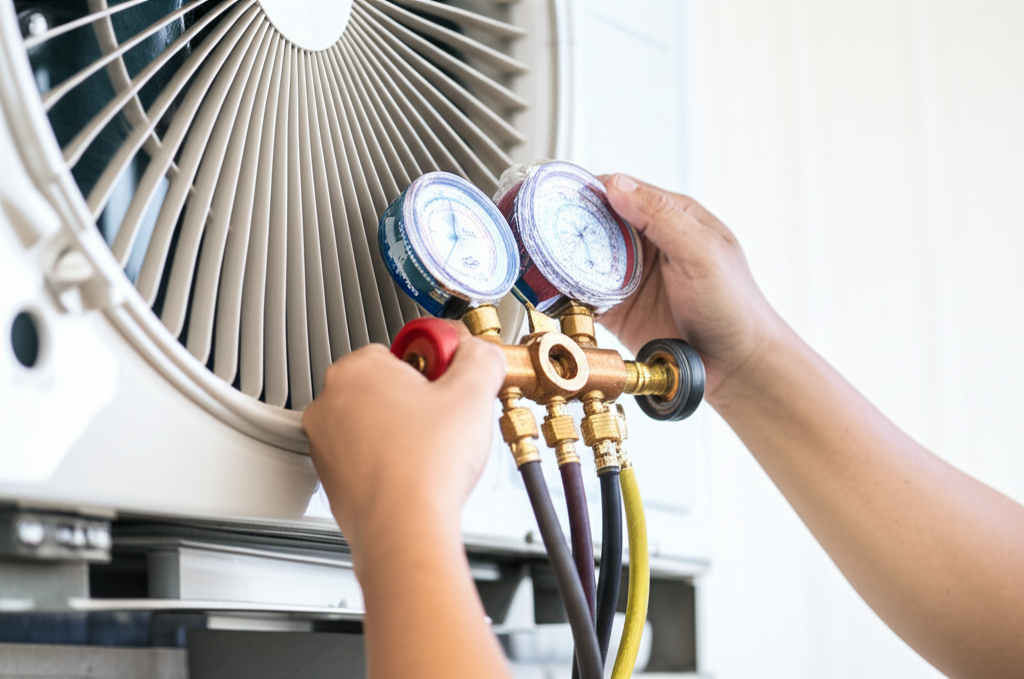
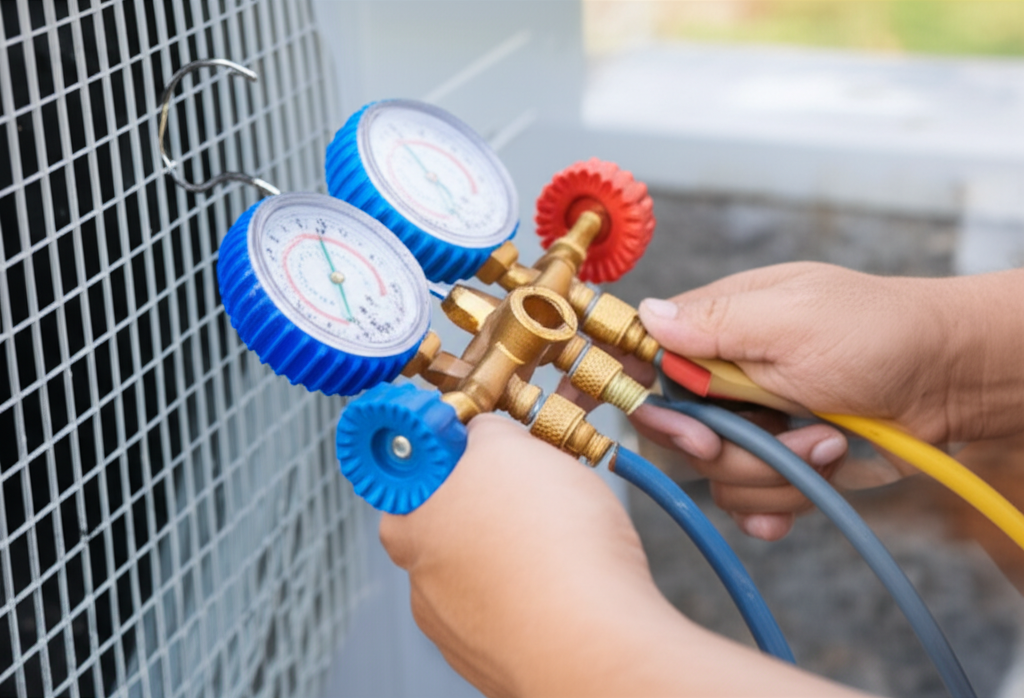
Real refrigerant checks require special tools. This is where you need to call in the experts, but it is good for you to know what they are doing. They use a manifold gauge set to measure the system’s pressure.
The technician connects hoses from the gauges to special service ports on the outdoor unit (the condenser). They check both the high side and the low side pressures.
These readings must match what the manufacturer specifies for your specific model and the outside temperature. If the pressures are too low, that confirms a refrigerant shortage.
For example, here is a quick look at how pressure relates to performance:
| Symptom Observed | Likely Cause (Refrigerant Related) | Action Needed |
|---|---|---|
| Coils are freezing over | Refrigerant level is too low | Leak search and repair, then recharge |
| No cooling, unit running | Severely low charge or compressor issue | Professional diagnosis required |
| High electric bills, weak cooling | Slightly low charge | Professional leak check and repair |
The Vital Fix: Finding and Repairing the Leak
Remember, simply adding refrigerant is not the fix. It is like putting a band-aid on a broken pipe. The leak must be found and sealed. This is the “vital fix” we talk about.
Here is the typical professional process:
- Isolate and Recover: The technician uses special recovery machines to safely remove the remaining old refrigerant from the system. This is required by law.
- Leak Detection: They pressurize the system with pure nitrogen. Then, they use electronic leak detectors or soap solutions on all fittings and joints to find exactly where the refrigerant is escaping.
- Repair: Once the leak is found (often a loose flare nut or a pinhole in a coil), they fix it using brazing or tightening the connection.
- Evacuation: The system is vacuumed out to remove all air and moisture. Moisture inside the lines can cause serious damage later.
- Recharge: Finally, they recharge the system with the exact amount of the correct type of refrigerant specified by the manufacturer.
For more official guidance on energy efficiency and proper system maintenance, you can check out resources from the U.S. Department of Energy at Energy.gov.
Mini-Split Maintenance Tips to Prevent Future Issues
While you cannot fix internal leaks easily, you can keep the rest of your system healthy. Good maintenance reduces stress on all components, including the sealed refrigerant lines.
Follow this simple routine:
- Clean Filters Monthly: Dirty filters block airflow, making the indoor coil work harder and potentially causing freeze-ups.
- Clear Outdoor Unit: Make sure nothing is blocking the outside unit. Leaves, grass clippings, and debris stop it from releasing heat properly.
- Annual Check-Up: Hire a pro once a year to inspect electrical connections and check the general health of the system. They can spot small issues before they become big, expensive refrigerant problems.
Frequently Asked Questions (FAQ) About Mini-Split Refrigerant
Here are some quick answers to the questions I hear most often:
Q: How much does it cost to recharge a mini-split?
A: A simple recharge without a leak fix can be a few hundred dollars, but if a leak repair is needed, the cost goes up significantly because of the extra labor involved.
Q: Can I just buy refrigerant cans online and add it myself?
A: No, you really shouldn’t. It is illegal in many places to handle refrigerant without certification, and without knowing the proper pressures, you can easily overcharge the system, which causes damage.
Q: How often should a mini-split need refrigerant?
A: Never! A properly installed mini-split should never lose refrigerant. If it does, there is a leak that needs fixing.
Q: What if my unit is blowing warm air but has no ice on the coils?
A: This could mean the refrigerant is low, but it could also mean the compressor is failing or the thermostat is faulty. A pro needs to check the electrical controls too.
Q: Is R-410A the only refrigerant used in mini-splits?
A: R-410A is very common in newer systems, but some newer, more efficient models are switching to R-32. Make sure your technician knows which type your system uses.
Q: How long does it take to find a small leak?
A: Finding a tiny leak can be time-consuming. It might take an hour or two just for the leak detection part of the service call.
Q: Should I turn the AC off if I see ice on the unit?
A: Yes, turn the cooling mode off, but you can switch it to “Fan Only” mode. This helps circulate air and thaw the ice faster until a technician can look at it.
Taking care of your mini-split does not have to be scary. Most problems come down to simple maintenance or noticing early warning signs.
By staying aware of poor cooling and frozen coils, you are already ahead of the game. Keep those filters clean, and remember that the vital fix for low refrigerant is always fixing the leak first. Stay cool, and happy cooling!
