
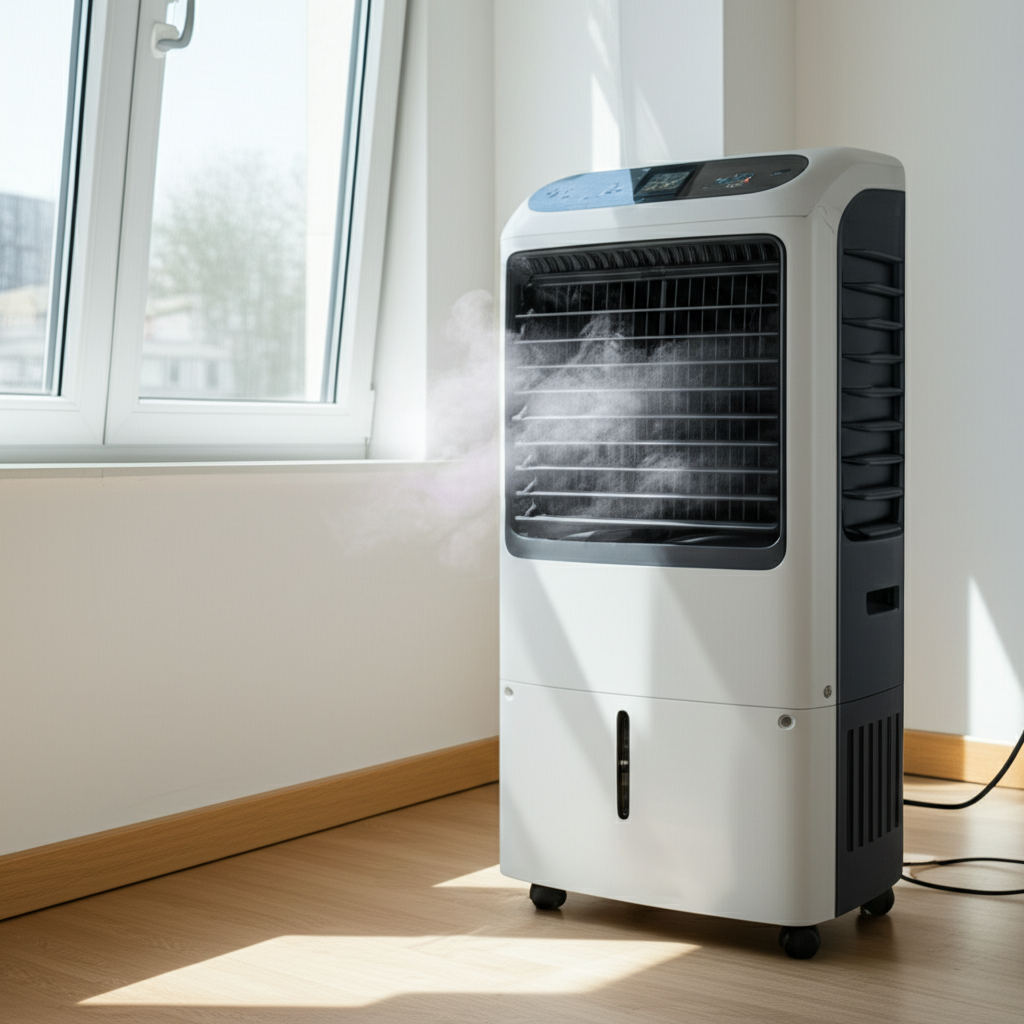
Quick Summary: To vent your air cooler (or portable AC) for max cooling, make sure the exhaust hose is as short and straight as possible, sealed tightly against the window or wall opening, and that you are blocking any outside air leaks. This keeps hot air out and cool air in!
Are you struggling to keep your room cool even when your air conditioner is running hard? It can be frustrating when your energy bill goes up, but the comfort stays low. Many times, the problem isn’t the AC itself, but how we set up the venting. Don’t worry; I’m Jack from ACReviewHub.com, and I will show you exactly how to get that cool air flowing perfectly. We are going to turn that confusing setup into simple steps so you can feel the difference right away.
Why Proper Venting is Your Secret Weapon for Cool Air
When you use a portable air conditioner, it works like a vacuum cleaner for heat. It sucks in warm room air, cools it down, and blows cold air back into the room. But where does the heat go? It has to go somewhere!
The vent hose is the special pipe that pushes all that hot, stale air outside your house. If this hose is set up poorly, that hot air just sneaks right back inside. That makes your AC work twice as hard for half the cooling. That is what we are fixing today!
Understanding Your Portable AC’s Exhaust Hose
Most portable AC units use one or two hoses. You need to know the difference so you vent it right.
- Single-Hose Units: These are simple but less efficient. They use one hose to push the hot air out, but they also suck in outside air (which is hot) to cool the machine.
- Dual-Hose Units: These are much better! One hose pushes the hot air out, and the second hose brings fresh outside air in to cool the machine. This keeps your room pressure balanced and much cooler.
If you have a single-hose unit, you must be extra careful about sealing the window opening. If you have a dual-hose unit, make sure both hoses have a clear path outside.
Step-by-Step: Venting Your AC for Maximum Cooling Power
This process is easy if you follow these simple steps. Think of this as giving your AC the clearest path to dump the heat.
Step 1: Choose the Best Location
Place your AC unit close to a window or a wall vent opening. Closer is always better for the hose.
Never try to run the hose through another room or down a hallway. That just heats up other parts of your home.
Step 2: Keep the Hose Short and Straight
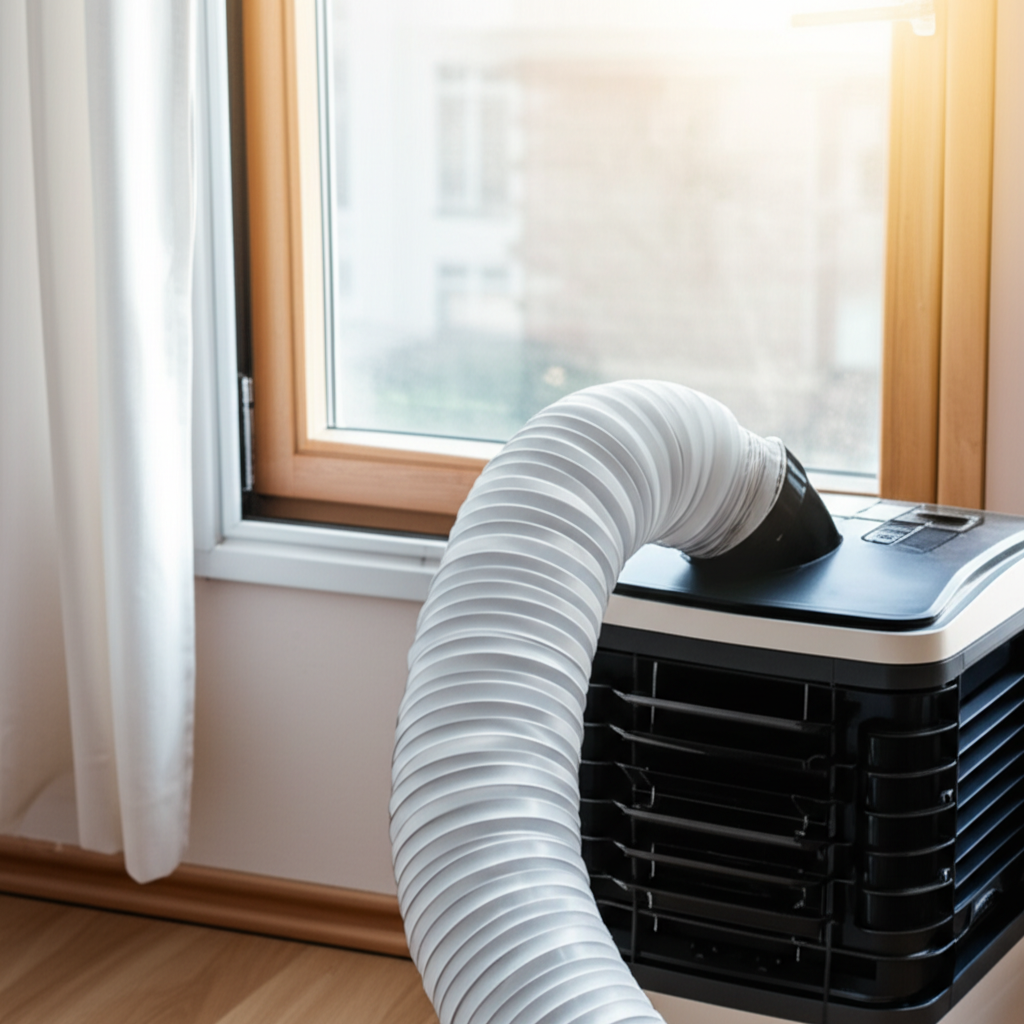
The exhaust hose is where all the heat travels. Every bend or extra length makes it harder for the heat to escape. This is like making a runner take a winding path instead of a straight track.
- Keep the hose as short as possible—only use the length you absolutely need.
- Avoid sharp 90-degree bends. Use gentle curves instead.
- Do not crush or kink the hose; this traps the hot air.
Step 3: Seal the Window Opening Perfectly
This is the most important step for single-hose units. You must seal the gap around the hose in the window kit.
Most ACs come with a plastic window slider kit. You slide this panel into the open window space.
- Fit the hose adapter firmly onto the end of the hose.
- Slide the panel into the window opening.
- Use the included foam strips or weather stripping to seal every crack around the panel.
- If you see any gaps where warm air can sneak in, cover it with strong tape or a thick towel.
Step 4: Check the Unit’s Placement (Crucial Tip!)
Make sure the air intake side of the unit is not blocked. The AC needs to breathe easily to cool the air inside your room.
Keep at least 18 to 24 inches of clear space around the back and sides of the unit, especially where the air flows in.
Comparison: Single-Hose vs. Dual-Hose Efficiency
If you are buying a new unit or thinking about upgrading, knowing the difference in how they vent is key to saving energy.
| Feature | Single-Hose AC | Dual-Hose AC |
|---|---|---|
| Hot Air Exit | One hose pushes heat out. | One hose pushes heat out. |
| Intake Air Source | Draws air from inside the room. | Draws fresh air from outside. |
| Room Pressure | Creates negative pressure (sucks in warm air from cracks). | Neutral pressure (better cooling). |
| Cooling Power | Good, but less efficient. | Excellent and much more efficient. |
Quick Fixes: Troubleshooting Common Venting Issues
If you’ve vented it, but it’s still not cool enough, check these common beginner mistakes.
- Mistake: The exhaust hose feels very hot. Fix: This means heat is trapped. Check for kinks or too many bends.
- Mistake: You are venting through a closed door into a hot attic or garage. Fix: Never vent into an unconditioned space that is hotter than your living area. Always vent directly outside.
- Mistake: Condensation is dripping near the hose. Fix: The seal around the window kit is broken, letting warm, humid air touch the cool plastic, causing sweat (condensation). Re-seal immediately.
For more detailed tips on saving energy while running your unit, check out the experts at the U.S. Department of Energy.
Simple Energy Saving Checklist for Vented ACs
Good venting saves energy, but these extra steps lock in the cold air you create.
| Action | Why It Helps |
|---|---|
| Close Blinds/Curtains | Stops direct sunlight from heating the glass. |
| Use Fans Wisely | Use ceiling fans to push cold air around the room gently. |
| Set Thermostat Wisely | Set it to 78°F (25.5°C) instead of 68°F (20°C) for big savings. |
| Check Filters Monthly | Dirty filters restrict airflow, making the AC work harder. |
Remember, every little bit of efficiency adds up to lower bills! For more advanced air quality tips, the American Society of Heating, Refrigerating and Air-Conditioning Engineers (ASHRAE) offers great advice.
Frequently Asked Questions About AC Venting
Here are the answers to the questions I hear most often from folks just starting out.
Q: Can I run my portable AC without venting it outside?
A: No, you really shouldn’t. The AC will just suck the cool air out of the room and blow super-hot air back in, making your room hotter than before!
Q: How often should I clean the vent hose?
A: You don’t usually need to clean the hose itself unless you see dust building up inside. Mostly, just make sure the filter inside the AC unit is clean!
Q: My window is old and doesn’t fit the sliding kit well. What now?
A: Use towels or foam weather stripping around the edges of the plastic panel to fill any gaps. A tight seal is your goal.
Q: Does the vent hose get very hot?
A: Yes, it should! That hose is carrying the heat away from your room. If it’s cool, your AC isn’t working correctly.
Q: Can I use a dryer vent hose instead of the one that came with the AC?
A: It’s best not to. AC hoses are usually insulated better and fit the connectors perfectly. Stick to the hose provided for the best seal.
Q: If I have a dual-hose system, do I still need to seal the window?
A: Yes, you still need to seal the space around both hoses. You want the unit pulling outside air only through the intake hose, not through random cracks.
Final Thoughts on Staying Cool and Comfortable
See? That wasn’t so complicated! Getting your air conditioner vented correctly is the single best way to maximize its cooling power without spending extra money on energy.
Take a few minutes today to check those seals and straighten those hoses. A little attention to venting means a lot more cool air for you and your family.
Keep those easy steps in mind, and you’ll be enjoying the cool comfort you paid for all season long. Happy cooling!
