
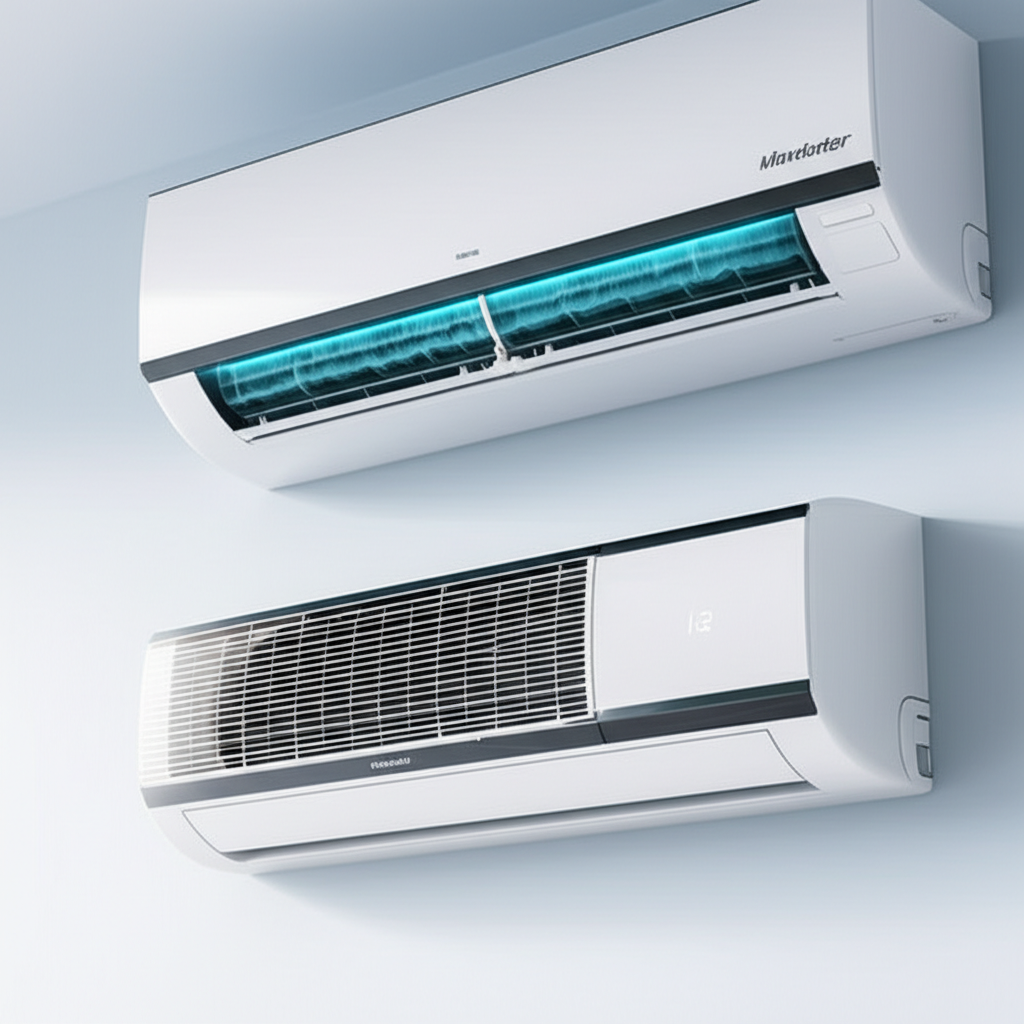
Inverter vs Non-Inverter Mini Splits: The shocking truth is simple: Inverter units save more money and keep you comfier by running at variable speeds, while non-inverter units just cycle fully on or fully off, which uses more energy.
Are you staring at two mini-split options and feeling totally lost? You see “Inverter” and “Non-Inverter,” and it sounds like complex rocket science. High energy bills make you sweat, even when the AC is running. Choosing the wrong system means wasting money every month. Don’t worry; I’m Jack from ACReviewHub.com, and I promise to break this down simply.
By the end of this guide, you will know exactly which type of mini-split is your best friend for comfort and savings. Let’s get your home cool without emptying your wallet!
The Big Difference: What Does ‘Inverter’ Actually Mean for Your Comfort?
Think about your car. When you are driving on the highway, you cruise at a steady speed. When you start going up a hill, you press the gas more. That is what an inverter AC does!
An inverter is a smart chip inside the outdoor unit. It lets the compressor (the AC’s engine) change its speed.
A non-inverter unit is like a light switch. It is either 100% ON or 100% OFF. It never runs at half speed.
How Inverter ACs Keep You Cooler and Save Energy
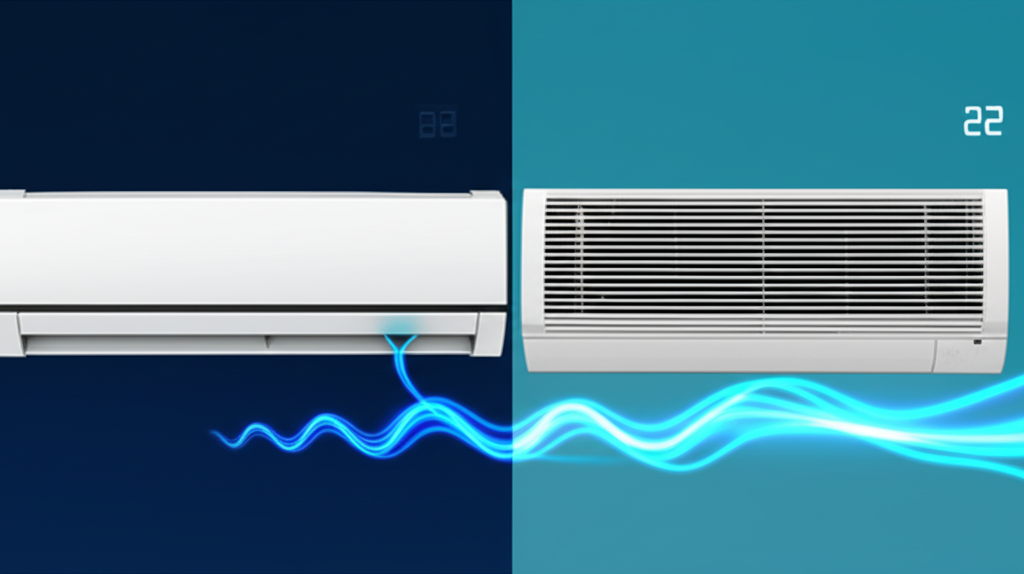
When you first turn on an inverter mini-split, it runs very fast to cool the room down quickly. This is called “boost mode.”
Once the room hits your perfect temperature, the inverter doesn’t shut off. Instead, it slows way down, using just enough power to maintain that exact temperature.
This constant, low-speed running is the secret sauce for energy savings. It prevents those big spikes in electricity use.
Why Non-Inverter ACs Cost You More Over Time
The old, non-inverter models constantly cycle. They cool until the room is too cold, then they shut off completely.
When the room warms up again, they blast back to 100% power to catch up. This on-and-off pattern is very hard on electricity.
That constant starting and stopping uses way more energy than the smooth running of an inverter.
Comparing the Two: At-a-Glance Facts
We made a simple chart so you can see the main differences right away. This helps you see which one fits your lifestyle better.
| Feature | Inverter Mini Split | Non-Inverter Mini Split |
|---|---|---|
| Compressor Speed | Variable (Changes Speed) | Fixed (On or Off Only) |
| Energy Efficiency | Very High (Saves Money) | Lower (Uses More Power) |
| Temperature Control | Very Precise (Stays steady) | Less Precise (Goes up and down) |
| Upfront Cost | Usually Higher | Usually Lower |
| Noise Level | Quieter during steady running | Louder when starting up |
When Should a Beginner Choose an Inverter?
If you plan to use your AC for many hours every day, the inverter is the clear winner. It pays back the higher initial cost with lower bills.
If you live somewhere with very hot summers, the consistent cooling of an inverter keeps you from feeling that sticky “almost cool” feeling.
Here are the best times to pick an inverter model:
- Your home uses AC more than 6 months a year.
- You value quiet operation, especially in bedrooms.
- You want the best long-term savings on power bills.
- You want the most comfortable, steady temperature.
When is a Non-Inverter Still Okay?
Sometimes, the cheaper upfront price of a non-inverter is the deciding factor. If you are on a tight budget right now, it is an option.
These units are best for spaces that don’t need cooling very often. Think of a guest room used only a few weekends a year.
Use these tips for choosing a non-inverter:
- You only use the AC for short bursts occasionally.
- The initial purchase price is your absolute top priority.
- You don’t mind small temperature swings (a degree or two warmer or colder).
Sizing Your Unit: Don’t Get Fooled by BTUs
Whether you pick inverter or not, you must get the right size. Too small, and it runs constantly, wasting energy. Too big, and it cycles too often, leading to poor dehumidification.
BTUs (British Thermal Units) measure cooling power. You need the right BTU for your room size.
| Room Size (Square Feet) | Recommended BTU Range |
|---|---|
| 150 – 250 sq ft | 5,000 – 6,000 BTU |
| 250 – 350 sq ft | 7,000 – 8,000 BTU |
| 350 – 550 sq ft | 9,000 – 10,000 BTU |
| 550 – 700 sq ft | 12,000 BTU |
For more detailed sizing help, the U.S. Department of Energy has great resources on sizing air conditioners correctly. It really helps save energy!
Easy Maintenance to Maximize Your New AC’s Life
No matter which technology you choose, keeping it clean makes it run better. This is true for both inverter and non-inverter types.
Here is a simple monthly checklist to keep your system happy:
- Turn the power completely OFF at the breaker.
- Carefully open the indoor unit cover.
- Gently pull out the air filter screens.
- Wash the filters with warm, soapy water. Rinse well.
- Let the filters dry completely before putting them back.
- Check the outdoor unit area—make sure leaves or grass aren’t blocking airflow.
Common Beginner Mistakes to Avoid
Choosing the right unit is only half the battle. How you use it matters just as much for your comfort and bills.
Here are the top mistakes I see new AC owners make:
- Setting the thermostat too low: Telling the AC to hit 65°F when it’s 95°F outside just makes it run harder, not faster. Set it to a comfortable 75°F or 76°F.
- Ignoring the filters: Dirty filters choke the system, forcing it to use more power to push air through.
- Using the fan setting instead of “Cool”: The fan moves air but doesn’t remove humidity, making you feel sticky. Always use the “Cool” or “Auto” setting for comfort.
Frequently Asked Questions for New AC Owners
Q1: Is an inverter AC much more expensive to buy?
A: Yes, usually they cost 15% to 30% more upfront, but they often save that difference back in energy costs within a few years.
Q2: Do inverter units last as long as non-inverter units?
A: Often, yes! Because they run at lower speeds most of the time, the components experience less wear and tear than the constant on/off cycling of older models.
Q3: Which one is better for dehumidifying a damp basement?
A: The inverter is usually better because it can run longer at low speeds, which is key to pulling moisture out of the air effectively.
Q4: Can I just replace my old non-inverter with a new inverter model?
A: Absolutely! If you are replacing an old unit, upgrading to an inverter is one of the best ways to modernize your home’s efficiency.
Q5: Does the “inverter” unit need special wiring?
A: For mini-splits, generally no, they use standard 240V power, but always have a qualified electrician confirm the circuit capacity for the specific model you buy.
Q6: What if my inverter AC starts making loud noises?
A: If it’s loud only when starting up, that might be normal. If it’s loud all the time, shut it off and call a technician; something might be loose.
Your Path to Smarter Cooling Starts Now
See? That wasn’t so scary! The main takeaway is this: Inverter technology is the modern standard because it brings better comfort and lower running costs.
If you use your AC regularly, invest in the inverter. If you only need it sometimes, a non-inverter might serve your budget right now.
Remember that simple monthly filter cleaning is the best thing you can do for any AC unit. Keep up those easy steps, stay informed, and you’ll enjoy cool, efficient comfort all year long. Happy cooling!
