
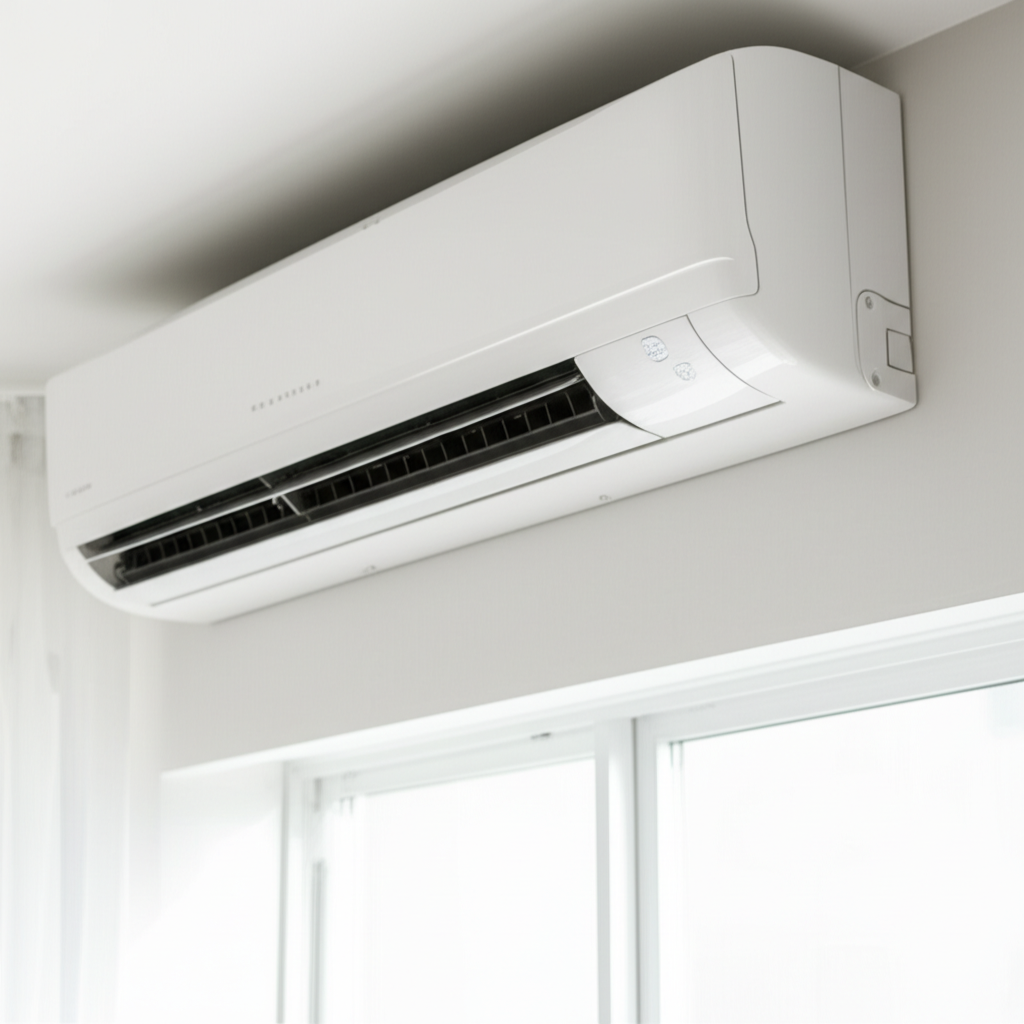
Quick Summary: Finding the right Mini Split BTU size is simple! Use a trusted online calculator, measure your room’s square footage, and adjust for sun exposure and ceiling height to ensure perfect, energy-efficient cooling.
Are you staring at a mini split box, feeling lost about what size you really need? It is easy to feel overwhelmed by all the numbers and acronyms like BTU.
If your new unit is too small, it will run constantly and never cool down. If it’s too big, you waste money and feel clammy. Don’t worry about the tech jargon anymore.
I’m Jack from ACReviewHub.com, and I’m here to walk you through sizing your mini split perfectly. We will break down BTUs so you can pick the right unit with total confidence next time.
Why Getting Your Mini Split BTU Size Right Really Matters
BTU stands for British Thermal Unit. It is just a fancy way of measuring cooling power. Think of it as the muscle your AC uses to fight off the heat.
If your AC unit doesn’t have enough muscle (low BTUs), it will struggle. It will never reach the temperature you set, leading to high bills.
If the unit has way too much muscle (high BTUs), it cools the air too fast. This means it doesn’t run long enough to take out the humidity. That leaves your room feeling cold but sticky—not comfortable!
How to Find Your Room’s Square Footage (The First Step)
The easiest way to start is by knowing the size of the space you need to cool. This is called square footage. You just need a tape measure and a calculator.
Measure the length of the room and the width of the room. Then, multiply those two numbers together. That final number is your square footage.
For example, a room that is 12 feet long and 15 feet wide is 180 square feet (12 x 15 = 180).
The Magic Number: A Simple BTU Sizing Chart
Once you have your square footage, you can match it to a basic BTU requirement. This chart gives you a great starting point for standard 8-foot ceilings.
| Room Size (Square Feet) | Required Cooling Power (BTUs per Hour) | Typical Mini Split Size |
|---|---|---|
| 150 to 250 sq. ft. | 6,000 BTUs | 0.5 Ton |
| 250 to 350 sq. ft. | 9,000 BTUs | 0.75 Ton |
| 350 to 550 sq. ft. | 12,000 BTUs | 1.0 Ton |
| 550 to 800 sq. ft. | 18,000 BTUs | 1.5 Ton |
| 800 to 1,000 sq. ft. | 21,000 BTUs | 1.75 Ton |
Notice how the chart uses “Tons” as well? One Ton of cooling power equals 12,000 BTUs. It’s just another way the industry talks about capacity.
Adjusting for Real-World Heat: The Sizing Multipliers
The chart above is a great baseline, but homes are rarely perfect boxes. You need to add or subtract BTUs based on your specific room conditions. This is where expert sizing really pays off.
Here are the main factors that require you to adjust your initial BTU number:
- Sunlight Exposure: Rooms that get strong, direct afternoon sun are hotter. Add 10% to your required BTUs.
- Shady Rooms: If the room is heavily shaded by trees or faces north, you can subtract 10%.
- Ceiling Height: If your ceilings are taller than the standard 8 feet, you have more air volume to cool. Add 10% for every extra foot of height.
- Occupancy: Every person generates heat. If you regularly have more than two people in the room, add 600 BTUs for each extra person.
- Heat Sources: Do you have a kitchen or a room with lots of electronics? Add 1,000 BTUs to compensate for the extra heat they generate.
A great resource for understanding home energy use is the Department of Energy. You can learn more about efficiency standards here: Energy.gov.
Step-by-Step: How to Use a Mini Split BTU Calculator Online
While manual calculation is good, most of us use online tools. These digital calculators do the math for you, but you still need to feed them good information. Here is the easy process:
- Find a Reputable Calculator: Use a calculator provided by a major HVAC brand or a trusted review site like ours.
- Input Room Dimensions: Enter the exact length and width you measured earlier to get the square footage.
- Select Location/Climate Zone: The calculator will ask for your general location (e.g., hot and humid Florida vs. mild coastal Oregon).
- Note Windows and Doors: Some advanced calculators ask if you have many large, south-facing windows. Answer honestly!
- Enter Insulation Quality: If your house is very new and well-insulated, you might need slightly less BTUs. Older homes need more power.
- Review the Recommendation: The tool will spit out a suggested BTU size. Always look for the range it provides (e.g., 10,000 to 12,000 BTUs).
Common Sizing Mistakes Beginners Make (And How to Avoid Them)
Picking the wrong size is the number one reason new mini split owners are unhappy. Let’s make sure you don’t fall into these common traps.
| Mistake | Why It Happens | Jack’s Fix |
|---|---|---|
| Guessing the Size | Not measuring the room or using guesswork. | Always measure square footage first. |
| Buying Too Big (Oversizing) | Thinking “Bigger is always better” for cooling. | Oversized units short-cycle, leading to high humidity and wasted energy. |
| Ignoring Sun Exposure | Forgetting to factor in south-facing glass doors. | Always add 10% BTU capacity for sunny rooms. |
| Not Accounting for People/Heat | Assuming the room is empty all the time. | Add 600 BTUs for every extra person regularly using the space. |
If you are trying to cool an open-concept living area, it is better to calculate the total square footage of all connected areas rather than sizing for just one corner.
Troubleshooting: My New Mini Split Isn’t Cooling Right
If you sized correctly but still feel uncomfortable, the problem might be simple maintenance, not sizing. Here are a few quick checks.
| Symptom | Likely Cause (Not Sizing Issue) |
|---|---|
| Air is blowing, but it’s not cold. | Dirty air filter or low refrigerant (needs a pro). |
| Unit runs constantly but never hits temp. | Outside unit is blocked by debris or vegetation. |
| Ice forming on the lines outside. | Fan motor issue or the unit is trying to heat when it’s too cold outside. |
Remember to clean those filters monthly! A clogged filter drastically reduces your system’s efficiency and cooling power, making even a perfectly sized unit seem weak.
Final Thoughts on Sizing for Comfort
Sizing your mini split correctly is the foundation of efficient, comfortable cooling. It’s not about picking the biggest number; it’s about picking the right number for the job.
Take your time measuring, be honest about your sun exposure, and always lean slightly toward the smaller side if you are truly stuck between two sizes—especially with modern, variable-speed inverter technology.
You’ve got this! By using these simple steps, you’ve already become smarter about your AC choice than most people who buy off the shelf.
Keep things simple, keep them clean, and enjoy the perfect temperature all year long!
