
Portable AC BTU Chart: Crucial Sizing Guide
Picking the right portable AC size is simple: match the BTU number to your room size. Too small means no cool air; too big wastes energy. Use this chart to find the perfect fit so you stay comfortable without breaking the bank.
Hey there! I’m Jack from ACReviewHub.com. Are you staring at confusing numbers on portable AC boxes? Do you worry about picking one that won’t actually cool your space? It happens to everyone when buying a new AC. These ratings seem like confusing homework, but they are really just simple math.
Don’t sweat it! I promise to break down what BTU means. We will show you exactly how to match that number to your room size. By the end of this guide, you will know exactly which portable AC to buy with total confidence. Let’s get you cool!
What Exactly is BTU and Why Does It Matter?
BTU stands for British Thermal Unit. This is the most important number when buying any air conditioner. Think of BTU as the AC’s cooling muscle. A higher BTU number means the unit can remove more heat from the air every hour.
If you buy an AC with too few BTUs for your room, it will run non-stop. It will never get truly cool. If you buy one with way too many BTUs, it cools too fast. This makes the unit shut off before it removes enough moisture. That leaves your room feeling cold but clammy and sticky.
Getting the size right saves you money on your electric bill too. We want happy cooling, not hard working cooling!
The Essential Portable AC BTU Sizing Chart
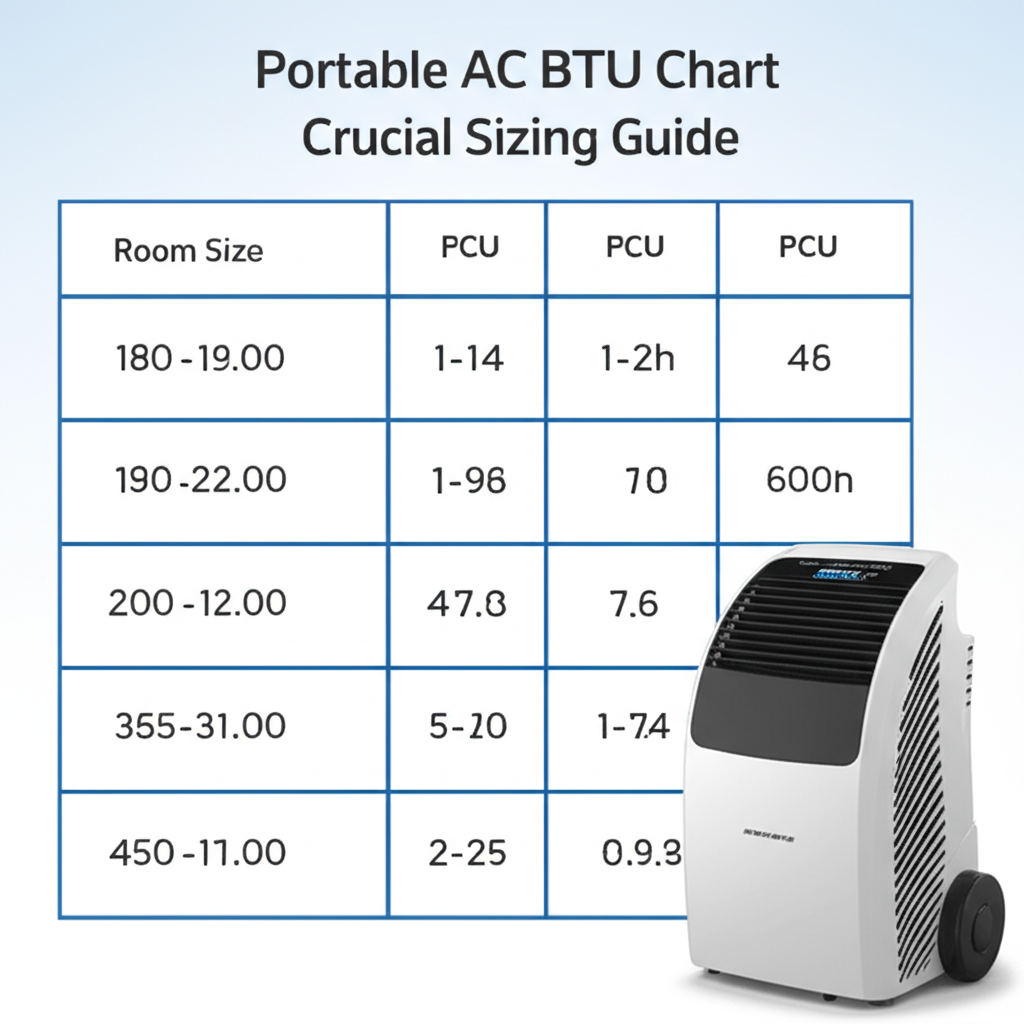
This chart is your new best friend. It shows the typical room size in square feet that different BTU ratings can handle effectively. Always measure your room before you shop!
| BTU Rating (Cooling Power) | Recommended Room Size (Square Feet) | Best For |
|---|---|---|
| 5,000 – 6,000 BTU | 150 – 250 sq. ft. | Small bedrooms, small offices |
| 8,000 – 10,000 BTU | 250 – 400 sq. ft. | Medium living rooms, large bedrooms |
| 12,000 – 14,000 BTU | 400 – 550 sq. ft. | Open concept areas, larger dens |
| 16,000 – 18,000 BTU | 550 – 750 sq. ft. | Very large rooms, studio apartments |
How to Measure Your Space for Perfect Sizing
Sizing isn’t just about the BTU number; it’s about your specific room. You need to know the square footage. This is easy to calculate.
Follow these simple steps to find your room’s size:
- Get a tape measure.
- Measure the length of the room in feet.
- Measure the width of the room in feet.
- Multiply the length by the width (Length x Width = Square Feet).
For example, a room that is 10 feet wide and 20 feet long is 200 square feet (10 x 20 = 200).
Adjusting BTU for Real-World Cooling Challenges
The chart above is a great starting point, but real life has quirks. You need to tweak the BTU number up or down based on a few factors. Think of these as bonus cooling needs.
Here is how you adjust your required BTU:
- Sunny Rooms: If the room gets strong afternoon sun through big windows, add about 10% more BTU power. The sun adds a lot of heat!
- High Ceilings: If your ceilings are taller than 8 feet, you have more air volume to cool. Add about 10% more BTU.
- Lots of People: If the room is usually crowded (like a busy home office or gym), each person adds body heat. Add 600 BTUs for every person over two.
- Hot Kitchens: If you are cooling a space next to a kitchen where you cook often, add 4,000 BTUs to cover the extra cooking heat.
If you find your calculated need is between two sizes on the chart, always round up to the next higher BTU rating. It is better to have a little extra power than not enough.
Understanding Dual vs. Single Hose Portable ACs
Portable ACs come in two main types: single-hose and dual-hose. This affects how efficiently they cool, which ties back into sizing.
Single-hose units are simpler but less efficient. They use the room’s air to cool the condenser coil, and then they blow that warm air outside through one hose. This process creates negative pressure, which sucks warm air from cracks and other rooms back into your space.
Dual-hose units are smarter. They use one hose to pull outside air in for cooling the machine, and the second hose pushes the hot exhaust air out. They don’t create that negative pressure, so they cool faster and more effectively. For dual-hose units, you might be safe sticking closer to the chart’s minimum recommendation.
For more detailed efficiency comparisons, check out the testing data from organizations like Consumer Reports.
Common Portable AC Mistakes Beginners Make
We all learn by doing, but let’s skip a few painful learning moments! Here are the top sizing and setup mistakes I see all the time:
| The Mistake | The Result |
|---|---|
| Buying the smallest BTU unit possible. | The AC runs constantly; your bill is high, and you never feel cool. |
| Forgetting about sunny windows. | The AC cools the air but loses the fight against solar heat gain. |
| Not sealing the exhaust hose properly. | Hot air leaks back into the room, wasting all the cooling effort. |
| Using a single-hose unit in a very hot climate. | The negative pressure effect makes cooling very difficult. |
Quick Portable AC Energy-Saving Checklist
Once you have the right size, keep it running smart!
- Set your thermostat a few degrees higher than you think you need (78°F is a great target).
- Keep curtains or blinds closed during the hottest part of the day.
- Make sure the exhaust hose is sealed tightly against the window frame.
- Clean the air filter at least once a month. A dirty filter blocks airflow.
- Use a ceiling fan to help circulate the cool air without dropping the thermostat lower.
For more tips on saving energy with cooling systems, the U.S. Department of Energy is a great resource: Energy Saver Tips.
Frequently Asked Questions (FAQ) About BTU Sizing
Here are quick answers to the questions I hear most often.
Q: Can I use a 12,000 BTU unit in a 300 sq. ft. room?
A: Yes, that will be very cold! Since 300 sq. ft. only needs about 8,000 BTUs, the 12,000 BTU unit will cool it fast but might cause humidity issues. Watch out for clammy air.
Q: Does the window size affect the BTU I need?
A: Not directly, but large, unshaded windows let in lots of heat, so you must compensate by choosing a higher BTU rating overall.
Q: What if I am cooling two small rooms together?
A: Measure the total square footage of both rooms combined and use that total number to select your BTU size.
Q: Is it bad if my portable AC is too big?
A: Yes, it’s inefficient. It cools the air too fast, which means it doesn’t run long enough to pull moisture out. That leaves you feeling damp.
Q: Should I buy a single-hose or dual-hose unit?
A: If you live in a very hot or humid area, always try to choose a dual-hose unit for better performance.
Final Thoughts on Picking Your Perfect Portable AC
See? That wasn’t so tough! Choosing the right portable AC is mostly about looking at your room size and using that handy BTU chart. Don’t let confusing labels stress you out. Measure once, buy smart, and you will enjoy perfectly comfortable air all season long.
Keep up with cleaning that filter, and your new AC will be a faithful, cool companion for years. Stay cool out there!
