
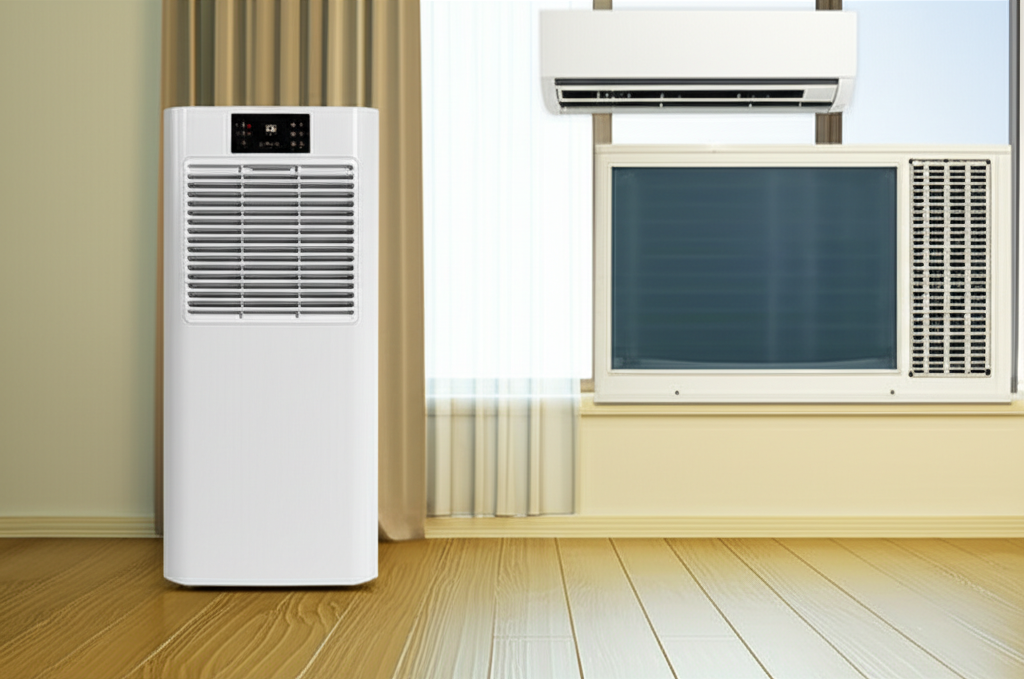
Portable AC Vs Window AC: Which is Best for You? For easy setup and moving around, choose a Portable AC. If you need the most powerful, efficient cooling for one room, the Window AC is usually the winner. We’ll break down the easy choices!
So, You Need to Cool Down? Let’s Figure Out Your Best AC Friend
It’s hot outside, and your room feels like an oven. You want cool air, but all the air conditioner choices can make your head spin. People often ask me, “Jack, should I get the one that sits in the window or the one that rolls around?”
Don’t worry about confusing terms or hard setups. I’m Jack from ACReviewHub.com, and I’m here to make this super simple. We will look closely at the good parts and the not-so-good parts of both portable and window units.
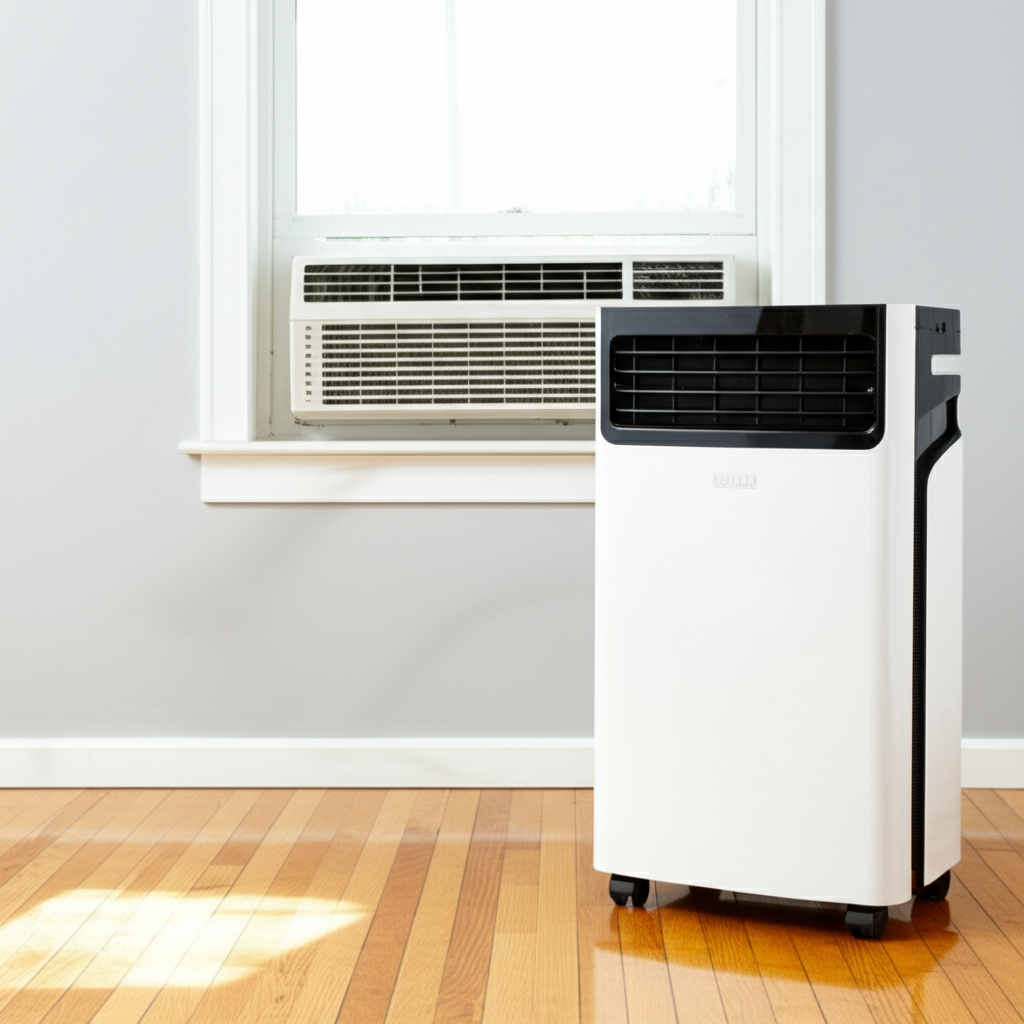
By the time we finish, you will know exactly which AC fits your space, your budget, and your need for cool comfort. Let’s get started on beating that heat!
Portable AC vs. Window AC: What’s the Big Difference?
These two types of ACs look very different, and they work a little differently too. Think of it like choosing between a bicycle and a small car. Both get you where you need to go, but one is much easier to move!
Understanding the Window AC: The Classic Cooler
The Window AC unit sits right in your window frame. Half of the machine is inside your room, and half sticks outside to blow out the hot air. They are very popular for a reason: they are usually powerful.
The Good Stuff: Pros of a Window AC
Window ACs are great at making a room cold fast. They move the hot air completely outside your living space. This means they often cool better than portable units of the same size.
- Better Cooling Power: Since the whole hot side is outside, they are very efficient at cooling the inside space.
- Quieter Operation (Sometimes): The loudest parts (the compressor) are often outside the window, making the inside noise a bit less harsh.
- Permanent Feel: Once installed, they stay put and don’t take up floor space inside your room.
- Lower Initial Cost: Often, a window unit costs less money to buy than a portable unit with the same cooling power (BTUs).
The Trade-Offs: Cons of a Window AC
The main drawback is installation and permanence. You have to fit it into a specific window size, and it stays there until you take it down.
- Installation Hassle: You need help lifting it into the window, and it can be tricky to secure it safely.
- Blocks the View: Your window is covered, so you lose light and the view outside.
- Not Allowed Everywhere: Some apartment buildings or HOAs do not allow window units due to how they look from the outside.
- Energy Loss Risk: If the seal around the unit isn’t perfect, cold air can leak out, or hot air can sneak in around the edges.
Meet the Portable AC: The Flexible Cooler
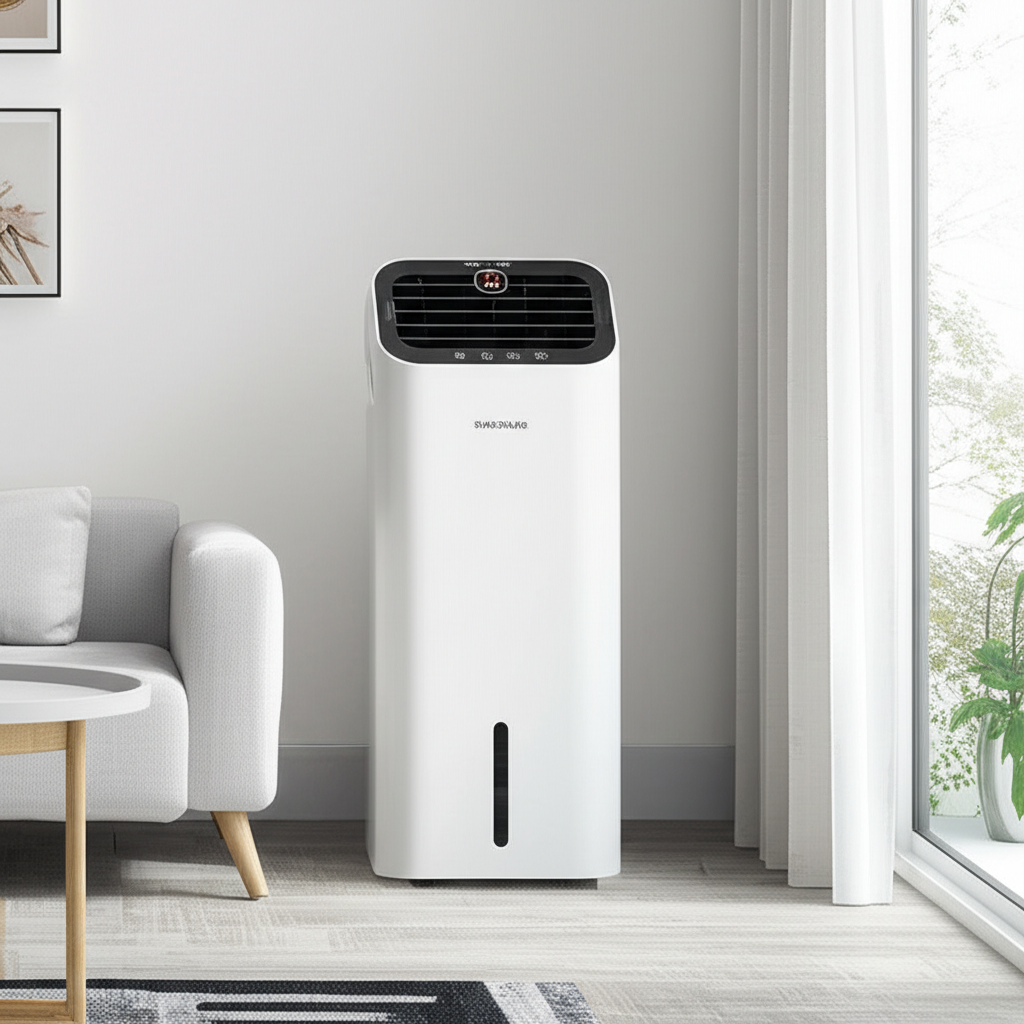
A Portable AC is a stand-alone machine that sits on the floor inside your room. It’s like a mini-fridge with wheels. Because it needs to get rid of hot air, it uses a big hose that you vent out a window or a sliding door.
The Good Stuff: Pros of a Portable AC
Portability is the superpower here. You can move it from the bedroom at night to the living room during the day. It’s perfect for renters.
- Easy Setup: No heavy lifting! You just roll it into place and attach the exhaust hose to the window kit.
- Great for Renters: Since it doesn’t permanently alter your home, landlords usually allow them.
- Flexibility: Move it to the basement when you are working there, and then back upstairs later.
- No Window Blockage: The window remains mostly usable because only a small vent kit is installed.
The Trade-Offs: Cons of a Portable AC
The biggest challenge with portable units is managing that exhaust hose and the heat it produces.
- Less Efficient Cooling: Because the machine (which generates heat) sits inside the room, it often struggles to cool as well as a window unit.
- Takes Up Floor Space: It needs a spot on the floor, which can be awkward in small rooms.
- The Noise Factor: Since the entire machine is inside, they can sometimes sound louder than window units.
- Condensate Management: You often have to empty a water bucket, or the unit needs to drain, which can be an extra chore (though many self-evaporate now).
Comparing Cooling Power: BTUs Explained Simply
When you shop for an AC, you see “BTUs” everywhere. BTU stands for British Thermal Unit. Think of it as the “horsepower” of your air conditioner. More BTUs mean more cooling power for a bigger space.
A portable AC usually needs slightly more BTUs than a window AC to cool the exact same size room because of its design limitations. Always pick a unit that is rated for your room size!
| Room Size (Square Feet) | Window AC (BTUs Needed) | Portable AC (BTUs Needed) |
|---|---|---|
| 150 to 250 sq. ft. | 5,000 – 6,000 | 7,000 – 8,000 |
| 250 to 350 sq. ft. | 7,000 – 8,000 | 9,000 – 10,000 |
| 350 to 550 sq. ft. | 9,000 – 10,000 | 12,000 – 14,000 |
For more details on sizing, check out the helpful information from the U.S. Department of Energy on choosing efficient cooling systems.
Setting Up Your New AC: Simple Steps for Beginners
Installation is often the scariest part, but it doesn’t have to be! Here is how you generally handle each type.
How to Set Up a Window AC (The Quick Version)
- Measure your window opening to ensure the unit will fit snugly.
- Slide the AC unit halfway into the window opening.
- Use the provided side panels or accordion pieces to fill any gaps on the sides.
- Secure the unit with screws or brackets if required by the manufacturer for safety.
- Plug it in and turn it on!
How to Set Up a Portable AC (The Easy Version)
- Roll the unit into the desired spot, making sure you have space behind it for the hose.
- Attach the flexible exhaust hose securely to the back of the AC unit.
- Place the window venting kit into your open window (it usually slides and locks).
- Connect the other end of the exhaust hose to the vent kit.
- Make sure the hose isn’t bent or kinked, which traps hot air inside.
Keeping Your AC Healthy: Easy Maintenance Tips
No matter which AC you choose, cleaning the filter regularly is the most important thing you can do. A dirty filter makes your unit work too hard and costs you money!
Simple AC Filter Cleaning Routine
- Check Monthly: Pull out the filter (usually behind the front grille).
- Vacuum or Wash: If it’s a reusable filter, vacuum off the dust or gently wash it with warm, soapy water.
- Dry Completely: Make sure the filter is bone dry before putting it back in the unit.
- Deep Clean Twice a Year: At the start of summer and the end of summer, wipe down the outside fins gently with a soft cloth.
Troubleshooting: What If My AC Isn’t Cooling Well?
If your cool air suddenly turns into lukewarm air, don’t panic. Most simple issues can be fixed right now without calling a technician.
| Symptom | Most Likely Cause (Portable or Window) |
|---|---|
| AC is running but not cold. | Dirty filter or clogged coils. |
| Unit turns on, then shuts off quickly. | The room is too small for the AC size, or the drain pan is full (Portable AC). |
| Loud rattling noise. | The unit is not sitting level or something is loose on the outside casing. |
| Warm air coming from the exhaust hose. | The exhaust hose on the portable unit has a leak or is disconnected. |
If you suspect your window AC seals are bad, you can find good sealing tips on sites like Consumer Reports to prevent air leaks.
Making the Final Choice: Portable or Window?
To help you decide, think about these three simple questions. Your answers will point you to the right machine.
Ask Yourself These Three Questions
- Do I need to move it? If yes, go Portable. If no, Window is fine.
- Is my landlord strict? If yes, go Portable. Window units are often banned in rentals.
- Do I need the absolute coldest air possible? If yes, Window ACs usually win on raw power efficiency.
If you are cooling a small office or a bedroom you only use sometimes, the flexibility of the Portable AC is unbeatable. If you are cooling a primary bedroom all summer long, the efficiency of a well-sized Window AC might save you more money in the long run.
Frequently Asked Questions (Just for You!)
Here are a few common things folks ask me when they are stuck between these two choices.
Q: Are portable ACs expensive to run?
A: They use a bit more electricity than window units because they are less efficient, but they are still much cheaper than using central air for just one room!
Q: Can I use a portable AC without the hose?
A: No, you cannot! The hose must go outside. If you run it without the hose, it just blows hot air right back into the room, and you’ll just overheat the space.
Q: Which one is better for very hot, humid weather?
A: Window ACs generally handle extreme heat and humidity better because they expel the heat outside more effectively.
Q: Do portable ACs really need to drain water?
A: Many newer models evaporate most of the water themselves. But if you live in a very humid area, you might still need to empty the collection tray every day or two.
Q: What about dual-hose portable units? Are they better?
A: Yes, dual-hose units are better! They pull in outside air for cooling the mechanics and push hot air out through the second hose, which helps them work more efficiently inside the room.
Final Thoughts: Staying Cool Without the Stress
Choosing between a Portable AC and a Window AC comes down to prioritizing convenience versus raw cooling power. There is no single “best” option; there is only the best option for your specific home situation.
Remember to always match the BTUs to your room size. Keep those filters clean, and your AC will reward you with years of reliable cool air. You’ve got this!
Stay comfortable, and happy cooling!
