
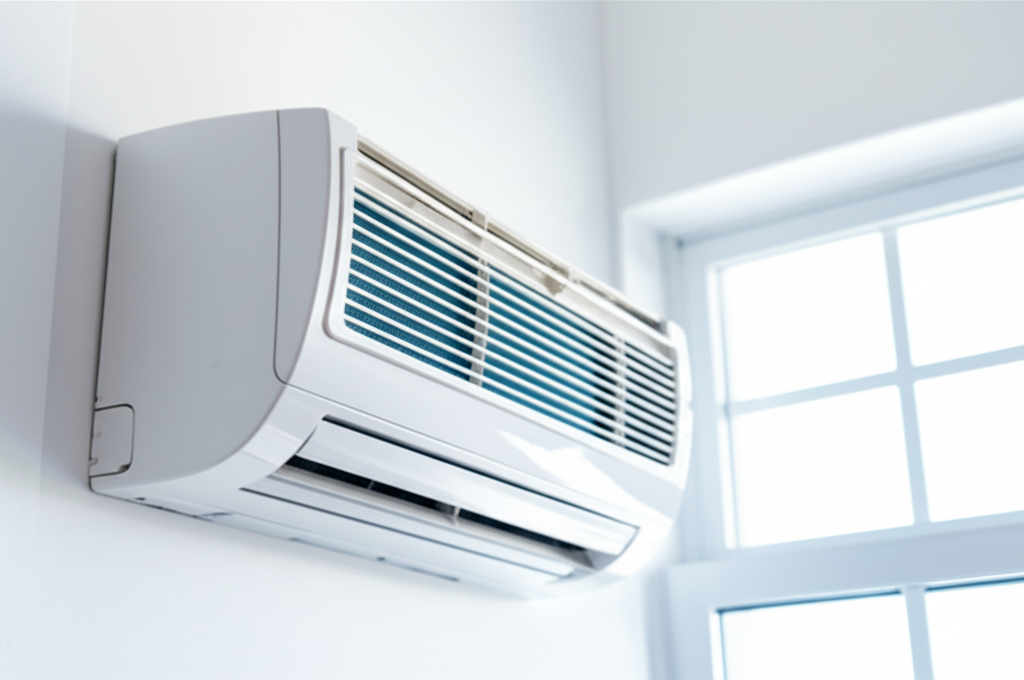
Quick Fix: Window AC dripping water usually means the unit is tilted forward, the drain pan is clogged, or the insulation is missing. Adjust the tilt slightly backward, clean the drain area, or add foam tape to seal gaps, and the dripping should stop fast.
Seeing water pool under your window AC unit is never fun. It can stain your walls or leak onto the floor, causing a real headache. Dealing with AC issues can feel confusing, especially if you are new to window units. Don’t worry; we are going to break down exactly why this happens. We’ll look at simple fixes you can do right now to stop that drip. Stay with me, and we’ll get your unit running quietly and cleanly again.
Why Is My Window AC Unit Leaking Water? The Top 3 Causes
It sounds scary, but most window AC leaks are super common problems. They aren’t usually signs of a huge breakdown. We need to look at three main culprits causing the water to escape where it shouldn’t.
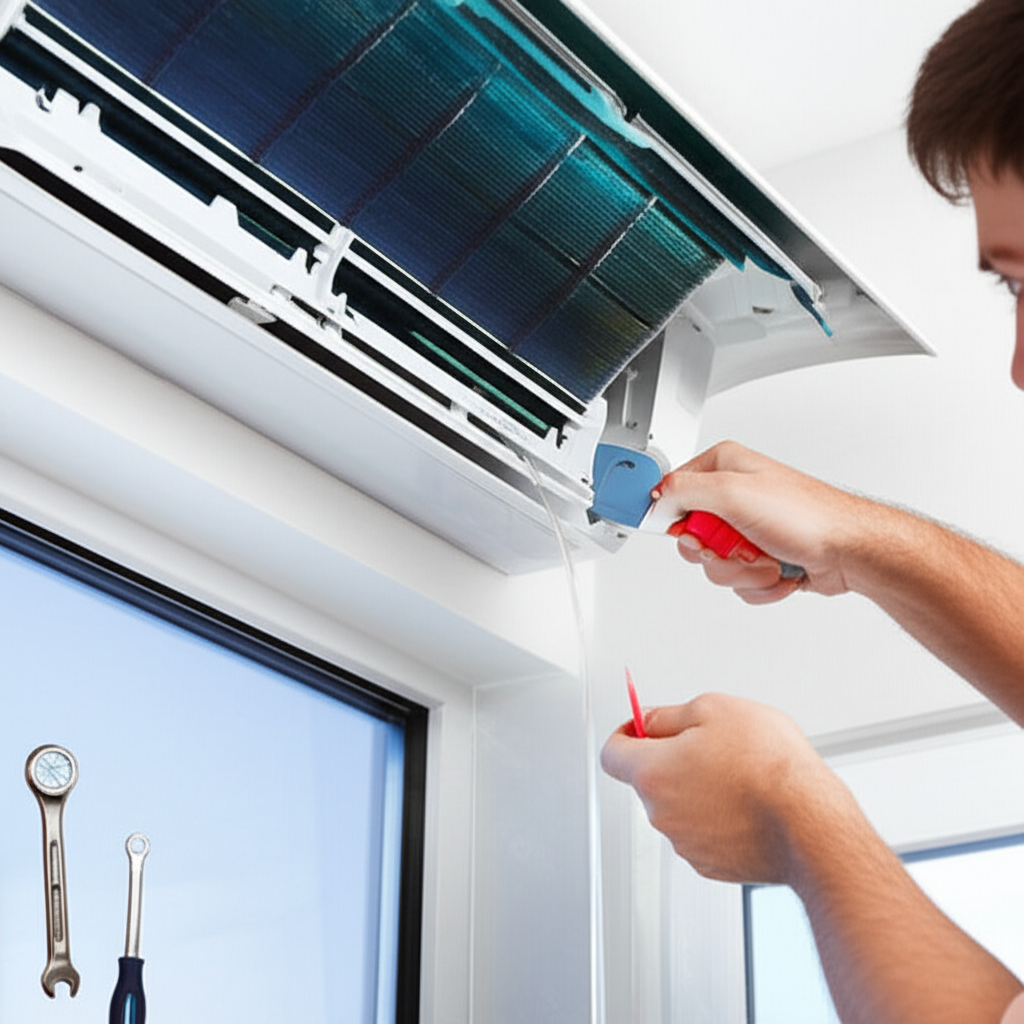
The first reason is often the easiest to fix: the tilt. Air conditioners need a slight backward tilt to drain condensation correctly inside the unit. If it’s leaning forward or perfectly level, the water can’t reach the drain pan.
The second big issue is a clogged drain. As your AC cools the air, it pulls moisture out—that’s condensation. This water should drip outside. If the drain line or the pan gets gummed up with dust or mold, the water backs up and spills inside.
Finally, sometimes the seal around the unit is broken. If the gap between the AC and the window frame isn’t sealed well, that humid outside air sneaks in. This extra moisture can freeze on the cold coils and then melt, dripping inside your house.
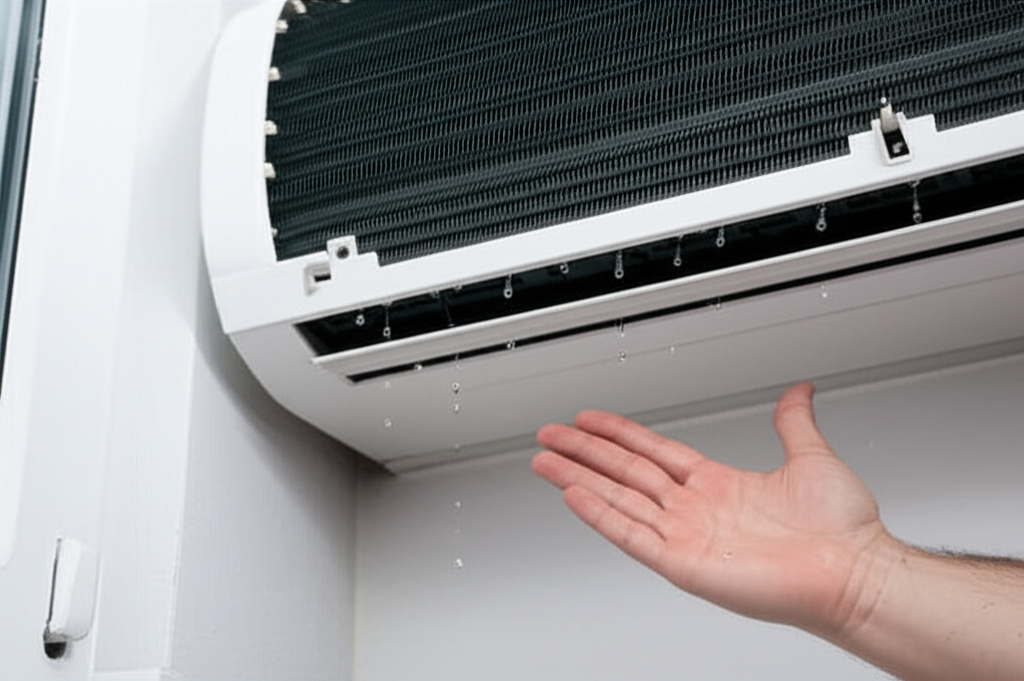
Fix 1: Checking and Adjusting the Unit’s Tilt
This is the first thing every expert checks. Your window AC needs to slope slightly toward the outside. This slope guides the water to the drain hole outside the window.
Here is how you check if the tilt is right:
- Look at the front of the AC unit where the cold air blows out.
- If it looks like it is leaning toward your room, it needs adjustment.
- You can often adjust the leveling feet or place a small shim under the outside mounting bracket to nudge it back.
- The general rule is about a quarter-inch of downward slope for every foot of depth the unit sits in the window.
Jack’s Tip: Never tilt the unit so much that water pools on the outside housing. We just need a slight, almost invisible backward lean for proper drainage.
Fix 2: Clearing Clogs in the Drain Pan and Holes
If the tilt is perfect, the next step is cleaning. The drain pan catches the condensation, and the drain hole lets it escape. Dirt loves to settle here.
Follow these simple cleaning steps:
- Unplug the AC first! Safety is always rule number one when working on appliances.
- Locate the drain pan, usually underneath the unit or near the back where the outside air flows.
- Use a thin, flexible tool, like a pipe cleaner or a thin wire, to gently poke through the drain hole on the bottom or back of the unit.
- If you can access the pan, carefully use a small wet/dry vacuum to suck out any visible sludge or debris.
- Once clear, pour a small amount of a mild vinegar and water solution down the drain hole to flush out any remaining residue.
This simple flush often resolves most dripping issues caused by buildup.
Fix 3: Sealing Air Gaps and Improving Insulation
If water is dripping inside, sometimes it’s not condensation dripping from the coils, but humidity getting in and condensing right on the cool plastic casing.
You need to seal the gaps around the sides of the unit where it meets the window frame. This is where most cold air escapes and warm, humid air sneaks in.
Here’s what you should look for and seal:
- Check the accordion panels that slide out on either side of the AC. Are they fully extended and tight?
- Look for gaps between the plastic panels and the window frame.
- Use foam weather stripping or insulation tape (available at any hardware store) to fill these gaps completely.
- Ensure the foam is compressed slightly when you close the window against it for a good seal.
This insulation work keeps your cool air in and stops outside humidity from causing extra drips.
When Professional Help Might Be Needed
While most drips are beginner fixes, sometimes the problem is deeper inside the unit. Don’t worry if the simple fixes don’t work; it just means it’s time to call in a pro.
You should call an HVAC technician if:
- The AC is blowing warm air, and the coils are frozen solid (this points to a refrigerant issue).
- You see signs of water leaking from the main front grill, not just the back or bottom.
- The unit is very old, and cleaning the drain pan is impossible without taking the whole thing apart.
For more general AC efficiency tips, check out resources like Energy.gov for great advice on saving energy while staying cool.
Understanding Your AC’s Job: Condensation Explained Simply
It helps to know what the water is in the first place! Your AC works like a cold drink on a hot day. As it cools the air in your room, the moisture in that air turns into liquid water on the cold evaporator coils.
This is normal and necessary. The unit is designed to collect this water in a drain pan and send it outside. If the tilt is wrong or the drain is blocked, the system backs up.
To help you match the right size AC to your space (which prevents over-cooling and excessive condensation), here is a quick chart:
| Room Size (Square Feet) | Recommended BTU Range |
|---|---|
| 150 to 250 sq. ft. | 5,000 – 6,000 BTU |
| 250 to 350 sq. ft. | 7,000 – 8,000 BTU |
| 350 to 450 sq. ft. | 9,000 – 10,000 BTU |
| 450 to 550 sq. ft. | 12,000 BTU |
Frequently Asked Questions (FAQ) About Window AC Leaks
Got a few more nagging questions? I hear them all the time. Here are the quick, friendly answers.
Q1: Can I just put a bucket under the drain pan?
A: Not really. The bucket will fill up fast and overflow, making a bigger mess. It’s best to fix the actual drain issue so the water goes outside where it belongs.
Q2: Is it bad if my AC drips a little bit outside?
A: Nope, that’s exactly what it should do! A small drip or stream outside on a very humid day is a sign the AC is working hard and draining correctly.
Q3: My AC is dripping water inside, but it’s not hot outside. Why?
A: This often means the unit is running too long because it’s oversized for the room, or the thermostat is set too low. It makes so much condensation that the drain can’t keep up, even if the outside temperature isn’t scorching.
Q4: How often should I clean the drain hole?
A: If you use your AC heavily during the summer, check and flush the drain hole once a month. If you only use it occasionally, check it at the start and end of the cooling season.
Q5: What if the dripping only happens when the fan is on, but the cooling isn’t running?
A: This points strongly to a blocked drain or improper tilt. The fan moves air, which causes condensation, but without the cooling cycle running, the drain might just be sluggish and back up immediately.
Q6: Can I use a shop vac to suck out the clog from the inside?
A: Yes, if you can safely reach the pan area without taking the unit apart, a shop vac is great for removing sludge quickly before flushing it with vinegar.
See? Dealing with a dripping AC is usually straightforward maintenance, not a disaster. Taking a few minutes to check the tilt and clear the drains makes a huge difference.
Staying on top of these small maintenance steps keeps your unit efficient and prevents those annoying water stains. Consistency is key to saving money and avoiding future headaches. You’ve got this — and cool, comfortable air is just a few simple steps away.
