
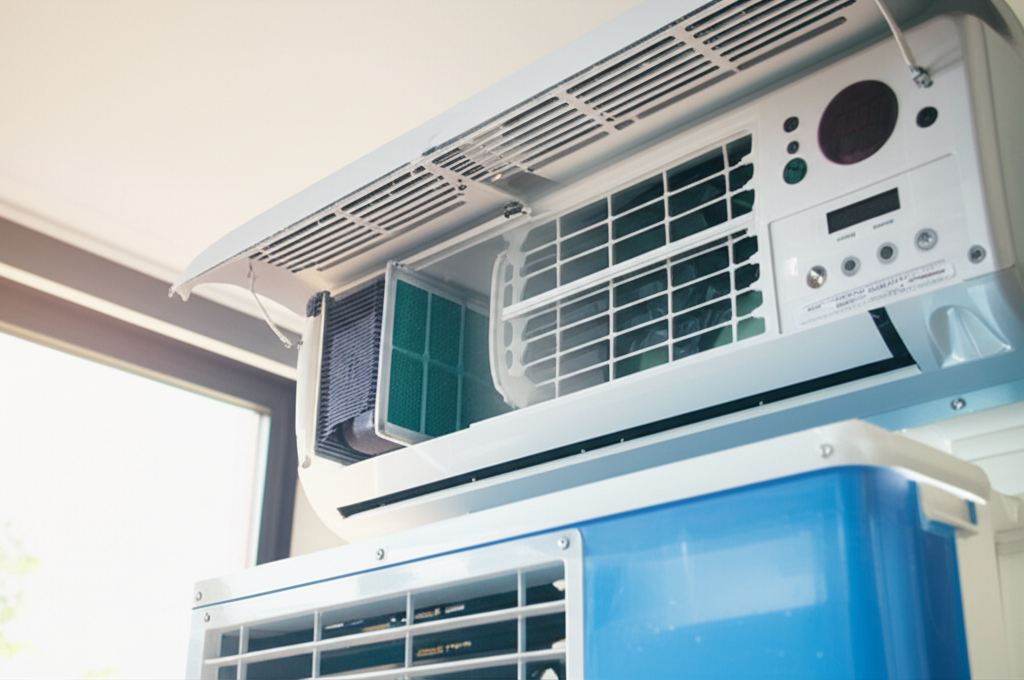
Evaporative coolers (swamp coolers) use simple physics: pulling hot air through water-soaked pads. As water evaporates, it cools the air naturally, much like sweating cools your skin. They use far less energy than traditional ACs!
Are you tired of confusing air conditioner manuals? Do high energy bills make you sweat even when the AC is on? I get it. Learning about cooling systems can feel like studying for a tough test.
But don’t worry, my friend. I’m Jack from ACReviewHub.com, and I’m here to make this super simple. We will break down the mystery behind evaporative coolers today.
By the end of this guide, you will know exactly how these amazing machines work and if they are right for your home. Let’s get cool!
What Exactly Is an Evaporative Cooler? (The Swamp Cooler Secret)
An evaporative cooler sounds fancy, but it is really just a big fan and a water system. People sometimes call them “swamp coolers,” but there’s nothing swampy about the cool air they produce!
These units are popular in dry climates because they use nature’s own cooling trick. Think about getting out of a swimming pool on a windy day. You feel instantly cooler, right?
That cooling effect is the magic we are talking about here. It’s all based on the process of evaporation.
The Simple Science: How Water Makes Things Cold
Evaporation is when liquid water turns into invisible water vapor (a gas). To make this switch, the water needs energy.
Where does it get this energy? It pulls that energy, which is heat, right out of the surrounding air.
When the heat is sucked out of the air to help the water evaporate, the air temperature drops significantly. That’s why they are so effective when the air is dry.
The Three Main Parts of an Evaporative Cooler
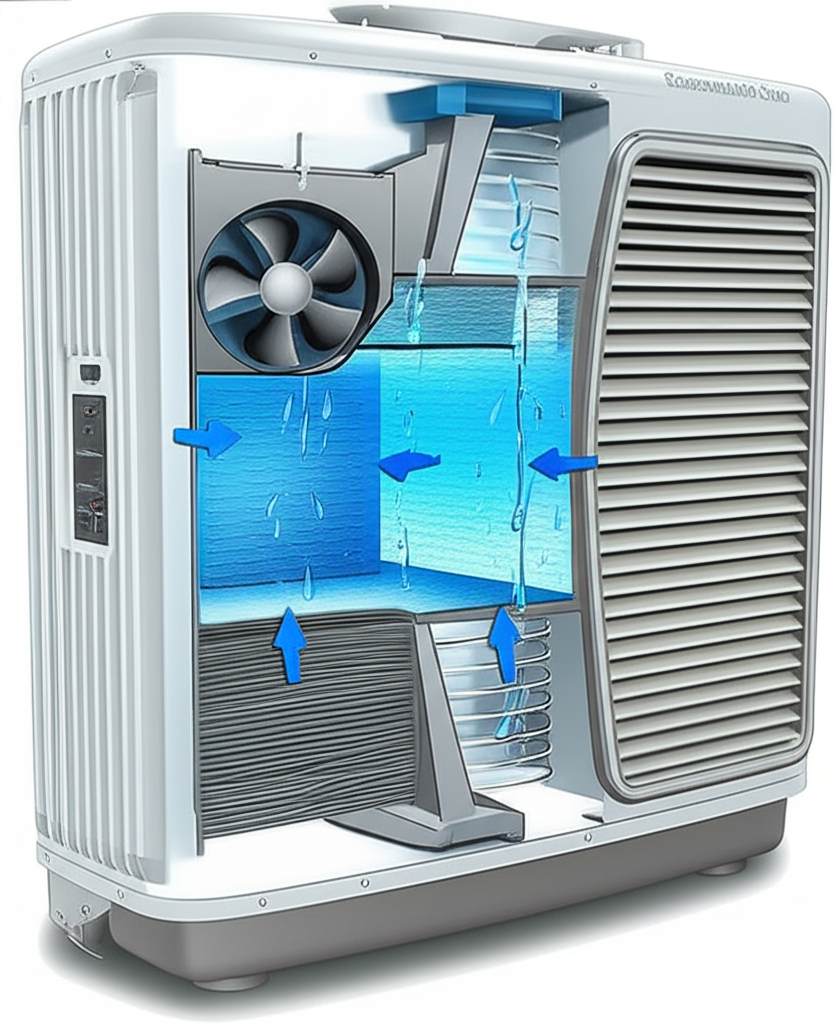
Every evaporative cooler needs three simple things to make cold air happen. You can picture this easily:
- Water Reservoir (or Sump): This is the tub that holds the cool water supply for the system.
- Cooling Pads: These are thick, fibrous pads that soak up the water, acting like giant sponges.
- Fan/Blower: This powerful fan sucks the hot outside air through the wet pads and pushes the newly cooled air into your home.
Step-by-Step: How Your Evaporative Cooler Cools Your House
Let’s walk through the cooling cycle. It is much easier than you think. Remember, this only works best when the outside air isn’t too humid!
Here is the simple flow of air and water:
- The Pump Starts: A small pump pulls water from the bottom reservoir.
- Pads Get Soaked: The pump pushes this water up and over the thick cooling pads, soaking them completely.
- Air Gets Sucked In: The large fan turns on and pulls the hot, dry outdoor air into the unit.
- The Magic Happens: As the hot air passes through the damp pads, the water evaporates, stealing the heat from the air.
- Cool Air Blows Out: The fan pushes the now cooler, moister air into your living space.
Evaporative vs. Traditional Air Conditioning: A Quick Look
It’s important to know that these are not the same as the big box AC units you see outside. Traditional ACs use chemicals (refrigerants) to move heat out of your house. Evaporative coolers just use water.
This difference makes a big impact on your bills and the environment.
| Feature | Evaporative Cooler (Swamp Cooler) | Traditional AC (Compressor-Based) |
|---|---|---|
| Cooling Method | Water Evaporation (Natural) | Refrigerant Cycle (Chemical) |
| Energy Use | Very Low (Mostly just a fan/pump) | High (Compressor uses a lot of power) |
| Humidity Effect | Adds moisture to the air (Great for dry climates) | Removes moisture from the air (Necessary in humid climates) |
Setting Up for Success: Where to Place Your Cooler
If you are setting up a new portable unit, placement is key to getting maximum cooling power. Think about where the air needs to go.
Here are the best practices for setting up your evaporative cooler:
- Use a Dry Window: Always place portable units near an open window or door so the hot, stale air has a way to escape.
- Don’t Trap the Air: If the hot air can’t leave, the cooler just pushes warm, humid air around your room.
- Face the Right Way: Ideally, place the unit so it draws air from the coolest, shadiest side of the house.
- Keep it Level: Make sure the unit sits flat so the water pump distributes moisture evenly across the pads.
Essential Maintenance Tips to Keep Cooling Strong
Evaporative coolers are simple, but they need regular care, especially because water is involved. If you skip maintenance, you will get less cool air and maybe even some funky smells.
Follow this easy maintenance schedule to save money and stay comfortable:
- Daily Check: Make sure the water level is correct and the pump is running smoothly.
- Weekly Cleaning: Drain the old water and rinse out the reservoir to prevent mineral buildup or algae growth.
- Monthly Pad Check: Look at the cooling pads. If they look crusty or dirty, give them a good scrub or replace them if they are falling apart.
- End-of-Season Prep: Before storing for winter, completely drain the system, clean everything thoroughly, and let the pads dry out completely to prevent mildew.
Troubleshooting Common Beginner Issues
Sometimes things don’t work perfectly right away. Don’t panic! Most issues are easy fixes once you know what to look for.
| Symptom | Most Likely Cause | Quick Fix |
|---|---|---|
| Air is warm, not cool | Pads are too dry, or outside air is too humid. | Check water level; wait for a drier day or use a dehumidifier nearby. |
| Unit smells musty or swampy | Water hasn’t been changed frequently enough. | Drain the sump completely and scrub it clean with mild soap. |
| Water is leaking onto the floor | The unit is not sitting level, or the fill line is too high. | Adjust the feet so the unit is perfectly level. |
For deeper technical guidance on water efficiency, you can check out resources from the U.S. Department of Energy on evaporative cooling technologies. Visit Energy.gov for official tips.
When Should You Choose an Evaporative Cooler? (The Right Climate)
This is the most important question! Evaporative coolers shine brightly in one specific environment. If you live somewhere hot and dry, this is your energy-saving champion.
They work best when the relative humidity is below 50%. If the air is already damp, the water has nowhere to evaporate into, and the unit just blows warm, wet air.
Consider these factors when making your choice:
- Low Humidity Areas: Ideal for deserts, Southwest US, and high plains regions.
- High Humidity Areas: Skip it! You need a traditional AC to dehumidify the air.
- Energy Savings Goal: If saving electricity is your top goal, evaporative cooling is usually cheaper to run.
You can find good, independent reviews on performance based on local climate zones. Consumer Reports often tests these units.
Three Common Mistakes Beginners Make with Swamp Coolers
I’ve seen people sabotage their cooling power by making these small, easy-to-fix mistakes. Let’s avoid them together:
- Forgetting to Open a Window: This is the biggest mistake. If you close all the windows, you trap the humid air inside, and the cooling stops working effectively. Always ensure at least one window or door is cracked open.
- Using It in a Humid Basement: Basements are often damp already. Adding more moisture via an evaporative cooler will make the space feel sticky and uncomfortable.
- Not Changing the Water Enough: Stagnant water breeds bacteria and deposits minerals that clog the pads. Think of it like changing the water in a fish tank—it needs refreshing!
Wrapping Up: Stay Cool, Stay Simple
See? That wasn’t so complicated! Evaporative coolers are clever, efficient machines that use simple physics to bring you relief during hot, dry spells.
The secret is making sure the water flows, the pads stay clean, and you always give that warm, stale air an easy exit route.
Keep up with those small, weekly cleaning habits, and your evaporative cooler will be your best friend all summer long. Happy cooling!
Frequently Asked Questions (FAQs)
Do evaporative coolers use a lot of electricity?
Nope! They use significantly less power than standard air conditioners because they only run a fan and a small water pump, not a big compressor.
Can I use an evaporative cooler if I live somewhere humid?
Generally, no. If the humidity is high (above 50-60%), the air is already saturated with moisture, and the water won’t evaporate enough to cool you down.
How often should I replace the cooling pads?
Check them monthly during the cooling season. If they look stiff, crusty, or start smelling, it’s time to swap them out—usually once a year before summer starts.
Do I need to keep a window open when running it?
Yes, absolutely! You must have an exhaust path for the air. Open a window or door on the opposite side of the room so the hot, used air can leave.
Is the water safe to breathe?
Yes, the air is just water vapor. However, if you don’t clean the unit, the water can grow mildew or bacteria, which you shouldn’t breathe in. Regular cleaning solves this!
How much cooler will the air actually feel?
In ideal, dry conditions, you can expect a temperature drop of 15 to 30 degrees Fahrenheit! That’s a huge difference.
