
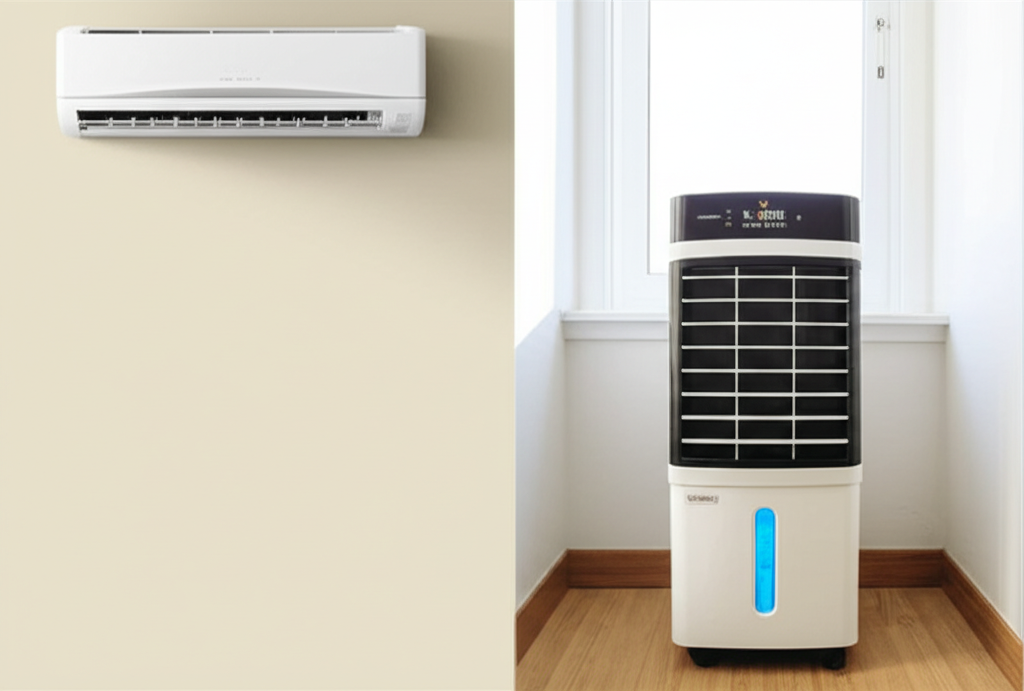
Quick Summary: For small rooms, a Split AC offers superior, consistent cooling and better humidity control, making it the better long-term investment, even though an Air Cooler is cheaper upfront.
Are you staring at two boxes in the store? One says “Air Cooler,” and the other says “Split AC.” Picking the right one for your small room can feel super confusing. You want cool air without huge electric bills. Don’t worry one bit. I am Jack from ACReviewHub.com, and I will break down the real differences. We will look at cost, cooling power, and what works best when the heat is really on. Let’s find your perfect cooling buddy today.
Air Cooler Vs Split AC: The Brutal Truth for Small Spaces
When picking a cooler for a small room, you have two main paths. One is cheap and easy. The other costs more upfront but works much better when it is very hot outside. We need to look closely at what each machine actually does to the air in your room.
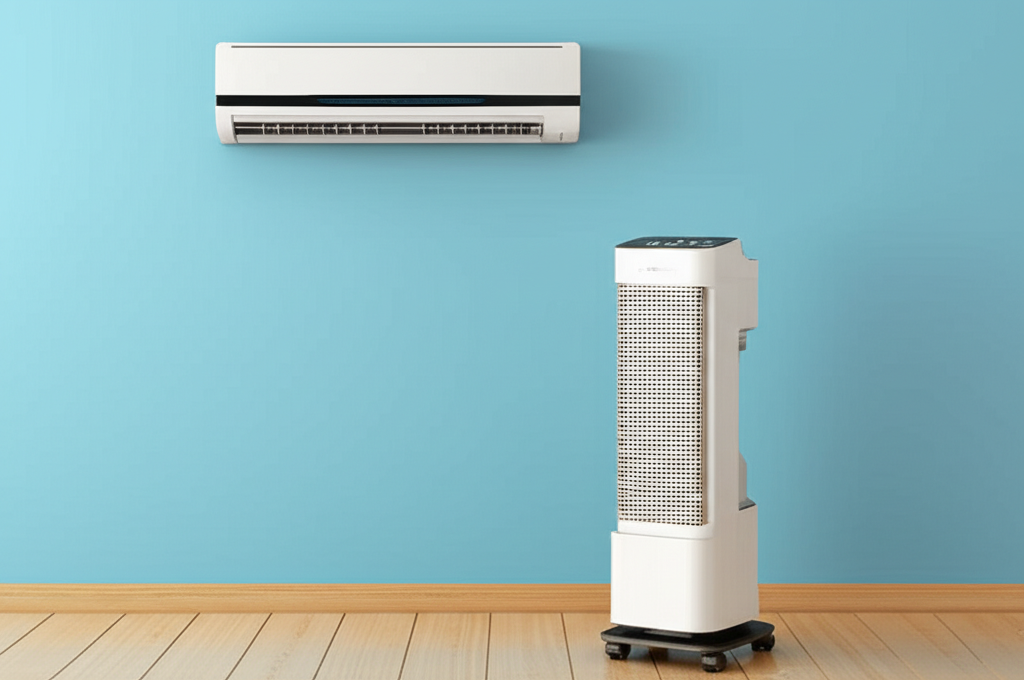
What is an Air Cooler (Evaporative Cooler)?
An air cooler is a simple machine. It does not use any harsh chemicals or refrigerants like a real AC unit. Think of it like a swamp cooler. It cools air by evaporating water into the room. This is great for dry heat.
How Does an Air Cooler Cool Your Room?
- It pulls warm air from the back of the unit.
- The air passes over water-soaked pads.
- The water turns into vapor, which lowers the air temperature.
- The cooler, moist air blows out into your room.
The biggest catch here is humidity. If your area is already humid, the cooler just adds more wetness to the air. This makes the room feel sticky and muggy, not cool.
What is a Split AC (Air Conditioner)?
A Split AC is a real cooling machine. It moves heat from inside your room to the outside. It uses a special gas called refrigerant to do this job. This process removes both heat and moisture from the air.
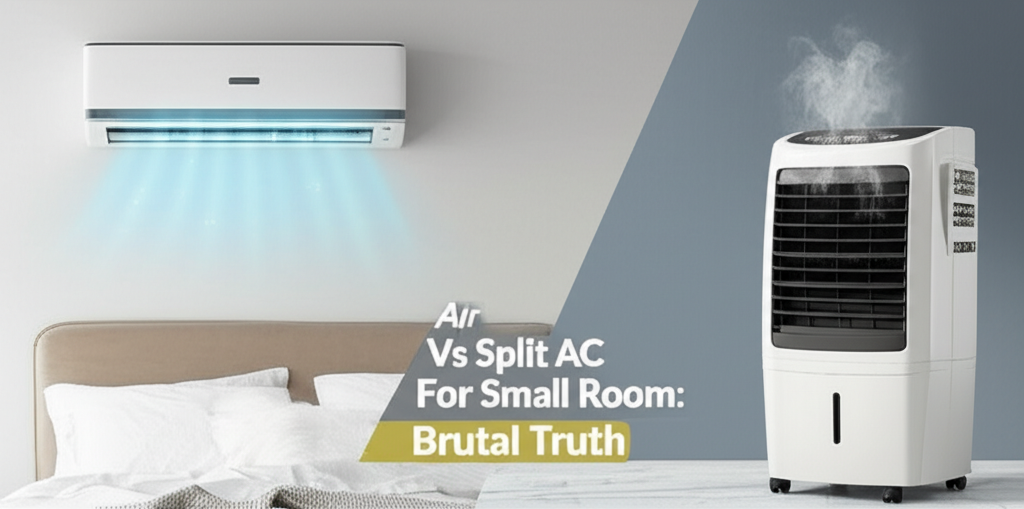
How Does a Split AC Cool Your Room?
- The indoor unit (the one on the wall) sucks in warm, humid air.
- The refrigerant inside cools the air down very quickly.
- It also pulls water out of the air, which is called dehumidification.
- The cold, dry air blows into your room.
Because it removes humidity, a Split AC always feels crisper and more comfortable than a cooler, even at the same temperature setting. This is a huge win for comfort.
The Main Showdown: Cooling Power and Room Size
For a small room, maybe 100 to 150 square feet, power matters. We measure cooling power in BTUs (British Thermal Units).
BTU Guide for Small Rooms (Approx. 10×10 ft to 12×12 ft)
A Split AC needs the right size. Too small, and it runs all day, wasting power. Too big, and it cools too fast, making the room damp.
| Room Size (Sq. Ft.) | Recommended AC Capacity (BTU) | Best Cooling Type |
|---|---|---|
| 100 – 150 Sq. Ft. | 6,000 to 8,000 BTU | Split AC or Window AC |
| 150 – 250 Sq. Ft. | 9,000 to 10,000 BTU | Split AC Recommended |
Air coolers do not use BTUs the same way. They cool the air that passes through them, but they cannot handle a sealed, small room efficiently against strong outside heat like an AC can.
Humidity Check: When Does It Matter Most?
This is the key difference for comfort. If you live somewhere that is hot AND sticky (high humidity), an Air Cooler will fail you. It will just make the room feel like a sauna.
A Split AC is designed to fix this. It dehumidifies the air as it cools. This is why you feel much colder when an AC is running, even if the temperature setting is higher than what a cooler might manage.
If you live in a dry area, like parts of Rajasthan or Arizona, an Air Cooler might be a fantastic, low-cost option for you. But for most places in India, where monsoon seasons bring high humidity, the AC wins easily.
Money Talk: Initial Cost vs. Running Cost
We all watch our wallets. Let’s compare what you pay now versus what you pay next month.
Upfront Purchase Price
Air Coolers are much cheaper to buy. You might spend 20% of what a basic 1-ton Split AC costs. This is a big attraction for renters or those on a tight budget.
Monthly Electricity Bill
This is where the Split AC starts to look better. A good 3-star or 5-star rated Split AC uses electricity efficiently. Because it cools the air faster and maintains the temperature, it often cycles on and off, saving energy.
An Air Cooler runs continuously. It uses less power per hour than an AC, but since it has to run constantly to keep you barely comfortable in hot weather, the total running cost can sometimes surprise you, especially when you factor in the discomfort.
Installation and Portability
Split ACs require professional installation. You need an outdoor unit, copper piping, and draining for the water. This adds to the initial cost.
Air Coolers are plug-and-play. You fill the water tank, plug it in, and turn it on. You can move it easily between rooms.
For a beginner, the simplicity of the Air Cooler setup is appealing. But remember, an AC provides a permanent, powerful cooling solution.
Choosing the Right Machine: Jack’s Simple Checklist
Before you swipe that card, ask yourself these three simple questions. Your answers will point you to the right machine.
- What is my local weather like? If it’s dry (low humidity), lean toward the Cooler. If it’s sticky (high humidity), you must get the Split AC.
- What is my budget for setup? If you need cooling right now for cheap, the Cooler is the easy choice. If you can invest for long-term comfort, choose the AC.
- Do I need consistent, deep cooling? Split ACs will always give you a stable, cool room, regardless of how hot it gets outside. Coolers struggle when temperatures go above 38°C (100°F).
For a small room that you use regularly, the Split AC provides a much better, healthier cooling experience. For quick, temporary relief in very dry heat, the Cooler is fine.
For more on understanding AC efficiency ratings, check out the official guidance from the Bureau of Energy Efficiency (BEE) in India (or your local energy authority if you are elsewhere).
Common Beginner Mistakes to Avoid
Many people buy the wrong machine or use it incorrectly. Here are the top three mistakes I see beginners make:
| Symptom/Problem | Likely Cause | Quick Fix |
|---|---|---|
| AC isn’t cold enough. | Dirty filter or low refrigerant. | Clean the filter immediately. Call a technician if cleaning doesn’t help. |
| Air Cooler makes the room muggy. | High outside humidity. | Stop using the cooler or open a window slightly to vent moist air. |
| High electric bill on the AC. | Setting the temperature too low (e.g., 16°C). | Set it to 24°C or 25°C. It cools just as well but uses much less power. |
Mistake number one with Air Coolers is forgetting to add water! They only blow warm air if the tank is empty. Mistake number two with ACs is running them with windows or doors wide open—you are just cooling the whole neighborhood!
Frequently Asked Questions (FAQs) for New AC Owners
Here are quick answers to the things I hear most often:
Q1: Can I use a Split AC without professional installation?
No. Please do not try this. Split ACs need precise piping and vacuuming to work safely and efficiently. Hire a certified technician.
Q2: How often should I clean my Split AC filter?
Once every two weeks if you use it daily. Dirty filters block airflow and waste a lot of energy.
Q3: Will an Air Cooler work in heavy rain or high humidity?
Not well at all. It will struggle to drop the temperature and will just make things feel swampy.
Q4: Which one is better for my small bedroom at night?
The Split AC, set to a comfortable 25°C, will give you deeper, quieter, and more consistent sleep because it handles humidity.
Q5: Do Air Coolers need constant ventilation?
Yes, they do! You must keep a window slightly open when using a cooler so that the humid air can escape. Otherwise, the room gets saturated.
Q6: Is a 1-star Split AC okay to buy?
If you can stretch your budget, always go for 3-star or 5-star ratings. The energy savings over two years will easily pay back the slightly higher initial cost.
Final Thoughts on Cooling Your Small Space
Choosing between an Air Cooler and a Split AC for your small room boils down to climate and budget priority. If you need real, dependable cooling that fights stickiness, the Split AC is the clear winner, despite the higher initial cost.
Remember, good cooling is about consistency and comfort, not just the lowest price tag. Stick to simple cleaning routines for your filter, and your AC will repay you with years of cool, comfortable air. Stay cool out there!
