
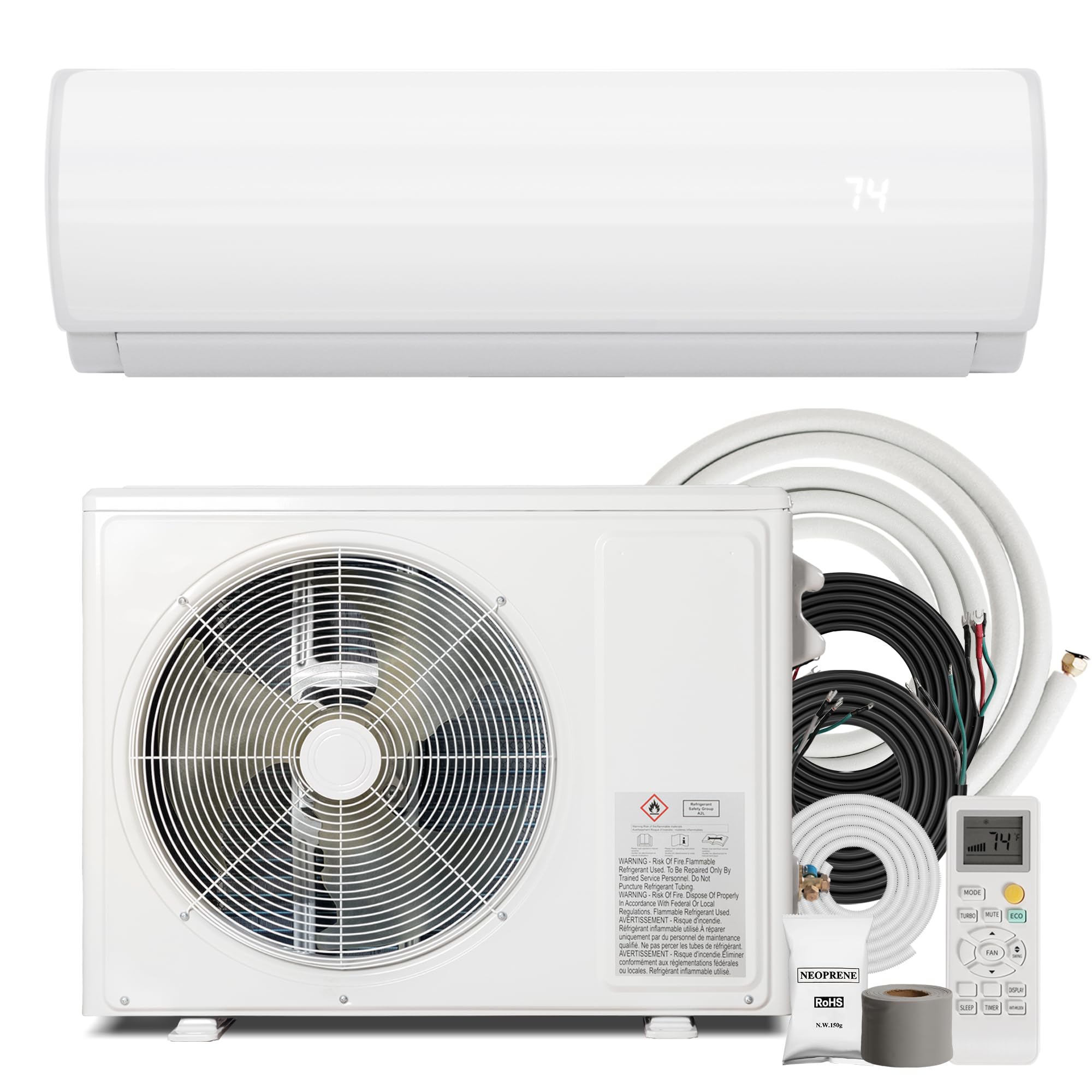
12000BTU Mini Split Air
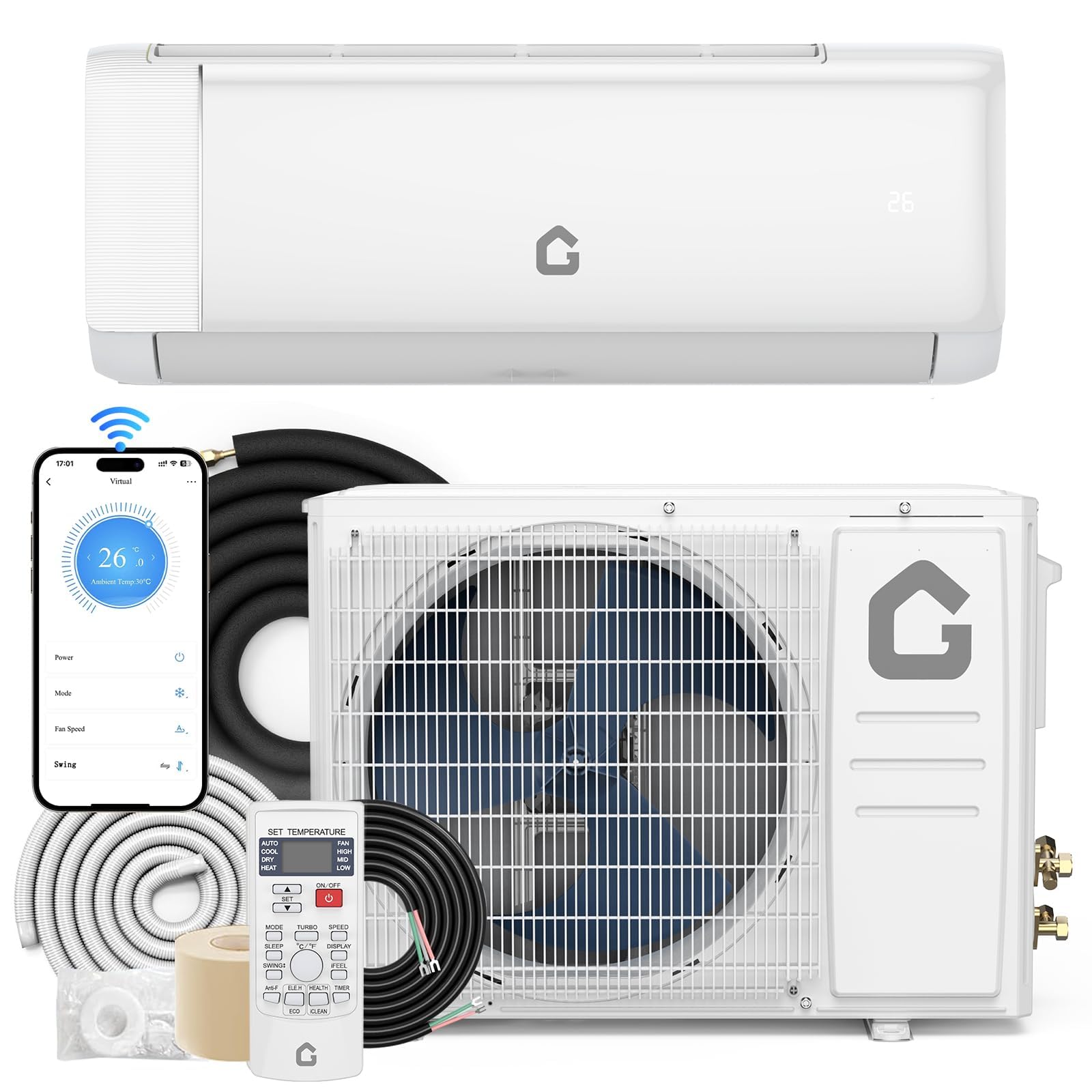
18000 BTU Mini Split
Choosing the right mini-split air conditioner can feel like a puzzle, especially when you’re faced with two seemingly similar options that promise to keep your home comfortable all year round. We’ve all been there, staring at product pages, trying to decipher the differences between models, and wondering which one will truly meet our needs without breaking the bank or leaving us with buyer’s remorse. Today, we’re diving deep into two popular contenders on Amazon: the 12000BTU Mini Split Air and the 18000 BTU Mini Split.
Both of these units are designed to offer powerful cooling and heating capabilities, utilizing inverter technology for efficiency and year-round comfort. They aim to be a more sophisticated alternative to traditional window units or even central air systems for specific zones. But with different BTU ratings and feature sets, how do they stack up against each other? This comparison is for anyone who’s feeling overwhelmed by the choices and wants a clear, straightforward breakdown to help make an informed decision. We’ll explore their core features, analyze their strengths and weaknesses, and look at what real users are saying.
By the end of this article, you’ll have a much clearer picture of which of these mini-splits is the better fit for your home, your budget, and your comfort expectations. We’ll cover everything from coverage area and energy efficiency to specialized functions and operational noise, so you can stop guessing and start cooling (or heating!).
In-Depth Look: 12000BTU Mini Split Air
Let’s start by taking a closer look at the 12000BTU Mini Split Air, a unit designed to provide robust climate control for moderate-sized spaces. The “1 Ton” classification, which aligns with its 12,000 BTU rating, suggests it’s well-suited for single rooms, apartments, or specific zones within a larger home. Its core promise is year-round comfort, achieved through its powerful inverter compressor and heat pump system, which means it’s not just for beating the summer heat but also for keeping you warm when the temperatures drop.
The advanced inverter technology is a key selling point here. Unlike older, single-speed compressors that constantly cycle on and off, inverter technology allows the compressor to adjust its speed based on the cooling or heating demand. This translates to more stable temperatures, quieter operation, and, importantly, significant energy savings. The 19 SEER2 rating indicates a good level of energy efficiency for cooling, meaning it uses less electricity to achieve your desired temperature compared to lower-rated units.
One of the standout features for the 12000BTU Mini Split Air is its extensive coverage area, capable of efficiently cooling or heating rooms up to 750 square feet. This makes it a versatile option for a master bedroom, a living room, a home office, or even a small apartment. It also utilizes R32 refrigerant, which is known for its lower global warming potential compared to older refrigerants like R410A, aligning with more environmentally conscious choices.
Beyond the primary cooling and heating functions, this unit offers a suite of versatile modes to tailor your comfort. You get the standard Cooling, Heating, Auto (which intelligently switches between modes), Fan (for air circulation), and Dry (to reduce humidity). Added convenience comes in the form of a 24-hour timer, a Sleep Mode that gradually adjusts temperature for a restful night, and an Eco Mode for further energy conservation. The Turbo Boost function is a nice touch for when you need to quickly reach your desired temperature.
The emphasis on “whisper-quiet operation” is another significant advantage. In today’s world, where peace and quiet are often at a premium, a unit that operates with minimal noise is a huge plus. This makes the 12000BTU Mini Split Air an excellent candidate for bedrooms, nurseries, or any space where noise can be disruptive. Furthermore, built-in features like mildew protection and automatic defrosting add to its practicality and longevity, ensuring consistent performance even in varying conditions and reducing the need for frequent maintenance.
Pros of the 12000BTU Mini Split Air:
- Excellent year-round climate control with inverter technology.
- Wide coverage area suitable for many common room sizes (up to 750 sq.ft.).
- Energy-efficient with a 19 SEER2 rating and R32 refrigerant.
- Multiple operational modes and convenience features (timer, sleep mode, eco mode).
- Very quiet operation, ideal for noise-sensitive environments.
- Includes helpful maintenance features like mildew protection and self-defrosting.
Cons of the 12000BTU Mini Split Air:
- Does not include smart connectivity features like WiFi or app control.
- Some customer reviews mentioned issues with receiving incomplete packages (missing outdoor unit or installation kit), though this might be an isolated issue.
- SEER2 rating is provided, but other efficiency metrics might be beneficial for comparison.
Customer Reviews for 12000BTU Mini Split Air:
One customer shared their experience: “I bought this unit to replace a 24,000 BTU unit that had given us years of good service but was icing under use and dripping water on our floor. I decided to replace it rather than chase the R22 pressures and whatever other issues were going on. I bought this 18,000 BTU unit hoping it would be enough to replace the more powerful previous unit. It came quickly and was well packaged. Everything on this unit was well packaged, the directions were clear, and all wiring marked and terminated.” This review is interesting because it mentions replacing a larger unit with this one and being satisfied with its performance, highlighting the effectiveness of modern, efficient units.
Another DIY enthusiast noted: “We are diy’ers but not pros and this unit was very easy to install. We bought a vacuum pump for $100 to save the cost of having a pro come and pressure test it. Our temps reached -4 last night and it stayed warm. Came with a couple of dents but the sellers gave us some money off and an extra remote control in case we lost ours as it is the only way to control the unit. Highly recommend.” This testimony speaks volumes about the ease of installation for those comfortable with DIY, the unit’s ability to perform in cold weather, and the seller’s responsiveness to issues.
However, a less positive review highlighted a significant problem: “Didn’t get the outside unit or installation kit. Only received the inside unit. Box read 1 of 2 packages. Never received the 2nd package outside unit or installation kit.” This indicates a potential issue with shipping or packaging that needs to be considered, though it’s crucial to note that this could be a rare occurrence.
Best for: The 12000BTU Mini Split Air is an excellent choice for homeowners or renters looking to efficiently condition a single room or a smaller living space (up to 750 sq.ft.). It’s ideal for bedrooms, home offices, or living areas where quiet operation and reliable year-round comfort are paramount, and smart home integration isn’t a primary requirement. It’s also a strong contender for those who are comfortable with some level of DIY installation and want to potentially save on professional setup costs.
In-Depth Look: 18000 BTU Mini Split
Now, let’s shift our focus to the 18000 BTU Mini Split, a more powerful option designed for larger areas or even multiple zones if configured correctly. With an 18,000 BTU capacity, this unit is engineered to tackle bigger challenges, making it suitable for larger living rooms, open-plan spaces, or even smaller apartments where one unit needs to do a lot of heavy lifting. The claim of cooling and heating up to 1,250 sq.ft. immediately tells us this is a unit built for substantial coverage.
Like its smaller counterpart, this 18000 BTU Mini Split boasts advanced inverter technology and a high-efficiency compressor, which are critical for managing its larger output while striving for energy savings. The fact that it’s ETL & AHRI certified is a significant mark of quality and performance verification, assuring you that it meets rigorous industry standards for safety and efficiency. The promise of saving up to 25% energy is compelling, especially for a unit with this much power.
A standout feature of the 18000 BTU Mini Split is its comprehensive 5-in-1 operation, which includes not just the standard Cooling, Heating, Dry, and Fan modes, but also an Auto mode. What sets it apart further are the modern smart features. With WiFi app control, you can manage your home’s climate from anywhere using your smartphone. This is a game-changer for convenience, allowing you to pre-cool your home before you arrive or turn it off remotely to save energy. The inclusion of an iFEEL sensor is also noteworthy; this intelligent sensor can detect the ambient temperature around the remote control and adjust the room temperature accordingly, aiming for more precise comfort in your immediate vicinity.
This unit is built for all-weather performance, capable of operating reliably in extreme temperatures ranging from a frigid -4°F (-20°C) to a scorching 140°F (60°C). This wide operational range ensures it can handle even the harshest winter chills and the most oppressive summer heatwaves. The 4D airflow and anti-dead wind design are engineered to distribute conditioned air evenly throughout the space, reaching up to 50 feet. This means fewer cold or hot spots and a more uniform temperature experience across the entire covered area.
When it comes to noise levels, the 18000 BTU Mini Split is also designed for quiet comfort, with operation as low as 41 dB. This is exceptionally quiet, comparable to the rustling of leaves, making it suitable for living areas and bedrooms alike. The auto-dimming remote adds another layer of user-friendly design, especially for nighttime use, preventing bright lights from disturbing sleep. The inclusion of timers allows for scheduled operation, further enhancing efficiency and convenience.
The self-cleaning function is a significant maintenance advantage, helping to keep the indoor unit clean and prevent the buildup of bacteria and odors. Coupled with the auto defrost feature, this unit is designed to be low-maintenance and reliable. The mention of “HEALTH air purification” with negative ions and PM2.5 removal is a bonus for those concerned about indoor air quality. The complete kit shipping in two packages, including a 13ft line set, drain hose, and all necessary cables, simplifies professional installation.
Pros of the 18000 BTU Mini Split:
- Higher capacity (18,000 BTU) for larger spaces (up to 1,250 sq.ft.).
- ETL & AHRI certified for verified performance and safety.
- Advanced smart features with WiFi/app control for remote operation.
- iFEEL sensor for more precise temperature control based on remote location.
- Wide operational temperature range for extreme weather conditions.
- Effective 4D airflow ensures even temperature distribution.
- Very quiet operation with advanced noise reduction.
- Includes a self-cleaning function and air purification features.
- Comprehensive installation kit included.
Cons of the 18000 BTU Mini Split:
- SEER2 rating is not explicitly mentioned, making direct energy efficiency comparison slightly harder without further research.
- No customer reviews are readily available on the product page at the time of writing, making it harder to gauge real-world user experiences.
- The 18,000 BTU capacity might be overkill for smaller rooms, potentially leading to inefficient operation or short cycling if not sized correctly.
Customer Reviews for 18000 BTU Mini Split:
Unfortunately, at the time of this review, there were no customer reviews available for the 18000 BTU Mini Split. This can sometimes happen with newer listings or products that haven’t been widely purchased and reviewed yet. While this means we lack direct user feedback, it also means there are no negative experiences to report from existing customers. The ETL and AHRI certifications provide a good baseline of trust in its performance and safety standards.
Best for: The 18000 BTU Mini Split is the ideal choice for larger rooms, open-plan living areas, or spaces up to 1,250 sq.ft. that require significant cooling and heating power. It’s also perfect for individuals or families who value smart home technology and the convenience of remote control via a smartphone app. If you live in an area with extreme temperature variations and need a unit that can consistently perform, this model is a strong contender. It’s also a great option if you’re looking for advanced features like air purification and intelligent temperature sensing.
Head-to-Head Comparison
When we pit the 12000BTU Mini Split Air against the 18000 BTU Mini Split, several key differences emerge, guiding you toward the unit that best suits your specific needs.
Capacity and Coverage Area
This is the most fundamental difference. The 12000BTU Mini Split Air is designed for spaces up to 750 sq.ft., making it a perfect fit for single rooms or smaller living areas. In contrast, the 18000 BTU Mini Split significantly expands this coverage to 1,250 sq.ft., making it suitable for much larger rooms, open-concept living spaces, or even larger apartments. Choosing the right capacity is crucial for efficiency; an oversized unit can lead to short cycling and uneven temperatures, while an undersized one will struggle to maintain comfort. For anyone needing to condition a larger area, the 18000 BTU unit is the clear winner here.
Smart Technology and Connectivity
The 18000 BTU Mini Split truly shines in this regard. Its inclusion of WiFi and smartphone app control offers a level of modern convenience that the 12000BTU Mini Split Air simply doesn’t provide. The ability to manage your thermostat remotely is a significant advantage for energy savings and comfort. If being able to adjust settings from your phone or integrate with a smart home ecosystem is a priority, the 18000 BTU Mini Split is the obvious choice. The 12000BTU model relies solely on its physical remote control and onboard functions.
Advanced Features
The 18000 BTU Mini Split comes with a few extra bells and whistles. The iFEEL sensor, for instance, offers a more nuanced approach to temperature control by sensing the environment around the remote. It also boasts a self-cleaning function and enhanced air purification features. While the 12000BTU unit has excellent core functionality with its various modes and sleep/eco settings, the 18000 BTU model leans more into advanced comfort and convenience technologies.
Energy Efficiency Indicators
The 12000BTU Mini Split Air proudly displays a 19 SEER2 rating, giving a clear benchmark for its cooling efficiency. While the 18000 BTU Mini Split claims up to 25% energy savings and is ETL & AHRI certified, the absence of a specific SEER2 rating makes direct comparison a little less straightforward. However, both units feature inverter technology, which is the cornerstone of modern energy efficiency in HVAC systems. The AHRI certification on the 18000 BTU unit is a strong indicator of reliable efficiency, so while the numbers might differ, both are likely to be efficient performers.
Real-World User Feedback
At the time of review, the 12000BTU Mini Split Air has some customer reviews, including praise for ease of installation and cold-weather performance, but also a concerning report about incomplete shipments. The 18000 BTU Mini Split, on the other hand, has no user reviews yet. This means you’re relying more on manufacturer specifications and certifications for the 18000 BTU model, whereas the 12000BTU model has some early user experiences, both positive and cautionary, to consider. This lack of reviews for the 18000 BTU unit might be a deterrent for some buyers who prefer to see real-world feedback before purchasing.
Price Point (General Assumption)
While exact prices fluctuate on Amazon, it’s generally safe to assume that a higher BTU unit with more advanced features (like WiFi control) will typically come with a higher price tag. Therefore, the 18000 BTU Mini Split is likely to be more expensive than the 12000BTU Mini Split Air. This makes budget a significant factor. If your needs are met by the 12000BTU unit and you don’t require smart features, it might offer better value.
Frequently Asked Questions
Q: Which unit is better for a single bedroom?
A: For a single bedroom, the 12000BTU Mini Split Air is generally the more appropriate choice. Its 12,000 BTU capacity is designed for rooms up to 750 sq.ft., which typically covers most bedrooms. Using a unit that’s too large, like the 18000 BTU Mini Split, can lead to inefficient operation and temperature swings. If your bedroom is exceptionally large or poorly insulated, you might consider the 18000 BTU unit, but for standard room sizes, the 12000BTU model is ideal.
Q: Can I install these mini-splits myself?
A: Both units are marketed with DIY installation in mind, as indicated by positive customer feedback on the ease of installation for the 12000BTU Mini Split Air. However, mini-split installation requires specific tools and knowledge, such as vacuum pumps for pressure testing refrigerant lines. While DIY is possible, it’s crucial to follow the instructions carefully or consult our guide on how to install a mini-split AC to ensure proper function and safety. Professional installation is always recommended for optimal performance and to maintain warranties.
Q: Which unit is more energy-efficient?
A: The 12000BTU Mini Split Air has a clearly stated 19 SEER2 rating, which is a good indicator of its cooling efficiency. The 18000 BTU Mini Split is ETL & AHRI certified and boasts energy savings, but a specific SEER2 rating isn’t listed. Both units feature inverter technology, a major factor in energy efficiency. Without the specific SEER2 for the 18000 BTU unit, it’s difficult to declare a definitive winner. However, for its size, the 12000BTU unit presents a strong efficiency profile. Ultimately, proper sizing for your space is the biggest determinant of energy efficiency, regardless of the model.
Q: Does either unit provide fresh outside air?
A: Standard mini-split air conditioners, including both the 12000BTU Mini Split Air and the 18000 BTU Mini Split, are primarily designed for recirculating and conditioning the air within a closed space. They do not bring in fresh outside air. If you’re looking for ventilation, you might need to supplement with other methods or consider specialized ventilation systems. For more on this, you can read about whether mini-splits bring fresh air.
Q: What is the significance of R32 refrigerant?
A: R32 refrigerant, used in the 12000BTU Mini Split Air, is considered an environmentally friendlier option compared to older refrigerants like R410A. It has a lower global warming potential (GWP), meaning it contributes less to climate change if it leaks into the atmosphere. It is also more energy-efficient, as it requires less refrigerant charge for the same cooling output. While the refrigerant type for the 18000 BTU Mini Split isn’t explicitly stated, R32 is becoming the industry standard for new installations due to these benefits.
Q: How do these compare to a window AC unit?
A: Mini-split systems like these are generally more energy-efficient, quieter, and aesthetically pleasing than window AC units. They also offer both heating and cooling. Window units are typically less expensive upfront and easier to install for renters or those not wanting permanent installation. For a more detailed look at energy usage, you can explore our comparison of mini-split vs. window AC energy usage.
Final Verdict: Which One Should You Choose?
Deciding between the 12000BTU Mini Split Air and the 18000 BTU Mini Split boils down to understanding the specific needs of your space and your priorities for comfort and technology.
If you’re looking to efficiently condition a single room or a smaller living area up to 750 sq.ft., and quiet operation is a major concern, the 12000BTU Mini Split Air is likely your best bet. It offers robust year-round comfort with a good energy efficiency rating (19 SEER2) and useful features like sleep mode and timers. It’s a solid, no-frills workhorse for targeted climate control, especially if smart home integration isn’t a must-have. While there’s a report of incomplete shipments in customer feedback, the core functionality and performance seem to satisfy many users.
On the other hand, if you have a larger space to cover, up to 1,250 sq.ft., or you simply want more power and advanced features, the 18000 BTU Mini Split is the superior choice. Its higher BTU output, combined with ETL & AHRI certification, promises strong performance even in extreme conditions. The real draw here is the WiFi and smartphone app control, offering unparalleled convenience and the ability to manage your home’s climate from anywhere. The iFEEL sensor, self-cleaning function, and air purification features further elevate its appeal for those seeking a more sophisticated and connected comfort solution. The lack of current customer reviews might be a slight concern, but its certified performance and feature set make it a compelling option.
Ultimately, the choice hinges on size and smarts. For targeted, efficient comfort in smaller spaces without the need for app control, go with the 12000BTU Mini Split Air. For extensive coverage, cutting-edge convenience, and advanced features in larger areas, the 18000 BTU Mini Split is the way to go.
