
Quick Summary: Window AC units do not bring in fresh air from outside. They mostly recirculate and cool the air already inside your room. If you need fresh air, you’ll need to open a window or use a different type of unit.
Are you tired of feeling stuffy even when your air conditioner is running? It’s a common problem many homeowners face. Choosing and using an AC unit can feel confusing with all the technical terms out there. Don’t worry; I’m Jack from ACReviewHub.com, and I’m here to clear up the confusion. Today, we are tackling a big question about those trusty window units: Do they actually cycle in fresh air? Let’s break down exactly how your window AC works so you can stay perfectly comfortable.
The Shocking Truth: Does My Window AC Bring in Outside Air?
This is where many people get tripped up when buying or using a window AC. The simple answer is usually no. Most standard window air conditioners are designed to cool the air that is already trapped inside your room. They don’t have a dedicated mechanism to pull in outside air.
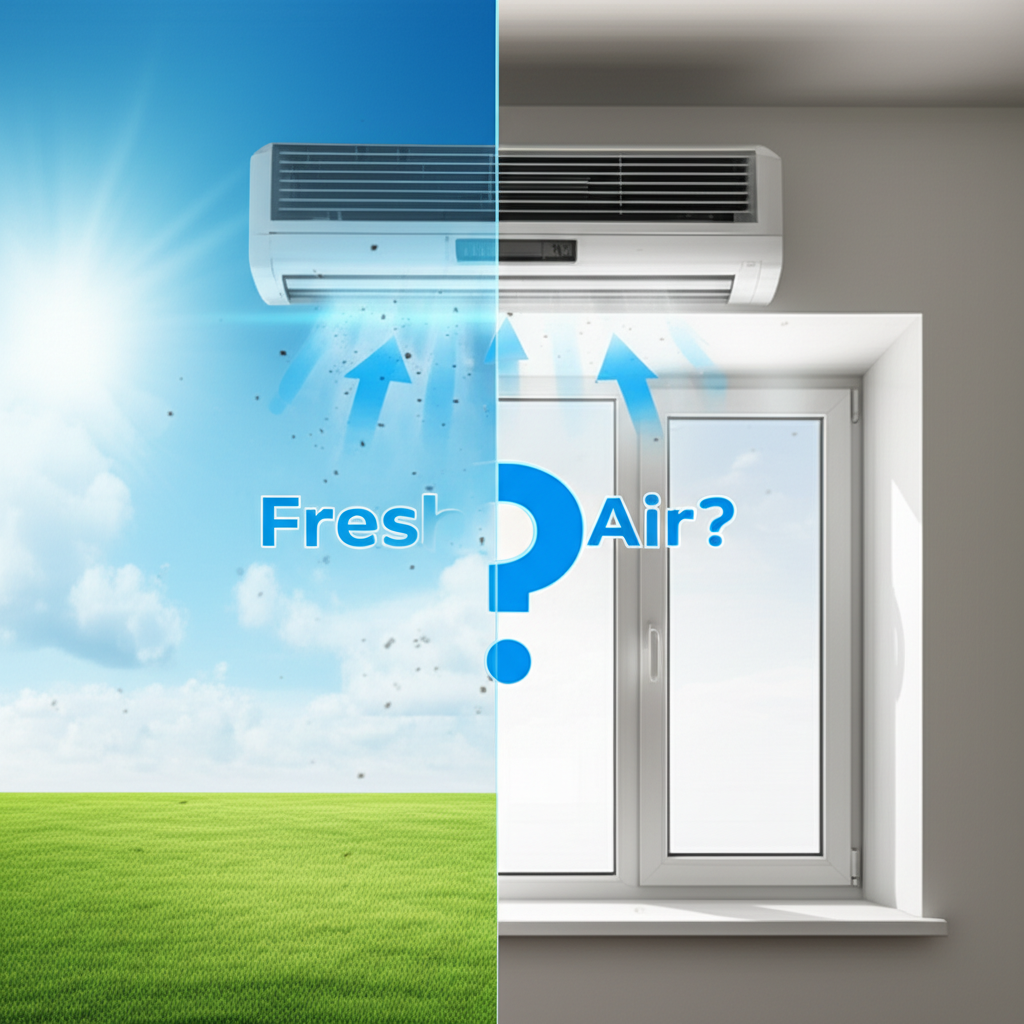
How Your Window AC Handles the Air Inside Your Room
Think of your window AC unit like a recycling machine for air. It takes the warm air from your room and processes it. This is the core function of what we call a “recirculating” system.
The unit sucks in the warm, stale air from the room through the front grille. Inside the machine, coils get very cold. As the warm air passes over these cold coils, the heat is removed, and the air gets chilled. This cool air is then blown back out into the room.
While this process is great for cooling, it means that if your indoor air quality is poor, or if it’s humid outside, the AC just keeps cooling the same old air.
Understanding the Two Sides of Your Window Unit
A window AC unit is split into two halves, even though they are in one box. This separation is key to understanding why it doesn’t bring in fresh air.
- The Cold Side (Evaporator Coil): This part faces your living space. It’s the part that blows out the cold air you feel.
- The Hot Side (Condenser Coil): This part faces the outdoors. It’s responsible for dumping the heat that was taken out of your room into the outside environment.
Because these two sides are sealed off from each other (except for the refrigerant lines running between them), the outside air doesn’t naturally mix with the inside air being cooled.
Why People Think Window ACs Bring in Fresh Air
Sometimes, when you look at the unit sitting in the window, it seems like it must be pulling air from somewhere else. Here’s why that perception happens, and what’s really going on.
The Role of Air Leakage (The Unintended Fresh Air)
While the AC unit itself isn’t designed to pull in fresh air, installation gaps can cause problems. If the unit isn’t sealed perfectly against the window frame, air can sneak in or out around the edges.
This air leakage is usually unwanted. It might bring in humidity, dust, or even bugs. It’s not controlled, fresh ventilation; it’s just a leak that makes your AC work harder.
Ventilation vs. Cooling: Knowing the Difference
Air conditioners are cooling machines; they are not ventilation machines. Ventilation means actively bringing in new air from the outside and pushing stale air out.
If you want true fresh air while keeping the room cool, you have two main options:
- Open a small crack in a window across the room from the AC.
- Use a dedicated ventilation system, like an Energy Recovery Ventilator (ERV).
When Does a Window AC Unit Exchange Air?
There is one special setting on some window units that allows for a slight air exchange, but it’s often confusing to use. It’s called the “Fan Only” mode or sometimes the “Vent” mode.
Exploring the “Vent” or “Exhaust” Setting
Older or more basic window units might have a sliding vent or knob labeled “Vent” or “Exhaust.” If you open this vent, you are creating a small path for air to move.
If you set it to “Exhaust,” the unit will try to blow some of the inside air out the back. To replace that outgoing air, the pressure difference will naturally pull some outside air in through any cracks or the vent itself.
Warning: Using this setting almost always defeats the purpose of cooling. If you exhaust conditioned (cool) air outside, you are just making your compressor run longer to cool the replacement air coming in.
Comparing AC Types for Fresh Air Delivery
If fresh air is a priority, you need to look beyond the standard window unit. Here is a quick comparison of common AC types and their ability to handle outside air.
| AC Type | Brings in Fresh Air? | Best For |
|---|---|---|
| Standard Window AC | No (Recirculates only) | Simple, cost-effective cooling |
| Portable AC (Single Hose) | No (Pulls air from the room to cool itself) | Temporary cooling solutions |
| Mini-Split (Ductless) | No (Recirculates only) | Efficient, zone-specific cooling |
| Through-the-Wall (PTAC) | Sometimes (Has a dedicated fresh air damper) | Hotels and apartments |
Simple Steps to Improve Air Quality (Since the AC Won’t Help)
Since your window AC is just cooling the air inside, you need to take charge of introducing fresh air safely. Keeping your indoor air clean is just as important as keeping it cool.
Your Simple Indoor Air Refresh Checklist
- Open Windows Daily: Even for just 10 minutes morning and evening, crack open windows on opposite sides of the house for a quick cross-breeze. This is called “airing out.”
- Use Exhaust Fans: Always run bathroom and kitchen exhaust fans when cooking or showering to pull humid, stale air out.
- Invest in an Air Purifier: A good HEPA filter air purifier cleans the air that’s already inside, trapping dust, pollen, and odors without changing the temperature much.
- Check Your Filters: Even though it’s a window unit, keep the reusable filter clean. A dirty filter restricts airflow, making the unit feel stuffier.
For more details on improving indoor air quality, the experts at Energy.gov offer great tips on ventilation without wasting energy.
Common Mistakes Beginners Make with Window ACs
Many people accidentally sabotage their cooling efforts by misunderstanding how these units function. Avoid these common pitfalls!
- Mistake 1: Leaving the Vent Open While Cooling. If you have that vent open, you are actively paying to cool outside air, which wastes serious energy. Keep it shut when cooling!
- Mistake 2: Not Sealing the Sides. Using the accordion side panels but ignoring the gaps around the outside of the unit lets in humidity and outside air. Use the provided foam seals or weather stripping.
- Mistake 3: Setting the Fan to “High” Constantly. A higher fan speed cools the room faster initially but often doesn’t allow enough time for the air to properly condense moisture, leading to a clammy, cool feeling instead of crisp cool air.
Troubleshooting: Stuffy Air Despite Running AC
If your room feels cool but still stuffy or stale, here are quick checks you can perform right now.
| Symptom | Most Likely Cause |
|---|---|
| Air feels cool but heavy/damp | Dirty air filter or low refrigerant (needs service) |
| Noticeable stuffiness/odor | No intentional fresh air exchange happening |
| AC runs constantly but temperature won’t drop | Unit is too small for the room size (BTU mismatch) |
Choosing the Right AC If Fresh Air is Important
If you absolutely need a system that handles both cooling and fresh air intake efficiently, you might need to look at systems designed for ventilation.
Central air systems or ductless mini-splits can be integrated with dedicated ventilation systems (like ERVs or HRVs) that bring in filtered fresh air while balancing the pressure inside your home. These are more complex but offer superior comfort and air quality control.
For beginners looking for the best balance of simple installation and modern features, a high-quality ductless mini-split is often the next step up from a window unit.
Remember, understanding your machine takes the stress out of using it. Your standard window AC is a workhorse for cooling, but it relies on you to manage the air quality!
You’ve got this — and cool, comfortable air is just a few simple steps away.
