
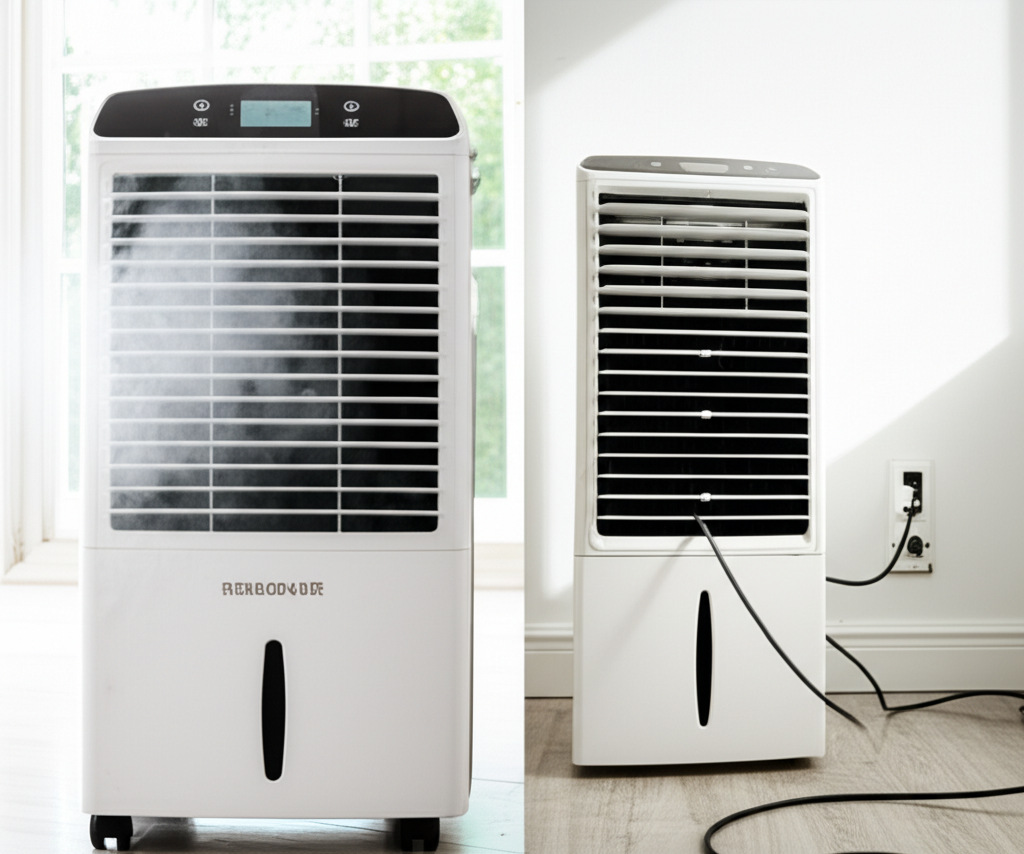
Evaporative coolers use way less electricity than portable ACs, often only using as much power as a standard fan. Portable ACs use much more energy because they run a big compressor, making them costlier to run daily.
Evaporative Cooler Vs Portable AC Energy Use: Shocking Truth
Are you sweating over which cooling unit to buy? Maybe your energy bill seems too high. Choosing the right AC can feel confusing. So many terms like BTU and watts make things unclear. Don’t worry; I’m Jack from ACReviewHub.com, and I make AC stuff easy.
This guide will break down the energy use for two popular options. We will compare the easy swamp cooler with the powerful portable AC. By the end, you will know exactly how to save money while staying cool.
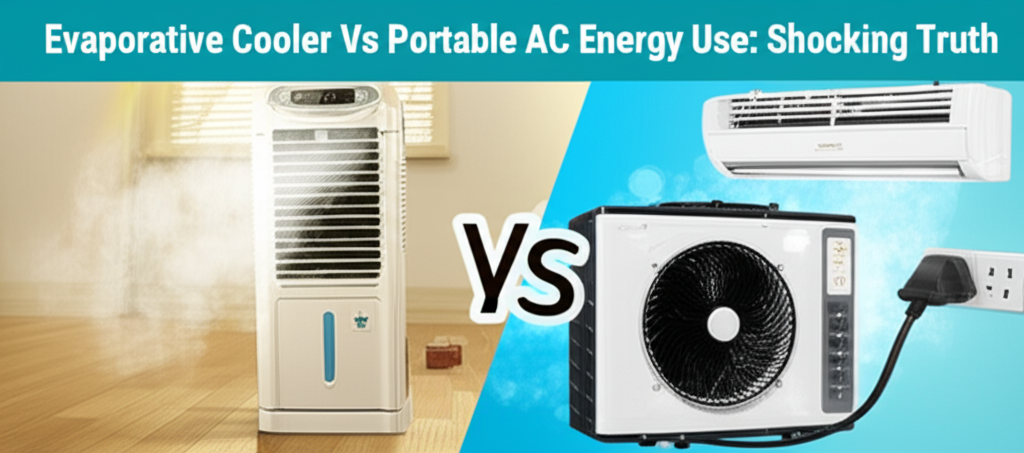
What Exactly Is an Evaporative Cooler? (The Swamp Cooler)
An evaporative cooler is also called a swamp cooler. It cools air using simple water evaporation. Think about how you feel cool right after a shower. This cooler works on that same idea.
It pulls warm, dry air through water-soaked pads. As the water evaporates, it takes heat out of the air. This cooler then blows the fresh, cooler air into your room. It does not use any chemical refrigerants.
How Much Power Does a Swamp Cooler Really Sip?
Swamp coolers are amazing energy savers. They mainly use a fan motor and a small water pump. They don’t have a big, energy-hungry compressor like traditional ACs.
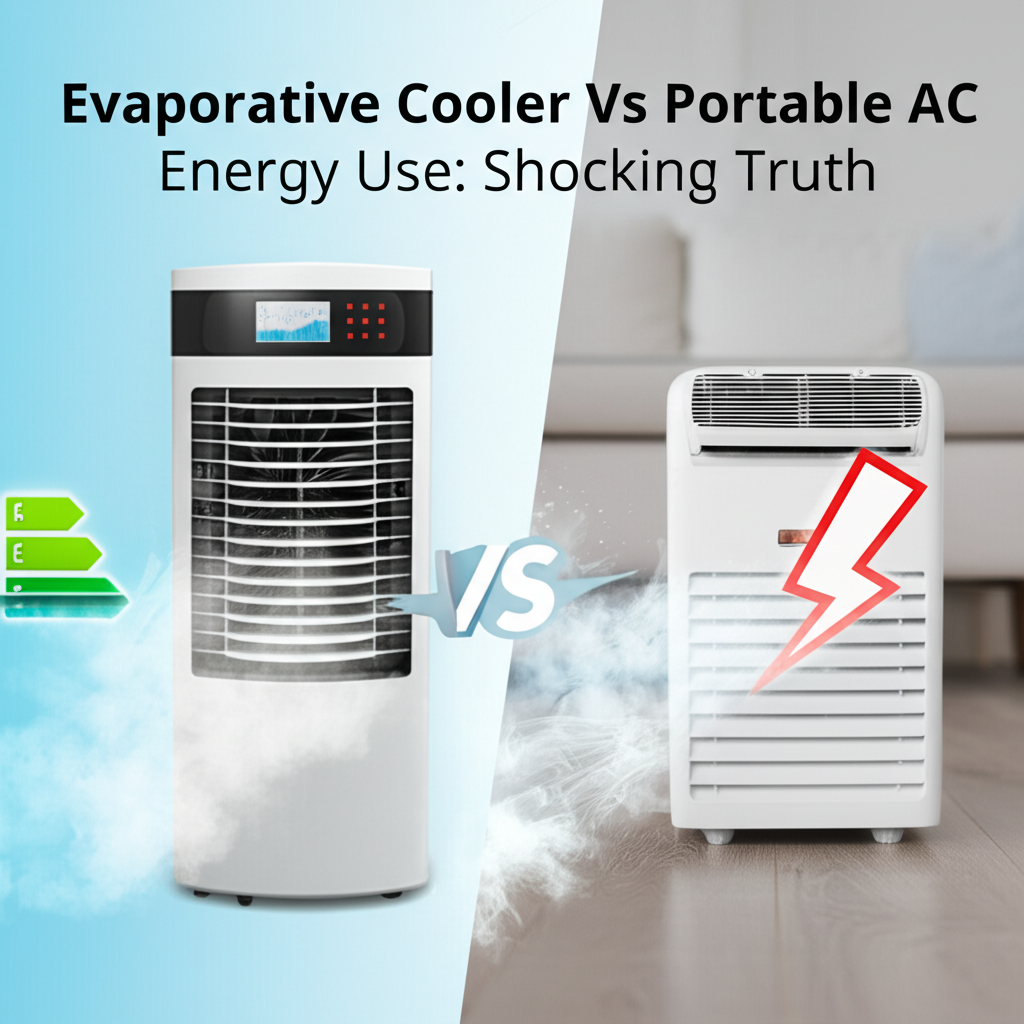
Most standard evaporative coolers use between 75 and 250 watts of electricity. That is very low. It is like running a big box fan, not a major appliance.
What Makes a Portable AC an Energy Hog?
A portable air conditioner is basically a small, movable version of your central AC unit. It works by using a refrigeration cycle. This means it has a compressor inside.
The compressor is the part that uses the most power. It squeezes a gas to make it cold, which takes a lot of electricity. This process is powerful, but it costs more to run.
The Power Drain: Portable AC Energy Facts
Portable ACs usually need a dedicated 15-amp circuit. They typically draw between 1,000 and 1,500 watts when running hard. That is about five to ten times more energy than a swamp cooler.
While they cool better in hot, humid places, that power draw adds up fast on your monthly bill. You are paying for that strong cooling power.
The Shocking Energy Comparison: Watts Tell the Story
Let’s look side-by-side at the typical power needs. This comparison makes the cost difference very clear. Remember, watts are how we measure energy use.
| Cooling Unit Type | Typical Watt Usage (Running) | Energy Cost Impact |
|---|---|---|
| Evaporative Cooler (Swamp Cooler) | 100 – 250 Watts | Very Low |
| Portable Air Conditioner (10,000 BTU) | 1,000 – 1,300 Watts | Medium to High |
If you run both units for 8 hours a day, the portable AC will cost you significantly more each month. The swamp cooler is the clear winner for saving energy dollars.
When Does a Portable AC Make Sense? (When Evaporation Fails)
Evaporative coolers only work well when the air is dry. They add moisture to the air to cool it down. If your area is already humid (like the Southeast US), a swamp cooler won’t help much.
This is where the energy-hungry portable AC shines. It removes heat AND humidity. If you live in a very humid climate, you need that compressor power, even if it costs more to run.
For more detailed information on how ACs work and energy efficiency ratings, check out the resources at Energy.gov.
How to Maximize Cooling While Minimizing Energy Use
Whether you choose a swamp cooler or a portable AC, you can always use less power. Here are simple steps you can take today to keep your bills down.
Simple Steps to Lower Your Cooling Energy Bill
- Set your thermostat a few degrees higher. Every degree makes a difference.
- Use ceiling fans along with your cooler or AC. Fans help circulate the cool air better.
- Block the sun during the hottest part of the day. Close blinds and curtains.
- Make sure your unit is sized right for your room. An oversized unit wastes energy cycling on and off.
Portable AC Setup: Avoiding Common Energy Traps
Portable ACs need proper setup to run efficiently. If you do this wrong, the unit struggles and uses even more power.
Portable AC Setup Checklist
- Ensure the exhaust hose is sealed tightly to the window and the unit. Leaks let hot air back in.
- Make sure the window kit fits snugly. Gaps let conditioned air escape.
- Empty the water collection tank regularly if your model requires it. Full tanks can slow cooling.
- Place the unit on a hard, level surface, not thick carpet, for better airflow underneath.
A poorly vented portable AC has to work harder. This means the compressor runs longer and uses more watts. Always check those seals!
Swamp Cooler Maintenance for Peak Efficiency
A clean evaporative cooler runs much cheaper than a dirty one. Dirty pads mean less water evaporates, so cooling power drops, making the fan run longer.
Easy Swamp Cooler Cleaning Routine
- Change or clean the cooling pads at least once per season.
- Flush the water reservoir before starting it up each summer.
- Wipe down the fan blades to ensure smooth, balanced spinning.
For tips on choosing the right size unit for your space, you can often find good advice from places like Consumer Reports when looking at new models.
Energy Use Summary Table: Quick Reference Guide
Here is a simple chart to keep the main difference in mind when you are shopping.
| Feature | Evaporative Cooler | Portable AC |
|---|---|---|
| Cooling Method | Water Evaporation | Refrigerant Compression |
| Best Climate Use | Dry Heat (Low Humidity) | Humid or Dry Heat |
| Energy Consumption | Very Low (Fan Power) | High (Compressor Power) |
| Moisture Added? | Yes | No (Removes Moisture) |
Frequently Asked Questions for New AC Owners
Q1: Can I use an evaporative cooler if it rains outside?
A1: Yes, but it won’t cool well. When it’s humid, the air is already full of moisture, so the cooler can’t evaporate much water to cool things down.
Q2: Do portable ACs need a window vent?
A2: Absolutely. They pump hot air out through that hose. If you don’t vent it, you are just blowing the heat you removed right back into the room.
Q3: Is a swamp cooler noisy?
A3: They are usually quieter than a portable AC, but they make a fan noise and a gentle water rushing sound. It’s usually less disruptive than a compressor.
Q4: Which one cools a room faster?
A4: A properly sized portable AC will usually achieve a lower temperature faster, especially if the humidity is high. Swamp coolers offer a gentler, broader cooling effect.
Q5: How much more money will a portable AC cost me monthly?
A5: Depending on local rates, you could easily spend $30 to $60 more per month running a portable AC versus a swamp cooler for the same amount of time.
Q6: Do I need to refill water in a portable AC?
A6: Most modern portable ACs handle condensation automatically by evaporating some of it or pumping it out the exhaust hose. You usually only need to drain the reservoir occasionally.
Stay Cool Without Breaking the Bank
Understanding the difference between a compressor (high energy use) and evaporation (low energy use) is the key to saving money. If you live in a dry area, the evaporative cooler is your budget-friendly best friend.
If you need serious dehumidifying power, the portable AC is worth the extra watts. Just remember to seal that exhaust hose well!
Taking these small steps in choosing and running your unit means you stay comfortable and keep more money in your wallet. Happy cooling!
