
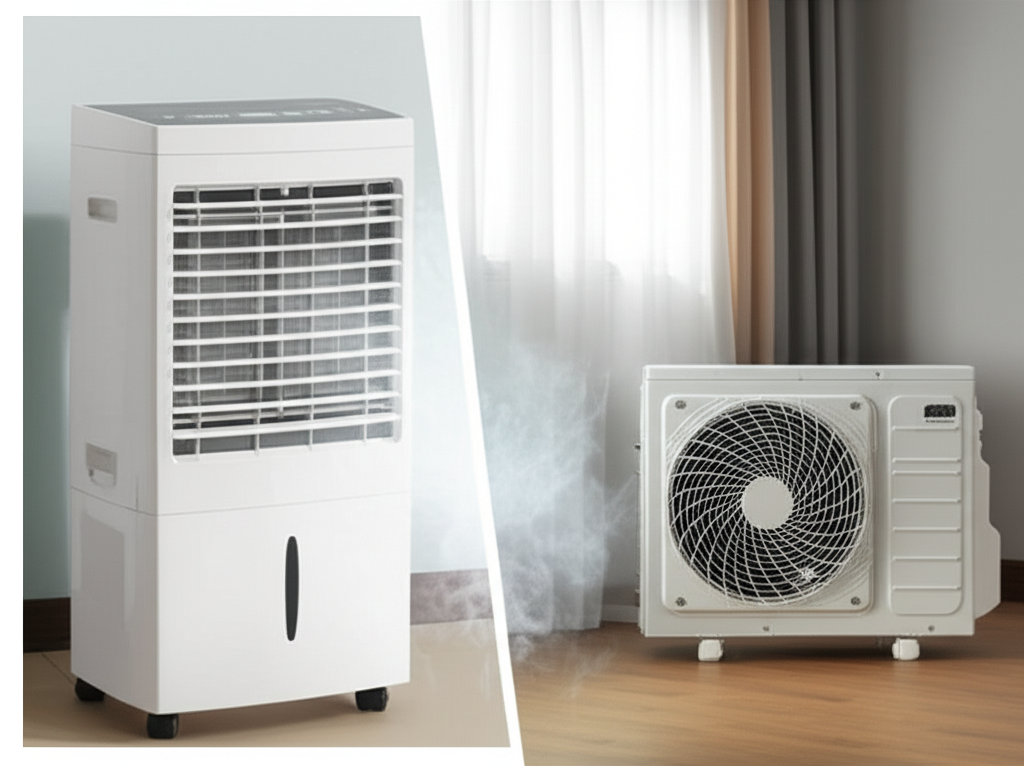
Evaporative coolers are cheap to run and add humidity, great for dry climates, but don’t work well in humid heat. Portable ACs cost more to run but are excellent dehumidifiers, perfect for almost any weather, though they take up more space and need window venting.
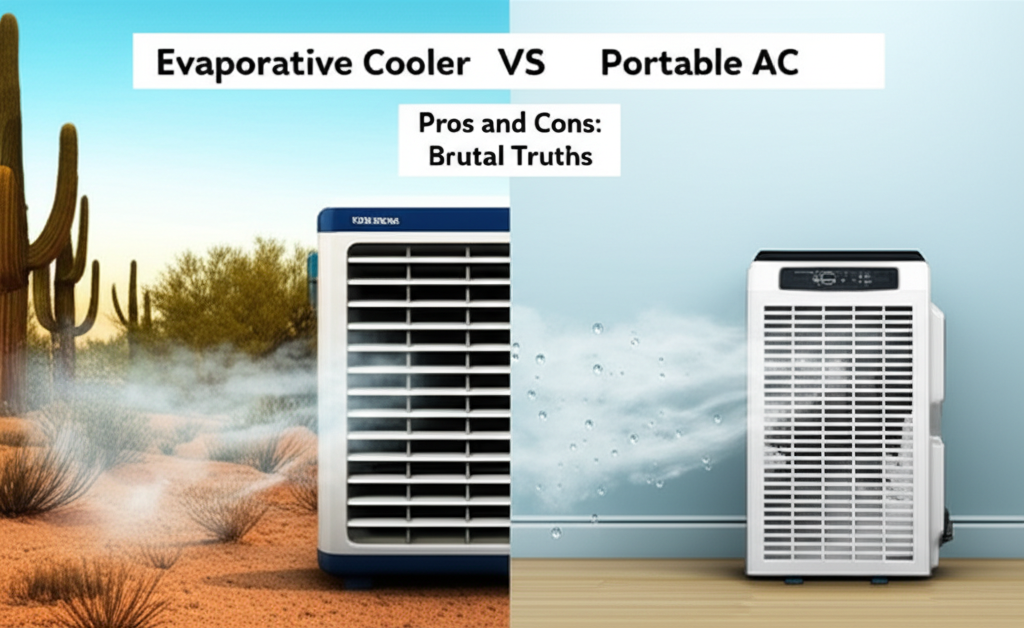
Evaporative Cooler Vs Portable AC: The Brutal Truths Explained Simply
Are you feeling the heat? It is easy to get lost when looking at cooling options. You see terms like “swamp cooler” and “portable AC,” and your head starts spinning. Don’t worry about the confusing tech talk.
I’m Jack from ACReviewHub.com, and I help folks like you make smart, simple choices for staying cool. We are going to break down the two main budget-friendly cooling choices. By the end, you will know exactly which one fits your home and your wallet best.
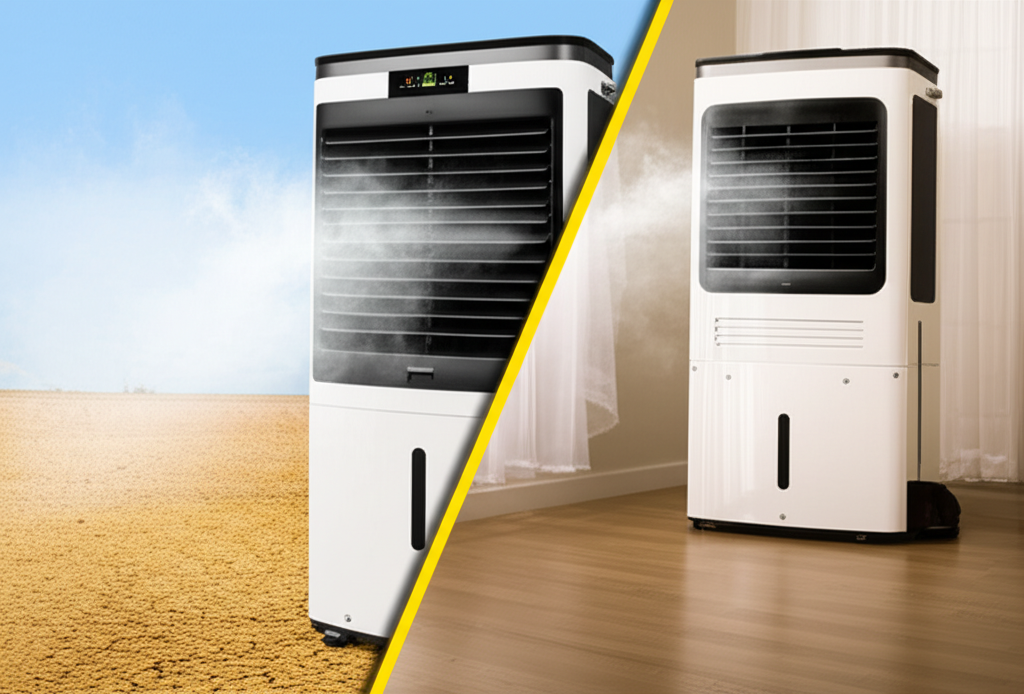
What Exactly Is an Evaporative Cooler (Swamp Cooler)?
An evaporative cooler is a simple machine. It is often called a swamp cooler. It uses water to cool the air, kind of like how a gentle breeze feels cool when you get out of a pool.
It pulls warm air through water-soaked pads. As the water turns into vapor, it sucks heat out of the air. This cooler, moist air blows into your room. It is a very natural way to cool down.
Pros of Using an Evaporative Cooler
These coolers have some big benefits, especially if you live in the right place. They are much cheaper to run than big AC units. Think of the savings on your electric bill!
- Low Energy Use: They only use a small fan and a tiny water pump. This saves a lot of money.
- Adds Humidity: If your air is dry, this adds welcome moisture, making the air feel better.
- No Special Installation: You just fill the tank or hook up a hose. No window kits needed.
- Eco-Friendly: They use way less electricity than compressor-based cooling.
Cons of Evaporative Coolers: When They Fail
Here is the “brutal truth” part. Swamp coolers have a big weakness. They rely on dry air to work well. If the air is already sticky and wet, they just make things worse.
- Poor in High Humidity: If it is 80% humid outside, a swamp cooler just blows warm, wet air around. It will feel muggy.
- Requires Constant Water: You must keep adding water for them to work.
- Maintenance Needs: The water pads can grow mold or mildew if you don’t clean them often.
- Must Keep Windows Open: For the air to evaporate, you need to let moist air escape. This means you cannot seal your home.
What is a Portable Air Conditioner (Portable AC)?
A portable AC is a real air conditioner, just in a rolling box. It uses a refrigeration cycle—the same way a big central AC works—to cool your room down.
Because it uses refrigerant, it actively pulls moisture out of the air as it cools. This is why it feels so crisp and dry when it runs.
Pros of Using a Portable AC
Portable ACs are the workhorses of spot cooling. They work almost anywhere, as long as you can vent them outside. They give you true, dry cooling power.
- Excellent Dehumidification: They actively dry the air, which is great for comfort on sticky days.
- Works in Any Climate: They cool just as well in humid Florida as they do in dry Arizona.
- Easy Setup: You move it where you need it, attach the exhaust hose to a window, and plug it in.
- Precise Temperature Control: You set a specific temperature, and it hits it.
Cons of Portable ACs: The Trade-Offs
Nothing is perfect, and portable ACs have their downsides. They are more complex machines, and that complexity costs you space and money.
- Higher Energy Bills: They use more electricity than swamp coolers because they run a compressor.
- Window Venting Required: You must attach a bulky hose to a sliding window or door to push the hot air out.
- Takes Up Floor Space: They are big boxes that sit inside your room all the time.
- Noise Level: The compressor running inside the unit can be quite loud compared to a simple fan cooler.
Comparing Cooling Power and Efficiency: The Numbers Game
When choosing, you need to think about how much cooling you need versus how much energy you want to use. This chart helps compare the basics.
| Feature | Evaporative Cooler | Portable AC Unit |
|---|---|---|
| Cooling Method | Water Evaporation | Refrigerant (Compressor) |
| Humidity Effect | Increases Humidity | Decreases Humidity (Dries Air) |
| Energy Use | Very Low | Moderate to High |
| Best Climate | Dry, Low Humidity | All Climates, Especially Humid |
| Noise Level | Low (Fan Noise) | Moderate to High (Compressor Noise) |
If you live somewhere like Southern California or Nevada where the air is dry, the evaporative cooler wins on efficiency. If you are in the Southeast, the Portable AC is your only real choice for comfort.
Choosing the Right Size for Your Space (BTUs)
Both units use British Thermal Units (BTUs) to measure cooling power, but how they achieve that cooling is different. For a portable AC, sizing is critical. Too small, and it never cools down. Too big, and it wastes energy.
Here is a simple guide for sizing a Portable AC. (Note: Evaporative cooler sizing is more based on CFM—Cubic Feet per Minute—but this helps with general cooling needs):
| Room Size (Square Feet) | Required Portable AC BTU Rating |
|---|---|
| 150 – 250 sq ft | 5,000 – 6,000 BTU |
| 250 – 350 sq ft | 7,000 – 8,000 BTU |
| 350 – 450 sq ft | 9,000 – 10,000 BTU |
| 450 – 550 sq ft | 12,000 BTU |
For more detailed, trusted information on sizing and energy efficiency standards, you can always check out resources from the U.S. Department of Energy.
Simple Setup: Getting Your Unit Running Fast
Setting up either cooler is pretty easy, but the steps are different. Follow these steps to avoid the common beginner mistakes.
Setting Up Your Evaporative Cooler (Swamp Cooler)
- Place the cooler near an open window or door for airflow.
- Fill the water reservoir completely, or connect a garden hose if it has that option.
- Plug it in and turn the fan setting to low first.
- Monitor the air. If it feels too damp, open another window slightly to help the air move.
Setting Up Your Portable AC Unit
- Roll the unit into the room where you need cooling.
- Assemble the window venting kit (usually a plastic slider panel).
- Attach the flexible exhaust hose firmly to the back of the unit and the window panel.
- Ensure the window seal is as tight as possible around the hose kit to prevent hot air from sucking back in.
- Plug it into a dedicated wall outlet if possible, as these draw significant power.
Keeping Your Cooler Happy: Basic Maintenance Tips
A little care goes a long way toward saving money and keeping your unit running smoothly. Both need different kinds of cleaning.
Evaporative Cooler Maintenance Checklist
- Drain and clean the water pan every few weeks, especially if you don’t use it daily.
- Scrub or replace the water-soaked pads at the start of every cooling season.
- Run the unit dry (fan only) for an hour before shutting it down for the season to dry the pads completely.
Portable AC Maintenance Checklist
- Empty the internal water collection tank often, or ensure the drain hose is working correctly (unless it’s a “self-evaporating” model).
- Clean the air intake filter monthly by gently vacuuming or rinsing it with water.
- Check the exhaust hose periodically to make sure it hasn’t become crushed or disconnected.
When Should You Just Splurge on Real AC?
Sometimes, the cheap option is actually the most expensive in terms of comfort. If your area sees high humidity (above 60% consistently), you should skip the evaporative cooler.
A swamp cooler will just leave you feeling sticky, forcing you to buy a portable AC later anyway. If comfort and dry air are your top priorities, go straight for the portable AC, even if the upfront cost is higher.
If you are looking for tips on maximizing the life of your standard central air system, Consumer Reports often has excellent articles on maintenance schedules.
FAQ Corner: Quick Answers for New Owners
Q1: Can I use an evaporative cooler in a closed room?
A: No! You must have a window or door open for the moist air to escape. If you don’t, it will just get too humid and stop cooling effectively.
Q2: Does a portable AC use a lot of electricity?
A: Yes, more than a swamp cooler. They use a compressor, which draws more power, so expect a noticeable bump in your electric bill compared to the water-based option.
Q3: Which one is quieter?
A: The evaporative cooler is almost always quieter because it only moves air with a simple fan. Portable ACs have a noisy compressor running inside the unit.
Q4: Can a swamp cooler work if the air is dry but cold outside?
A: Yes, that is the perfect condition for it! If the air is cool and dry, it will cool very effectively using very little energy.
Q5: Do portable ACs need to drain water?
A: Most do. Some newer models evaporate the moisture outside with the hot exhaust air, but older or cheaper models collect water that you have to empty manually.
Q6: Which is better for very hot, dry desert heat?
A: The evaporative cooler wins here because it is super cheap to run, and the dry air allows it to work at peak performance.
Final Thoughts: Pick the Tool for the Job
Choosing between these two cooling methods boils down to one main thing: humidity. If you live where it’s dry, an evaporative cooler is your friend—cheap, easy, and effective. If you live where it’s sticky, a portable AC is the only way to get that refreshing, dry cool.
Don’t let the confusing choices stop you. By keeping it simple—checking your local weather patterns—you can pick the right machine and enjoy a much cooler season without stress. Keep up with that simple filter cleaning, and you’ll be comfortable all summer!
