
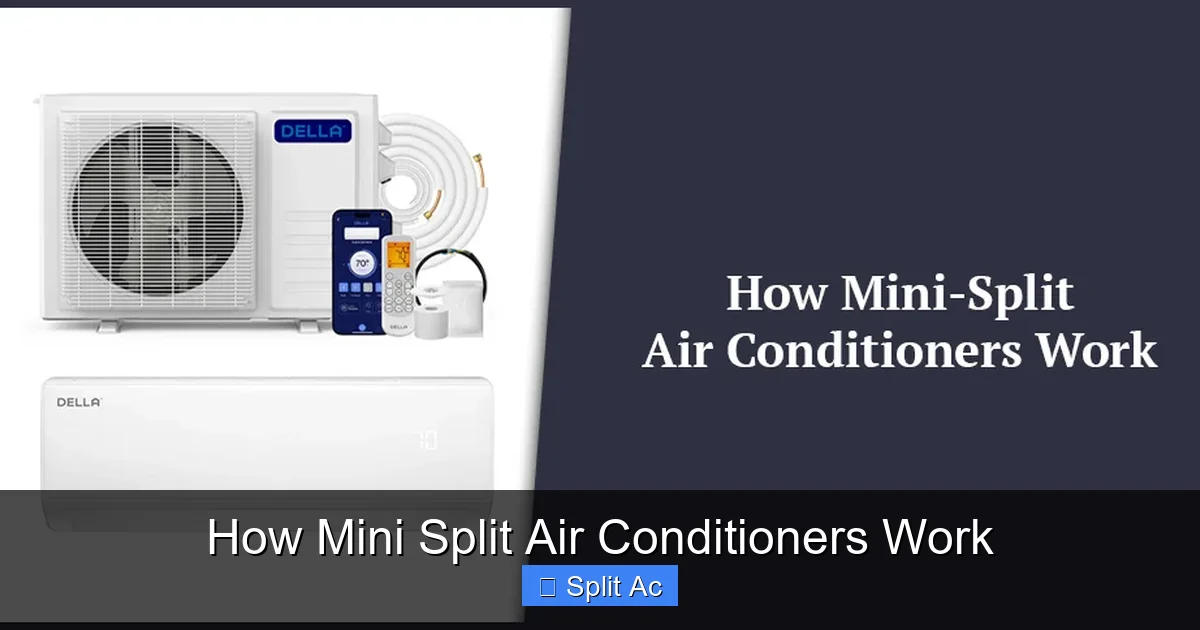
Mini split air conditioners offer a smart way to cool or heat your home without ductwork. They work by moving heat, not just creating cold air, using an indoor unit, an outdoor unit, and a special refrigerant. This system provides efficient, zoned comfort, letting you control temperatures in individual rooms. Understanding their simple yet effective process helps you appreciate their energy-saving benefits and quiet operation.
How Mini Split Air Conditioners Work
Have you ever wondered about those sleek, wall-mounted air conditioners that seem to pop up everywhere these days? They’re called mini split air conditioners, and they’ve revolutionized how we think about home comfort. Unlike traditional central air systems that rely on bulky ductwork, mini splits offer a flexible, efficient, and quiet way to cool and even heat your home, room by room.
If you’re curious about how these clever machines manage to keep you perfectly comfortable without a maze of ducts, you’ve come to the right place. This guide will take you on a journey to understand the fascinating science and practical engineering behind mini split air conditioners. We’ll break down their key components, explain the magical refrigeration cycle in simple terms, and show you why they’re celebrated for their energy efficiency and zoned comfort capabilities.
By the end of this read, you’ll not only grasp the “how” but also appreciate the “why” behind their growing popularity. So, let’s dive in and demystify the inner workings of your modern mini split system!
Key Takeaways
- Ductless Design: Mini split air conditioners operate without the need for extensive ductwork, making them ideal for additions, older homes, or specific zones.
- Heat Transfer, Not Generation: The core principle is moving heat from one place to another (inside to outside for cooling, outside to inside for heating) using a refrigerant, rather than burning fuel to create heat or cold.
- Key Components: A mini split system consists of an indoor air-handling unit (evaporator), an outdoor condensing unit (compressor/condenser), copper refrigerant lines, electrical wiring, and a remote control.
- The Refrigeration Cycle: This continuous process involves a refrigerant changing between liquid and gas states, absorbing heat as it evaporates indoors and releasing heat as it condenses outdoors (or vice-versa for heating).
- Inverter Technology for Efficiency: Many mini splits use inverter compressors that can vary their speed, leading to precise temperature control, significant energy savings, and quieter operation compared to traditional on/off systems.
- Zoned Comfort: Multi-zone mini split systems allow a single outdoor unit to connect to multiple indoor units, providing individual temperature control for different rooms or areas of your home.
- Dual Functionality: Most mini split air conditioners are also heat pumps, meaning they can provide efficient heating in colder months by simply reversing the flow of refrigerant.
Understanding the Basics: What is a Mini Split Air Conditioner?
Before we get into the nitty-gritty of how mini split air conditioners work, let’s establish what they are. A mini split is a type of HVAC (Heating, Ventilation, and Air Conditioning) system that provides both cooling and often heating to individual rooms or “zones” of a building. The key feature is that it’s “ductless.” This means it doesn’t need the extensive network of air ducts found in traditional central air conditioning systems.
Think of it as having two main parts: one part inside your home and one part outside. These two parts are connected by a small conduit that houses copper refrigerant lines, a power cable, and a condensate drain line. Because there are no ducts, installation is generally less invasive, and you avoid the energy losses often associated with leaky ductwork.
The Essential Components of Your Mini Split System
Every mini split air conditioner relies on a few core components working together harmoniously. Understanding these parts is the first step to knowing how the entire system functions.
Visual guide about How Mini Split Air Conditioners Work
Image source: wg.scene7.com
The Indoor Unit (Evaporator)
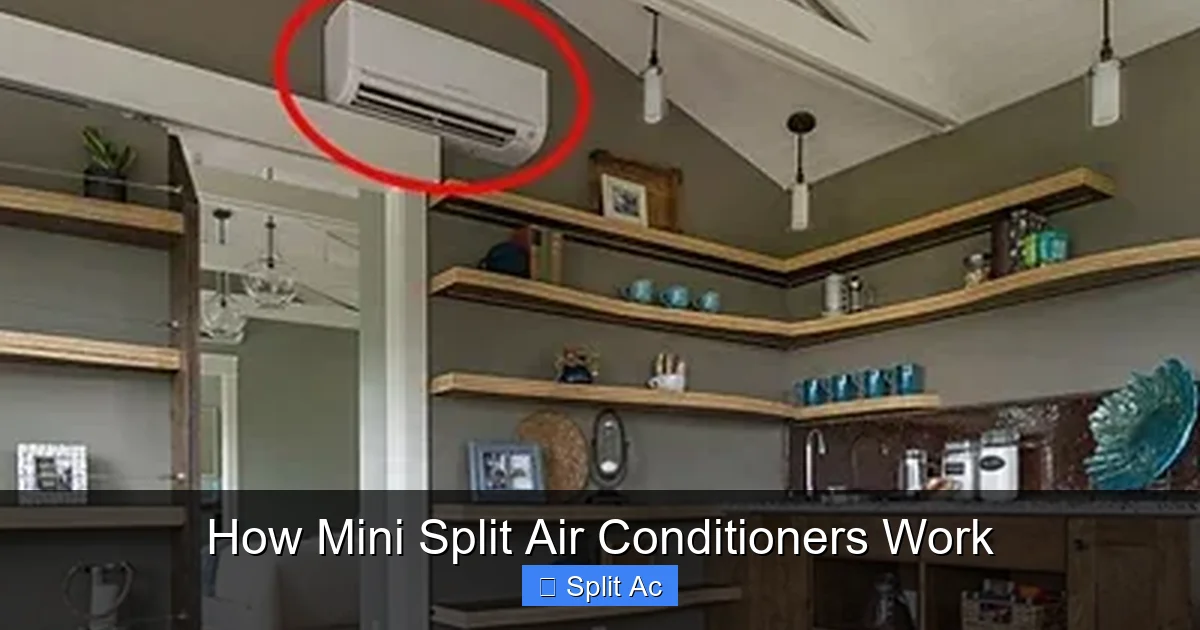
This is the part you see inside your home, typically mounted high on a wall, but sometimes on the ceiling or floor. Its main job is to take in warm room air, cool it down (or heat it up), and then blow the conditioned air back into the room. It houses a fan, an evaporator coil (which gets cold), and air filters. This unit is designed to be quiet and blend into your home’s decor.
The Outdoor Unit (Condenser/Compressor)
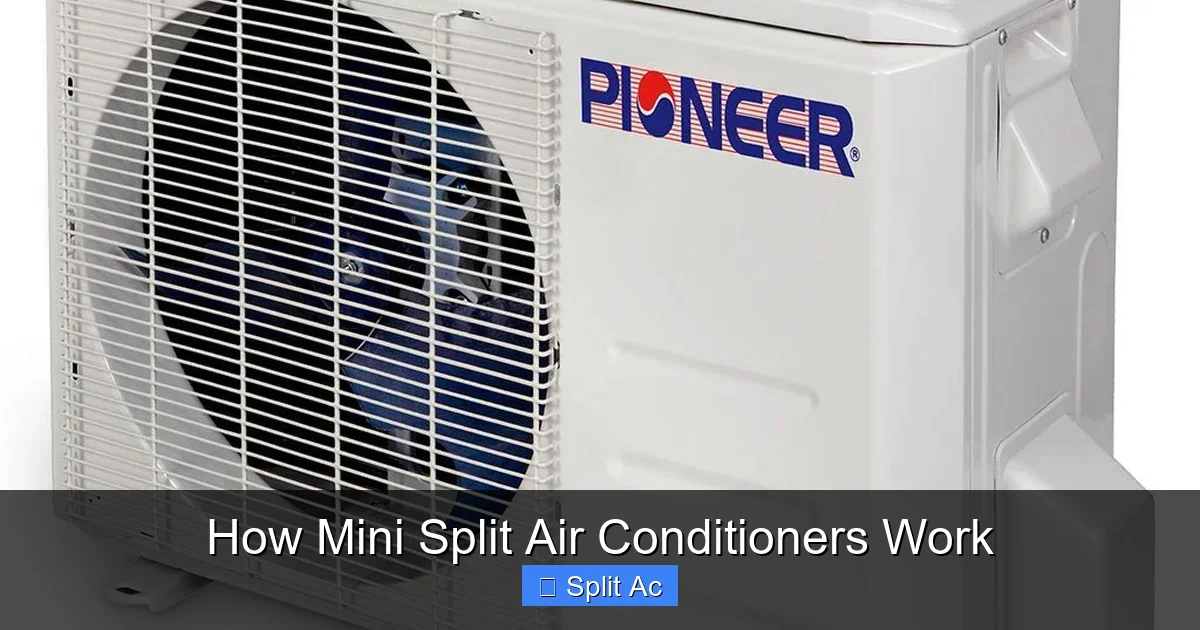
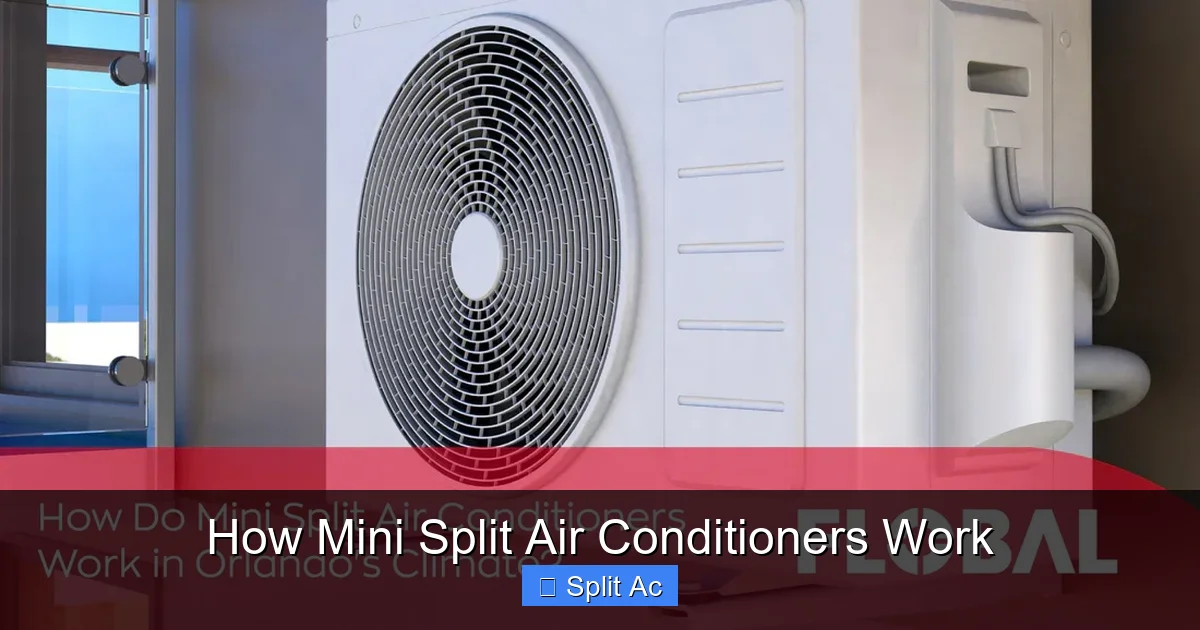
Located outside your home, this unit is the powerhouse of the mini split system. It contains the compressor (the “engine” that pumps refrigerant), a condenser coil (which gets hot), and a large fan. For cooling, it releases the heat from inside your home to the outside air. For heating, it absorbs heat from the outside air.
The Refrigerant Lines (Copper Tubing)
These are the vital arteries of the mini split system. Two insulated copper lines connect the indoor unit to the outdoor unit. One line carries the refrigerant at high pressure, and the other carries it at low pressure. Refrigerant is a special chemical compound that can easily change between liquid and gas states, making it perfect for moving heat.
Electrical Wiring
Of course, electricity is needed to power both the indoor and outdoor units, specifically the fans and the crucial compressor. A control wire also runs between the units, allowing them to communicate and operate in sync.
The Condensate Drain Line
When the indoor unit cools the air, moisture is removed from the air (that’s why your windows might fog up on a humid day). This moisture collects as water, which needs to be drained away. The condensate drain line carries this water safely outside your home, preventing drips and water damage.
The Remote Control and Thermostat
This is your command center! Most mini split air conditioners come with a wireless remote control that allows you to adjust the temperature, fan speed, operating mode (cool, heat, dry, fan), and even set timers. Some advanced systems also integrate with smart home thermostats for even greater control.
How Mini Split Air Conditioners Work: The Refrigeration Cycle
The true genius of mini split air conditioners lies in their ability to move heat from one place to another. They don’t generate cold air; they simply remove heat from your living space and dump it outside. This process is called the “refrigeration cycle,” and it’s a continuous loop that involves the refrigerant changing state.
Visual guide about How Mini Split Air Conditioners Work
Image source: refrigeranthq.com
Step 1: Sensing the Need for Cooling (or Heating)
It all starts when you (or your thermostat) tell the mini split air conditioner that you want a cooler room. You set a desired temperature on your remote control. The indoor unit’s sensor detects that the room temperature is higher than your set point, triggering the system to begin its cooling cycle.
Step 2: The Indoor Unit Absorbs Heat (Evaporation)
Once activated, the indoor unit’s fan begins to draw warm, humid air from your room across a cold coil called the evaporator coil. Inside this coil, the refrigerant is at a low pressure and is in a liquid state. As the warm room air passes over the coil, the refrigerant absorbs the heat from the air. Think of it like a sponge soaking up water, but in this case, it’s heat!
As the refrigerant absorbs this heat, it boils and transforms from a cold liquid into a warm, low-pressure gas (vapor). This process of changing from liquid to gas is called evaporation. The now-cooled and dehumidified air is then blown back into your room by the indoor unit’s fan, making your space feel comfortable and fresh.
Step 3: Moving the Heat Outdoors
The warm, low-pressure refrigerant gas (now carrying all that unwanted heat from your room) then travels through one of the copper refrigerant lines to the outdoor unit. Here, it encounters the compressor, which is a powerful pump. The compressor’s job is crucial: it squeezes and pressurizes the refrigerant gas, significantly increasing its temperature and pressure. It’s like inflating a bicycle tire – the air inside gets warm as it’s compressed.
Step 4: Releasing Heat Outside (Condensation)
The super-hot, high-pressure refrigerant gas then flows into the condenser coil located in the outdoor unit. The outdoor unit’s fan pulls cooler ambient air from outside and blows it across this hot coil. As the outdoor air passes over the hot coil, it absorbs the heat from the refrigerant.
This cooling process causes the high-pressure refrigerant gas to release its heat to the outside environment. As it releases heat, it cools down and changes back from a gas into a high-pressure liquid. This transformation from gas back to liquid is called condensation. Essentially, the mini split is dumping the heat from your home into the outdoor air.
Step 5: The Refrigerant Prepares for Another Round (Expansion)
After leaving the condenser coil as a warm, high-pressure liquid, the refrigerant then travels through the second copper line back towards the indoor unit. Before it enters the indoor evaporator coil again, it passes through a tiny, precisely engineered device called an expansion valve (or sometimes a capillary tube).
The expansion valve drastically reduces the pressure of the refrigerant. Imagine squeezing toothpaste out of a very small opening – the pressure drops instantly. This sudden drop in pressure causes the refrigerant liquid to cool down significantly, becoming a cold, low-pressure liquid. It’s now ready to re-enter the indoor evaporator coil and start the heat-absorbing cycle all over again, continuing the loop of comfort!
How Heating Works: The Reversing Valve
What if you want heat instead of cool air? This is where the magic of a “heat pump” comes in, and most mini split air conditioners are actually heat pumps. They achieve heating by simply reversing the flow of the refrigerant. A special component called a reversing valve changes the direction of the refrigerant.
In heating mode:
- The outdoor unit’s coil becomes the evaporator, absorbing heat from the outside air (even cold air contains heat!).
- The indoor unit’s coil becomes the condenser, releasing that absorbed heat into your room.
So, instead of moving heat from inside to outside, the mini split air conditioner literally extracts heat from the outside environment and pumps it into your home. This is incredibly energy-efficient, as it’s simply moving existing heat rather than generating it from scratch (like an electric heater or furnace).
The Magic of Inverter Technology: Why Mini Splits are So Efficient
Modern mini split air conditioners often boast incredible energy efficiency, and a large part of this is due to something called inverter technology. To understand its importance, let’s compare it to older, traditional AC units.
Visual guide about How Mini Split Air Conditioners Work
Image source: flobal.com
Traditional air conditioners have compressors that are either fully “on” or fully “off.” When your room gets too warm, the compressor kicks on at full power until the desired temperature is reached. Then, it shuts off completely. This constant starting and stopping uses a lot of energy and can lead to temperature fluctuations – it gets a bit too cold, then a bit too warm, then cold again.
Inverter technology, on the other hand, allows the compressor to vary its speed and output. Instead of just “on” or “off,” an inverter compressor can run at 20%, 50%, 80%, or 100% capacity, depending on the demand. Once your room reaches the desired temperature, the inverter-driven compressor doesn’t shut off; it simply slows down and runs at a lower speed, just enough to maintain the temperature precisely.
The benefits are huge:
- Energy Savings: Avoiding constant start-ups and shutdowns drastically reduces electricity consumption.
- Consistent Comfort: Temperatures stay much more stable, preventing those annoying hot and cold spots.
- Quieter Operation: When the compressor runs at a lower speed, it makes less noise, both inside and outside.
- Longer Lifespan: Less stress on the compressor due to fewer starts and stops can extend the unit’s life.
Enjoying Zoned Comfort: How Multiple Indoor Units Work
One of the biggest advantages of mini split air conditioners is their ability to provide “zoned comfort.” This means you don’t have to heat or cool your entire house to a single temperature. Instead, you can control the temperature in different areas or “zones” independently.
With a single-zone mini split, one outdoor unit connects to one indoor unit, conditioning a single room. But what if you want to cool or heat several rooms?
This is where multi-zone mini split systems come in. A single, more powerful outdoor unit can be connected to two, three, four, or even more separate indoor units throughout your home. Each indoor unit operates independently, with its own remote control and thermostat.
For example, you could have an indoor unit in your living room set to 72°F, another in your bedroom set to 68°F, and turn off the unit in the guest room when it’s not in use. This level of customization leads to significant energy savings, as you only condition the spaces you are actively using, exactly to your preference.
Installation: A Quick Look (Professional Job Recommended)
While understanding how mini split air conditioners work might seem straightforward, their installation requires specific expertise. Connecting refrigerant lines, ensuring proper vacuum and charge, and handling electrical connections are jobs best left to certified HVAC professionals.
A professional installation ensures the system runs efficiently, safely, and lasts for its intended lifespan. They will correctly mount the indoor and outdoor units, properly run and seal the refrigerant lines and electrical connections, and make sure the condensate drains effectively.
Key Benefits of Choosing a Mini Split Air Conditioner
Now that you know how these impressive systems work, let’s summarize why mini split air conditioners are such a popular choice for modern homeowners:
- Energy Efficiency: Thanks to inverter technology and the elimination of leaky ducts, mini splits are highly energy-efficient, leading to lower utility bills.
- Zoned Comfort: Enjoy personalized temperature control in different rooms, avoiding the need to condition unused spaces.
- Quiet Operation: Both indoor and outdoor units are typically much quieter than traditional central ACs or window units.
- No Ductwork Needed: Perfect for homes without existing ducts, new additions, or spaces where running ducts would be impractical or too expensive.
- Heating and Cooling in One: Most models act as efficient heat pumps, providing year-round comfort.
- Improved Air Quality (Some Models): Many mini split air conditioners come with advanced filtration systems that can help remove allergens, dust, and odors from your indoor air.
- Flexible Placement: Indoor units come in various styles (wall-mounted, floor-standing, ceiling cassette) to suit different aesthetics and room layouts.
Keeping Your Mini Split Running Smoothly: Simple Maintenance Tips
Understanding how mini split air conditioners work also empowers you to perform basic maintenance that keeps them operating at peak performance. Regular care can extend their lifespan and maintain efficiency.
- Clean or Replace Air Filters Regularly: This is the most important user maintenance. Dirty filters restrict airflow, reduce efficiency, and can even cause the unit to freeze up. Most filters are washable; check your manual for specific instructions, but generally aim to clean them every 2-4 weeks during heavy use.
- Keep the Outdoor Unit Clear: Ensure there’s no debris, leaves, grass clippings, or overgrown plants blocking the outdoor unit’s airflow. Clear at least two feet of space around it.
- Inspect the Condensate Drain: Occasionally check the condensate drain line for blockages. If water is leaking from the indoor unit, this is often the culprit.
- Schedule Professional Maintenance: Just like your car, your mini split system benefits from an annual check-up by a qualified technician. They can check refrigerant levels, clean coils, inspect electrical connections, and ensure everything is running optimally.
Troubleshooting Common Mini Split Issues
Even with excellent maintenance, sometimes issues can arise. Here are a few common problems and what they might indicate, though professional diagnosis is always recommended for complex issues.
Not Cooling/Heating Effectively
- Cause: Dirty air filter, blocked outdoor unit, low refrigerant, wrong mode selected, or a weak compressor.
- Tip: First, check the air filter and ensure the outdoor unit isn’t obstructed. Double-check that you’ve selected the correct mode (cool/heat) and set the temperature appropriately.
Making Strange Noises
- Cause: Rattling could be loose parts or debris. Hissing might indicate a refrigerant leak. Gurgling often points to condensate drain issues.
- Tip: If it’s a new or unusual noise, especially hissing or grinding, it’s best to turn off the unit and call a professional.
Water Leaking from Indoor Unit
- Cause: Clogged condensate drain line, dirty evaporator coil (freezing up), or incorrect installation.
- Tip: Check the condensate drain line for blockages. A frozen coil can sometimes be seen; in this case, turn the unit off to thaw and clean the filter.
Remote Control Not Working
- Cause: Dead batteries, obstruction between remote and unit, or a faulty remote.
- Tip: Replace the batteries. Ensure nothing is blocking the signal path to the indoor unit. If it still doesn’t work, there might be a problem with the remote itself or the receiver in the indoor unit.
Conclusion
Mini split air conditioners are far more than just fancy boxes on a wall; they are sophisticated pieces of engineering designed to deliver precise, efficient, and personalized comfort. By understanding how mini split air conditioners work – from their fundamental components to the intricate dance of the refrigeration cycle and the efficiency of inverter technology – you gain a deeper appreciation for their value.
Whether you’re looking to cool a new addition, heat an older home without ductwork, or simply enjoy individualized temperature control in every room, mini split systems offer a powerful and flexible solution. With proper installation and a little regular maintenance, your mini split air conditioner will provide reliable comfort for many years to come, making your living spaces exactly as you like them, quietly and efficiently.
