
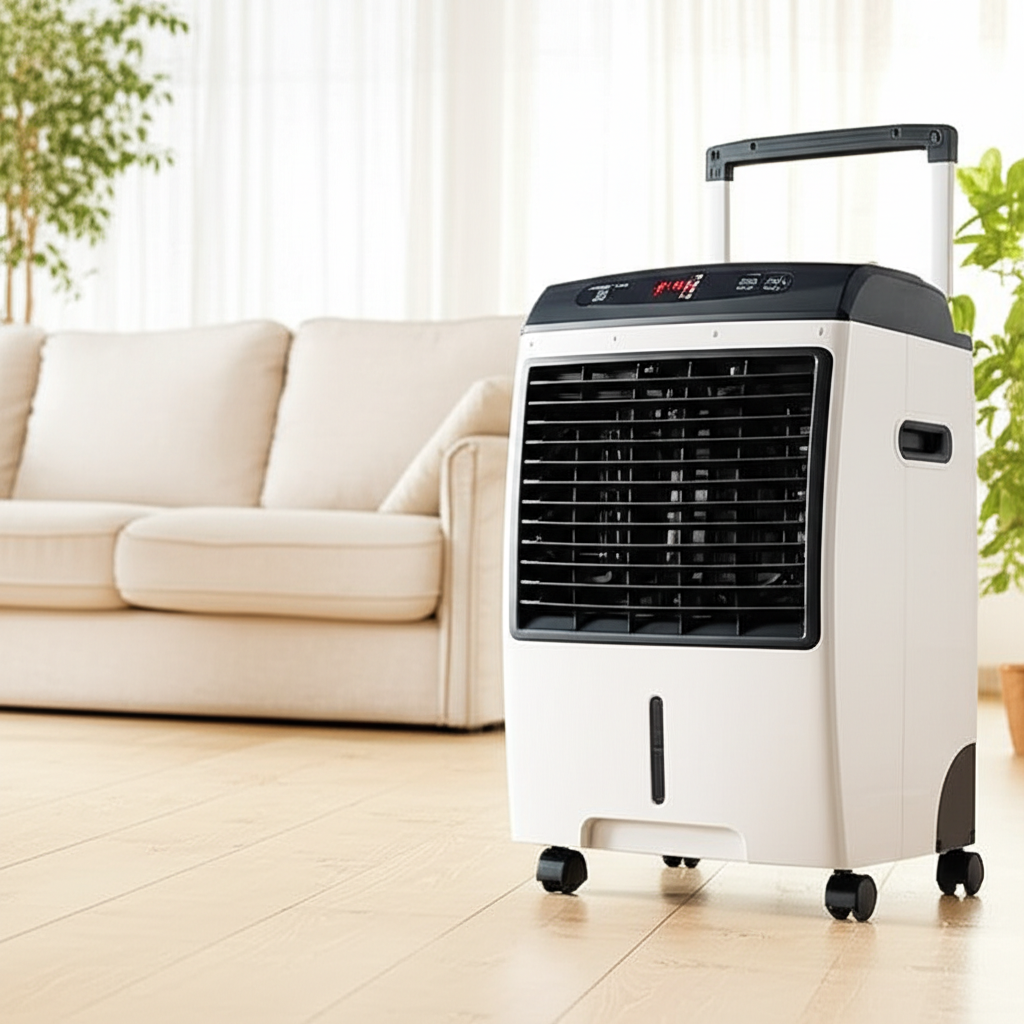
Quick Summary: Moving your air cooler is easy! Unplug it, drain any water, secure the hose/window kit, and gently roll or carry it to the new spot. Then, just set it up again following the simple steps.
Are you tired of your living room being cool while the bedroom is hot? Many of us have portable air conditioners or evaporative coolers that we wish could follow us around the house. It can feel tricky to move these units without breaking them or making a huge mess. Don’t worry about complicated instructions or heavy lifting.
I’m Jack, and here at ACReviewHub.com, we make AC stuff simple. We will walk you through moving your air cooler room-to-room step-by-step. You will learn the right way to disconnect and reconnect your unit so you stay cool everywhere.
Before You Move: Essential Prep Work (Don’t Skip This!)
Moving an air cooler isn’t like moving a lamp. You have to unplug it and make sure no water spills out. This preparation keeps you safe and protects your cooler.
Step 1: Power Down Safely
The first rule of AC safety is always unplugging the machine. Never try to move a running or plugged-in unit. This prevents electric shock.
- Find the power cord.
- Pull the plug gently from the wall socket.
- Wait about five minutes after unplugging. This lets the internal parts settle down safely.
Step 2: Handling the Water Mess (Crucial for ACs and Evaporative Coolers)
Most portable air conditioners and all swamp coolers collect water. If you move it while it’s full, water will spill everywhere. This can ruin your floor or damage the machine.
For Portable Air Conditioners (PACs):
- Locate the drain plug, usually near the bottom.
- Place a shallow pan or bucket underneath the drain opening.
- Unscrew or remove the plug and let all the water drain out completely.
- Put the plug back in tightly when it stops dripping.
For Evaporative Coolers (Swamp Coolers):
These hold much more water. You might need a wet/dry vacuum to suck the water out of the tank, or you might need to open a main drain valve near the bottom.
Step 3: Disconnecting the Exhaust Hose or Window Kit
Portable AC units need a hose to push hot air outside. You must disconnect this hose before moving the unit.
- Find where the flexible hose connects to the back of the AC unit.
- Twist or unclip the hose connection gently.
- If you have a window kit (the plastic panel in the window), carefully remove the panel and the sliding parts.
- Roll up the hose neatly and keep the window kit pieces together in a bag so you don’t lose them.
Moving Day: Getting the Cooler to the New Room
Now that the unit is dry and disconnected, it is time to move it. Most modern portable ACs are designed for this exact task.
Using the Wheels (Casters)
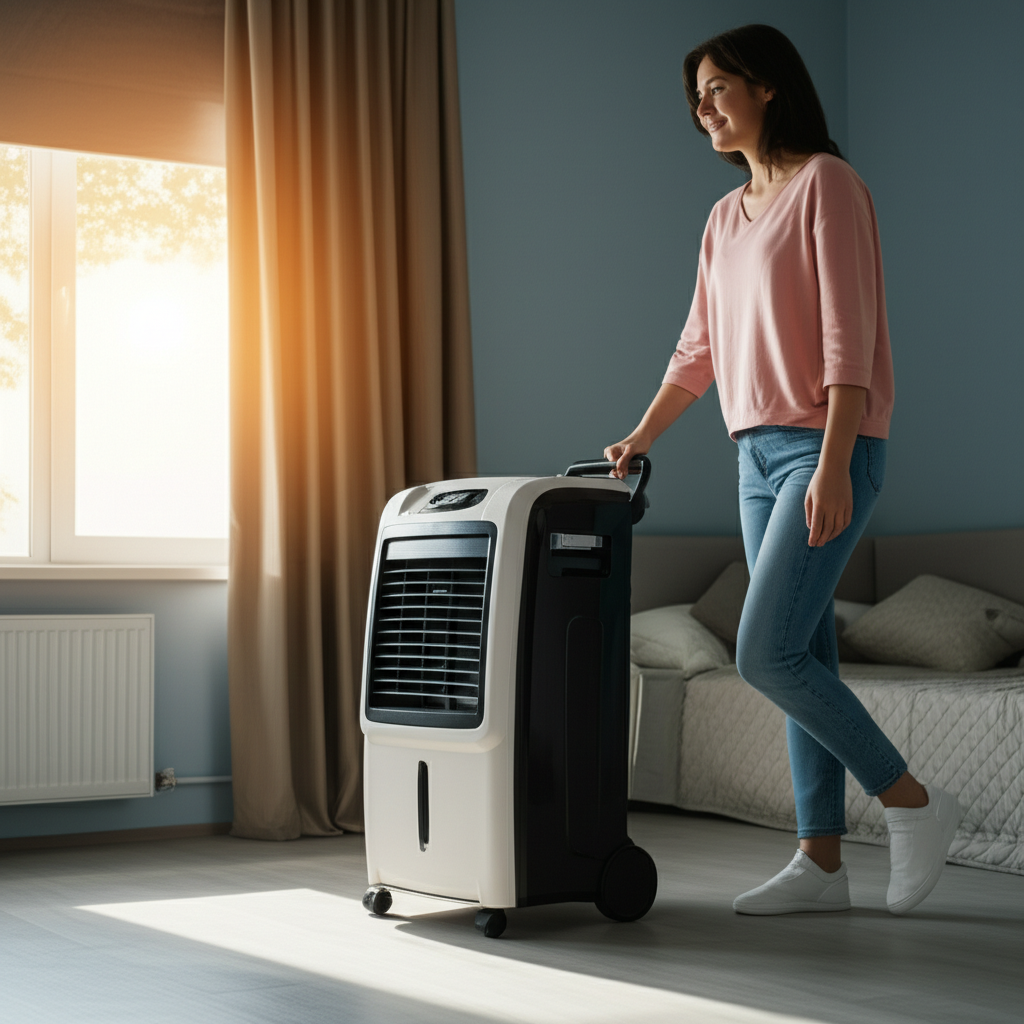
Most PACs come with small wheels, called casters, on the bottom. This makes moving them much easier.
- Stand the unit upright.
- Grip the handles on the top or sides firmly.
- Tilt the unit back just slightly so the wheels touch the floor.
- Gently roll the unit to your new room. Avoid sudden jerks or bumps.
What If It Doesn’t Have Wheels?
If you have a smaller evaporative cooler or an older portable AC without wheels, you need an extra set of hands. These units can be heavy when you lift them.
- Ask a friend or family member to help you lift.
- Lift with your legs, not your back, keeping the unit level so any remaining moisture doesn’t slosh around.
Setting Up Your Cooler in the New Location
Once you reach the new room, the setup process is almost the reverse of how you took it apart. Think of it like building a simple Lego set.
Step 4: Positioning and Ventilation
Air conditioners need space to breathe. Don’t push the unit right up against the wall.
Place the cooler where you want it, making sure there are at least 12 to 18 inches of clear space around the back and sides. This allows air to flow in and out correctly.
Step 5: Reattaching the Exhaust System (For PACs Only)
If you are moving a portable air conditioner, you must re-install the window kit and exhaust hose. This step is essential for cooling!
- Slide the window panel back into the open window sash.
- Connect the exhaust hose firmly back onto the AC unit.
- Connect the other end of the hose to the opening on the window kit panel. Make sure this connection is tight so hot air doesn’t leak back in.
Step 6: Refilling Water (For Evaporative Coolers)
If you moved a swamp cooler, now is the time to add fresh, cool water to its tank. Never run a swamp cooler without water, or you might damage the pump.
Step 7: Power Up and Test
Plug the unit back in. Turn it on to a low setting first. Listen for strange noises. If it sounds normal, you can increase the fan speed or lower the temperature setting. Congratulations, you are cooling a new room!
Important Things to Remember After Moving
Sometimes, moving an AC unit can cause small issues. Here are a few quick checks to make sure everything is perfect.
Quick Moving Checklist
| Action | Why It Matters |
|---|---|
| Check Drain Plug | Ensure it is sealed tight to prevent leaks in the new spot. |
| Hose Connection | Make sure the hose is securely clicked into both the unit and the window panel. |
| Level Surface | Wheels should sit flat on the floor so the unit runs smoothly. |
If you use a portable AC, check the energy use in the new room. Larger rooms might need the AC to work harder.
For more in-depth efficiency tips, check out the great advice from the U.S. Department of Energy on Energy Saving Tips.
Common Beginner Mistakes When Moving Coolers
Even experts make small mistakes when they are rushing. Avoid these common pitfalls when relocating your cooling unit.
- Moving While Running: Never move a unit while it is plugged in or running. Safety first!
- Ignoring Drainage: Forgetting to drain the water tank before moving a PAC or swamp cooler. This causes big spills.
- Forgetting the Hose: Turning on a PAC without reconnecting the exhaust hose. This just pumps hot air back into the room!
- Blocking Vents: Pushing the unit too close to furniture in the new room. It needs airflow.
- Not Letting It Settle: If you moved the unit on its side (which you shouldn’t!), wait an hour before plugging it in so the internal oils settle.
Comparing Cooler Types When Moving
Moving a simple evaporative cooler is usually easier than moving a complex PAC.
| Cooler Type | Main Moving Difficulty | Post-Move Check |
|---|---|---|
| Evaporative Cooler (Swamp Cooler) | Draining large water reservoir. | Refill water tank and check pump connection. |
| Portable AC (PAC) | Disconnecting and reconnecting the heavy exhaust hose/kit. | Ensure tight seal on window kit for efficiency. |
For maintenance schedules that keep your unit reliable after moving, review best practices from organizations like ASHRAE.
Frequently Asked Questions (FAQ) About Moving Your Cooler
Q1: Can I just unplug my portable AC and wheel it to the next room?
A: Almost! You must unplug it AND drain the water first. Then you can wheel it safely.
Q2: How long should I wait before turning the AC on after I move it?
A: If you kept the unit upright, you can usually turn it on right away after setting up the hose. If you tilted it a lot, wait 30 minutes.
Q3: Do I need to reinstall the window kit every time I move it?
A: Yes, if you are moving a portable AC to a room without a window connection, you must move the kit. If you move it to another room that also has a window, you should reinstall the kit there too.
Q4: My swamp cooler won’t turn on after moving. What gives?
A: Check the water level first! Swamp coolers often have a safety switch that stops the fan if the water tank is empty.
Q5: Is it okay if some water splashes inside the portable AC unit when I move it?
A: It is not great. If you suspect water got into the main body, let it sit unplugged for a full day before trying to turn it on. Water and electricity don’t mix well.
Q6: Do I need a different size AC for the new room?
A: If the new room is much bigger or smaller, yes. Bigger rooms need more BTUs (cooling power). Check a BTU chart online before buying a new one!
Taking care of your air cooler doesn’t have to be complicated. By following these simple steps—unplug, drain, disconnect, move, and reconnect—you can keep your cool comfort moving right along with you.
Stay consistent with your checks, and you will save energy and keep your AC running like a champ. Happy cooling!
