
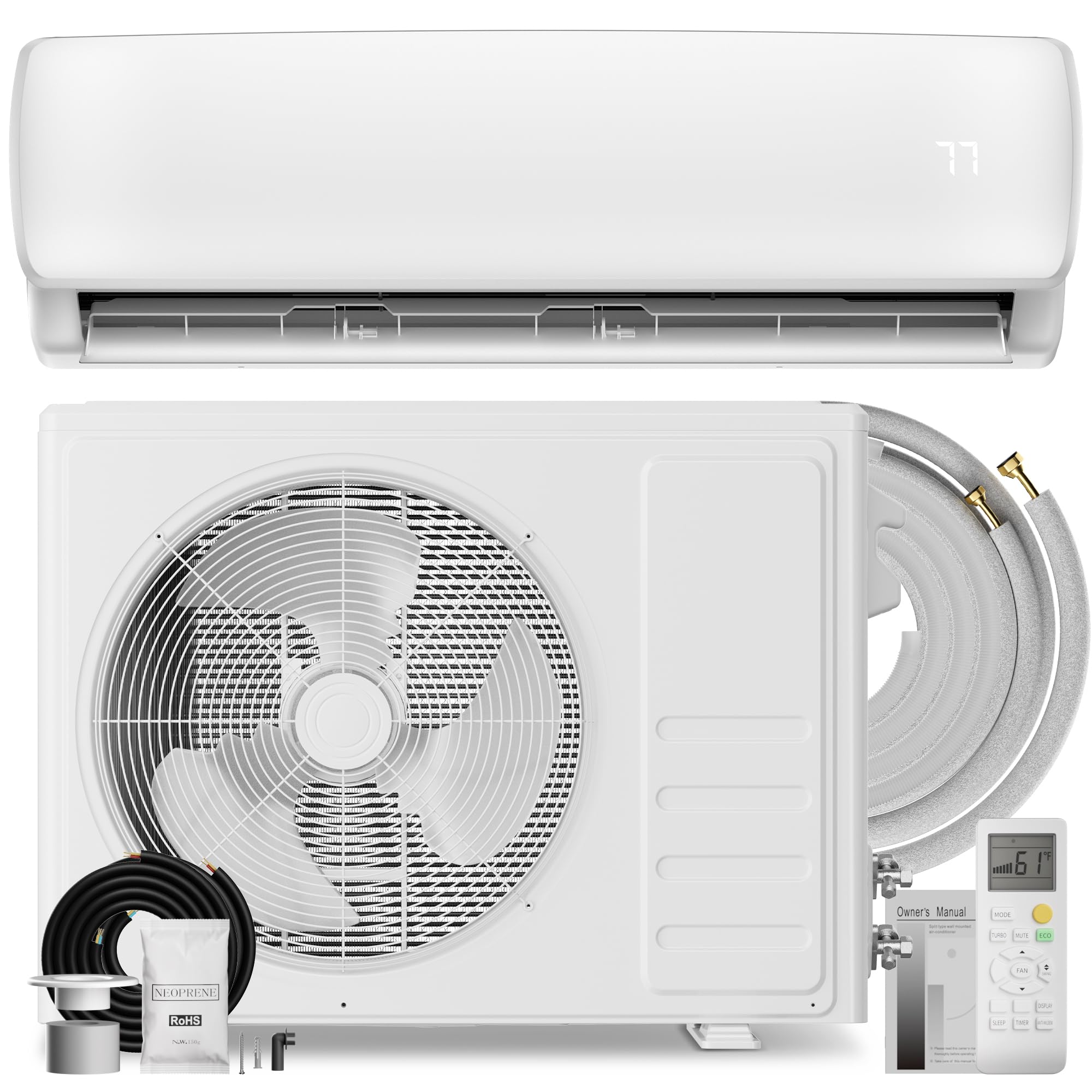
MEPTY 12000BTU Mini Split
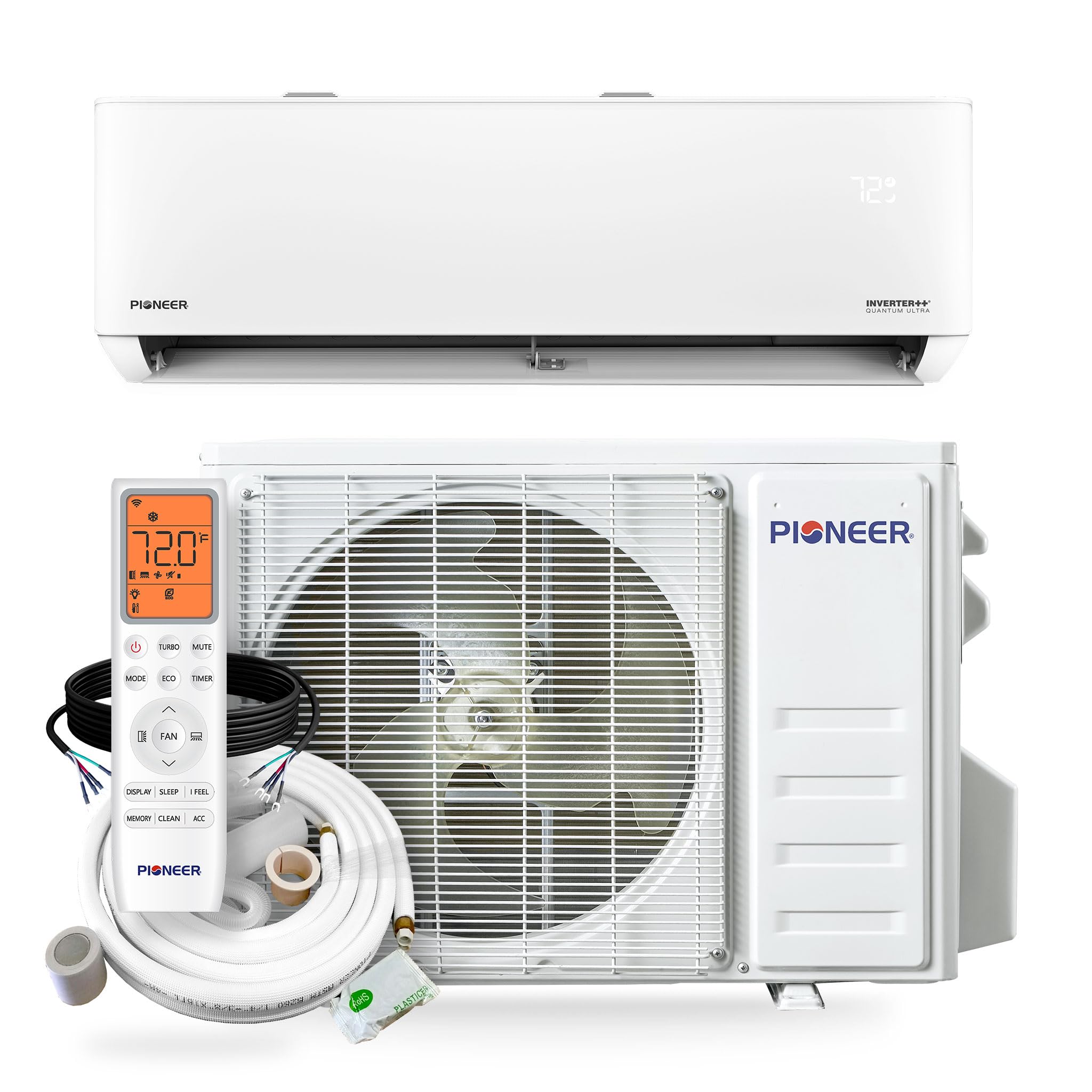
Pioneer Quantum Ultra 24
Choosing the right mini-split system for your home can feel like navigating a maze of technical jargon and impressive-sounding features. You want comfort, efficiency, and a system that will last. Today, we’re diving deep into two popular contenders: the MEPTY 12000BTU Mini Split AC/Heating System and the Pioneer Quantum Ultra 24,000 BTU High-Wall Ductless System. Both promise to deliver excellent climate control, but they cater to different needs and scales.
This comparison isn’t just about comparing numbers; it’s about understanding what makes each unit tick, who they’re best suited for, and ultimately, helping you make an informed decision. Whether you’re looking to cool a single room, a garage, or a larger living space, we’ll break down the MEPTY 12000BTU Mini Split and the Pioneer Quantum Ultra 24 to help you find your perfect match. Let’s explore what sets these two apart.
In-Depth Look: MEPTY 12000BTU Mini Split
The MEPTY 12000BTU Mini Split is designed to be a versatile and energy-efficient solution for smaller to medium-sized spaces. With its 12,000 BTU capacity, it’s well-suited for single rooms, apartments, garages, or offices. What immediately stands out is its commitment to energy savings, boasting a 19 SEER2 rating. This means it’s designed to be highly efficient, using less energy to cool or heat your space, which translates directly to lower electricity bills.
At its core, the MEPTY 12000BTU Mini Split utilizes advanced inverter technology. This isn’t just a buzzword; it means the compressor doesn’t just turn on and off abruptly. Instead, it intelligently adjusts its speed based on your room’s temperature. If it’s getting close to your set point, it slows down, and if it drifts, it speeds up. This constant, subtle adjustment is key to maintaining a stable temperature and using significantly less energy compared to older, non-inverter models. MEPTY claims up to 36% energy savings, which is a substantial figure.
One of the most appealing features for many users is the “Quick Cooler & Heater” function. Nobody likes waiting around for a room to become comfortable. This unit aims to deliver rapid temperature changes, cooling your space in as little as 30 seconds and heating it in about 60 seconds. This is perfect for those moments when you walk into a stuffy room or need to quickly warm up on a chilly evening. It also comes pre-charged with R32 refrigerant, which is a more environmentally friendly option than older refrigerants, offering a good balance between performance and reduced environmental impact.
The 4-in-1 multi-function design is another strong point. It covers all your bases: cooling, heating, a simple fan mode for gentle air circulation, and a dehumidifying mode. The latter is crucial for comfort, especially in humid climates, as it removes excess moisture from the air, making it feel cooler and preventing that sticky, unpleasant sensation. You also get control over airflow with four fan speeds and an up-and-down swing function to distribute air evenly, avoiding those annoying drafts that blow directly on you.
From a user experience perspective, the MEPTY 12000BTU Mini Split aims for quiet operation. MEPTY states it can operate as low as 35dB in its “mute mode.” For reference, a whisper is around 30dB, so this unit should be unobtrusive, making it ideal for bedrooms, living areas, or even offices where noise can be a distraction. The temperature range for both cooling and heating is typically between 61°F and 88°F, providing a good spectrum for comfort.
Smart control is also part of the package. The included remote allows you to easily adjust settings like temperature, fan speed, and mode without having to get up. The 24-hour timer is a convenient feature that lets you program the unit to turn on or off at specific times, further enhancing energy savings and convenience. Imagine setting your AC to start cooling your bedroom before you even get out of bed.
Pros:
Excellent Energy Efficiency: The 19 SEER2 rating and inverter technology promise significant energy savings.
Rapid Temperature Control: The quick cooling and heating feature is a major plus for immediate comfort.
Versatile 4-in-1 Functionality: Covers cooling, heating, fan, and dehumidifying needs.
Quiet Operation: Low dB level makes it suitable for noise-sensitive environments.
Eco-Friendly Refrigerant: Uses R32, which is better for the environment.
User-Friendly Controls: Remote control and timer add convenience.
Compact Size: Ideal for smaller spaces or supplementary heating/cooling.
Cons:
Limited Capacity: 12,000 BTU is suitable for smaller areas; it won’t be enough for large open-plan homes or multiple rooms without additional units.
Installation Complexity: While some reviewers mention ease, mini-splits generally require professional installation or at least a good understanding of HVAC systems for optimal performance and safety. Vacuuming the lines is often recommended.
Customer Reviews Spotlight:
One user installed the MEPTY 9000BTU (a smaller sibling) in their garage, which gets very hot. They were impressed by its ability to keep the 450 sq. ft. space comfortably cool, noting the energy savings from the 19 SEER2 rating and inverter technology. Another reviewer stated the unit “works wonderful and heats and cools awesome. Just what unneeded for my size home,” highlighting its effective performance. A third mentioned that while installation wasn’t the easiest, it was “very close to it,” and they recommended vacuuming the lines for the best results, especially for their 115v unit with a 10 ft lineset.
Best For:
The MEPTY 12000BTU Mini Split is an excellent choice for:
Homeowners or renters looking to climate control a single room, apartment, condo, or a specific zone like a bedroom, living room, or home office.
Those with garages, workshops, or additions that need efficient, dedicated heating and cooling.
Individuals prioritizing energy efficiency and lower utility bills.
People who want rapid temperature adjustments.
In-Depth Look: Pioneer Quantum Ultra 24
The Pioneer Quantum Ultra 24 is a powerhouse designed for larger cooling and heating demands. With a substantial 24,000 BTU capacity, this unit is built to handle significantly larger spaces than the MEPTY 12000BTU Mini Split. This makes it a strong contender for main living areas, larger homes, or spaces with higher heating and cooling loads. The “Ultra” designation in its name often signifies enhanced features and performance, and in this case, it’s backed by a very impressive 23 SEER2 energy efficiency rating, which is even higher than the MEPTY unit. This means it’s one of the most efficient systems available for its capacity.
Operating on a 230V power supply, the Pioneer Quantum Ultra 24 is built for robust performance. This voltage requirement indicates it’s designed for heavier loads and is typically found in homes with appropriate electrical infrastructure. Like the MEPTY, it’s very likely to feature advanced inverter technology, allowing for precise temperature control and significant energy savings, even at its higher capacity. This technology is crucial for maintaining comfort without running up a massive electricity bill, especially considering the unit’s powerful output.
While specific multi-function modes aren’t detailed in the product snippet, ductless mini-split systems of this caliber universally offer cooling, heating, fan, and dehumidifying functions. The ability to provide effective heating in colder months is a key benefit, making it a true year-round climate solution. Its higher SEER2 rating suggests superior performance in both cooling and heating efficiency.
The installation of the Pioneer Quantum Ultra 24 is noted by customers to be a significant project, often taking a full day or more for a DIYer. This isn’t unusual for larger capacity systems and highlights the need for careful planning and execution. However, the reviews also emphasize the substantial cost savings compared to professional installation quotes for comparable brands like Mitsubishi. This points to the Pioneer Quantum Ultra 24 as a strong value proposition for those comfortable with DIY or who have a skilled contact for the installation process. It’s crucial to note that proper installation, including pulling a vacuum on the lines with a dedicated HVAC vacuum unit, is vital for performance and longevity. Flaring tube ends correctly to prevent leaks is also a critical skill.
A key point for DIY installers is the voltage. The 230V requirement means a dedicated circuit is necessary. If you’re not familiar with electrical work, this is where professional help is essential. The installation process, while demanding, is achievable for the technically inclined, as evidenced by the customer reviews. This indicates the system is designed with the understanding that a segment of users will opt for self-installation to save costs.
The “Quantum Ultra” line from Pioneer is generally known for its robust build quality and reliable performance. While specific noise levels aren’t detailed here, Pioneer systems typically aim for quiet operation, especially given their high efficiency ratings. For a 24,000 BTU unit, you’d expect it to be audible during peak operation, but very quiet during maintenance cycles.
Pros:
High Capacity: 24,000 BTU is ideal for large rooms, open-plan living areas, or even smaller whole-house applications.
Exceptional Energy Efficiency: A 23 SEER2 rating is top-tier, promising significant long-term savings.
Powerful Performance: Capable of handling significant heating and cooling loads.
Value for Money: Offers substantial savings for DIY installation compared to premium brands.
Robust Build (Implied): Pioneer’s reputation suggests good quality and durability.
230V Operation: Suitable for homes with the necessary electrical infrastructure for high-demand appliances.
Cons:
Installation Demands: Requires a higher level of DIY skill or professional installation, especially regarding electrical work and refrigerant line handling.
Higher Initial Cost (Potentially): While offering good value, a 24,000 BTU unit will naturally have a higher purchase price than a 12,000 BTU unit.
Requires 230V Circuit: Not compatible with standard 115V outlets.
Customer Reviews Spotlight:
One reviewer expressed curiosity about the “Diamante Ultra” versus the regular version but purchased the newest one. They noted the installation was “quite a project,” taking them “almost a day and a half” but they took their time. Another user, after finishing installation, stated it “Works great!” They confirmed that a homeowner can install it if they can run a dedicated circuit and pull a vacuum. They pointed out the huge cost savings compared to a $6700 quote for a similar Mitsubishi unit. A third reviewer was “Very happy with this purchase” and found it “not too difficult to assemble for someone good with DIY projects,” though they did hire an HVAC professional to evacuate the lines after a procedural error, emphasizing the importance of having the right tools and watching installation videos.
Best For:
The Pioneer Quantum Ultra 24 is the ideal choice for:
Larger homes or living spaces that require a significant cooling and heating capacity.
Open-plan layouts where a single unit needs to serve a broad area.
Homeowners looking for a primary whole-house solution in smaller to medium-sized homes, especially if supplemented by other systems.
DIY enthusiasts who are comfortable with complex installations and want to save on labor costs.
* Those with a 230V electrical service available.
Head-to-Head Comparison
Let’s break down how these two systems stack up against each other on key aspects.
Capacity and Space Coverage
The most obvious difference is the BTU output. The MEPTY 12000BTU Mini Split is designed for smaller zones, typically recommended for rooms up to 500-600 square feet. This makes it perfect for a single bedroom, a small living room, or a detached garage. The Pioneer Quantum Ultra 24, with its 24,000 BTU capacity, is in a different league. It’s designed for much larger areas, often recommended for spaces up to 1000-1200 square feet or more, making it suitable for entire open-plan living areas or larger homes where a single unit can make a significant impact. If you’re trying to cool or heat a substantial portion of your home, the Pioneer is the clear choice.
Energy Efficiency and Savings
Both units feature inverter technology and high SEER2 ratings, which is excellent for energy savings. However, the Pioneer Quantum Ultra 24 edges out the MEPTY with a 23 SEER2 rating compared to the MEPTY’s 19 SEER2. While 19 is still very good, 23 is exceptionally efficient for its capacity. This means that for every unit of energy consumed, the Pioneer system delivers more cooling or heating. Over the long run, especially with a unit of this size running frequently, the Pioneer’s higher efficiency could lead to greater electricity bill savings, even though the MEPTY is also designed for significant energy conservation. For a smaller space, the MEPTY’s 19 SEER2 is more than adequate and highly efficient, but the Pioneer is at the forefront of efficiency for larger capacities.
Installation and Setup
This is a significant differentiator. The MEPTY 12000BTU Mini Split, especially if it’s a 115V model as suggested by customer feedback, is generally easier to install. Many 115V models can be plugged into a standard outlet or require simpler electrical connections. While professional installation is always recommended for optimal performance and safety, DIY installation is more feasible for smaller, lower-voltage units. The Pioneer Quantum Ultra 24, being a 230V unit, necessitates a dedicated circuit and a more robust electrical setup. Customer reviews consistently point out that installation is a major undertaking, requiring specific HVAC knowledge for vacuuming lines and proper refrigerant handling. While this offers potential cost savings for skilled DIYers, it presents a higher barrier to entry and a greater need for professional assistance for the average homeowner. If ease of installation is a top priority, the MEPTY likely wins, assuming it’s a 115V model. For those comfortable with more complex DIY, the Pioneer offers significant value.
Features and Functionality
Both systems offer the core functionality of cooling, heating, fan, and dehumidifying modes. The MEPTY 12000BTU Mini Split explicitly mentions its 4-in-1 design and features like “Quick Cooler & Heater,” a low 35dB mute mode, and an up-and-down air swing. The Pioneer Quantum Ultra 24, as a higher-end unit, will undoubtedly offer these core functions, and likely similar advanced features, though they are not as explicitly detailed in the provided information. The MEPTY’s explicit mention of quick temperature changes and ultra-quiet operation might give it a slight edge in user-centric features for smaller spaces. However, the sheer power and efficiency of the Pioneer are its primary feature for larger applications.
Cost and Value
The cost comparison is complex and depends heavily on installation. The Pioneer Quantum Ultra 24, being a higher capacity and likely higher-end model, will have a higher upfront purchase price than the MEPTY 12000BTU Mini Split. However, customer reviews strongly suggest that the Pioneer offers excellent value for money, especially when considering the significant savings from DIY installation compared to professional quotes for comparable high-end brands. The MEPTY 12000BTU Mini Split, being a smaller unit, will have a lower initial cost. If installation costs are factored in, and if professional installation is required for both, the overall cost difference might narrow. But purely on the unit price and the potential for DIY savings, the Pioneer can be a very compelling option for larger spaces.
Frequently Asked Questions
Q: Which unit is better for a single, large living room?
A: For a single, large living room (e.g., over 600 sq. ft.), the Pioneer Quantum Ultra 24 is the more appropriate choice due to its 24,000 BTU capacity. The MEPTY 12000BTU Mini Split would likely struggle to adequately cool or heat such a large space efficiently.
Q: Can I install either of these myself?
A: The MEPTY 12000BTU Mini Split, especially if it’s a 115V model, is more likely to be suitable for DIY installation for individuals with some technical aptitude. The Pioneer Quantum Ultra 24, being a 230V unit and higher capacity, presents a more complex installation. While many customers successfully install it themselves, it requires more advanced knowledge of electrical work and HVAC systems, including vacuuming refrigerant lines. Professional installation is recommended for both for optimal performance and to maintain warranties.
Q: Which unit will save me more on my electricity bill?
A: Both units are designed for energy efficiency. The Pioneer Quantum Ultra 24 has a higher SEER2 rating (23 vs 19) and a larger capacity. If you have a large space that requires significant run time, the Pioneer’s superior efficiency could lead to greater absolute energy savings. However, the MEPTY 12000BTU Mini Split is very efficient for its size, and if you are only cooling a small room, its overall energy consumption will naturally be lower than a larger unit running in a similar space.
Q: What kind of maintenance do these units require?
A: Both mini-split systems require regular maintenance, primarily cleaning the air filters every 1-3 months. You should also schedule professional check-ups annually or bi-annually to ensure the system is running optimally, check refrigerant levels, and clean the indoor and outdoor coils. For more detailed guidance, you might find resources on mini-split maintenance helpful.
Q: Are these units noisy?
A: The MEPTY 12000BTU Mini Split is noted for its quiet operation, as low as 35dB in mute mode, making it excellent for bedrooms. The Pioneer Quantum Ultra 24, while likely designed for quiet operation, is a higher-capacity unit and may be more audible during peak performance than the MEPTY’s lowest setting. However, modern high-efficiency units are generally much quieter than traditional AC systems.
Q: What’s the difference between SEER2 and older SEER ratings?
A: SEER2 is the updated standard for measuring air conditioner and heat pump energy efficiency, reflecting more realistic operating conditions (like wind on the outdoor unit and longer refrigerant lines). A 19 SEER2 rating is generally equivalent to a higher SEER rating (around 19.7 SEER) in the older standard. The SEER2 standard provides a more accurate representation of real-world energy savings. Understanding energy usage comparisons can be insightful.
Final Verdict: Which One Should You Choose?
The choice between the MEPTY 12000BTU Mini Split and the Pioneer Quantum Ultra 24 boils down to the size of the space you need to condition and your installation capabilities.
If you’re looking to efficiently and comfortably cool or heat a single room, an apartment, a garage, or a small office, the MEPTY 12000BTU Mini Split is likely your best bet. Its 12,000 BTU capacity is perfectly suited for these smaller applications, and its features like rapid temperature control, ultra-quiet operation, and a user-friendly interface make it a fantastic all-around choice for targeted comfort. Its 19 SEER2 rating ensures it’s also an energy-conscious decision for these smaller zones.
On the other hand, if you have a larger space – think an open-plan living area, a substantial portion of your home, or a space that requires a significant heating or cooling load – the Pioneer Quantum Ultra 24 is the clear winner. Its 24,000 BTU capacity is designed for these bigger jobs, and its impressive 23 SEER2 rating makes it exceptionally efficient for its power. Coupled with the potential for significant DIY installation savings, it offers outstanding value for those needing serious climate control. Just be prepared for a more involved installation process and the requirement of a 230V electrical circuit.
Ultimately, both are strong contenders in the mini-split market. The MEPTY 12000BTU Mini Split offers focused comfort and efficiency for smaller spaces, while the Pioneer Quantum Ultra 24 provides robust, highly efficient performance for larger areas. Consider the size of your space, your budget for installation, and your comfort priorities to make the right selection.
