
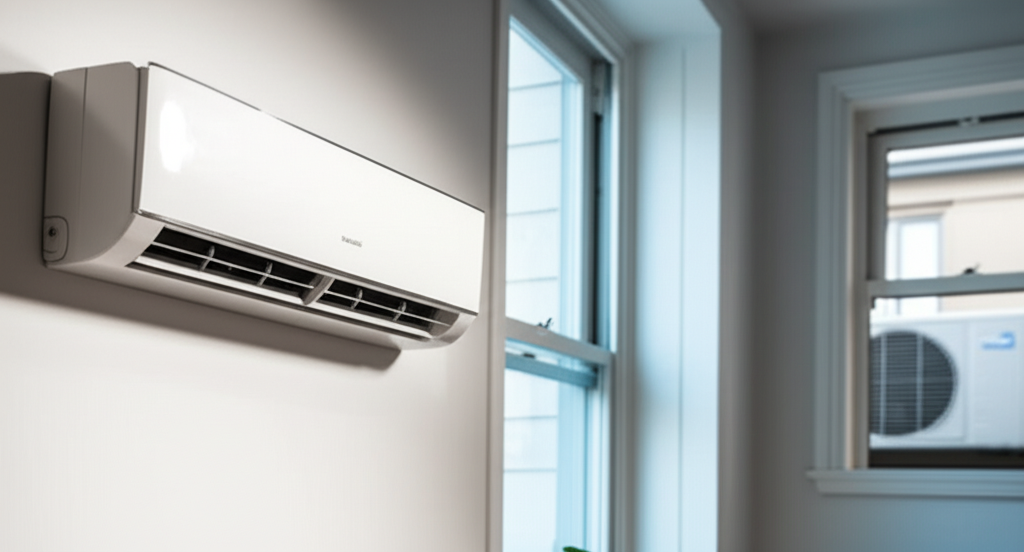
Quick Summary: Mini-split systems are almost always the clear winner for energy savings over window units, often using 30% to 50% less electricity to cool the same space effectively.
Are you staring at your electric bill, wondering where all that money is going? Picking the right air conditioner can feel like solving a giant puzzle. You need to cool your home, but you do not want to break the bank doing it. It is confusing comparing those bulky window units to the sleek mini-splits. Don’t sweat it! I’m Jack from ACReviewHub.com, and I promise to break down the energy secrets of both systems. By the end of this guide, you will know exactly which unit saves you the most cash.
Why Energy Usage Matters for Your Wallet and Comfort
We all want a cool house when summer hits. But the machine running all day long sucks up power. That power shows up as dollars on your monthly statement. Understanding how each AC type uses electricity is the first step to saving money. It is not just about the sticker price; it is about the long-term cost of running the machine.
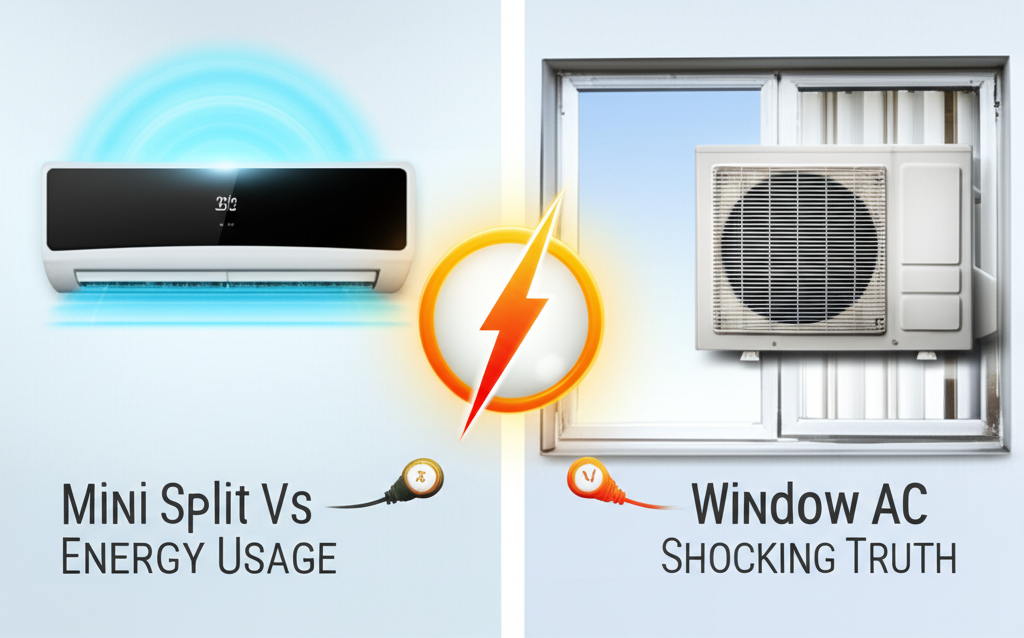
Window ACs: The Familiar Workhorse Explained Simply
Window units are great for cooling one room quickly. They are usually cheaper to buy upfront. However, they work by running their compressor at full blast until the room hits the temperature you set. Then, they shut off completely. When the room warms up even a little, they kick back on at 100% power again. This constant on-and-off cycle uses a lot of energy.
Think of it like driving a car where you constantly slam the gas pedal to the floor and then slam the brakes. It wastes fuel, right? That is what a standard window AC does to electricity.
The Mini-Split Secret: How Inverter Technology Saves Big Bucks
Mini-split systems look different because they have an indoor unit and an outdoor unit connected by a thin line. The real magic is inside the outdoor unit—it uses something called inverter technology. This is the game-changer for energy use.
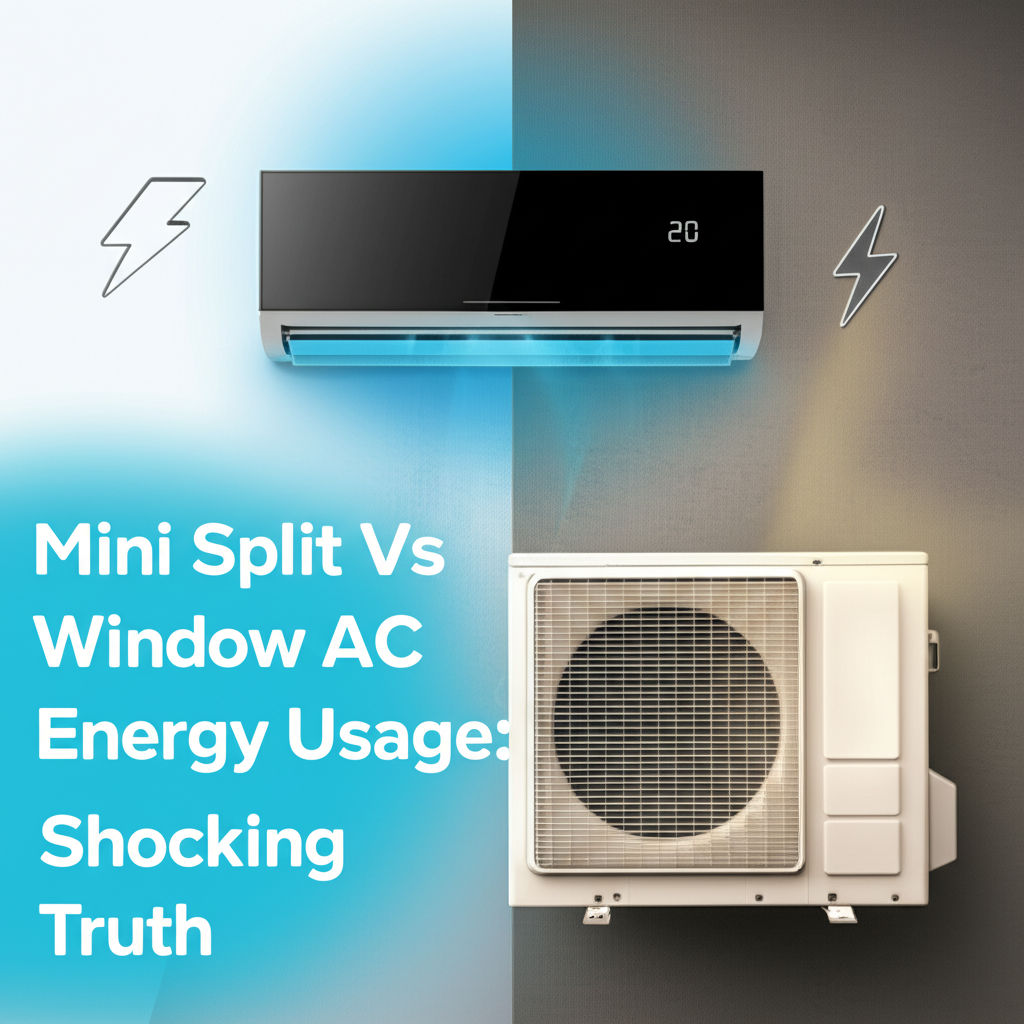
Instead of turning completely off and on, an inverter compressor speeds up or slows down, just like cruise control in your car. If the room only needs a little cooling, the compressor runs slowly and sips electricity.
This constant, gentle running keeps the temperature steady and avoids those huge power surges that window units create every time they restart. This smooth operation is why mini-splits win the energy race.
Energy Usage Showdown: Mini-Split vs. Window AC
To see the shocking truth, we need to look at how much power they actually draw. While exact numbers depend on the size (BTUs) and age of the unit, the general pattern holds true.
| AC Type | Typical Running Wattage (Medium Size) | Energy Efficiency Rating (SEER Range) | Key Energy Feature |
|---|---|---|---|
| Window AC (Standard) | 800 – 1,500 Watts | 9 – 11 | On/Off Cycling (Less Efficient) |
| Ductless Mini-Split (Inverter) | 300 – 1,000 Watts (Variable) | 18 – 30+ | Variable Speed Compressor (Highly Efficient) |
Notice that SEER rating? SEER stands for Seasonal Energy Efficiency Ratio. A higher number means better efficiency. Most new mini-splits have much higher SEER ratings than standard window units.
Understanding SEER Ratings for Beginners
The U.S. government sets minimum efficiency standards. If you are buying new, always look for the highest SEER rating you can afford. Higher SEER equals lower electric bills over the AC’s life.
- SEER 13-15: Good baseline efficiency for many regions.
- SEER 16-19: Very good efficiency; noticeable savings.
- SEER 20+: Excellent, premium efficiency; maximum savings potential.
How to Pick the Right Size (BTUs) So You Don’t Waste Power
Whether you choose a window unit or a mini-split, picking the wrong size is a huge energy killer. An AC that is too big cools too fast and shuts off before it removes humidity. An AC that is too small runs constantly but never truly cools the space down.
We measure cooling power in BTUs (British Thermal Units). Here is a quick cheat sheet to get you started:
| Room Size (Square Feet) | Recommended BTU Capacity |
|---|---|
| 150 to 250 sq ft | 5,000 to 6,000 BTU |
| 250 to 350 sq ft | 7,000 to 8,000 BTU |
| 350 to 450 sq ft | 9,000 to 10,000 BTU |
| 450 to 550 sq ft | 12,000 BTU |
For more detailed guidance on sizing, the Department of Energy has excellent calculators available online.
Simple Steps to Maximize Energy Savings with Either AC Type
You can save energy regardless of the unit you choose if you follow a few simple habits. These tips cost you nothing but a little bit of attention.
- Set the Thermostat Wisely: Aim for 78°F when you are home during the day. Every degree lower can increase energy use by 3% to 5%.
- Use Fans Wisely: Ceiling fans circulate the cool air, making you feel 4 degrees cooler without lowering the thermostat.
- Block the Sun: Close blinds and curtains on south- and west-facing windows during the hottest part of the day.
- Check Filters Monthly: A dirty filter makes any AC work much harder. Clean or replace it right away.
- Seal Air Leaks: Check around window unit frames or where pipes enter your walls for gaps. Seal them with weatherstripping.
Common Mistakes That Drain Your Energy Bills
Sometimes we make small mistakes that cost us a lot of money over a season. Avoiding these pitfalls is key to keeping those energy costs down.
- Mistake 1: Oversizing the Unit. If you buy a 14,000 BTU unit for a tiny bedroom, it cycles too fast and wastes energy. Always measure your space first!
- Mistake 2: Ignoring Maintenance. Letting dust build up on coils is like putting a blanket on your AC motor. It struggles and uses more power.
- Mistake 3: Setting the Thermostat Too Low. Setting it to 68°F will not make you cool faster; it will just make the AC run constantly until it hits that low number, using maximum power the whole time.
Frequently Asked Questions (FAQ) for AC Beginners
Q: Do mini-splits cost a lot more to install than window units?
A: Yes, the upfront installation cost is higher for a mini-split, but the energy savings usually make up that difference in just a few years.
Q: Can I use a window AC in a sliding glass door?
A: It is generally not recommended. They are designed for vertical windows, and sealing a sliding door opening properly is tough, leading to air leaks and wasted energy.
Q: How much energy does an old window unit use compared to a new one?
A: Significant amounts! Older units might be 30% less efficient than even basic new models because technology has improved so much.
Q: Do mini-splits work as heaters too?
A: Most modern mini-splits are “heat pumps” and work very well for heating, often being much more efficient than a standard electric furnace.
Q: If I only run my AC for one hour a day, does it matter which type I have?
A: Even for short runs, the mini-split’s ability to start up efficiently without a massive power spike gives it a slight edge.
Final Thoughts on Choosing Cool Comfort Over High Bills
See? That was not so scary after all! When we look closely at how these machines work, the winner for long-term energy savings is clearly the mini-split system because of that smart inverter technology. However, if you are only cooling one small room temporarily, a properly sized window unit is fine.
The real secret to saving money isn’t just buying the right machine; it’s treating it right with simple, consistent maintenance. Keep those filters clean, keep that thermostat sensible, and you will stay cool without the shock when the bill arrives. Stay comfortable out there!
