
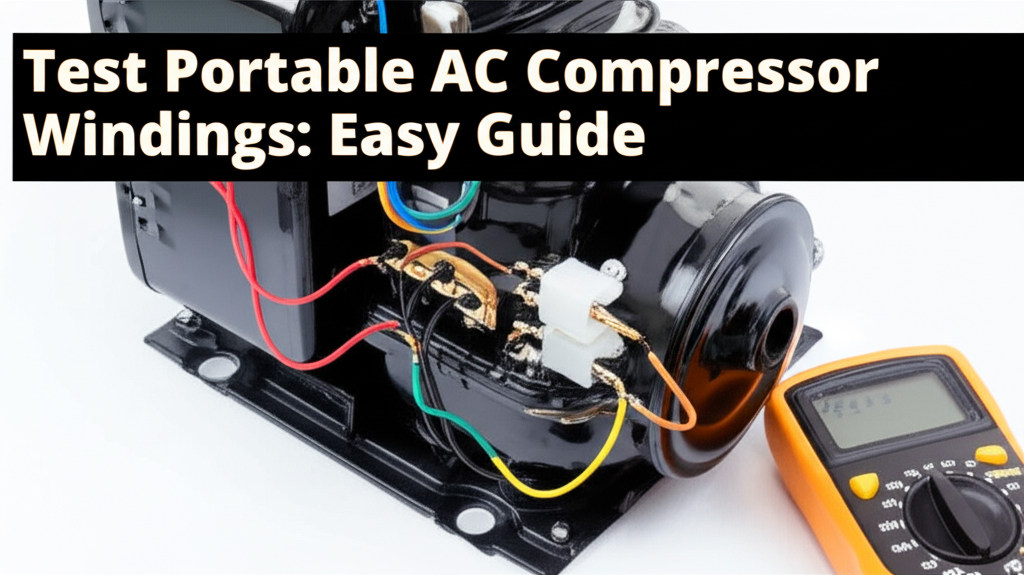
Summary: Testing your portable AC compressor windings is a straightforward process that helps you diagnose cooling issues and potentially save on repair costs. This guide breaks it down step-by-step for easy understanding.
Is your portable air conditioner not cooling like it used to? It can be frustrating when that trusty unit decides to take a break, especially when the heat is on. Many times, a small issue is the culprit, and knowing a bit about your AC can help you fix it. Don’t worry, we’re going to walk through how to check a key part of your AC’s cooling system.
In this guide, we’ll focus on testing the compressor windings. It sounds technical, but I promise to make it super simple. You’ll learn what windings are, why they matter, and how to check them yourself. Let’s get your cool air flowing again!
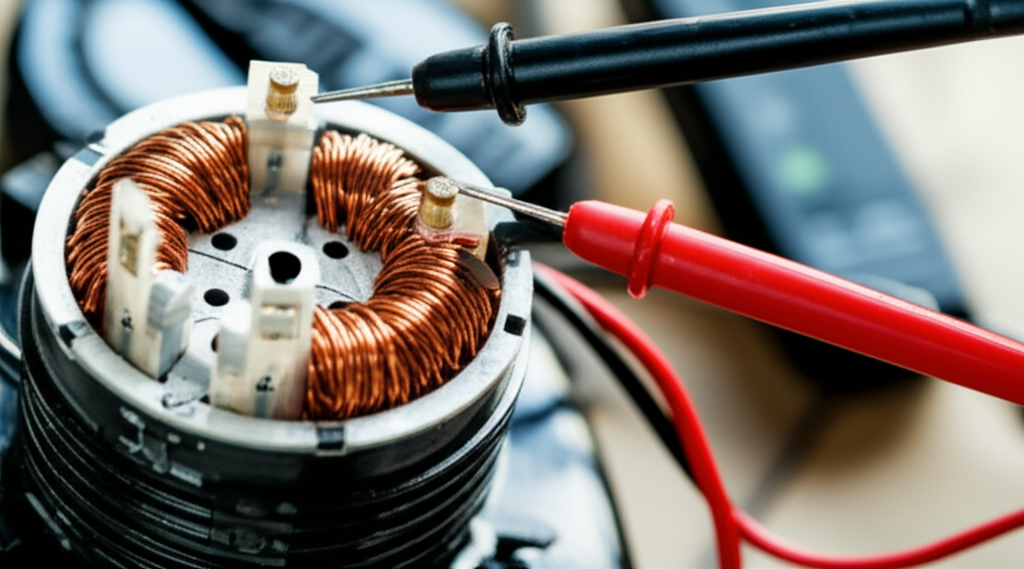
What are AC Compressor Windings?
Think of the compressor as the heart of your air conditioner. It’s a small, powerful motor that pumps the refrigerant, which is what actually cools your air. Inside this motor are coils of wire called windings. These windings create the magnetic field needed to make the compressor spin.
Why Test Compressor Windings?
If your compressor isn’t working right, your AC won’t cool. The windings are a common place for problems to happen. They can get damaged from overheating or electrical surges. Testing them helps us figure out if the compressor itself is the issue, or if something else is causing the problem.
Safety First!
Before we touch anything, safety is super important. Always, always unplug your portable AC from the wall. Never work on a plugged-in appliance. Also, give your AC a little time to cool down after it’s been running. Safety glasses are a good idea too, just in case.
Gather Your Tools
You won’t need a whole toolbox for this. Just a few simple things will do:
Screwdriver set (usually Phillips head)
A multimeter (this is a handy tool for measuring electricity)
Your portable air conditioner
How to Access the Compressor
Most portable ACs have a removable panel that gives you access to the inner workings. You’ll usually find screws on the back or sides of the unit.
Carefully unscrew the panel.
Set the panel and screws aside in a safe place so you don’t lose them.
Gently lift or slide the panel off.
What Does a Multimeter Do?
A multimeter is like a detective for electricity. It can measure voltage (the “push” of electricity), current (how much electricity is flowing), and resistance (how much something is blocking electricity). For testing windings, we’ll use the resistance setting.
Understanding Resistance
Resistance is measured in Ohms (Ω). Think of it like a narrow pipe for water. A low resistance means electricity flows easily. A high resistance means it’s hard for electricity to flow. If windings are broken, the resistance will be infinite (like a broken pipe).
Testing the Windings: Step-by-Step
Now, let’s get to the actual test. Don’t be nervous; we’ll go slow.
1. Locate the Compressor: Inside your AC, you’ll see various components. The compressor is usually a black, cylindrical or oval-shaped metal unit. It will have wires connecting to it.
2. Find the Compressor Terminals: On the compressor, there will be a small electrical connection block. It often has three metal prongs sticking out. These are the terminals. They might be labeled “C” (common), “S” (start), and “R” (run), but sometimes they are not clearly marked.
3. Set Your Multimeter: Turn your multimeter dial to the resistance setting (often shown as Ω). Make sure it’s set to a range that can measure ohms, usually something like 200Ω or 2kΩ.
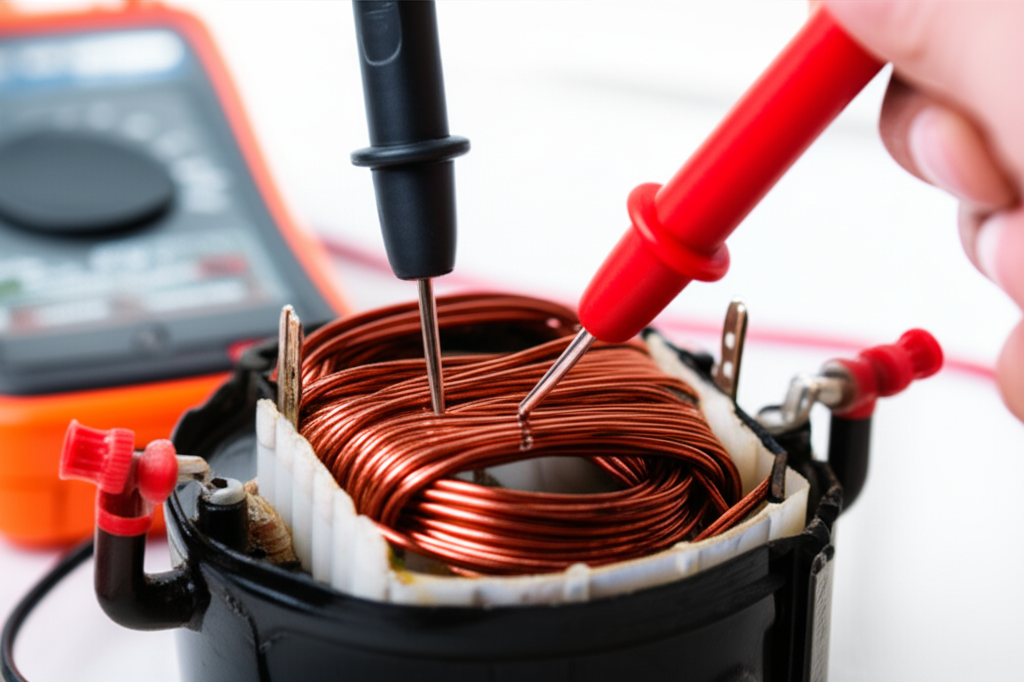
4. Test Between Terminals: You’ll be testing the resistance between pairs of these terminals.
Place one multimeter probe on the “C” terminal and the other on the “S” terminal. Note the reading.
Now, move the probe from “S” to “R” and test again. Note the reading.
Finally, test between “C” and “R”. Note the reading.
5. What Readings Mean:
Good Windings: You should get a low, consistent resistance reading for each pair. The exact numbers vary by model, but they should be similar to each other (e.g., if C-S is 5 ohms, C-R might be 6 ohms, and S-R might be 11 ohms).
Bad Windings:
Infinite Resistance (OL or 1): If your multimeter shows “OL” (overload) or a “1” for any pair, it means the winding is broken. The compressor is likely bad.
Very Low Resistance (Near 0): This could indicate a short circuit within the winding, which is also a problem.
Uneven Readings: If the readings are wildly different or one pair shows no connection while others do, it’s a sign of trouble.
Troubleshooting Common Symptoms
Here’s a quick look at what your AC might be doing and if it could be the compressor windings.
| Symptom | Possible Cause (Including Compressor Windings) |
|---|---|
| AC turns on, fan blows, but no cool air | Low refrigerant, dirty coils, bad compressor windings |
| AC makes a humming noise but won’t start cooling | Bad start winding, capacitor issue, seized compressor |
| AC cycles on and off quickly | Overheating, thermostat issue, compressor problem |
When to Call a Professional
If you find that your compressor windings are indeed faulty (showing infinite resistance or other bad signs), it generally means the compressor itself needs to be replaced. For most portable AC units, replacing the compressor is often more expensive than buying a new unit. It’s usually best to call a qualified HVAC technician to confirm the diagnosis and discuss your options.
Need More AC Info?
For more tips on energy efficiency and understanding your AC’s cooling power, the U.S. Department of Energy has some great resources. You can learn about Energy Star certified appliances and tips to keep your energy bills down: Energy.gov Home Cooling.
Frequently Asked Questions
Q: Do I need to be an expert to test compressor windings?
A: Not at all! With a multimeter and this guide, anyone can give it a try. Just remember to prioritize safety.
Q: What if my multimeter doesn’t show numbers for resistance?
A: Make sure the dial is set to the correct resistance setting (Ω) and that the probes are making good contact with the terminals.
Q: Can I just replace the windings myself?
A: Replacing individual windings is a very complex job, usually only done on large industrial compressors. For portable ACs, it’s typically not feasible or cost-effective.
Q: How much does a new portable AC cost?
A: Prices vary, but you can find decent portable AC units from a few hundred dollars upwards. Check reviews to find one that fits your room size and budget.
Q: Is it cheaper to fix my old AC or buy a new one?
A: If the repair involves a major component like the compressor, it’s often more economical to buy a new unit, especially if your old one is several years old.
Q: How often should I clean my portable AC?
A: Clean the air filter every 2-4 weeks during heavy use. A deeper clean of coils and the exhaust hose can be done seasonally.
Keep Your Cool, One Step at a Time
See? Testing your portable AC compressor windings isn’t as scary as it sounds. By taking a few simple steps and using a multimeter, you can gain valuable insight into why your AC might not be cooling properly. Remember, regular maintenance and understanding the basics can save you time, money, and a lot of sweaty nights.
Stay cool and confident with your AC knowledge!
