
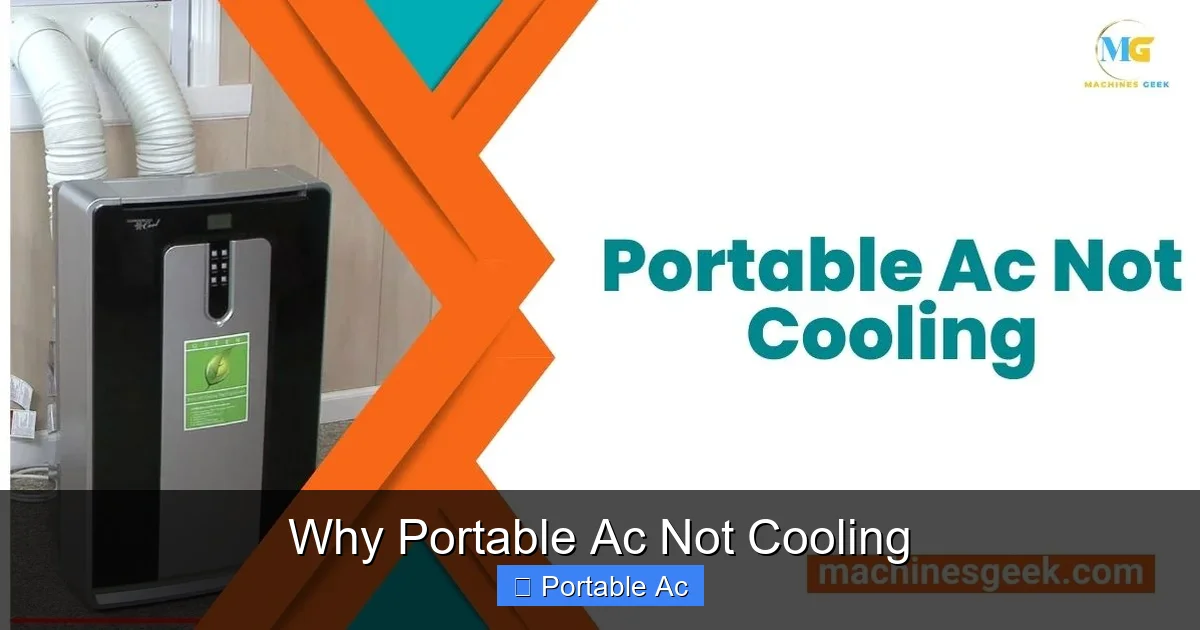
Your portable AC isn’t cooling—but don’t panic. Most issues stem from simple causes like dirty filters, blocked exhaust hoses, or low refrigerant. With a few quick checks and maintenance steps, you can often restore full cooling power yourself. This guide walks you through the most common reasons why portable AC not cooling happens—and how to fix them fast.
You just bought a portable AC to escape the summer heat, only to find it’s blowing warm air. Frustrating, right? You’re not alone. Many homeowners and renters face the same issue: why portable AC not cooling. It’s one of the most common complaints we hear—and the good news is, in most cases, the problem isn’t with the unit itself.
Portable ACs are designed to be user-friendly and energy-efficient, but like any appliance, they need proper care and attention. When your portable AC stops cooling, it’s usually due to a simple oversight—not a broken motor or expensive repair. With a little troubleshooting, you can often get your unit back to doing what it does best: keeping you cool.
In this guide, we’ll walk through the most likely causes of cooling failure and show you how to fix them yourself. Whether it’s a clogged filter, a tangled hose, or just the wrong settings, we’ve got you covered. Let’s dive in and get your portable AC back on track.
Key Takeaways
- Dirty or clogged air filters restrict airflow, reducing cooling efficiency. Clean or replace them monthly for best performance.
- Blocked or kinked exhaust hose prevents hot air from escaping, causing the unit to overheat and stop cooling.
- Incorrect thermostat settings can make your portable AC seem like it’s not working—double-check mode and temperature.
- Refrigerant leaks or low levels require professional attention, as they affect the core cooling mechanism.
- Room size mismatch means your unit is too small for the space, leading to constant running without cooling gains.
- External heat sources like direct sunlight or appliances can raise room temperature beyond your AC’s capacity.
- Faulty compressor or fan motor indicates internal damage needing expert repair or replacement.
Quick Answers to Common Questions
Why is my portable AC blowing warm air?
Warm air usually means the unit isn’t cooling properly. Common causes include clogged filters, blocked exhaust hoses, incorrect settings, or low refrigerant. Start by cleaning the filter and checking the hose for kinks.
Can a dirty filter stop my portable AC from cooling?
Yes. A clogged filter restricts airflow, making it harder for the AC to absorb heat. This reduces cooling efficiency and can cause the unit to overheat. Clean or replace the filter regularly.
What if my portable AC is making noise but not cooling?
Unusual noises like grinding or buzzing may indicate a failing fan motor or compressor. Check if the fan spins freely. If not, or if the noise is loud, stop using the unit and contact a technician.
How do I know if my portable AC is too small for my room?
If the unit runs constantly but the room stays warm, it’s likely undersized. Check the BTU rating against your room size. Use a BTU calculator to find the right match.
Can I fix a refrigerant leak myself?
No. Refrigerant leaks require professional repair. Attempting to refill refrigerant can damage the compressor and void your warranty. Call a licensed HVAC technician.
📑 Table of Contents
Common Reasons Why Portable AC Not Cooling
When your portable AC stops blowing cold air, it’s natural to assume the worst. But 80% of the time, the issue is something you can fix without calling a technician. Let’s go through the most frequent causes in detail.
1. Dirty or Clogged Air Filters
One of the most overlooked reasons why portable AC not cooling is due to clogged filters. Over time, dust, pet dander, and debris build up in the filter, blocking airflow. Without proper airflow, the evaporator coil can’t absorb heat efficiently, and the unit struggles to cool.
How to fix it: Locate the front panel and remove the filter. If it’s visibly dirty, rinse it under lukewarm water or replace it if it’s disposable. Let it dry completely before reinstalling. For best results, clean or replace the filter every 2–4 weeks during peak cooling season.
2. Blocked or Kinked Exhaust Hose
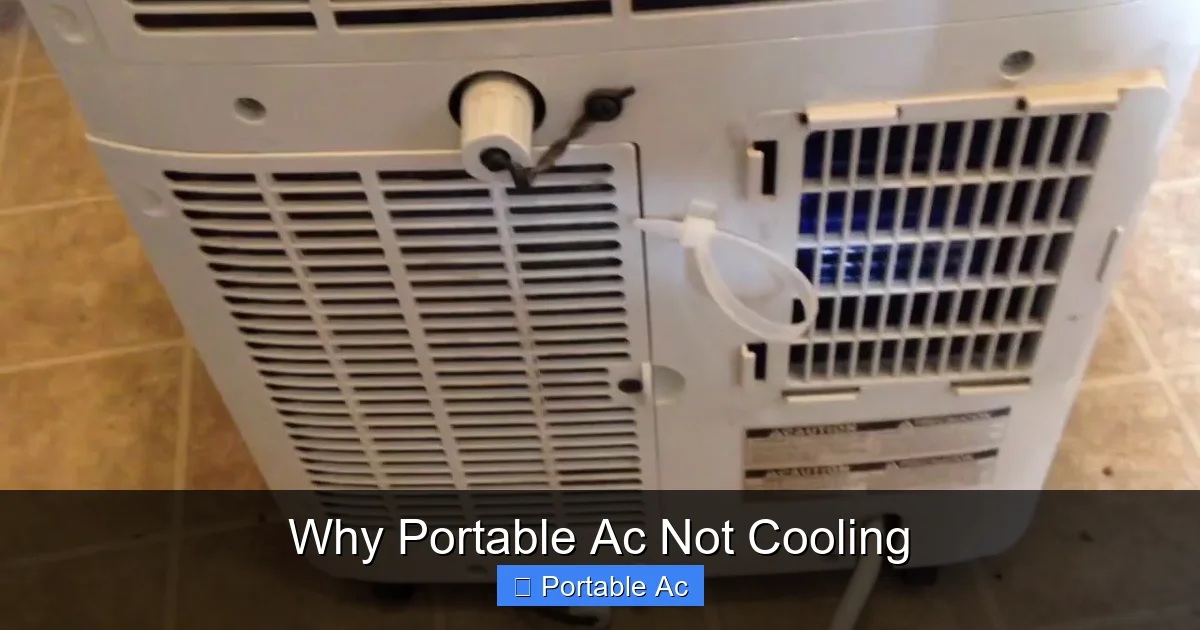
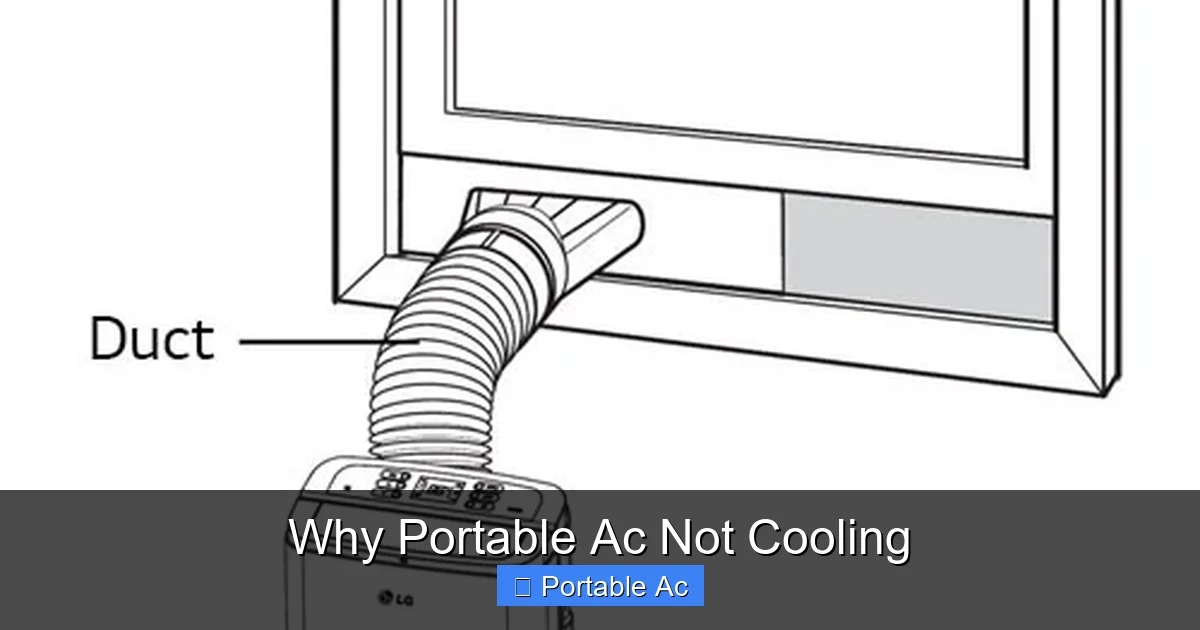
Portable ACs expel hot air through an exhaust hose connected to a window or vent. If the hose is kinked, twisted, or blocked—say, by furniture or curtains—the hot air can’t escape. This creates backpressure, causing the unit to overheat and shut down or fail to cool.
Pro tip: Keep the hose as straight and unobstructed as possible. Use a hose clamp or zip tie to secure it in place. If you’re using an extension hose, ensure it’s not longer than recommended—most units work best with hoses under 10 feet.
3. Incorrect Thermostat or Mode Settings
Sometimes, the issue isn’t mechanical—it’s user error. If your portable AC is set to “Fan Only” or “Dry Mode,” it won’t cool. Similarly, if the temperature setting is too high, the unit won’t activate the compressor.
Quick check: Make sure the mode is on “Cool” and the thermostat is set 5–8 degrees below the current room temperature. Also, verify that the remote or control panel isn’t locked or malfunctioning.
4. Low Refrigerant Levels or Leaks
Refrigerant is the lifeblood of any AC. If levels are low due to a leak or improper installation, the unit can’t absorb and release heat. This is a more serious issue and usually requires a licensed technician to diagnose and recharge.
Warning signs: If your portable AC is running nonstop but still not cooling, or if you hear hissing sounds, it may have a refrigerant leak. Do not attempt to refill refrigerant yourself—this can damage the compressor.
5. Room Size Mismatch
Not all portable ACs are created equal. If your unit has a BTU rating too low for your room size, it simply can’t cool effectively. A 5,000 BTU unit won’t cool a 500-square-foot room—and that’s why it feels like it’s not working.
How to choose the right size: Use a BTU calculator to match your room’s square footage, insulation, and sun exposure. For example, a 150-square-foot bedroom needs about 5,000 BTUs, while a 350-square-foot living room may require 8,000–10,000 BTUs.
6. External Heat Sources
Even the best portable AC can struggle if the room is too hot. Direct sunlight, kitchen appliances, or electronics like TVs and computers generate heat and raise the ambient temperature. This makes it harder for your unit to achieve the desired cooling.
Cooling strategy: Use curtains or blinds to block sunlight. Keep electronics away from the AC’s intake vents. Consider running the AC during cooler parts of the day, like early morning or evening.
7. Faulty Compressor or Fan Motor
If your portable AC is brand new and not cooling, or if it worked before but suddenly stopped, the issue could be internal. A failing compressor or fan motor won’t circulate air or transfer heat properly.
What to do: Check if the fan spins when the unit is on. If not, the motor may be burned out. Compressor issues often require professional repair. If your unit is under warranty, contact the manufacturer.
8. Drainage Issues in Self-Draining Models
Some portable ACs use a self-draining system that evaporates condensation. But if humidity is high or the unit is tilted incorrectly, water can pool and trigger a safety shutdown—stopping cooling altogether.
Tip: Ensure the unit is level and not overfilled with water. If your model has a drain pan, check it regularly. For non-self-draining units, empty the water tank every 24–48 hours.
How to Diagnose and Fix Your Portable AC
Visual guide about Why Portable Ac Not Cooling
Image source: i.ytimg.com
Now that you know the common causes, let’s go through a step-by-step diagnosis process. This methodical approach will help you pinpoint the issue quickly.
Step 1: Check the Basics
Start with the simplest fixes:
– Is the power cord plugged in?
– Is the unit turned on?
– Are the settings correct (cool mode, low temp)?
Step 2: Inspect the Filter and Airflow
Remove the filter and check for dust. Clean it or replace it. Then, feel the air coming out of the vent. If it’s warm, the issue isn’t the filter.
Step 3: Examine the Exhaust Hose
Look for kinks, bends, or blockages. Straighten the hose and ensure it’s securely connected at both ends. Make sure the window vent is open and unobstructed.
Step 4: Test the Unit in a Smaller Space
If possible, move the AC to a smaller room. If it cools that space effectively, the original room may be too large for the unit.
Step 5: Monitor for Error Codes
Many modern portable ACs display error codes on the control panel. Refer to the manual to decode them. Common codes include “E1” (drain full) or “E2” (overheat).
Step 6: Call a Professional if Needed
If none of the above steps work, and you suspect internal damage or refrigerant issues, it’s time to call a technician. Don’t ignore persistent warm air—it could signal a serious problem.
Preventive Maintenance Tips
Visual guide about Why Portable Ac Not Cooling
Image source: miro.medium.com
The best way to avoid cooling issues is with regular maintenance. Think of it like car maintenance—small care keeps your AC running smoothly.
Clean the Filter Monthly
Dust buildup is the #1 enemy of airflow. A clean filter ensures your portable AC works efficiently and lasts longer.
Keep the Exhaust Hose Straight
Avoid bending or twisting the hose. Use the included vent kit properly, and don’t block the outlet with furniture.
Use the Right Window Kit
Not all window kits are created equal. Make sure your vent kit fits snugly and doesn’t leak hot air back into the room.
Level the Unit
Place your portable AC on a flat, stable surface. An uneven unit can cause water pooling and drainage issues.
Store Properly During Off-Seasons
Drain the water tank, clean the filter, and cover the unit when not in use. Store it in a dry place to prevent mold and mildew.
When to Replace Your Portable AC
Visual guide about Why Portable Ac Not Cooling
Image source: gscs.lge.com
Even with perfect care, portable ACs have a lifespan. Most last 5–7 years. If your unit is older and frequently breaks down, it may be more cost-effective to replace it.
Signs It’s Time to Upgrade:
– Frequent breakdowns despite maintenance
– Rising energy bills
– Inconsistent cooling
– Loud noises or burning smells
Consider upgrading to a more efficient model with better BTU capacity, dual-hose systems, or smart controls.
Conclusion: Stay Cool Without the Stress
A portable AC that won’t cool can be a real headache—but it’s rarely a sign of a major defect. In most cases, the problem lies in something simple: a dirty filter, a tangled hose, or incorrect settings. By following the steps in this guide, you can diagnose and fix the issue yourself, saving time and money.
Remember, regular maintenance is key. Clean your filter, keep the hose straight, and choose the right size unit for your room. And if you’re shopping for a new portable AC, check out our guides on best portable AC for single room cooling or best portable AC under $400 to find a reliable, efficient model.
Don’t let the heat get the best of you. With a little know-how, your portable AC can keep you cool all summer long.
Frequently Asked Questions
How often should I clean my portable AC filter?
Clean or replace the filter every 2–4 weeks during cooling season. If you have pets or live in a dusty area, do it more frequently. A clean filter ensures proper airflow and efficient cooling.
Why does my portable AC stop working after a few hours?
This could be due to a full water tank (in non-self-draining models), a clogged filter, or overheating. Check the drain pan or tank, clean the filter, and ensure the exhaust hose isn’t blocked.
Can I use my portable AC without the exhaust hose?
No. The exhaust hose is essential—it removes hot air from the room. Without it, the AC can’t cool effectively and may shut down due to overheating or safety sensors.
What temperature should I set my portable AC to?
Set it 5–8 degrees below the current room temperature for optimal comfort. For example, if your room is 80°F, set the AC to 72–75°F. Avoid setting it too low, as it wastes energy.
Is it normal for my portable AC to run all the time?
Yes, but only if it’s reaching the set temperature. If it’s running nonstop and the room stays warm, your unit may be too small or have a mechanical issue. Check size and maintenance.
How do I prevent my portable AC from leaking water?
Ensure the unit is level, the drain pan isn’t cracked, and the hose isn’t kinked. For self-draining models, avoid tilting the unit. Empty the tank regularly in non-self-draining units.
