
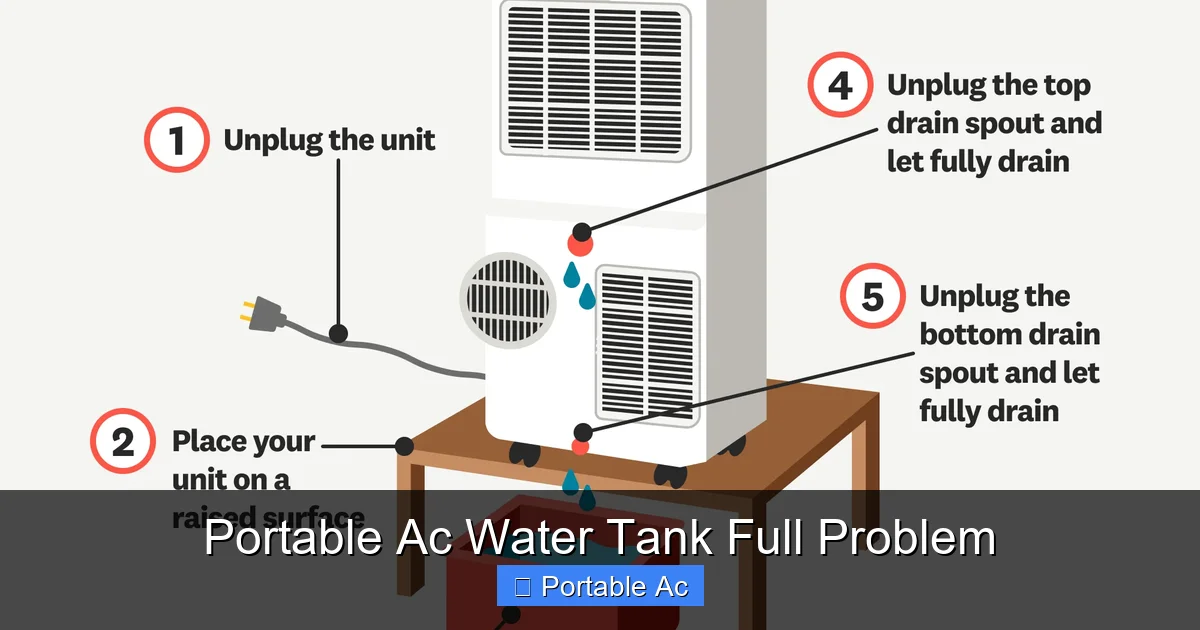
Your portable AC’s water tank is full—again? This common issue usually stems from clogged filters, improper installation, or overuse. Don’t panic; most causes are easy to solve with simple maintenance. In this guide, we’ll walk you through why your unit fills up quickly, how to drain it safely, and steps to avoid repeated problems. With the right care, your portable AC can run smoothly without constant draining interruptions.
Ever been mid-siesta when your portable AC suddenly beeps—“water tank full”—and cuts off? It’s annoying, especially during a heatwave. If this keeps happening, you’re not alone. The “portable AC water tank full problem” is one of the most frequent complaints among users, but understanding why it occurs is the first step toward fixing it permanently.
Portable air conditioners work by pulling warm air through cold evaporator coils, which turns moisture into water—this is called condensation. That water drips into a small internal tank, which must be emptied regularly. But sometimes, even after emptying, the tank fills up faster than expected. Why? And more importantly—how do you stop it?
Let’s dive into what causes this issue and how to solve it like a pro.
Key Takeaways
- Clogged air filters restrict airflow, causing excess condensation that floods the drip tray.
- Incorrect hose placement leads to poor drainage or water backflow into the tank.
- High humidity levels increase moisture production, overwhelming smaller tanks.
- Dirty evaporator coils reduce cooling efficiency and create more condensate than normal.
- Using the unit beyond recommended runtime strains the system and accelerates water buildup.
- Improper leveling causes water to pool in areas other than the designated drain channel.
- Regular cleaning prevents 80% of overflow issues—make it part of your routine.
Quick Answers to Common Questions
Why does my portable AC fill its water tank too quickly?
It’s usually due to clogged air filters, high indoor humidity, or incorrect exhaust hose setup. Restricted airflow increases condensation, while poor drainage directs water back into the tank.
Can I run my portable AC without draining the water?
Some models support dry-run mode for short periods, but not all. Check your manual—running without proper drainage risks internal damage or electrical faults.
Is it safe to tilt my portable AC to drain the water faster?
No. Tilting beyond 45 degrees can spill refrigerant, damage components, or break seals. Always drain upright using the built-in valve.
How often should I clean my portable AC filter?
At least once a week during heavy use, or monthly otherwise. Dirty filters are the #1 cause of rapid water accumulation.
What’s the best way to prevent mold in the drip tray?
After each drain, wipe the tray with a vinegar-water solution (1:1 ratio) and let it air-dry completely. Avoid leaving standing water.
📑 Table of Contents
Why Does Your Portable AC Water Tank Fill Up So Fast?
Before blaming your unit, consider these common culprits:
1. Clogged or Dirty Filters
Air filters trap dust, pet dander, and pollen. When they get thick with gunk, airflow becomes restricted. Less air moves over the cold coils, so less heat is removed—but more condensation forms instead. Think of it like sweating when you’re standing still vs. running: both produce sweat, but one happens faster.
For example, if you haven’t cleaned your filter in two months (especially in high-pollen seasons), it might only allow 60% of its rated airflow. This imbalance triggers excessive moisture buildup, filling your tank in just 3–4 hours instead of the usual 6–8.
2. High Indoor Humidity
Portable ACs remove humidity, but only up to a point. If your room has 70%+ relative humidity (common in coastal areas or monsoon seasons), your unit may struggle to keep up. A standard 5,000 BTU model handles about 1.5 pints per hour under ideal conditions—but in humid climates, that number climbs rapidly.
If you live near the coast or in a tropical region, consider pairing your portable AC with a dehumidifier. Or look into units specifically designed for high-humidity environments, like those reviewed in our Best Portable AC for Tropical Weather guide.
3. Improper Exhaust Hose Setup
Most portable ACs need an exhaust hose vented outside through a window. If the hose is kinked, blocked, or improperly sealed, hot air recirculates inside the room. This raises indoor temperature and humidity, forcing the compressor to work harder and produce more condensation.
Worse yet, if the hose isn’t sloped correctly toward the exterior (even slightly), condensed water can trickle back into the unit instead of flowing out freely. Always check that the hose is straight, untwisted, and ends at least 6 inches above ground level.
How to Fix a Full Portable AC Water Tank
Don’t worry—most cases aren’t serious. Here’s what to do immediately:
Step 1: Turn Off and Unplug
Safety first! Even if the unit says “tank full,” always power down before touching any internal parts. Some models have a safety switch that prevents operation until the tank is drained—but don’t force it.
Step 2: Empty the Tank Safely
Locate the drain valve (usually on the front or bottom). Place a shallow pan underneath, open the cap slowly, and let gravity do the work. Never tilt the unit more than 45 degrees—you could damage internal components or spill refrigerant.
Pro tip: Keep a microfiber cloth handy to wipe away residual moisture. Moisture left behind encourages mold growth, which affects air quality and performance.
Step 3: Check for Obstructions
Inspect the air filter, intake vents, and drip tray. Remove debris with a soft brush or vacuum attachment. If the tray looks warped or cracked, replace it—it won’t hold water properly otherwise.
Step 4: Verify Hose Installation
Reinstall the exhaust hose if needed. Make sure it’s connected snugly to both the unit and the window kit. Test by running the unit for 10 minutes without the tank attached (only if your model allows dry-run mode—check the manual).
Prevention Tips to Avoid Future Overflow
Once you’ve cleared the immediate issue, prevent recurrence with these habits:
Clean Filters Weekly During Peak Use
Set a reminder every Sunday to wash or replace your filter. For homes with pets or allergies, consider upgrading to HEPA filters compatible with your model. Regular cleaning alone can reduce water buildup by up to 50%.
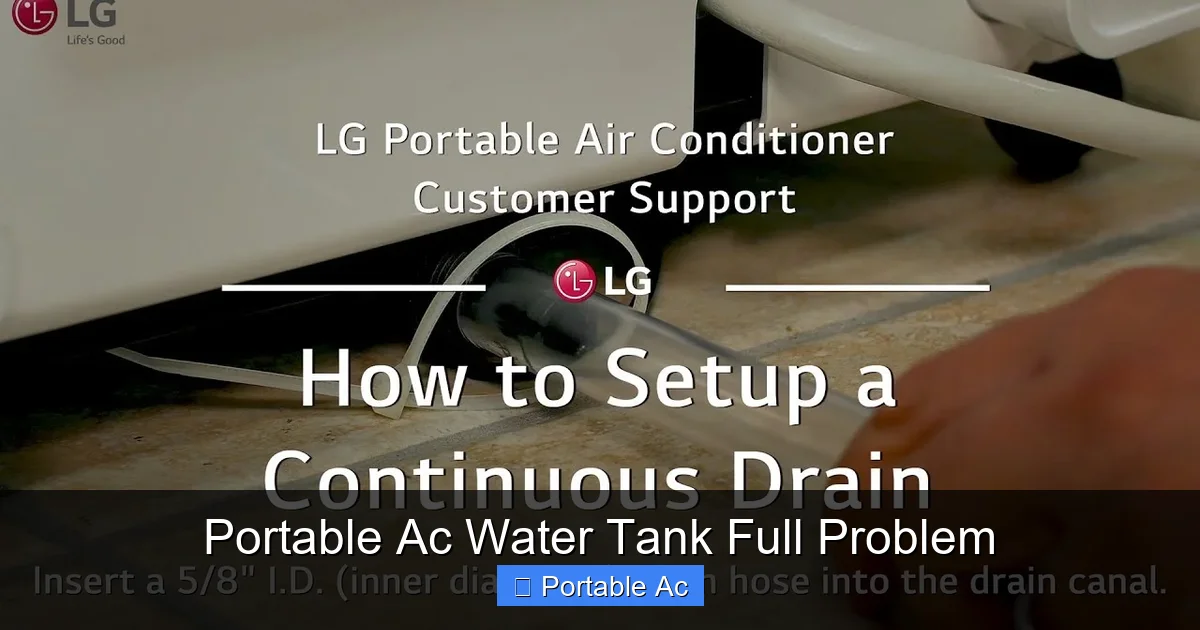
Visual guide about Portable Ac Water Tank Full Problem
Image source: i.ytimg.com
Use a Secondary Drain Pan (Optional)
In high-humidity zones, add an external secondary drain pan beneath your AC. These collect any accidental leaks and protect your floor. Pair this with a float switch alarm for extra peace of mind.
Monitor Runtime and Settings
Avoid running your portable AC continuously for more than 8 hours straight. Give it breaks to reset internal sensors. Also, use eco-mode or fan-only mode when possible—they generate far less condensation.
Upgrade to a Larger-Capacity Model if Needed
If your tank fills within 2–3 hours despite good maintenance, your current unit may simply be undersized for your space. Look into models with 30+ pint/day capacity, such as those listed in our Best Value Portable AC for Money roundup.
When to Call a Professional
Visual guide about Portable Ac Water Tank Full Problem
Image source: m.media-amazon.com
While DIY fixes work for 90% of cases, watch for red flags:
- The unit leaks water even with an empty tank and clean filters
- You hear unusual rattling or gurgling sounds during operation
- The cooling performance drops significantly after draining
These could signal refrigerant leaks, faulty valves, or internal corrosion—issues best handled by certified technicians. Don’t ignore them; prolonged misuse can void your warranty.
Choosing the Right Portable AC to Minimize Water Issues
If you frequently face this problem, investing in a smarter unit pays off. Modern portable ACs offer innovations like:
- Auto-drain systems: Pump water directly outside via a second hose
- Larger drip trays: Hold up to 40% more water before alerting
- Smart sensors: Detect high humidity and adjust fan speed automatically
Top brands like Frigidaire, LG, and De’Longhi lead in reliability and low-maintenance design. Explore our comprehensive reviews—like Best Premium Portable AC Worth Buying—to find models engineered for hassle-free operation.
And remember: even the best portable AC requires basic care. Think of it like a car—regular oil changes prevent bigger problems later.
In conclusion, a full portable AC water tank doesn’t mean your unit is broken. It’s often a sign of simple maintenance needs or environmental factors. By cleaning filters weekly, ensuring proper hose setup, and monitoring runtime, you’ll drastically reduce overflow incidents. And if you’re shopping anew, prioritize units built for your specific climate and space size. Stay cool, stay dry—and enjoy uninterrupted comfort all summer long!
Frequently Asked Questions
Why does my portable AC keep saying the water tank is full?
This usually means the internal sensor detects liquid beyond safe levels. Common causes include clogged filters, blocked drain tubes, or high ambient humidity. Addressing these typically resolves the issue.
Can high outdoor temperatures affect water tank filling?
Yes. Extreme heat increases thermal load on the AC, causing more condensation. Ensure your exhaust hose vents hot air outside efficiently to balance internal conditions.
Does using a dehumidifier help with portable AC water issues?
Absolutely. Reducing indoor humidity lowers the workload on your AC, minimizing condensation. Ideal for basements, coastal homes, or rainy seasons.
Are all portable AC water tanks the same size?
No. Sizes vary by model and brand—from 12 to 30 pints. Larger tanks suit bigger rooms or high-humidity areas. Always match capacity to your space needs.
What should I do if my portable AC leaks water even with an empty tank?
Stop using it immediately. Possible causes include cracked internal trays, loose hose connections, or damaged seals. Consult a technician to avoid further damage.
How can I tell if my portable AC is oversized for my room?
If it cycles on/off constantly or fails to lower temperature despite running, it may be too powerful. Conversely, if the tank fills too fast, it might be undersized. Match BTU output to room square footage for optimal performance.
