
If your portable AC not removing humidity, it could be due to a clogged filter, low refrigerant, or improper setup. Humidity control is key to comfort and air quality, so addressing this issue quickly ensures your space stays cool and dry. We’ll walk you through common causes and practical fixes to restore your unit’s performance.
Key Takeaways
- Clogged Air Filters: Dirty filters restrict airflow, reducing the AC’s ability to remove moisture from the air.
- Low Refrigerant Levels: Insufficient refrigerant prevents the cooling cycle from working efficiently, affecting dehumidification.
- Improper Drainage: A blocked or kinked drain hose can cause water to back up, limiting moisture removal.
- Room Size Mismatch: Using a portable AC in a space larger than its capacity leads to incomplete humidity control.
- High Outdoor Temperatures: Extreme heat outside reduces the AC’s cooling efficiency, which in turn affects dehumidification.
- Faulty Thermostat or Sensors: Malfunctioning sensors may prevent the unit from operating in the right mode for humidity removal.
- Regular Maintenance: Cleaning coils, checking hoses, and replacing filters regularly keeps your portable AC working at peak performance.
Quick Answers to Common Questions
Why is my portable AC not removing humidity?
Your portable AC not removing humidity could be due to a clogged air filter, blocked drain hose, low refrigerant, or improper room setup. Regular maintenance and proper usage can fix most of these issues.
Can a portable AC act as a dehumidifier?
Yes, portable ACs remove moisture from the air as part of the cooling process. However, they are less effective than dedicated dehumidifiers in very humid conditions.
How often should I clean my portable AC filter?
Clean or replace the air filter every 1–2 weeks during heavy use. A dirty filter restricts airflow and reduces humidity removal efficiency.
What should I do if my portable AC is leaking water?
Check the drain hose for blockages or kinks. Ensure the tank isn’t overfilled and the float switch isn’t stuck. If the problem persists, consult a technician.
Is it worth adding a dehumidifier with my portable AC?
Yes, especially in high-humidity areas. A dehumidifier complements your AC by removing excess moisture, improving comfort and air quality.
📑 Table of Contents
Why Is Your Portable AC Not Removing Humidity?
You just bought a portable AC to beat the summer heat, only to notice that while it’s cooling the room, it’s not doing a great job at reducing humidity. Your clothes feel damp, your windows fog up, and the air still feels sticky. If you’re asking, “Why is my portable AC not removing humidity?” you’re not alone. Many people expect their portable AC to act like a dehumidifier, but that’s not always how it works. The truth is, portable air conditioners cool the air by removing heat and moisture, but they don’t always do it efficiently—especially when something’s wrong.
Portable ACs extract warm, humid air, cool it through an evaporator coil, and remove moisture in the process. This water is usually collected in a tank or drained through a hose. But if that system isn’t working right, humidity lingers. In this guide, we’ll explore the most common reasons your portable AC not removing humidity, how to diagnose the issue, and what you can do to fix it. Whether you’re in a humid coastal area or just dealing with a muggy afternoon, we’ve got practical solutions to help you breathe easier.
Understanding How Portable ACs Remove Humidity
Before diving into fixes, it’s important to understand how portable ACs work. Unlike dehumidifiers, which are designed solely to pull moisture from the air, portable ACs cool the air by running warm air over a cold evaporator coil. As the air passes through, moisture condenses into water and drips into a collection tank or out through a drain hose. The cooled, drier air is then blown back into the room.
This process relies on several components working together: the compressor, refrigerant, air filters, and drainage system. If any of these parts are compromised—whether due to dirt, blockage, or mechanical failure—the AC can’t remove humidity effectively. For example, a clogged filter limits airflow, which reduces the amount of air being cooled and condensed. Similarly, if the drain hose is kinked or full of mold, water can’t exit, and the system may shut down or fail to run properly.
It’s also worth noting that portable ACs are less effective in very humid environments. If the outside temperature is high, the AC’s efficiency drops, and it struggles to remove moisture. In such cases, pairing your portable AC with a standalone dehumidifier might be the best solution. But first, let’s look at the most common causes of poor dehumidification.
Common Causes of Poor Humidity Removal
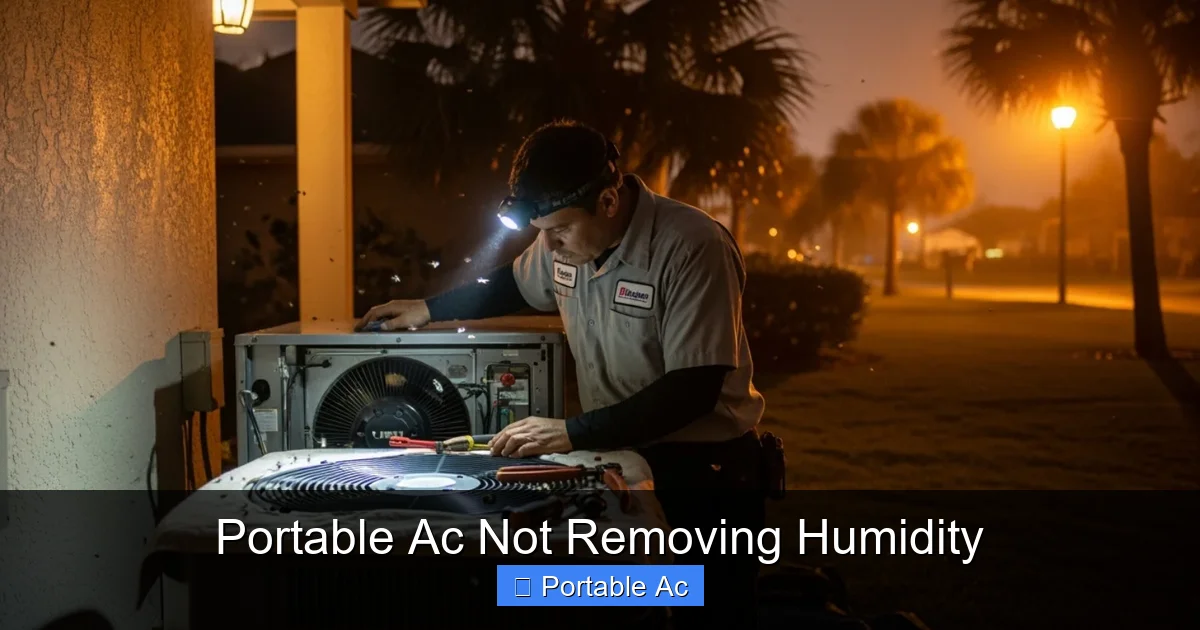
Visual guide about Portable Ac Not Removing Humidity
Image source: cdn.prod.website-files.com
If your portable AC not removing humidity, the issue could stem from several factors. Let’s break them down so you can pinpoint the problem and take action.
1. Dirty or Clogged Air Filters
Over time, air filters collect dust, pet dander, and other particles. When filters are clogged, airflow is restricted. Less airflow means less air is cooled and condensed, so moisture isn’t removed as effectively. In fact, a dirty filter can reduce efficiency by up to 15%. This is one of the most common and easiest fixes—simply clean or replace the filter every 1–2 weeks during heavy use.
2. Blocked or Kinked Drain Hose
Portable ACs use a drain hose to remove condensed water. If the hose is bent, clogged with mold, or not properly connected, water can’t flow out. This causes the unit to shut off or reduce performance to prevent overflow. Check the hose regularly, especially in humid environments where mold growth is common. For models that don’t need draining, like evaporative coolers, this isn’t an issue—but traditional portable ACs rely on proper drainage.
3. Low Refrigerant Levels
Refrigerant is the lifeblood of your AC. It absorbs heat and enables the cooling process. If levels are low due to a leak or manufacturing defect, the AC can’t cool efficiently, which directly impacts dehumidification. Signs of low refrigerant include warm air blowing out, longer cooling cycles, and ice buildup on the coils. This requires professional repair and should not be handled as a DIY fix.
4. Oversized or Undersized Unit
Using a portable AC that’s too small for your room means it can’t handle the heat and humidity load. Conversely, an oversized unit cools the room too quickly but doesn’t run long enough to remove moisture effectively. Always match the AC’s BTU rating to your room size. For example, a 10,000 BTU unit works best in rooms up to 400 square feet.
5. High Outdoor Temperatures
Portable ACs work by transferring heat from inside to outside. If it’s 95°F outside, the AC has to work harder to expel heat, reducing its efficiency. This heat transfer limitation means humidity removal suffers during extreme weather. In such cases, consider using a fan or dehumidifier alongside your AC for better results.
6. Faulty Thermostat or Humidity Sensor
Some portable ACs have built-in humidity sensors that adjust operation based on moisture levels. If the sensor is malfunctioning, the unit might not run long enough or at the right settings to remove humidity. Similarly, a faulty thermostat can prevent the AC from cycling properly. Try resetting the unit or consulting the manual for troubleshooting steps.
How to Fix a Portable AC That’s Not Removing Humidity
Now that you know the common causes, here’s how to fix them. Most of these solutions are simple and can be done at home.
Clean or Replace the Air Filter
Remove the filter and rinse it under warm water with mild soap. Let it dry completely before reinstalling. If it’s torn or too dirty, replace it with a compatible model. For reusable filters, wash monthly. For disposable ones, replace every 1–2 weeks.
Check and Clear the Drain Hose
Unplug the unit and disconnect the drain hose. Flush it with clean water to remove any mold or mineral buildup. Make sure it’s not kinked and that the outlet is above the tank level. For models with a float switch, ensure it’s not stuck in the “on” position.
Ensure Proper Ventilation
Portable ACs need a clear path for hot air exhaust. If the vent is blocked by furniture or curtains, the unit can’t expel heat efficiently, reducing cooling and dehumidification. Position the exhaust hose at least 6 inches from walls and ensure the window kit is sealed tightly.
Run the AC in Dry Mode (If Available)
Some portable ACs have a “dry” or dehumidification mode. This setting prioritizes moisture removal over cooling. Use it in humid conditions to maximize humidity control. It’s especially useful in coastal areas or during monsoon seasons.
Use a Dehumidifier for High Humidity
If your portable AC still struggles, consider adding a small dehumidifier to the room. This complements the AC by removing excess moisture without overworking the unit. Look for energy-efficient models with auto shut-off features.
Schedule Professional Maintenance
For issues like low refrigerant or internal coil problems, call a licensed technician. Regular maintenance—once a year—can prevent many humidity-related issues and extend your unit’s life.
Tips to Improve Humidity Control Long-Term
Prevention is better than cure. Follow these tips to keep your portable AC removing humidity effectively.
Use the Right Size Unit
Check the BTU rating and match it to your room. Too small? You’ll never get rid of humidity. Too large? It cools fast but doesn’t run long enough. A 8,000–10,000 BTU unit is ideal for most average-sized rooms.
Keep the Room Sealed
Open windows and doors let humid outside air in. Use weather stripping and close curtains to keep cool, dry air inside. This helps your AC work smarter, not harder.
Clean Coils Regularly
Dirty evaporator and condenser coils reduce efficiency. Use a soft brush or coil cleaner every 3–6 months. This is especially important in dusty or pet-heavy homes.
Monitor Humidity Levels
Use a hygrometer to track indoor humidity. Ideal levels are between 30–50%. If it’s above 60%, your AC is likely struggling. Combine with a dehumidifier if needed.
Choose a Model with Dual Hose or Evaporative Cooling
Dual-hose portable ACs pull air from outside, reducing humidity buildup inside. Evaporative coolers work well in dry climates but aren’t effective in high humidity. For tropical or coastal areas, look for models with strong dehumidification features.
When to Replace Your Portable AC
If your portable AC not removing humidity despite all your efforts, it might be time for an upgrade. Signs it’s time to replace include:
– The unit is over 5 years old and frequently breaks down
– Repair costs exceed 50% of a new model
– It’s noisy, inefficient, or uses too much electricity
– It lacks modern features like remote control, sleep mode, or auto-clean
Instead of spending money on repairs, consider investing in a newer, more efficient model. Many modern portable ACs come with advanced humidity control, Wi-Fi connectivity, and energy-saving modes. For example, units designed for tropical weather or coastal areas often include enhanced dehumidification systems.
If you’re unsure which model is right for you, check our guide on Best Portable AC for Coastal Areas or Best Portable AC for Tropical Weather for top picks that handle high humidity.
Conclusion
A portable AC that’s not removing humidity can make your home feel uncomfortable and damp. But with the right troubleshooting, most issues are fixable. Start by cleaning filters, checking the drain hose, and ensuring proper ventilation. If those don’t work, consider room size, outdoor temperature, and internal components.
Remember, portable ACs are powerful cooling tools, but they’re not full dehumidifiers. In extremely humid climates, pairing your AC with a dehumidifier or upgrading to a more efficient model may be necessary. Regular maintenance and smart usage habits go a long way in keeping your space cool and dry.
By understanding why your portable AC not removing humidity and taking proactive steps, you can enjoy a more comfortable home all summer long. Stay cool, stay dry, and don’t let humidity win.
Frequently Asked Questions
How do I know if my portable AC is removing humidity?
Check for condensation on the outside of the unit, a full water tank, or use a hygrometer to measure humidity levels. A drop in humidity indicates effective moisture removal.
Can a portable AC work in a very humid climate?
Yes, but performance may be limited. In extreme humidity, consider using a dehumidifier or choosing a model designed for tropical or coastal areas.
Why does my portable AC keep shutting off?
It may be due to a full water tank, blocked drain hose, or overheating. Check the tank, clean the hose, and ensure proper ventilation to prevent shutdowns.
Should I run my portable AC in dry mode?
Yes, if your model has a dry mode, use it in humid conditions. This setting prioritizes dehumidification over cooling, improving moisture removal.
Can I use a portable AC without a window?
No, portable ACs require an exhaust hose vented to a window or vent. Without proper airflow, they can’t expel heat or remove humidity effectively.
How can I improve my portable AC’s efficiency?
Keep filters clean, maintain the drain hose, ensure proper room sealing, and choose the right BTU size. Regular maintenance also boosts performance.
