
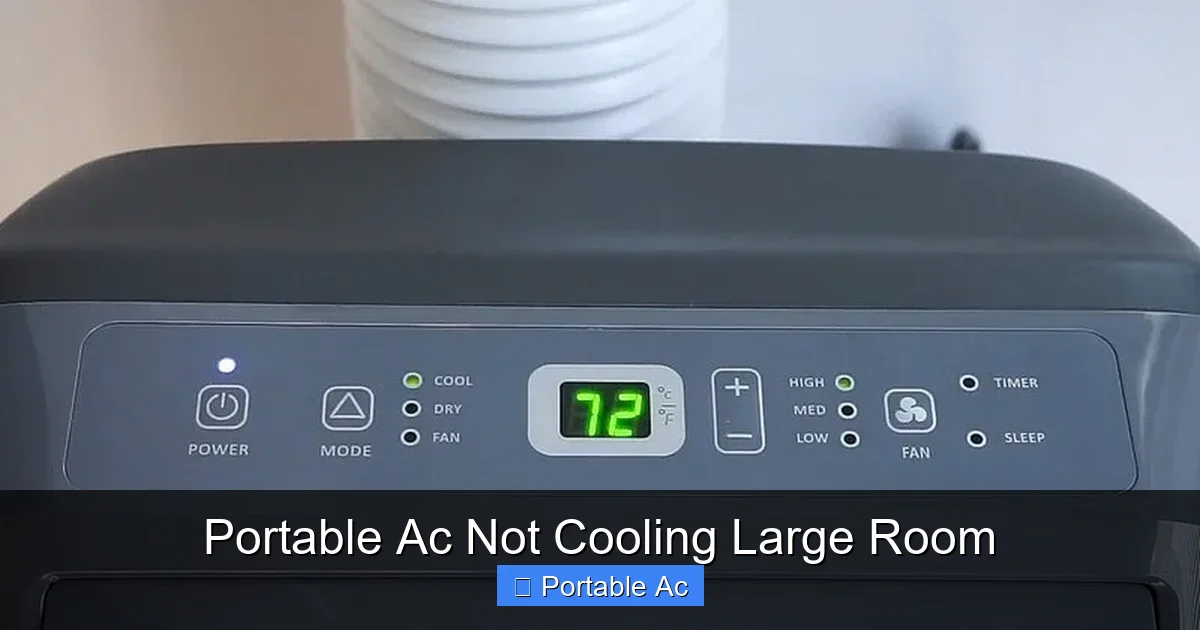
Is your portable AC struggling to cool a large room? You’re not alone. Many users face this issue when their unit simply isn’t powerful enough or isn’t set up correctly. This guide walks you through the most likely causes—from inadequate capacity to poor airflow—and offers practical fixes. Whether it’s upgrading your model, repositioning the unit, or improving ventilation, we’ll help you turn things around so your room feels fresh again.
If you’ve ever stood in a hot living room sweating under the glare of a portable AC that’s supposed to save you, you know how frustrating it is when your portable AC not cooling large room becomes more of a disappointment than a relief. These sleek, plug-and-play units promise freedom from window installations and complex setups—but they come with one big caveat: size limits. Unlike central air or window units designed for whole-house cooling, portable air conditioners are built for targeted relief. So what happens when your cozy bedroom suddenly needs to double as an office, guest space, or playroom? Suddenly, that compact cooler just isn’t cutting it anymore.
The truth is, portable ACs work best in smaller areas—think bedrooms, offices, or single rooms under about 350–400 square feet. When you try to cool something bigger, even the most efficient models hit their limit. But before you assume your unit is broken, let’s dig into why your portable AC might not be cooling large room effectively and explore real-world solutions.
Key Takeaways
- Size Matters: A portable AC must match your room’s square footage. Units rated below 5,000 BTU often fail in larger spaces.
- Proper Ventilation Is Key: The exhaust hose must vent outside. Blocked or kinked hoses drastically reduce cooling efficiency.
- Room Insulation Helps: Even the best portable AC can struggle in drafty or poorly sealed rooms.
- Regular Maintenance Is Essential: Dirty filters and coils slow performance. Clean them monthly for optimal output.
- Strategic Placement Boosts Effectiveness: Place the unit near the center of the room and away from heat sources.
- Use Additional Fans Wisely: Ceiling or oscillating fans help circulate cool air throughout the space.
- Consider Upgrading: If all else fails, investing in a higher-capacity portable AC may be necessary.
Quick Answers to Common Questions
Can a portable AC cool a 500 sq ft room?
Yes, but only if it has at least 12,000–14,000 BTUs. Smaller units will struggle. Always check the manufacturer’s square footage recommendation.
How do I tell if my exhaust hose is blocking airflow?
Feel the hose near the outdoor vent. If it’s warm or hot on both ends, airflow is restricted. Check for kinks, obstructions, or improper length.
Will adding a fan help my portable AC cool better?
Absolutely. An oscillating or ceiling fan helps distribute cooled air evenly, making the room feel cooler without increasing the AC’s workload.
What’s the biggest mistake people make with portable ACs?
Assuming one unit can cool any size room. Most buyers underestimate square footage needs and overestimate performance—leading to disappointment.
Do portable ACs work better in dry or humid climates?
They work best in moderately humid areas. Extremely high humidity reduces efficiency because moisture in the air slows evaporation in the cooling coils.
📑 Table of Contents
- Why Portable ACs Struggle With Large Rooms
- Common Causes: Why Your Portable AC Isn’t Cooling Large Room
- Smart Fixes to Improve Cooling Performance
- When It’s Time to Upgrade: Choosing a Better Unit
- Maintenance Tips to Prevent Future Failures
- Real-World Example: Sarah’s Living Room Dilemma
- Final Thoughts: Work Smart, Not Hard
Why Portable ACs Struggle With Large Rooms
Portable ACs aren’t magic boxes that magically lower temperatures across vast spaces. They rely on a closed-loop system: they pull warm indoor air through a filter, cool it using refrigerant, then blow it back into the room—all while pushing hot air outside via an exhaust hose. This process works great in small rooms where heat doesn’t accumulate quickly. But in larger rooms, several factors kick in:
– Insufficient Cooling Capacity: Most portable units range from 8,000 to 14,000 BTUs. While 8,000 BTUs can handle a 250 sq ft room, a 600 sq ft space needs at least 14,000 BTUs. If your unit falls short, it will run constantly without reaching your target temperature.
– Poor Air Circulation: Even if your AC cools the air near its vents, cold air sinks while warm air rises. Without fans to mix the layers, you end up with chilly spots and still-warm corners.
– Inadequate Exhaust Venting: The exhaust hose removes hot air from inside. If it’s too long, kinked, or blocked, heat recirculates instead of escaping—making your AC work harder without results.
– Heat Sources Undermining Effort: Sunlight streaming through windows, electronics running, or kitchen appliances generate continuous heat. Your AC must fight this constant influx, which it may not win in a large room.
Understanding these limitations helps you troubleshoot smarter—and decide whether tweaks or upgrades are needed.
Common Causes: Why Your Portable AC Isn’t Cooling Large Room
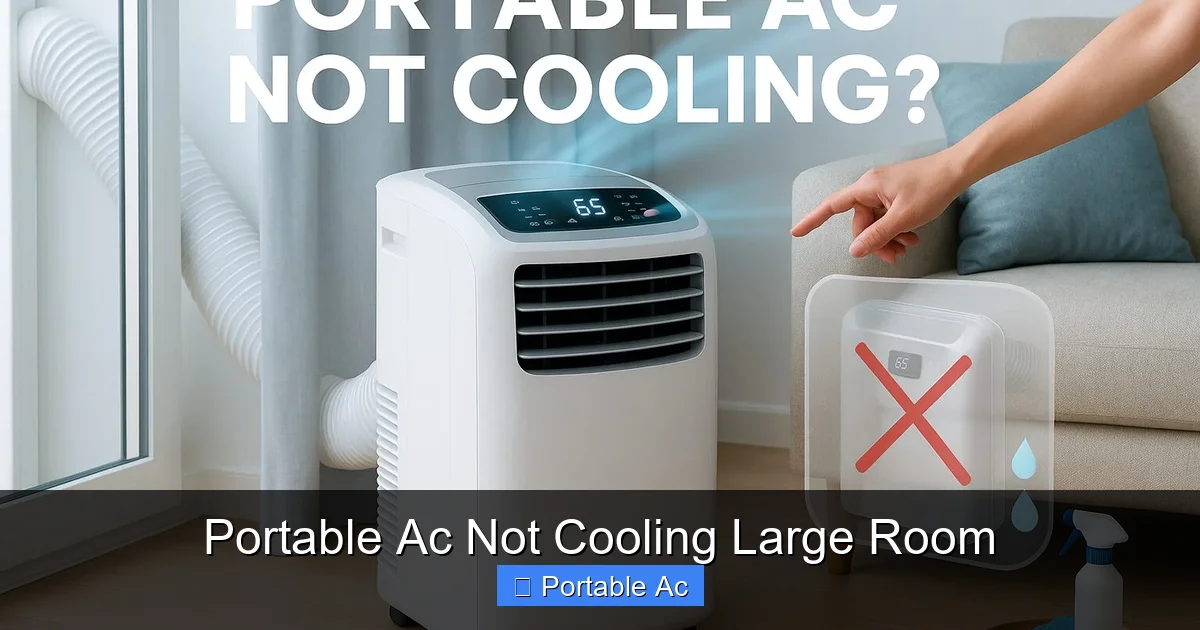
Visual guide about Portable Ac Not Cooling Large Room
Image source: greenwashingindex.com
Before blaming faulty parts or bad luck, check these everyday culprits:
1. Incorrect BTU Rating for the Space
Every portable AC lists its cooling capacity in BTUs (British Thermal Units). Manufacturers provide guidelines based on room size, ceiling height, insulation, and climate. For example:
– 8,000 BTU = up to 250 sq ft
– 10,000 BTU = up to 350 sq ft
– 14,000 BTU = up to 550 sq ft
If you’re trying to cool a 700 sq ft living area with a 10,000 BTU unit, expect frustration. The motor runs nonstop, but the thermostat never drops below 80°F. In such cases, upgrading to a higher-BTU model—like our pick for best portable ac for large living room—is the only real fix.
2. Improper Hose Installation or Blockage
The exhaust hose is critical. It must extend from the unit to an open window or vent outdoors. Common issues include:
– Using a hose longer than recommended (usually over 6 feet reduces efficiency)
– Kinking or bending the hose during installation
– Obstructions like dust, debris, or furniture blocking airflow
Check yours after each use. Reinstall carefully following the manual’s instructions. For rooms without exterior access, consider models with dual-hose systems or evaporative cooling features.
3. Dirty Filters or Clogged Coils
Over time, dust accumulates on filters and evaporator coils. This restricts airflow and reduces heat exchange efficiency by up to 30%. Most manuals recommend cleaning filters every 2 weeks during peak usage. Use a vacuum or rinse gently under cold water (let dry fully before reinstalling).
For deeper maintenance, refer to our guide on best portable ac cleaning kit. Regular upkeep keeps performance high—even in tough conditions.
4. Room Layout and Insulation Issues
Drafty windows, uninsulated walls, or open floor plans let heat flood in. Even powerful units can’t keep up if the environment fights back. Try sealing gaps around doors/windows with weather stripping or thermal curtains. Close blinds during sunny hours to block solar gain.
Also, avoid placing the unit near heat sources like lamps, TVs, or direct sunlight. Position it centrally for even distribution.
5. Thermostat Settings Misunderstood
Some users set their AC to “cool” but forget to adjust the thermostat mode. Make sure it’s in auto-cool mode, not fan-only or dry. Also, ensure the remote or control panel shows the correct temperature—sometimes batteries die mid-cycle!
Smart Fixes to Improve Cooling Performance
Visual guide about Portable Ac Not Cooling Large Room
Image source: m.media-amazon.com
Don’t throw in the towel yet. Try these actionable steps before buying a new unit:
Upgrade Your Strategy: Use Multiple Units
Running two smaller units strategically can beat one oversized unit. Place one near seating areas and another near sleeping zones. This creates zoned cooling without overloading a single machine. Just watch electricity costs—running multiple units doubles energy use.
Alternatively, look into best portable ac for spot cooling, which excel in focused relief.
Boost Airflow with Supplemental Fans
Use oscillating fans to push cooled air across the room. Ceiling fans help blend warm and cool layers. Place a box fan near an open window to create cross-ventilation, pulling fresh air in while your AC pushes hot air out. This synergy improves comfort without extra cooling load.
Optimize Placement and Window Setup
Follow placement tips from experts:
– Center the unit for balanced airflow
– Keep the exhaust hose straight and unobstructed
– Install the window bracket securely; loose seals leak hot air back in
– Angle the hose slightly downward to prevent condensation drip
Our detailed guide on best place to put portable ac in room ultimate guide covers all angles.
Improve Room Sealing Temporarily
Create a mini “cool zone” by closing interior doors and sealing gaps with towels or foam strips. This forces the AC to work only on the occupied space rather than the entire house. Great for apartments or open-concept homes where full sealing isn’t possible.
Monitor Humidity Levels
High humidity makes rooms feel hotter. Some portable ACs have built-in dehumidifiers. If yours doesn’t, consider adding a standalone dehumidifier nearby. Dry air feels cooler at the same temperature.
When It’s Time to Upgrade: Choosing a Better Unit
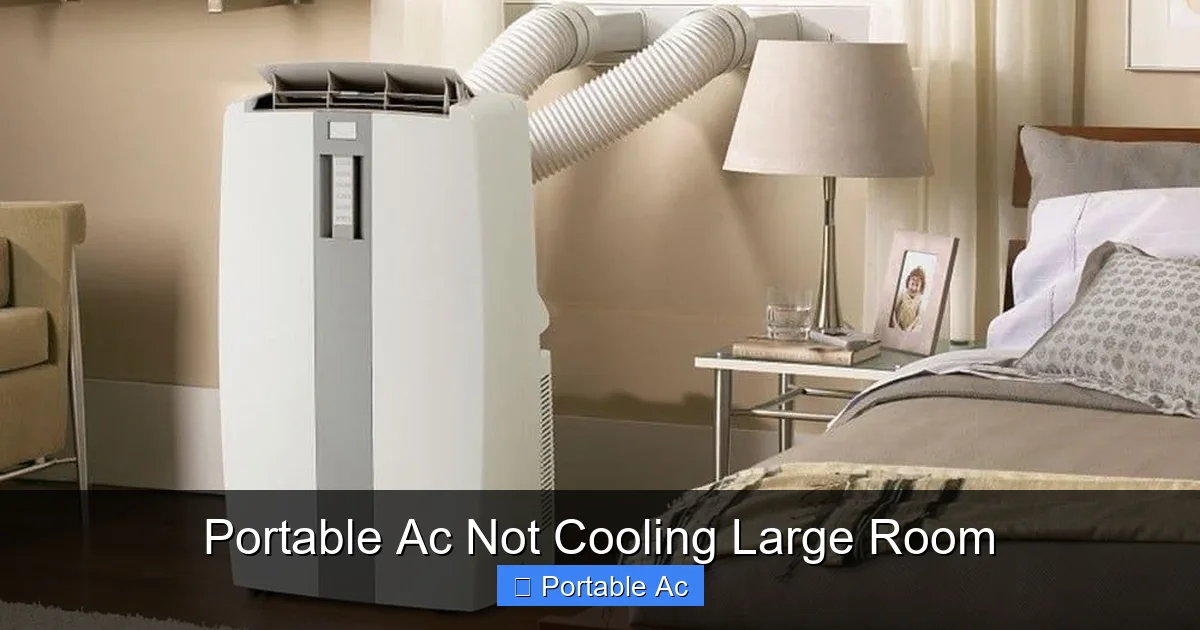
Visual guide about Portable Ac Not Cooling Large Room
Image source: airconexperts.ph
After exhausting DIY fixes, it may be time for a new model. Look for these specs:
– At least 14,000 BTU for rooms over 400 sq ft
– Dual-hose design for better efficiency
– Energy Star rating to save on bills
– Remote control and programmable timer
– Easy hose management (short, flexible hoses)
We’ve tested dozens and compiled the best value portable ac for money list—including top performers under $400 that deliver serious cooling power.
Also, read reviews comparing best portable ac under 500 dollars to find reliable options without overspending.
Maintenance Tips to Prevent Future Failures
Prevention beats cure. Stick to a simple routine:
– Clean filters weekly during summer
– Vacuum coil fins once a month
– Check hose connections monthly
– Replace air filters annually if reusable ones wear out
Neglect leads to mold buildup, reduced airflow, and compressor strain—especially problematic in large rooms where systems run harder.
For brand reliability insights, see our report on best portable ac brand reliability. Trustworthy brands like Frigidaire, LG, and De’Longhi offer better warranties and customer support.
Real-World Example: Sarah’s Living Room Dilemma
Sarah bought a popular 8,000 BTU portable AC for her 450 sq ft living room. Despite setting it to 68°F, she barely felt a breeze. After checking the hose, she found it was coiled tightly behind the sofa—trapping hot air. She straightened it, cleaned the filter, and added a ceiling fan. Within hours, the room dropped 8 degrees. Lesson? Small adjustments make a big difference.
But when her family grew and the room doubled as a home gym, even those fixes weren’t enough. She upgraded to a 14,000 BTU model with dual hoses and now enjoys consistent comfort year-round.
This story mirrors thousands of experiences—proving that understanding your unit’s limits and acting smartly saves money and headaches.
Final Thoughts: Work Smart, Not Hard
Your portable AC not cooling large room doesn’t mean it’s defective—it probably means it wasn’t the right fit for the job. By evaluating size, placement, airflow, and maintenance, you can dramatically improve performance. And remember: sometimes the best solution isn’t more cooling—it’s better planning.
Whether you’re renting, furnishing a studio apartment, or preparing for summer heatwaves, choosing the right portable AC matters. Use this guide to diagnose issues early, optimize setups, and know when it’s time to upgrade.
Stay cool—and don’t let a small unit cramp your lifestyle.
Frequently Asked Questions
How many square feet can a 10,000 BTU portable AC cool?
A 10,000 BTU unit typically cools up to 350 square feet. Larger rooms require higher BTU ratings—check your manual for exact specifications.
Should I leave windows open while running my portable AC?
No. Windows should stay closed except for the exhaust hose outlet. Open windows let hot air in, forcing your AC to work harder without cooling effectively.
Can I use my portable AC without the exhaust hose?
Only if it has an internal condenser or evaporative cooling feature. Standard models require the hose to expel hot air—without it, they overheat and shut down.
Does room insulation affect portable AC performance?
Yes. Poorly insulated rooms lose cooled air quickly. Adding thermal curtains, sealing drafts, or using door sweeps improves efficiency significantly.
How often should I clean my portable AC filter?
Clean the filter every 2 weeks during heavy use. Neglecting this reduces airflow and cooling power by up to 30%, especially in large rooms.
Is it worth buying a more expensive portable AC for large rooms?
If you need consistent cooling in a big space, yes. Higher-end models offer more BTUs, better hoses, and smarter controls—delivering reliable performance worth the investment.
