
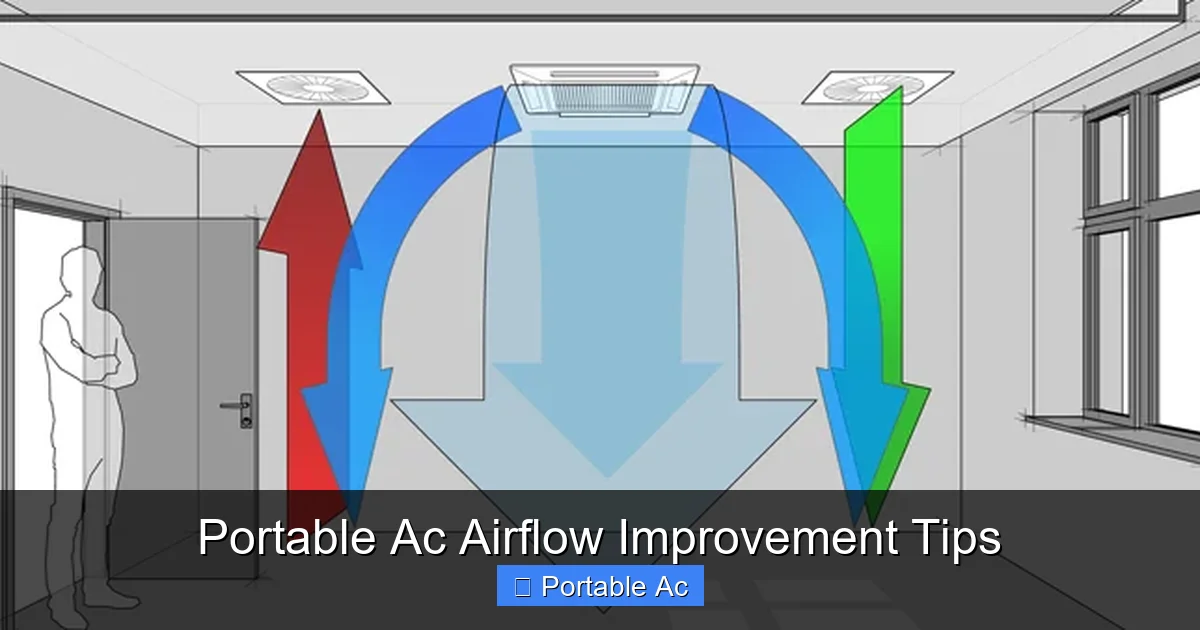
Struggling with weak airflow from your portable air conditioner? You’re not alone—many users face this common issue that reduces comfort and increases energy bills. The good news? Simple fixes can dramatically improve airflow and make your unit work smarter, not harder. In this guide, we’ll walk you through practical, easy-to-implement tips to enhance your portable AC airflow like a pro. From cleaning filters to optimizing hose placement, these strategies will help you get the most out of your investment and enjoy consistent, powerful cooling.
Have you ever turned on your portable air conditioner only to feel a faint breeze instead of that refreshing blast of cool air you were promised? You’re not imagining it—weak airflow is one of the most common complaints among portable AC users. Whether you’re cooling a bedroom, home office, or living room, poor airflow can make your unit seem underpowered, increase energy consumption, and leave you sweating through hot afternoons.
The truth is, many airflow issues aren’t due to faulty units—they’re caused by simple oversights. A little attention to detail and a few smart adjustments can transform your portable AC from barely functional to impressively effective. This comprehensive guide dives deep into proven portable AC airflow improvement tips that anyone can follow, no matter their experience level.
From cleaning clogged filters to optimizing hose placement and using household tools to enhance circulation, we’ll show you how to unlock your unit’s full potential. Let’s turn that weak breeze into a powerful, steady stream of cool air.
Key Takeaways
- Clean or replace air filters regularly: Clogged filters block airflow and reduce efficiency. A clean filter ensures smooth operation and better cooling.
- Optimize exhaust hose routing: Straight, short hoses minimize resistance and improve refrigerant flow, boosting overall performance.
- Seal window gaps properly: Even small leaks let warm air in and cool air out, wasting energy and weakening airflow.
- Elevate the portable AC slightly: Raising the unit improves circulation beneath it and allows cooler air to circulate more freely.
- Use fans to distribute cool air: Strategically placed fans help push cold air deeper into the room, maximizing comfort without overworking the AC.
- Keep vents unobstructed: Blocked intake or output vents restrict airflow and cause the unit to work harder than necessary.
- Schedule professional maintenance annually: Routine servicing keeps coils clean and components running smoothly for peak airflow efficiency.
Quick Answers to Common Questions
How do I know if my portable AC airflow is weak?
If your unit feels like it’s blowing warm air, takes longer than usual to cool the room, or runs constantly without reaching the desired temperature, your airflow may be restricted. Check the filter first—it’s the most common culprit.
Can a dirty filter really affect airflow that much?
Yes! A clogged filter can reduce airflow by up to 50%, forcing your AC to work harder and consume more energy. Clean or replace it weekly during peak cooling months for optimal performance.
Is it safe to elevate my portable AC?
Absolutely. Elevating your unit 6–12 inches off the ground improves airflow beneath it and helps prevent dust buildup. Just make sure it’s stable and won’t tip over.
Should I use a fan with my portable AC?
Definitely. A fan helps distribute cool air more evenly throughout the room, making the space feel cooler without lowering the thermostat. It’s a simple, energy-efficient way to boost comfort.
How often should I clean my portable AC?
Clean the filter weekly and perform a full inspection monthly. Annual professional servicing is recommended to maintain peak airflow and efficiency year-round.
📑 Table of Contents
- Why Airflow Matters More Than You Think
- Master Your Exhaust Hose Setup
- Seal Every Gap Around Windows and Doors
- Clean and Maintain Your Unit Regularly
- Optimize Room Layout for Better Air Circulation
- Leverage Fans to Boost Airflow Distribution
- Upgrade Your Portable AC for Maximum Performance
- Conclusion: Small Changes, Big Results
Why Airflow Matters More Than You Think
Airflow isn’t just about feeling a breeze—it directly affects how well your portable AC removes heat from your space. When airflow is restricted, the evaporator coil can’t release moisture properly, leading to reduced cooling capacity. Over time, this causes the system to cycle on and off more frequently, increasing wear and energy use.
Think of airflow like blood flow in the body. If circulation slows, organs don’t get what they need. Similarly, if your portable AC can’t move air efficiently, it can’t cool effectively. That’s why improving airflow isn’t optional—it’s essential for performance, longevity, and comfort.
One of the first things to check is your air filter. A dirty or clogged filter acts like a traffic jam, blocking the path of cool air. Most portable ACs are designed to operate best with clean filters, and manufacturers recommend checking them weekly during heavy use. Replacing a simple filter can instantly restore airflow and make your unit feel like new.
But airflow issues often go beyond the filter. The way you install and route your exhaust hose plays a huge role. If the hose is kinked, too long, or poorly sealed, it creates backpressure that forces your AC to work harder. And when warm outdoor air sneaks back in through unsealed windows, your cooling efforts become less effective.
Don’t underestimate the power of small changes. Adjusting a single component—like tilting the unit slightly or adding a fan—can have a big impact. In fact, combining several airflow-boosting techniques often yields the best results. Let’s explore how.
Master Your Exhaust Hose Setup
Visual guide about Portable Ac Airflow Improvement Tips
Image source: magnovent.id
The exhaust hose is your portable AC’s lifeline. It carries hot, humid air from inside the room to the outside, allowing the unit to continue cooling without re-circulating warm air. But if not installed correctly, this critical component can become a bottleneck.
Keep It Short and Straight
Longer hoses create more resistance, forcing your AC to pull harder to expel heat. Ideally, keep your hose as short as possible—most portable ACs work best with hoses under 4 feet. Avoid loops, twists, or sharp bends. Instead, run the hose in a straight line from the unit to the window.
Secure It Tightly
Loose connections at either end of the hose let warm air leak back into the room. Use duct tape or specialized hose clamps to seal both ends tightly. Check daily during hot days to ensure nothing shifts.
Install a Window Kit Properly
Many portable ACs come with a universal window kit, but improper installation defeats its purpose. Make sure the flap opens outward and stays closed when the AC is off. Use foam insulation strips around the window frame to eliminate gaps. For sliding windows, consider a custom bracket or magnetic seal.
Pro tip: Some users report better airflow by installing a second window kit or using a dual-hose system if their model supports it. Explore options like the ones discussed in our article on best portable ACs with dual hose systems for even greater efficiency.
Seal Every Gap Around Windows and Doors
Visual guide about Portable Ac Airflow Improvement Tips
Image source: rvairflow.com
Even a tiny gap under a window sill can let in enough warm air to reduce cooling efficiency by up to 30%. Portable ACs rely on creating a sealed environment so they don’t have to compete with external heat sources.
Use Weather Stripping
Apply adhesive weather stripping along the top and sides of your window. It’s affordable, easy to install, and highly effective. For sliding windows, consider magnetic seals or foam tape.
Close Curtains and Blinds
While you might think keeping curtains open helps “ventilate,” they actually let sunlight in, raising indoor temperatures. Keep them closed during peak sun hours to maintain a cooler base temperature.
Check Door Thresholds
If your room shares a door with another area, make sure the gap underneath isn’t too wide. Use door sweeps or draft stoppers to block airflow from hallways or unconditioned spaces.
Remember, your portable AC is only as strong as the environment it controls. A well-sealed room means less work for the unit and better airflow distribution throughout.
Clean and Maintain Your Unit Regularly
Visual guide about Portable Ac Airflow Improvement Tips
Image source: thecoolestair.com
Neglecting basic maintenance is one of the fastest ways to kill airflow. Dust, pet hair, and debris accumulate quickly in portable ACs—especially in the filter, vents, and condenser coils.
Weekly Filter Cleaning
Remove the filter and rinse it under warm water. Let it air-dry completely before reinstalling. Never run the unit with a wet or dirty filter—it strains the motor and reduces airflow.
Monthly Coil Cleaning
Turn off the unit and gently vacuum the front grille. Then, use a soft brush or compressed air to remove dust from the coils behind the filter. Dirty coils reduce heat exchange efficiency, which directly impacts airflow.
Inspect Vents and Louvers
Make sure intake and output vents aren’t blocked by furniture, curtains, or other objects. Even a small obstruction can disrupt airflow patterns.
For a complete cleaning routine, consider investing in a high-quality portable AC cleaning kit. These kits include brushes, vacuums, and sprays designed specifically for HVAC systems.
Consistent cleaning not only improves airflow but also extends the life of your unit. Plus, cleaner coils mean lower energy bills—something every homeowner appreciates.
Optimize Room Layout for Better Air Circulation
Where you place your portable AC matters as much as how you set it up. Poor positioning leads to uneven cooling and wasted energy.
Center the Unit in the Room
Placing the AC near a wall or corner creates turbulence and blocks airflow. Instead, center it in the room so cool air spreads evenly. Avoid blocking return vents on opposite walls.
Elevate Slightly
Use wooden blocks, bricks, or a sturdy platform to raise the unit 6–12 inches off the floor. This allows cooler air to circulate underneath and prevents dust buildup. Just ensure the unit remains stable and level.
Angle Output Vents Downward
Direct the louvers toward the center of the room or toward people sitting nearby. Cool air sinks, so pointing vents upward may waste energy. Experiment with angles to find the sweet spot.
Also, consider room size. If your portable AC is undersized for the space, no amount of airflow tweaking will fix the problem. For larger rooms, look into models with higher BTU ratings or pair your unit with a fan for supplemental cooling.
Leverage Fans to Boost Airflow Distribution
Your portable AC cools the air, but fans help spread it. Using a ceiling fan, oscillating fan, or box fan can dramatically improve comfort without turning up the thermostat.
Place Fans Strategically
Position a fan near the AC’s output vent to push cool air across the room. Or use multiple smaller fans to create cross-ventilation. This technique works especially well in open-plan homes or large bedrooms.
Reverse Ceiling Fan Direction
In summer, set your ceiling fan to rotate counterclockwise at low speed. This pushes cool air down toward occupants, making the room feel 5–7 degrees cooler.
Use a Box Fan to Pull Hot Air Out
If your AC has an exhaust hose, a box fan pointed out the window can help draw hot air away faster, reducing backpressure and improving efficiency.
Combining your portable AC with smart fan usage is a cost-effective way to enhance airflow—and it’s something many users overlook.
Upgrade Your Portable AC for Maximum Performance
Sometimes, the best way to improve airflow is to invest in a better unit. Not all portable ACs are created equal—some have superior fan designs, dual hoses, or advanced airflow management systems.
Look for High CFM Ratings
CFM (cubic feet per minute) measures how much air your unit moves. Higher CFM means stronger airflow. Compare models before buying.
Choose Models with Adjustable Louvers
Units with multi-directional vents give you more control over where cool air goes, improving coverage and comfort.
Consider Smart Features
Some modern portable ACs offer app-controlled settings, sleep modes, and auto-shutoff. These features optimize performance based on usage patterns.
If you’re shopping for a new unit, check out our detailed reviews on best portable ACs under $500 or premium portable ACs worth buying. These guides highlight top performers with excellent airflow capabilities.
Even if you already own a portable AC, upgrading accessories—like a longer hose or better window kit—can make a noticeable difference.
Conclusion: Small Changes, Big Results
Improving your portable AC airflow doesn’t require expensive upgrades or technical expertise. With a few simple steps—cleaning filters, sealing gaps, optimizing hose placement, and using fans—you can turn a weak-performing unit into a cooling powerhouse.
Remember, airflow is the foundation of effective air conditioning. Without proper movement of air, even the most advanced compressor won’t deliver consistent comfort. By addressing common airflow blockers and adopting smart habits, you’ll extend your unit’s lifespan, lower energy costs, and enjoy a more pleasant indoor climate.
Start today. Open your portable AC, check that filter, and see how easy it is to breathe new life into your cooling system. Your future self will thank you for staying cool—without breaking the bank.
Frequently Asked Questions
What causes weak airflow in a portable AC?
Weak airflow is usually caused by clogged filters, kinked exhaust hoses, blocked vents, or unsealed windows. Addressing these issues can restore normal performance.
Can I improve airflow without buying new parts?
Yes! Many airflow improvements involve simple fixes like cleaning, repositioning, or adding fans. However, upgrading to a better hose or window kit can yield significant gains.
Does hose length affect portable AC performance?
Yes. Longer hoses increase resistance, reducing airflow and cooling efficiency. Keep your hose as short and straight as possible for best results.
Will sealing windows improve airflow?
Indirectly, yes. Sealing windows prevents warm air from entering, so your AC doesn’t have to fight external heat. This lets it focus on moving cool air effectively.
How does fan placement affect cooling?
Fans help circulate cool air from your portable AC across the room. Placing a fan near the output vent pushes cold air deeper into the space, enhancing comfort.
Is annual maintenance necessary for portable ACs?
Yes. Professional maintenance ensures coils are clean, refrigerant levels are correct, and all components function smoothly—maximizing airflow and energy efficiency.
