
A portable AC in basement setup can transform your damp, stuffy space into a comfortable retreat—without expensive ductwork or permanent installations. With the right unit, proper hose routing, and strategic placement, you’ll enjoy spot cooling that’s both effective and affordable. Whether it’s for a home gym, laundry room, or extra living area, this guide walks you through everything from unit selection to maintenance hacks.
If you’ve ever walked into your basement on a warm day and felt like you’ve entered a sauna—or worse, a swamp—you know how uncomfortable that space can be. Basements often suffer from poor ventilation, higher humidity, and heat buildup, making them difficult to use year-round. But what if you could turn that chilly, damp corner into a cool, usable space without tearing down walls or installing costly central air?
Enter the portable AC in basement setup. These compact, self-contained units are designed to deliver targeted cooling exactly where you need it—perfect for transforming your basement into a functional living space, home office, or even a guest room. Unlike traditional window units or central systems, portable air conditioners offer unmatched flexibility, especially in homes without existing ductwork or suitable windows.
In this guide, we’ll walk you through every step of setting up a portable AC in your basement, from choosing the right model to optimizing performance and maintaining long-term efficiency. Whether you’re dealing with summer heatwaves or just want a cooler rec room, you’ll learn practical tips to make your basement feel like a true extension of your home.
Key Takeaways
- Portable AC units are ideal for basements because they don’t require window modifications and offer flexible placement options.
- Proper hose installation is crucial—route the exhaust hose through a window or wall vent to safely expel hot air.
- Energy efficiency matters; look for models with high EER ratings and sleep modes to reduce power use.
- Basement humidity control is key; pair your portable AC with a dehumidifier for better comfort and air quality.
- Regular cleaning prevents mold and inefficiency; clean filters monthly and empty water tanks as needed.
- Strategic placement improves airflow; position the unit away from walls and near an exterior wall for optimal performance.
Quick Answers to Common Questions
Can I put a portable AC in a basement with no windows?
Yes, but you’ll need an alternative exhaust method such as a basement egress window, crawlspace vent, or a temporary wall vent kit. Some units also allow recirculation mode (though this reduces efficiency).
How long should the exhaust hose be for a basement?
At minimum, 5–6 feet is ideal. Longer hoses offer more flexibility, especially if your window is far from the AC. Always ensure the hose is straight and unobstructed for maximum airflow.
Will a portable AC remove humidity from my basement?
Yes! Portable ACs naturally condense moisture from the air and collect it in a built-in tank. However, in very humid climates, you may need to empty the tank frequently or pair it with a dehumidifier.
Can I leave a portable AC running all night?
Absolutely—just enable sleep mode and set a timer. Modern units are designed for continuous use, and safety features like auto-shutoff prevent overflow or overheating.
What if my portable AC doesn’t fit through my basement stairs?
Measure your stairwell and doorway beforehand. Most portable ACs are under 30 inches wide and under 36 inches tall, but large 14,000 BTU models may require disassembly or careful maneuvering. Consider delivery services that can stage the unit near the entrance.
📑 Table of Contents
- Why Choose a Portable AC for Your Basement?
- Choosing the Right Portable AC for Basement Use
- Step-by-Step Guide to Setting Up Your Portable AC in the Basement
- Maximizing Performance in Your Basement Setup
- Common Challenges and How to Solve Them
- Maintenance Tips for Long-Term Reliability
- Final Thoughts: Is a Portable AC Right for Your Basement?
Why Choose a Portable AC for Your Basement?
Many homeowners assume that only whole-house systems can cool large spaces effectively. But modern portable ACs have come a long way—today’s models can chill entire basement rooms with impressive speed and precision. The real magic lies in their ability to deliver spot cooling: instead of cooling your entire house, you focus the energy where it’s needed most.
Another major advantage? No permanent installation required. Unlike window units that block views and restrict natural light, or central AC systems that demand ducting and professional setup, portable ACs sit on wheels and connect directly to a window or wall vent. This makes them perfect for renters, older homes, or anyone who wants quick, reversible climate control.
Plus, basements often lack direct access to exterior walls, but many portable ACs include adjustable exhaust hoses that can reach through small windows or basement-level vents. With a little planning, even tight spaces become manageable.
Benefits of Portable ACs Over Window Units
While window air conditioners have been the go-to solution for decades, they come with several drawbacks—especially in basements. Portable ACs solve many of these issues:
– No drilling or sealing required: Most portable units use flexible exhaust hoses that slide into standard windows or wall vents.
– Easier to move around: Need to cool a different room? Just roll the unit—no lifting heavy windows out.
– Better airflow control: Many models feature directional louvers and oscillation settings for more even cooling.
– Quieter operation: Modern portable ACs operate significantly quieter than older window units.
Of course, no system is perfect. Portable ACs generally consume more energy per square foot than central systems, so it’s important to choose an efficient model and use it wisely.
Choosing the Right Portable AC for Basement Use
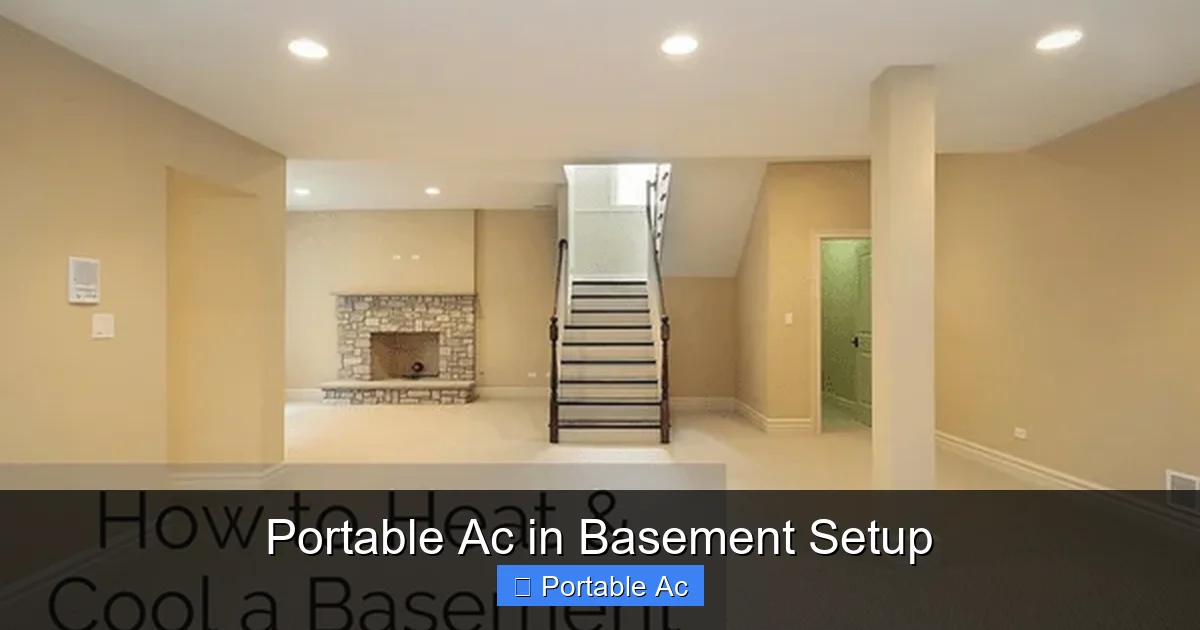
Visual guide about Portable Ac in Basement Setup
Image source: blog.totalhomesupply.com
Not all portable ACs are created equal—and when it comes to basement setups, size, cooling capacity, and hose design matter more than usual. Here’s what to look for before you buy.
Cooling Capacity (BTUs)
The first thing to consider is how much cooling power you actually need. Basements vary widely in size—some are finished and spacious, others are unfinished utility closets. A good rule of thumb: aim for 500 BTUs per square meter (or 176 BTUs per square foot). So, a 400-square-foot basement would need roughly 7,000–8,000 BTUs.
However, if your basement has high ceilings, poor insulation, or lots of sunlight exposure, you may need a slightly larger unit. Conversely, smaller finished areas might get by with a 5,000 BTU model.
For reference:
– 5,000 BTU = up to 150 sq ft
– 8,000 BTU = up to 250 sq ft
– 10,000 BTU = up to 350 sq ft
Keep in mind that portable ACs are measured differently than window units—always check the manufacturer’s coverage chart.
Hose Length and Design
This is arguably the most critical factor for basement setups. If you can’t route the exhaust hose outside easily, your unit won’t work at all. Look for models with:
– At least 5–6 feet of hose: Longer is better for flexibility.
– Quick-connect fittings: Makes installation faster and leak-proof.
– Dual-hose systems (if available): More efficient and reduces suction loss—ideal for larger basements.
Some advanced models even include extendable hoses or universal adapters for sliding windows.
Energy Efficiency and Features
Since basements are often used intermittently, energy efficiency becomes more important over time. Seek out units with:
– High Energy Efficiency Ratio (EER): Aim for 10 or above.
– Sleep mode and programmable timers: Automatically adjust temperature and fan speed overnight.
– Remote control and digital display: Convenient for adjusting settings from across the room.
– Auto-evaporation technology: Minimizes water collection—great for humid climates.
These features not only save money but also make daily use far more pleasant.
Step-by-Step Guide to Setting Up Your Portable AC in the Basement
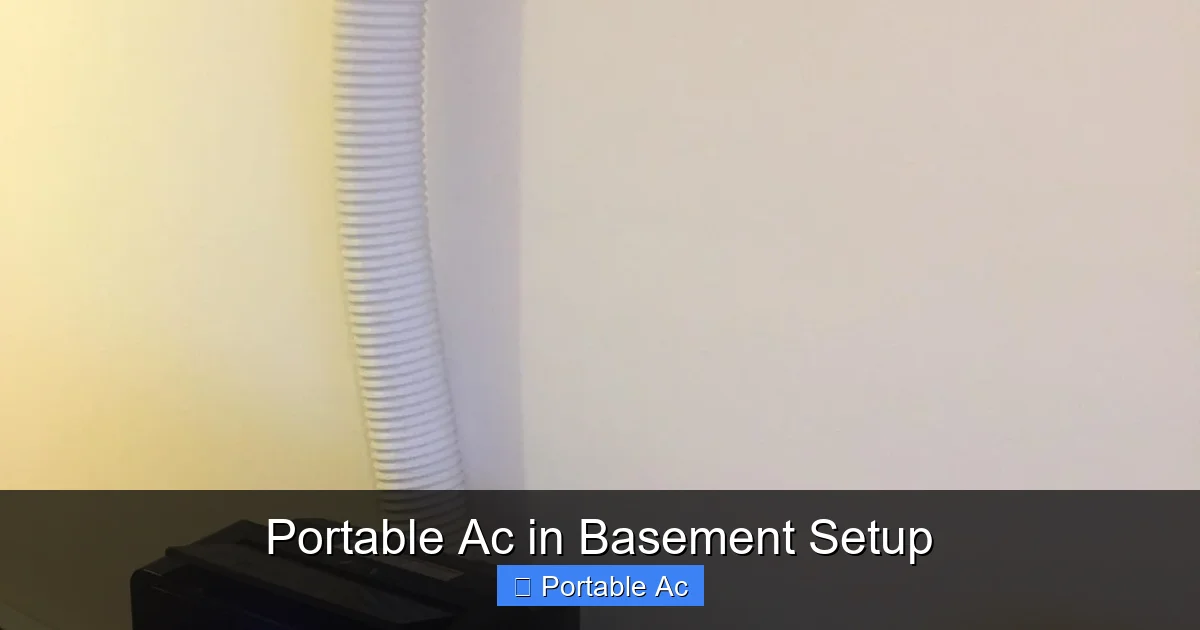
Visual guide about Portable Ac in Basement Setup
Image source: airconditionsolve.com
Once you’ve picked the perfect unit, it’s time to install it properly. Follow these steps for safe, efficient operation.
Step 1: Find the Best Location
Place your portable AC near an exterior wall—ideally one with a window or basement-level vent. Avoid corners where airflow gets blocked, and ensure there’s at least 12 inches of clearance around all sides. For optimal performance, position the unit so it draws in cool, fresh air from outside while pushing hot air out through the exhaust hose.
If your basement has no windows, check if you have a crawlspace access point or a basement egress window. In rare cases, you might need to create a temporary vent using rigid ducting and a wall sleeve.
Step 2: Install the Exhaust Hose
Attach the exhaust hose securely to the back of the unit. Then, run it through the window or wall opening and seal any gaps with foam weatherstripping or duct tape to prevent warm air from re-entering the room.
Tip: Use a window kit that includes a flap or baffle to keep rain, dust, and pests out of your basement.
Step 3: Plug It In and Test
Connect the unit to a dedicated outlet—avoid power strips or surge protectors, as they can cause overloads. Turn it on and set your desired temperature. Within minutes, you should feel a noticeable drop in temperature and see condensation forming in the water tank.
Monitor the first hour for unusual noises or leaks. If everything runs smoothly, congratulations—you’re officially cooled!
Maximizing Performance in Your Basement Setup
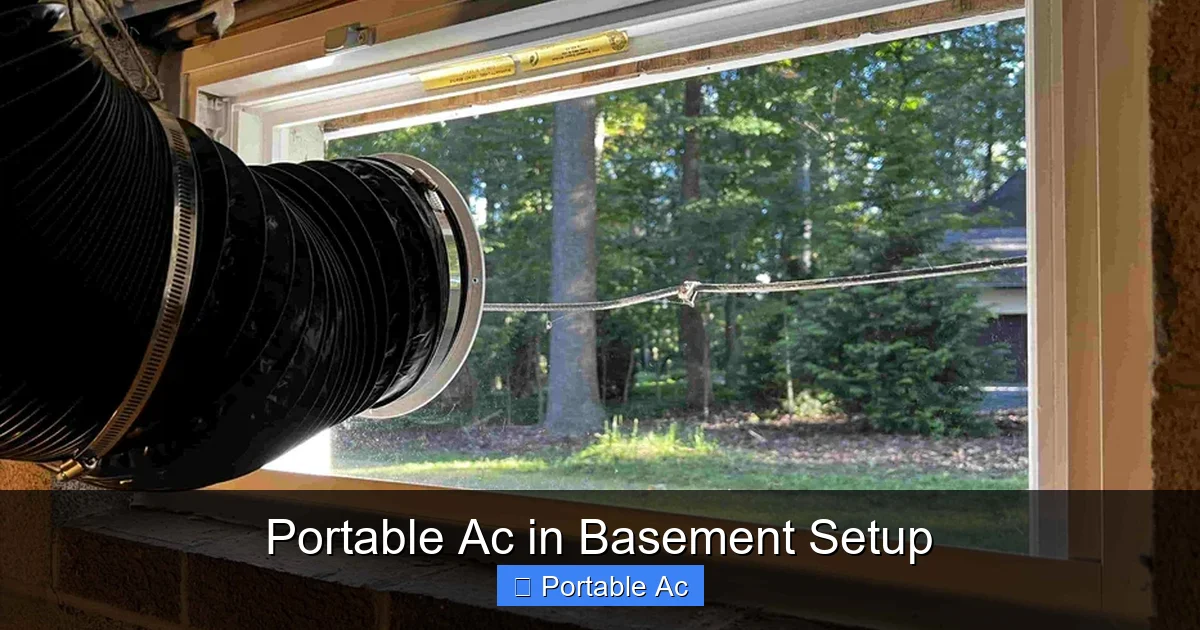
Visual guide about Portable Ac in Basement Setup
Image source: martinsonmanufacturing.com
Even the best portable AC won’t perform well if you don’t optimize its environment. Here are some proven ways to boost efficiency and comfort.
Seal Air Leaks
Drafts from doors, cracks, or poorly insulated walls can ruin your cooling efforts. Use door sweeps, draft stoppers, or caulk to seal gaps around basement entryways. This keeps cool air inside and stops humid outdoor air from seeping in.
Improve Airflow
Use a box fan near the intake side of the portable AC to pull in more cool air. Alternatively, open a basement window slightly (but not so much that insects get in) to create cross-breeze circulation.
Add a Dehumidifier
Basements are notorious for excess moisture. Pairing your portable AC with a small dehumidifier can dramatically improve comfort—especially during humid summers. Many newer portable ACs integrate dehumidification functions, but standalone units offer even greater capacity.
Clean Regularly
A clogged filter restricts airflow and forces the compressor to work harder. Clean or replace the filter every 1–2 weeks during peak use. Also, empty and wipe down the water collection tray regularly to prevent mold and odors.
For deeper cleaning, refer to our guide on the best portable AC cleaning kits—they make maintenance simple and thorough.
Common Challenges and How to Solve Them
Every basement setup hits bumps along the way. Here’s how to handle the most frequent issues.
Issue: Warm Air Coming Back In
Symptom: The room feels warmer than expected despite running the AC.
Solution: Check the exhaust hose connection. Make sure it’s fully inserted and sealed. Also, verify that the window flap isn’t allowing hot air to回流. Replacing cheap plastic ducts with insulated rigid tubing can help reduce heat gain.
Issue: Water Leaking or Overflowing
Symptom: Water drips onto the floor or the internal float switch shuts off the unit.
Solution: Empty the water tank frequently—especially in high-humidity environments. Some models support continuous drainage via a garden hose attachment. If leaks persist, inspect the condensate tray for cracks or misalignment.
Issue: Unit Won’t Cool Enough
Symptom: After 30 minutes, the room still feels warm.
Solution: Confirm the BTU rating matches your space size. Consider upgrading to a higher-capacity model or supplementing with a ceiling fan for better air distribution.
Maintenance Tips for Long-Term Reliability
To keep your portable AC running smoothly for years, establish a simple maintenance routine:
– Monthly: Vacuum the filter and wipe exterior surfaces.
– Every 3 months: Inspect the exhaust hose for kinks or damage.
– Annually: Schedule professional inspection (optional but recommended for heavily used units).
– Before winter storage: Clean thoroughly and follow our guide on how to store portable ACs in winter.
Proper care extends lifespan, improves efficiency, and prevents costly repairs.
Final Thoughts: Is a Portable AC Right for Your Basement?
A portable AC in basement setup offers a fast, affordable path to climate control without major renovations. Whether you’re finishing your basement, creating a home gym, or just need relief from summer heat, these units deliver powerful, flexible cooling exactly where you want it.
With the right model, careful installation, and smart usage habits, you can enjoy comfortable temperatures all year long—without breaking the bank or your windows. Ready to get started? Explore our curated list of the best portable ACs for basement use, or dive into our detailed buyer’s guides to find the perfect match for your space.
Remember: comfort starts with preparation. Plan your layout, invest in quality, and maintain your system—and soon, your basement will feel less like a cave and more like home.
Frequently Asked Questions
What size portable AC do I need for a 12×12 basement?
A 12×12 foot basement (144 sq ft) typically requires a 6,000–7,000 BTU portable AC. If the ceiling is over 8 feet or the area gets direct sunlight, opt for 8,000 BTU for reliable cooling.
Do I need to vent a portable AC in a finished basement?
Yes. All portable ACs must vent hot air outside—usually through a window or wall. Without proper exhaust, the unit will struggle to cool and may overheat or shut down.
Can I use a portable AC without a window?
Only if you have another way to exhaust hot air, such as a basement egress window, crawlspace vent, or exterior wall opening. Otherwise, you’ll need to modify the space temporarily.
How often should I clean the filter?
Clean or replace the filter every 1–2 weeks during heavy use. Neglecting this reduces airflow, lowers efficiency, and increases wear on internal components.
Are portable ACs noisy?
Most modern portable ACs operate between 50–60 decibels—comparable to a quiet conversation or refrigerator. Sleep mode further reduces noise, making them suitable for bedrooms and offices.
Can I connect multiple portable ACs to one circuit?
It’s possible, but not recommended. Each portable AC draws significant power (often 10+ amps). Mixing units can overload circuits, trip breakers, or cause voltage drops. Use dedicated outlets when possible.
