
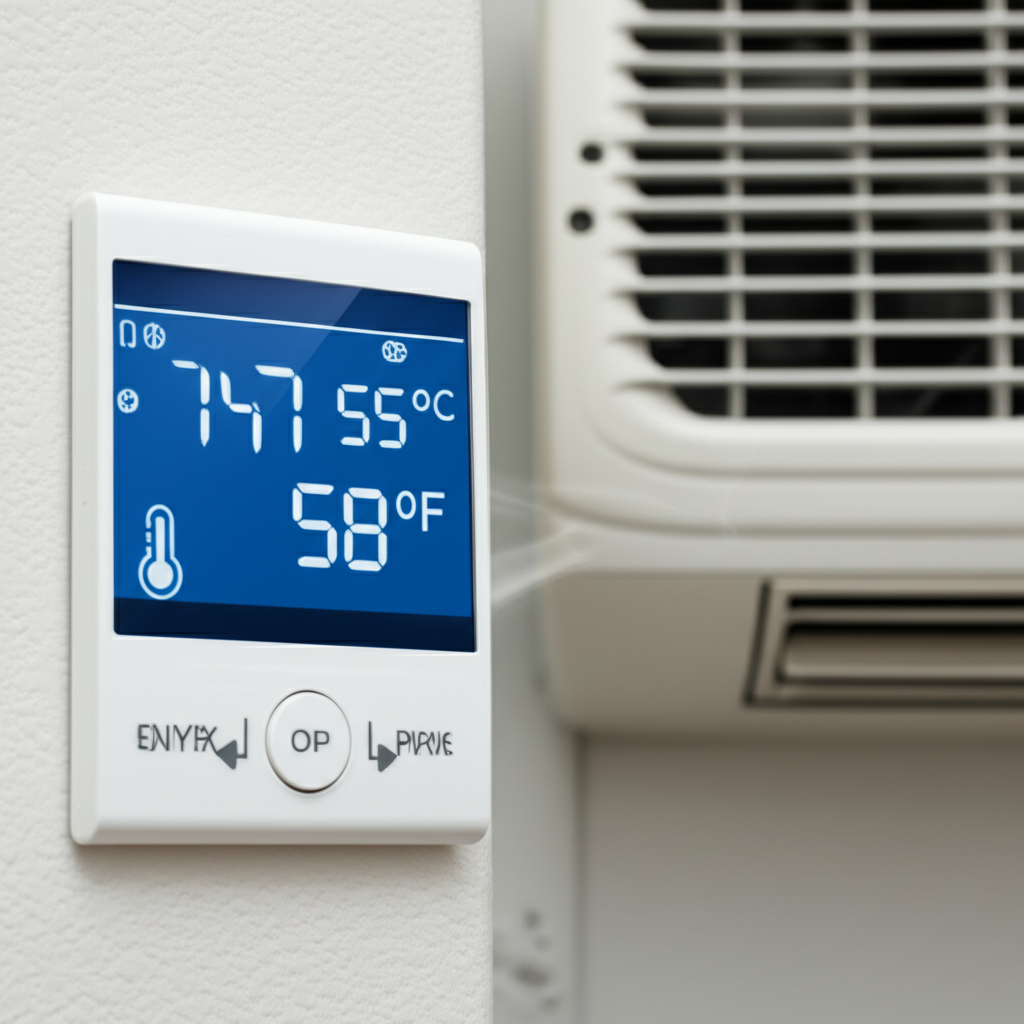
The AC temperature drop, or Delta T, is the difference between the warm air entering your AC and the cold air leaving it. A healthy system should show a drop between 16°F and 22°F. Checking this takes just five minutes with two thermometers. This simple measurement is the most reliable way to confirm your AC is cooling efficiently and save you money on unnecessary repairs.
Are you tired of feeling confused about your air conditioner? High energy bills and poor cooling are frustrating. You just want your home to feel comfortable again. The good news is that troubleshooting your AC doesn’t always require calling a technician.
One of the easiest and most powerful checks you can do is measuring the “temperature drop.” This simple measurement tells you exactly how hard your AC is working. This guide will show you how to do this essential test in minutes. You’ll become the expert of your own AC system!
What is the AC Temperature Drop (Delta T)?
Don’t worry about confusing technical terms. The AC temperature drop is very simple. We call it the Delta T.
Delta T is just the difference in temperature. You measure the temperature of the air going into your AC system. Then you measure the temperature of the cold air coming out. Subtract the cold number from the warm number. That difference is your Delta T.
Think of it like this: If 80°F air goes in and 60°F air comes out, your Delta T is 20°F. That means your AC is cooling properly!
Why Checking the Delta T is Essential for Beginners
You might wonder why you need to do this simple test. It’s the easiest way to check the health of your cooling system. You don’t need fancy tools or deep knowledge.
A good Delta T confirms that your refrigerant levels are correct. It also tells you if the compressor is working hard enough. If your drop is too low, you are wasting energy and not cooling your home efficiently. If it is too high, you might have airflow problems.
This simple test saves you time and money. It helps you catch small problems before they become expensive breakdowns.
Tools You Need for This Easy Test
You only need two things to perform this check. You likely already have one or both of these items at home.
- Two Digital Thermometers: Use reliable digital thermometers. They are fast and accurate. You can also use a single thermometer and just measure the two points separately.
- A Pen and Paper (or Phone): You need to jot down your two temperature readings.
That’s it! No specialized gauges or complex equipment needed.
Step-by-Step: How to Check AC Temperature Drop
Before you start, make sure your AC has been running for at least 15 minutes. This allows the system to reach its normal operating temperature.
-
Step 1: Prep the AC System
Set your thermostat to its lowest setting (like 68°F). Make sure the fan speed is set to low or medium. Close all windows and outside doors in the house. This creates a stable environment for accurate readings.
-
Step 2: Measure the Return Air (Air Going In)
Find your main air return vent. This is usually the largest vent where air is sucked back into the system. Hold or tape the first thermometer right in the middle of this vent. Wait about 60 seconds until the temperature stabilizes. Write down this number. This is your Return Air Temperature (RAT).
-
Step 3: Measure the Supply Air (Air Coming Out)
Now find the closest supply vent. This is one of the smaller vents where cold air blows out into the room. Hold the second thermometer right in the middle of this vent. Wait 60 seconds for the temperature to stabilize. Write down this number. This is your Supply Air Temperature (SAT).
-
Step 4: Calculate the Difference
Subtract the Supply Air Temperature (SAT) from the Return Air Temperature (RAT). This final number is your Delta T.
Example: 80°F (RAT) – 62°F (SAT) = 18°F (Delta T)
What Your AC Temperature Drop Results Mean
Once you have your Delta T number, you can instantly know the health of your cooling system. A good air conditioner should produce a cooling drop within a specific range.
In most homes, the ideal range is 16°F to 22°F. If your number is outside of this, it is telling you something needs attention.
| Delta T Reading | System Health & Indication | What This Means |
|---|---|---|
| 16°F to 22°F | Excellent/Good | Your AC is running perfectly. Your refrigerant and airflow are balanced. |
| 10°F to 15°F | Poor Cooling/Low | The system is struggling. You might have a dirty filter, low refrigerant, or a dirty indoor coil. |
| Below 10°F | Major Problem | The compressor may be failing, or you have a serious refrigerant leak. Call a professional ASAP. |
| Above 23°F | Airflow Restriction | This is less common. It often means the air moving over the cold coil is too slow. Check for clogged vents or a failing blower fan. |
Troubleshooting Common Issues Based on Delta T
If your Delta T is lower than 16°F, don’t panic. There are a few easy fixes you can try yourself before calling for service. Most issues are related to simple maintenance.
Low Delta T Quick Fixes (10°F – 15°F)
- Change the Air Filter: A dirty filter is the number one cause of poor cooling. It suffocates your system. Change it monthly during heavy use.
- Clean the Indoor Coil: If the filter is clean, the evaporator coil (inside unit) might be dirty. This requires professional cleaning if you can’t access it easily.
- Check the Outdoor Unit: Make sure the condenser unit outside is clean. Hosing off dirt and debris helps it release heat properly.
- Check for Blocked Vents: Ensure all supply vents in your home are fully open and not blocked by furniture or curtains.
If you have tried all these steps and the Delta T is still low, you likely have a refrigerant leak. This requires a certified HVAC technician. Please remember that refrigerant is a regulated substance and should only be handled by professionals. You can learn more about safe AC practices from trusted sources like Energy.gov.
Simple Maintenance Tips to Keep Your Delta T Perfect
The best way to ensure your AC always hits that perfect 16°F to 22°F drop is through consistent, easy maintenance. A little work now saves big money later.
- Schedule Annual Checks: Hire a pro once a year to check refrigerant pressure and electrical components.
- Keep the Area Clear: Ensure the outdoor unit has at least two feet of clear space around it for good airflow.
- Check Drainage: Make sure the condensate drain line (often a small pipe near the indoor unit) is not clogged. This prevents water damage and keeps humidity low.
- Use a Smart Thermostat: Modern thermostats help regulate temperature more evenly, reducing strain on your system.
Frequently Asked Questions (FAQ)
What if the humidity is high when I check the Delta T?
Humidity absolutely affects the reading. If it’s very humid, some of the cooling energy goes into pulling moisture out of the air. This might make your Delta T look slightly lower (maybe 14°F or 15°F) even if the AC is fine. Don’t worry, that means the AC is dehumidifying!
Should I check the Delta T every month?
No, you don’t need to check it monthly. Checking it at the start of the cooling season (Spring) and maybe once mid-summer is usually enough. If your AC starts blowing warm, that’s the time to check it immediately.
Is it bad if my Delta T is too high (above 22°F)?
Yes, a high drop usually means the air is moving too slowly over the cold coil. The air gets extra cold because it spends too much time there. This points to a severe airflow restriction, like a totally clogged filter or a failing blower motor.
What temperature should I set my thermostat to for the test?
Set it as low as it will go (e.g., 65°F or 68°F). This forces the AC to run continuously, giving you a stable and accurate measurement of its maximum cooling ability.
Can I use a meat thermometer instead of a digital thermometer?
If it’s accurate and reads down to the low temperatures, you can. However, dedicated digital room thermometers are often faster at stabilizing their reading, which is helpful for this quick test.
Conclusion
See? Checking your AC temperature drop is not scary at all. It is a simple piece of detective work that empowers you to understand your cooling system better. That 16°F to 22°F range is your sweet spot for efficiency and comfort.
By learning this one easy trick, you can catch maintenance issues early. You’ll save money, keep your energy bills low, and enjoy consistent, comfortable cooling all summer long. Keep that filter clean, do this check once a year, and your AC will thank you!
Stay cool out there!
