
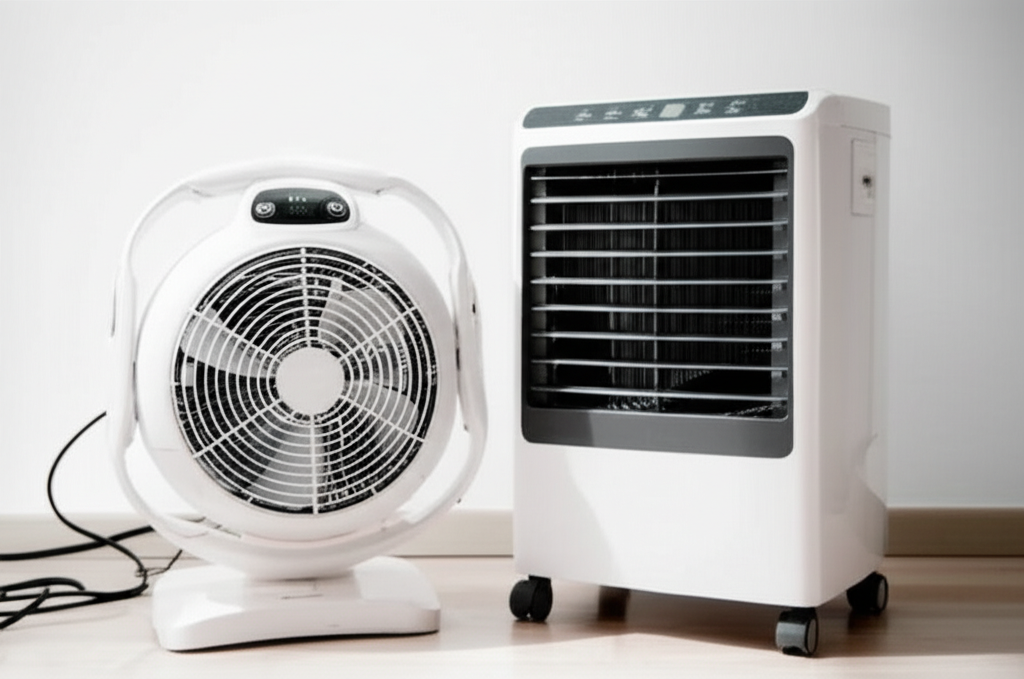
Quick Summary: For a small room, an Air Cooler provides much better moisture and airflow relief in dry heat, but a Desk Fan is cheaper and uses way less energy if you just need a slight breeze. They cool differently!
Are you staring at two fans, feeling hot and confused? It is easy to get mixed up when picking the right cooler for a small space. Energy bills can sneak up on you, too. Worry not! I am Jack from ACReviewHub.com. I will make this simple for you, just like talking over the fence.
Today, we are getting down to brass tacks. We will compare the powerful air cooler and the simple desk fan. You will know exactly which one belongs in your little room by the end of this guide.
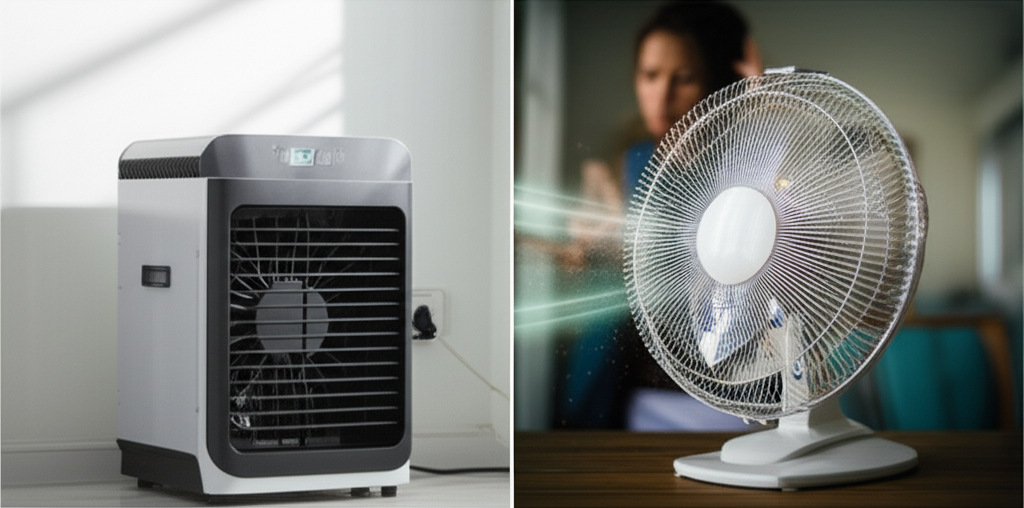
Air Cooler Vs Desk Fan: The Brutal Truth for Small Rooms
When your room feels stuffy, you need help fast. But air coolers and desk fans do totally different jobs. Think of it this way: one is like a gentle shower, and the other is just a strong breeze.
We need to look at how they handle heat, how much water they use, and what they cost to run. This will help you pick the best friend for your small space.
What Exactly Does an Air Cooler Do? (It’s Not an AC!)
An air cooler, often called an evaporative cooler, uses water to cool the air. It pulls warm air over wet pads. When the water evaporates, it takes heat away, making the air feel cooler when it blows out.
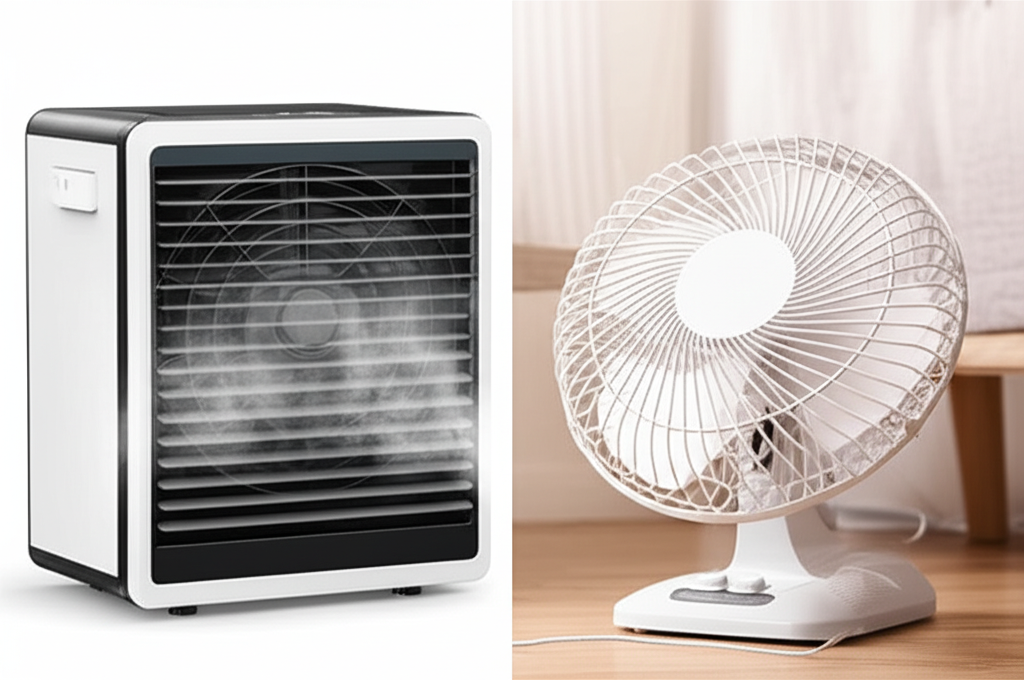
This process adds humidity (moisture) to the air. This is great if you live where it is dry outside, like in a desert climate. But if your room is already damp, an air cooler can make it feel sticky and muggy.
When the Air Cooler Shines (Pros)
- It cools the air temperature noticeably better than a fan.
- It adds needed moisture in very dry weather.
- They use much less electricity than a real air conditioner.
- Setup is usually plug-and-play, no special venting needed.
Where the Air Cooler Falls Short (Cons)
- It requires constant refills of water.
- It will not work well if the humidity is already high.
- They need regular cleaning to stop mold growth in the water tank.
- They are bigger and take up more floor space than a desk fan.
The Humble Desk Fan: Just Moving Air Around
A desk fan is the simplest cooling tool you can buy. It has blades that spin very fast. This spinning pushes the air in front of it towards you.
A fan does not actually lower the air temperature. It cools you down because the moving air helps sweat evaporate off your skin. This makes you feel cooler instantly. It is just air movement, not actual cooling.
Why You Might Love a Simple Desk Fan
- They are super cheap to buy and very small.
- They use almost no electricity—pennies a day to run.
- You can place them anywhere—on a desk, shelf, or floor.
- They work great in any humidity level, wet or dry.
The Limitations of Just Blowing Air
- If the room air is 95°F, the fan is just blowing 95°F air on you.
- They do not help much if the air is completely still and hot.
- They can sometimes just stir up dust around the room.
Head-to-Head Cooling Power for Your Small Room
Let us compare them side-by-side using the key things that matter when you are trying to stay comfortable in a small space, like a dorm room or a small office.
| Feature | Air Cooler (Evaporative) | Desk Fan (Air Mover) |
|---|---|---|
| Cooling Method | Evaporation (Adds moisture) | Air Circulation (Evaporates sweat) |
| Energy Use | Low to Moderate (Motor + Pump) | Very Low (Motor only) |
| Best Climate | Dry Heat (Low Humidity) | Any Climate |
| Maintenance | Medium (Must clean water tank) | Low (Dusting blades) |
| Space Needed | Moderate Floor Space | Very Small Footprint |
For a small room, the main thing is the environment. If you live somewhere like Arizona where the air is bone dry, the cooler will make a real difference. If you live somewhere like Florida, the fan is safer because the air is already sticky.
Saving Money: Which Costs Less to Run?
When thinking about your budget, running costs are important. A desk fan is almost always the champion of low energy use.
A typical desk fan uses about as much power as a lightbulb, maybe 40–75 watts. Running it all day is very cheap.
An air cooler uses a little more power because it runs a fan and a small water pump. They usually use between 75 and 200 watts. This is still much less than an AC unit, but more than the simple fan.
Energy Saving Checklist for Small Space Cooling
- Always use the lowest fan speed that keeps you comfortable.
- If using an air cooler, make sure the water tank lid is closed tight.
- Keep curtains or blinds closed during the hottest part of the day.
- If using a fan, point it directly at you, not just across the room.
- Remember to clean your fan blades often so they move air efficiently.
For more on using energy wisely for cooling, check out the tips from the Department of Energy over at Energy.gov.
Setup and Care: Making Your Cooler or Fan Last
Setting these up is easy, but care is needed to keep them working well and safely.
Setting Up Your Desk Fan (The 3-Step Breeze)
- Unpack the fan base and attach it securely to the stand, if necessary.
- Plug the fan into a safe wall socket or power strip.
- Turn it on the lowest setting first, then adjust until you feel a nice breeze.
Setting Up Your Air Cooler (The Water Factor)
- Place the cooler near an open window or door for best results. This lets moist air escape.
- Fill the water tank up to the indicated MAX line. Never overfill it.
- Plug it in, turn the fan on, and then switch the “Cool” or “Pump” setting on.
Remember, never run an air cooler without water. Running the pump dry can damage it quickly.
Troubleshooting Tiny Cooling Problems
Sometimes even the simplest tools have hiccups. Here is what to check if things feel off.
| Symptom | Desk Fan Cause | Air Cooler Cause |
|---|---|---|
| Fan is noisy/wobbly | Loose screws or bent blade | Pads are dry or pump needs cleaning |
| Air flow seems weak | Dusty blades or motor wearing out | Water level is too low or pads are clogged |
| Room feels damp/stuffy | N/A | Outside humidity is already high |
If you want deep dives into specific fan maintenance, Consumer Reports often has great general guides on small appliance care.
Frequently Asked Questions (FAQ) for Beginners
Q1: Can an air cooler replace my AC unit in the summer?
A: Nope! An air cooler is not an air conditioner. It can only drop the temperature a few degrees, and only if the air is dry.
Q2: Is it bad for my desk fan to run all day?
A: Generally, no, as long as it is not overheating or making strange noises. They are built for long, low-power runs.
Q3: How often should I change the water in my air cooler?
A: You should dump out old water and refill with fresh, cool water every single day if you are using it often. This keeps things clean.
Q4: Can I put ice in my air cooler?
A: Yes! Many coolers have a special ice compartment. Adding ice gives you a temporary, stronger blast of cool air.
Q5: Which one is better for allergies?
A: The desk fan is better. Air coolers blow air over wet pads, which can sometimes spread mold or mildew if you don’t clean them perfectly.
Q6: My fan is making a clicking sound. What is wrong?
A: Check the front grill cover. Something small, like a stray piece of paper or string, might be hitting the blades as they spin.
The Final Takeaway for Small Room Comfort
Choosing between an air cooler and a desk fan for your small space comes down to your local weather and your budget. If you are in a dry area and need real temperature relief, the air cooler is your friend, even with the extra water duty.
If you just need a light personal breeze, want to save every penny on electricity, or live where it is already humid, stick with the trusty, simple desk fan.
Remember, keeping things simple is the key to staying cool without headaches. Keep your chosen device clean and running efficiently, and you will stay comfortable all season long!
