
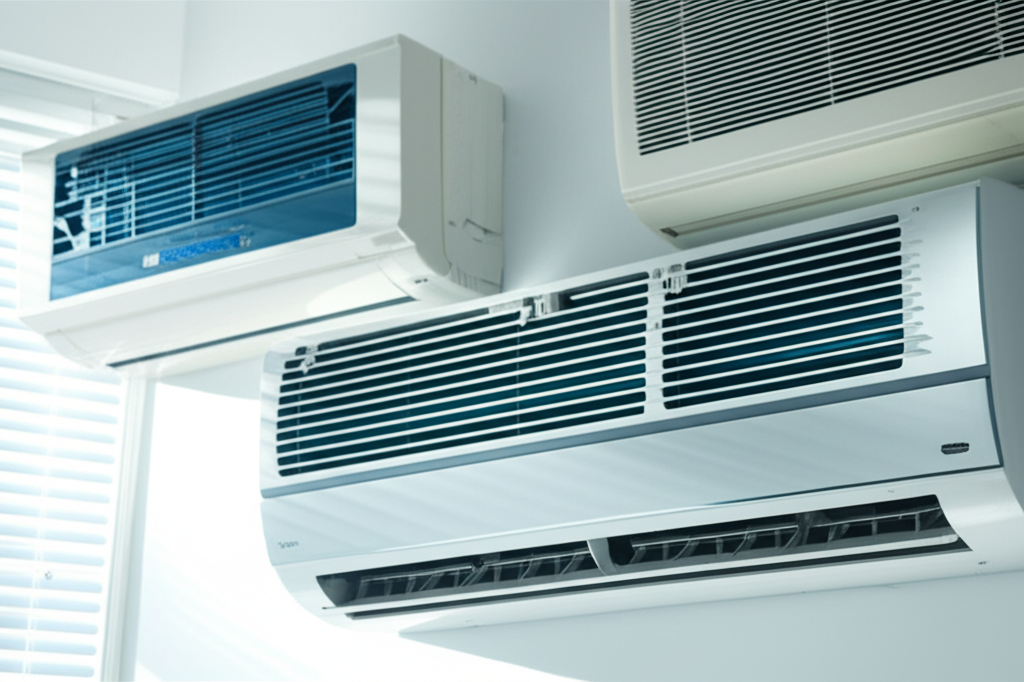
Quick Summary: Inverter ACs adjust their speed to save big on electricity and keep the temperature steady, while Non-Inverter ACs just cycle fully ON or fully OFF, which costs more to run.
Are you staring at two different air conditioners and feeling totally confused? That is completely normal. Choosing an AC should not feel like rocket science, but all those technical terms can certainly make your head spin. We are here to clear up the biggest mystery in window units: the difference between Inverter and Non-Inverter models. By the end of this guide, you will know exactly which one saves you money and keeps your comfort level perfect.
The Shocking Truth: What Makes an AC an “Inverter”?
The real difference between these two types of ACs boils down to how the compressor works. Think of the compressor as the heart of your air conditioner—it does all the heavy lifting to cool the air.
A traditional, Non-Inverter AC is like a light switch: it is either 100% ON or completely OFF. When your room gets warm, it blasts the cooling power until the target temperature is hit, then shuts down entirely. This constant starting and stopping wastes a lot of energy.
An Inverter AC, however, has a smart speed control. It starts strong, but once the room is cool, it does not shut off. Instead, it slows down its compressor—like gently tapping the gas pedal in a car instead of slamming the brakes and speeding up again.
How Inverter Technology Saves You Real Money on Bills
That gentle slowing down is where the magic happens for your wallet. Because the compressor never fully stops, it uses much less electricity to maintain the temperature.
When a Non-Inverter unit kicks back on after being off, it needs a huge surge of power—this is called the starting surge—which spikes your bill.
Here is a quick look at the power comparison:
| Feature | Non-Inverter AC | Inverter AC |
|---|---|---|
| Compressor Operation | Full Power (ON/OFF) | Variable Speed (Adjustable) |
| Energy Efficiency | Lower (Higher running costs) | Much Higher (Lower running costs) |
| Temperature Consistency | Fluctuates slightly | Very stable and precise |
| Initial Purchase Price | Usually lower | Usually higher |
Understanding Cooling Comfort: Steady vs. Surging
Beyond saving energy, the type of AC drastically affects how comfortable your room feels. No one likes that chilly blast followed by a warm lull.
Non-Inverter units often lead to noticeable temperature swings. You feel too cold, you turn it up, then you feel too warm, and you turn it down again. It is a constant battle.
Inverter ACs offer superior comfort because they constantly monitor the room temperature. They make tiny adjustments to maintain your set point—say, exactly 74°F—all day long. This results in quieter operation too, as the unit is rarely running at maximum capacity.
When Should You Choose a Non-Inverter Window AC?
While Inverters are technologically better, there are still a few specific situations where a standard, Non-Inverter unit makes sense for a beginner.
- If your budget for the initial purchase is very tight.
- If you only plan to use the AC for a few hours occasionally (like a guest room).
- If the space you are cooling is very small and cools down almost instantly.
When is Investing in an Inverter AC Worth It?
If you live in a hot climate or plan to run your AC for many hours every single day, the Inverter model will pay for itself through energy savings.
Here are the top reasons smart homeowners upgrade to Inverter technology:
- You use your AC more than 8 hours per day regularly.
- You want the lowest possible monthly electricity bill.
- You prioritize quiet operation, especially in bedrooms or offices.
- You want precise temperature control without constant fiddling with the remote.
Simple Setup: Getting Your New Window AC Running
Whether you choose Inverter or Non-Inverter, the physical setup for a window unit is usually the same. Always follow your specific manual, but here are the general steps:
- Measure the window opening to ensure the unit fits securely.
- Slide the AC unit into the window opening from the inside.
- Secure the side accordion panels fully extended to fill any gaps.
- Use the provided mounting brackets and screws to lock the unit into the window frame.
- Seal any remaining gaps around the frame with weather stripping or foam tape to prevent air leaks.
- Plug the unit into a dedicated, grounded wall outlet (never use an extension cord).
Easy Maintenance to Keep Any AC Happy
Proper care extends the life of both AC types and keeps them running efficiently. Remember, dirty filters make your compressor work harder, whether it is an Inverter or not!
Follow this simple routine:
- Monthly: Clean the air filter. Carefully remove the front panel and rinse the reusable filter under cool water. Let it dry completely before putting it back.
- Seasonally (Before Summer): Check the exterior fins (the outside metal part) for dirt or debris buildup. Gently clean with a soft brush if necessary.
- Annually: Have a professional check the refrigerant levels and clean the coils deep down. This ensures maximum efficiency for your investment.
Quick Troubleshooting: What If My AC Acts Strange?
If your AC is not cooling well, check these simple things before calling a technician. This applies whether you have the smart Inverter or the simple Non-Inverter.
| Symptom | Possible Cause (Easy Fixes) |
|---|---|
| AC runs constantly but blows warm air | Dirty filter or clogged outdoor unit |
| AC turns on and off too quickly (short cycling) | Thermostat is set too low, or unit is oversized |
| Water is leaking inside the room | Unit is not level (needs slight backward tilt) |
| AC won’t turn on at all | Check the circuit breaker or plug connection |
For more in-depth efficiency tips from the government, you can always check out the U.S. Department of Energy on saving home energy.
Frequently Asked Questions for AC Newbies
Here are the quick answers to the questions I hear most often:
- Q: Are Inverter ACs quieter than Non-Inverter ACs?
- A: Yes, usually significantly quieter because they don’t constantly cycle at full blast.
- Q: Does an Inverter AC cost a lot more upfront?
- A: They typically cost more initially, but the energy savings often make up the difference within a few years.
- Q: Can I replace my old Non-Inverter with a new Inverter in the same window slot?
- A: Yes, if the physical dimensions (width and height) match the old unit, the installation process is nearly identical.
- Q: Which one cools a room faster?
- A: A Non-Inverter can hit the target temperature slightly faster on the very first startup, but the Inverter maintains that temperature much more consistently afterward.
- Q: Do Inverter ACs need special maintenance?
- A: No, the basic filter cleaning is the same. They just benefit more from keeping the coils clean because they run longer.
- Q: What does “BTU” mean?
- A: BTU (British Thermal Unit) measures cooling power. Bigger rooms need higher BTUs. Never guess—measure your space first!
Choosing an air conditioner does not have to be a stressful decision. Now you understand the core technology difference: Inverter equals smart, steady savings, and Non-Inverter equals simple, high-power bursts.
Focus on how often you use the unit and what your long-term budget looks like. A little bit of consistent cleaning and checking those simple things will keep your unit performing like a champion all summer long.
You’ve got this — and cool, comfortable air is just a few simple steps away.
