
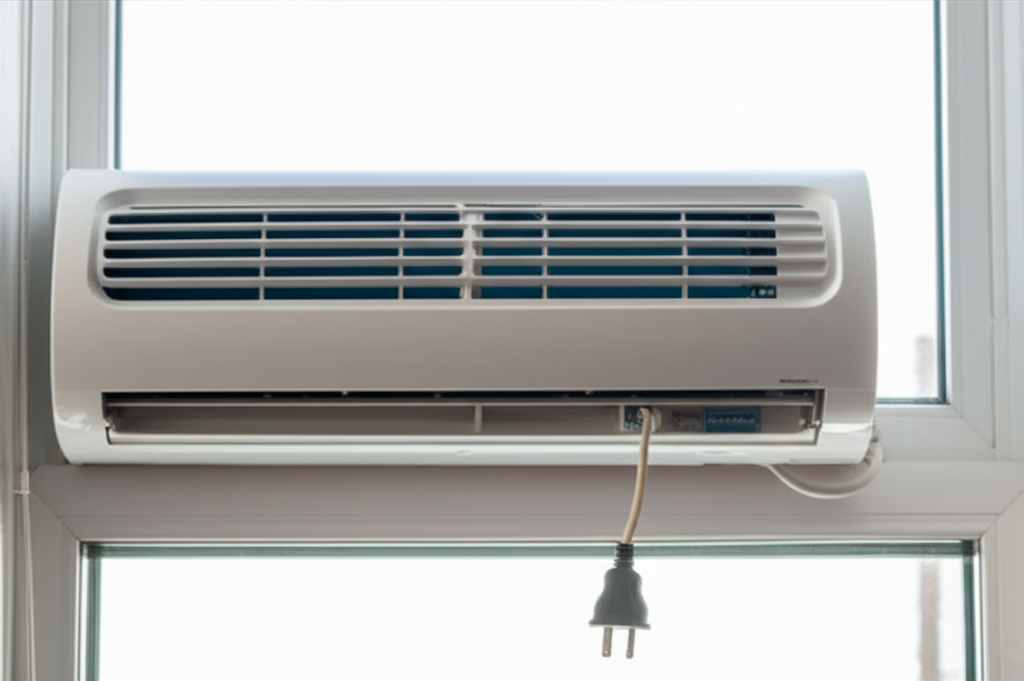
Quick Summary: A window AC trips a breaker usually because it’s drawing too much electricity, often due to a dirty filter, a bad capacitor, or an old, overloaded circuit. Don’t worry; we’ll trace the cause simply!
Is there anything worse than finally turning on your window AC on a hot day, only to hear that familiar snap from the wall? It’s frustrating when your cooling stops dead. You shouldn’t need an engineering degree to keep your AC running. I’m Jack from ACReviewHub.com, and I promise to explain why this happens in plain English. We are going to look at the most common, easy-to-fix reasons your breaker is taking a vacation when your AC needs to work.
Why Window AC Keeps Tripping Breaker: The Shocking Truth Explained Simply
That breaker trip isn’t a random act of electrical doom. It’s your home’s safety system doing its job. An AC unit needs a lot of power to start up and run. When it pulls too much power, the breaker cuts the electricity to prevent overheating and fire. That’s a good thing!
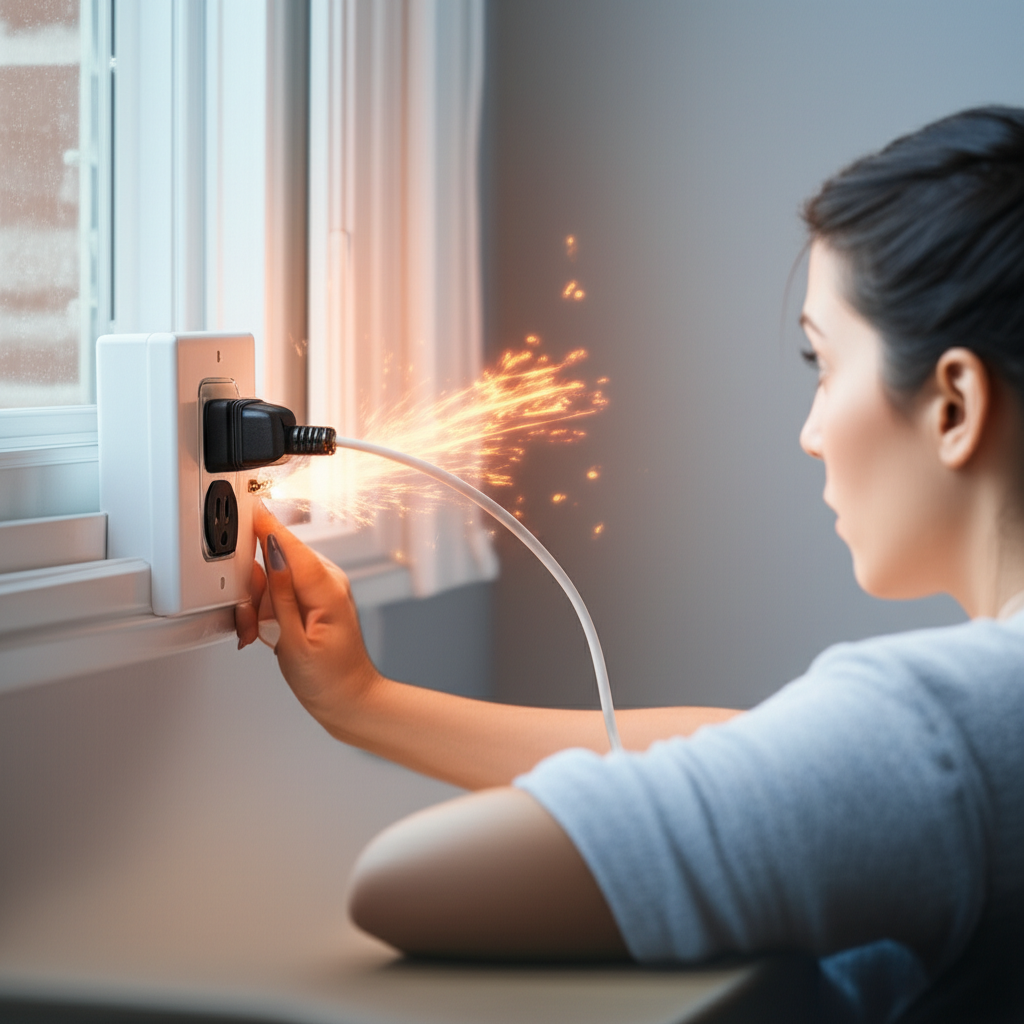
We need to figure out if the problem is the AC unit itself or the place where it’s plugged in. Most of the time, it’s something simple we can handle ourselves. Let’s start with the most common culprit: the unit demanding too much power.
Is Your AC Just Too Big or Too Small for the Job?
Believe it or not, sizing matters a lot for electrical health. An AC unit that is too small has to run constantly to try and cool your space. This constant running puts a heavy, long-term strain on the circuit. It might not trip immediately, but continuous high load can lead to issues.
If your unit is brand new and frequently trips right when it starts up, it might be undersized and overheating its components quickly. We often look at BTUs (British Thermal Units) to match the unit to the room size.
Match Your AC Power (BTU) to Your Room Size
Use this simple chart to see if your unit is struggling because it’s too weak for the space:
| Room Size (Square Feet) | Recommended Cooling Capacity (BTUs) |
|---|---|
| 150 to 250 sq. ft. | 5,000 – 6,000 BTUs |
| 250 to 350 sq. ft. | 7,000 – 8,000 BTUs |
| 350 to 550 sq. ft. | 9,000 – 12,000 BTUs |
| 550 to 1,000 sq. ft. | 14,000 – 18,000 BTUs |
If you see you need an 8,000 BTU unit but are running a 5,000 BTU model, that poor little AC is working itself to death!
The Simple Fix: Dirty Filters Cause Overheating
This is the number one, easiest fix, folks. A clogged, dirty air filter stops air from flowing over the evaporator coils inside the unit. Think of it like trying to breathe through a thick scarf.
When airflow is restricted, the coils get too cold, freeze up, and the compressor has to work incredibly hard to push air through. This excessive strain makes the compressor draw way more amperage than it should, and pop—the breaker trips.
Your Easy Filter Cleaning Routine
- Unplug the AC unit completely for safety.
- Carefully open the front grille or access panel.
- Slide out the reusable filter.
- Wash it gently with warm, soapy water (if reusable) or replace it immediately (if disposable).
- Let it dry fully before sliding it back in.
- Plug the unit back in and try running it on a low setting first.
When the Power Source is the Problem (It’s Not the AC!)
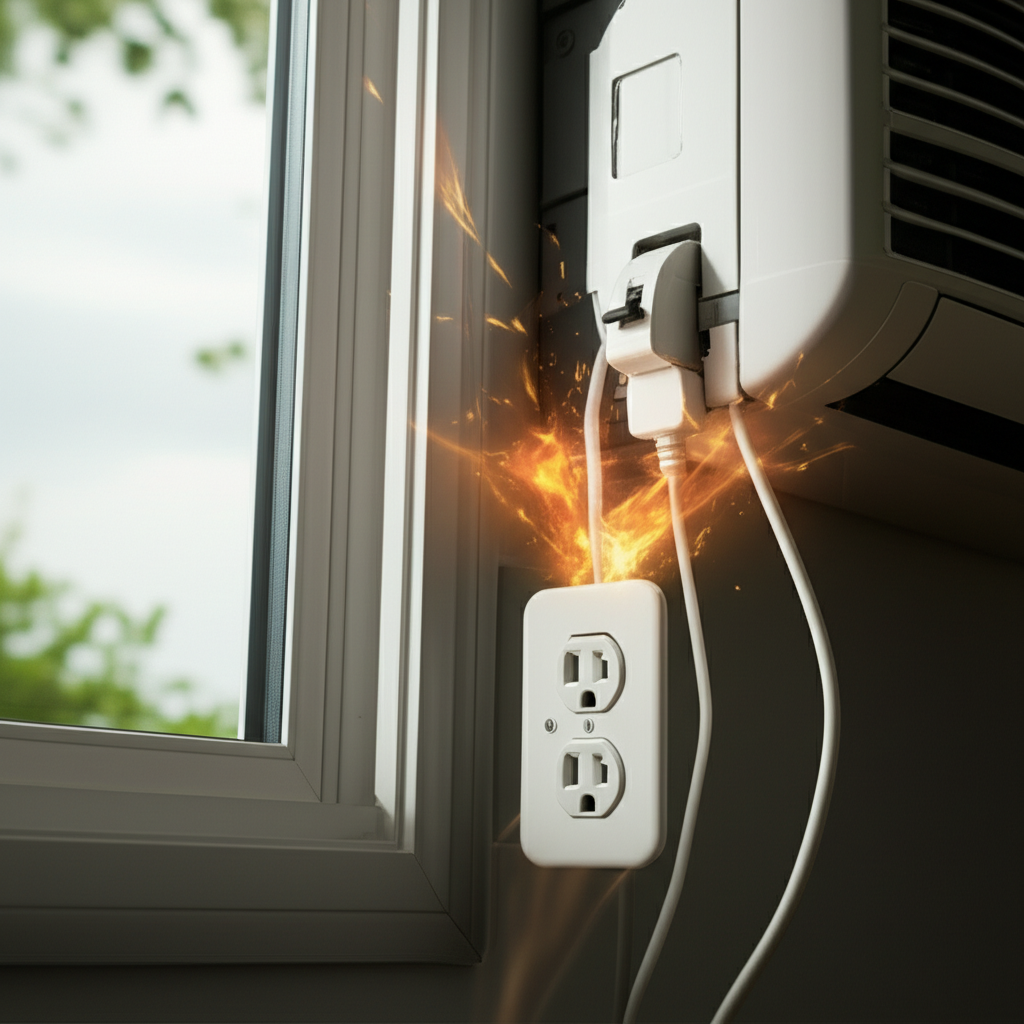
Sometimes your AC is perfectly fine, but the electrical circuit it’s plugged into is overloaded. This is very common in older homes or rooms where people use too many high-wattage devices.
Window AC units need a dedicated circuit, or at least one that isn’t sharing power with a space heater, a microwave, or a high-powered computer setup. If another appliance kicks on at the exact moment your AC compressor starts, the combined power draw will blow the breaker.
Check These Common Circuit Overload Culprits
- Is the AC plugged into an extension cord? (Big no-no!)
- Are you running a hairdryer or vacuum cleaner on the same circuit?
- Is the outlet itself old, loose, or damaged?
- Is the breaker old or weak? Sometimes, older breakers trip too easily.
If you suspect an extension cord issue, stop using it immediately. Most extension cords cannot handle the continuous high amperage draw of an AC unit. You should always plug window units directly into a sturdy, grounded wall outlet.
The Shocking Truth: Failing Internal Parts
If cleaning the filter and checking the circuit doesn’t work, we move to the parts inside the machine. These issues are a bit more serious but still traceable.
The Bad Capacitor: The Hard Starter
The capacitor is like a temporary battery that gives the compressor the big initial jolt of electricity it needs to start spinning. If the capacitor is old or failing, it struggles to provide that jolt.
When it struggles, the compressor stalls, drawing massive amounts of power trying to start over and over. This huge, momentary draw often trips the breaker right as you turn the unit on.
Motor Issues and Compressor Failure
If the compressor itself is starting to seize up due to age or lack of maintenance, it will fight against turning. This mechanical failure results in an electrical overload, leading to a trip. You might hear a loud humming or buzzing sound right before the breaker trips if this is the case.
For help understanding how much power these components use, here is a good resource on household energy consumption: Understanding Your Energy Bill (Energy.gov).
Troubleshooting: When Does the Breaker Trip?
The timing of the trip gives us huge clues. Use this quick guide to narrow down your diagnosis:
| When the Breaker Trips | Most Likely Cause |
|---|---|
| Immediately upon turning the AC ON | Bad Start Capacitor or Short Circuit in Wiring |
| After running for 10–30 minutes | Overheating due to Dirty Filter or Condenser Coil Issues |
| When another appliance is turned on | Circuit Overload (Too many things on one line) |
| Randomly, even when the AC is off | Faulty Breaker or Wiring Issue in the Wall/Outlet |
If you find the coils are dirty (the outside fins are caked with dirt), you might need a professional cleaning, as cleaning these parts requires more care than just swapping a filter.
When to Call in the AC Pro
If you have cleaned the filter, confirmed the outlet isn’t overloaded, and the breaker still trips, it’s time to step back. Internal electrical component failures—like a bad capacitor or compressor—require specialized tools and knowledge.
Attempting to replace these parts yourself can be dangerous because capacitors hold a serious electrical charge even when unplugged. Call a certified HVAC technician if you suspect component failure. They can test the draw accurately.
Frequently Asked Questions for Beginners
Q: Can I just replace the breaker with a stronger one?
A: Absolutely not! That’s very dangerous. If your 15-amp breaker keeps tripping, it means 15 amps is the safe limit for that wiring. Putting in a 20-amp breaker will just burn the wires before the breaker trips. Stick to the rating!
Q: My AC is old. Is it just time for a new one?
A: If your AC is over 10 years old and tripping breakers, replacement is often the most cost-effective choice. Older units are less efficient, and the components are more likely to fail.
Q: What if the outlet feels warm when the AC is running?
A: Warm or hot outlets mean high resistance, which is dangerous. Unplug the AC immediately. The wiring or the outlet itself is failing and needs replacement by an electrician.
Q: Does humidity make my AC trip the breaker?
A: High humidity doesn’t directly trip the breaker, but it makes the AC work harder to condense the moisture out of the air, which increases the electrical load. This can push an already strained unit over the edge.
Q: Should I plug my AC into a surge protector?
A: No. Most standard surge protectors are not rated for the high, continuous power draw of an AC unit. Always plug directly into a heavy-duty, grounded wall outlet.
Seeing that breaker trip can certainly feel like a major disaster, but it’s usually just your AC sending you a clear warning signal. Most of the time, the solution is as simple as giving your unit some fresh air via a clean filter or making sure it has breathing room on its electrical circuit.
By staying consistent with simple maintenance and paying attention to when the trip happens, you can solve most issues yourself and keep that cool air flowing without interruption. You’ve got this — and cool, comfortable air is just a few simple steps away.
