
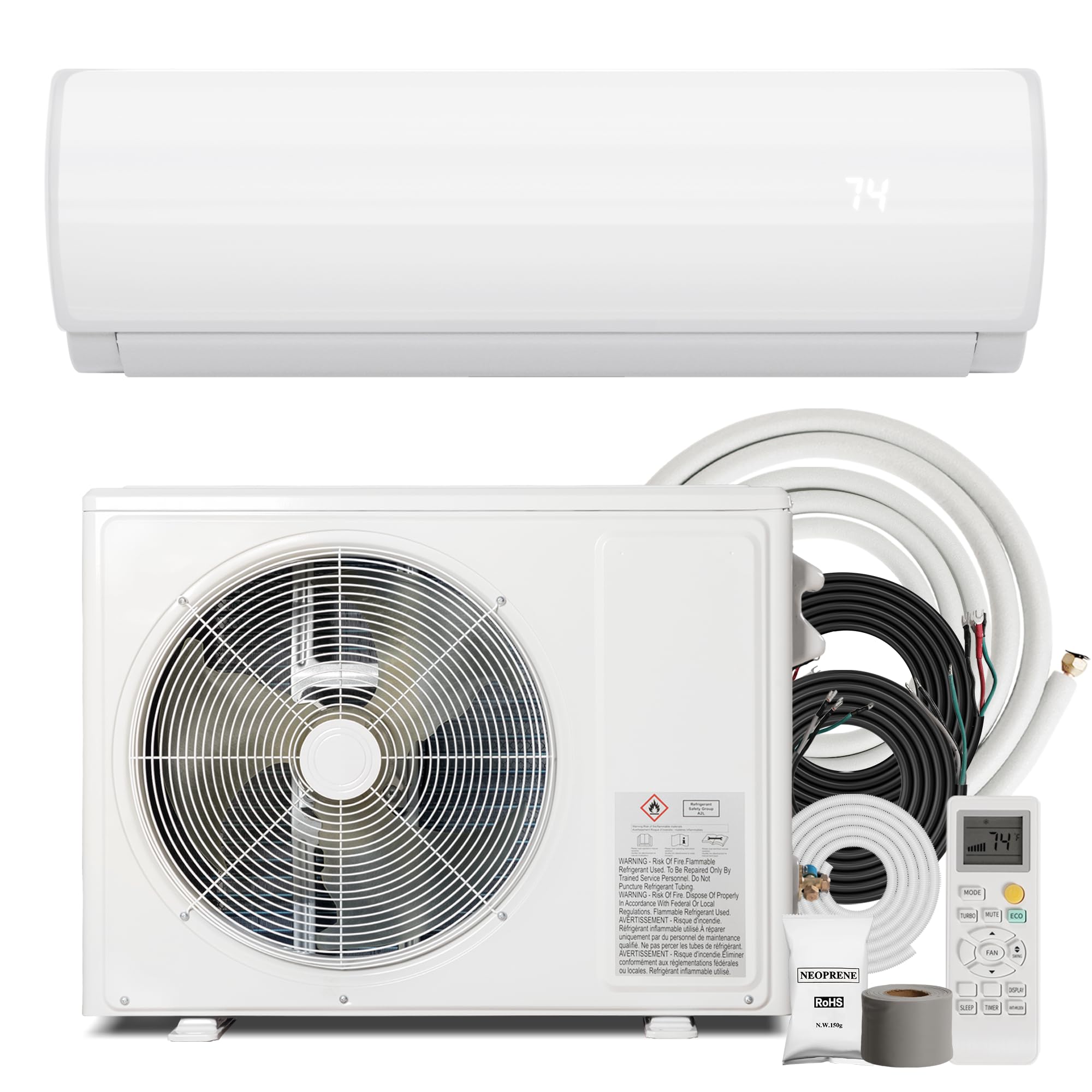
12000BTU Mini Split Air
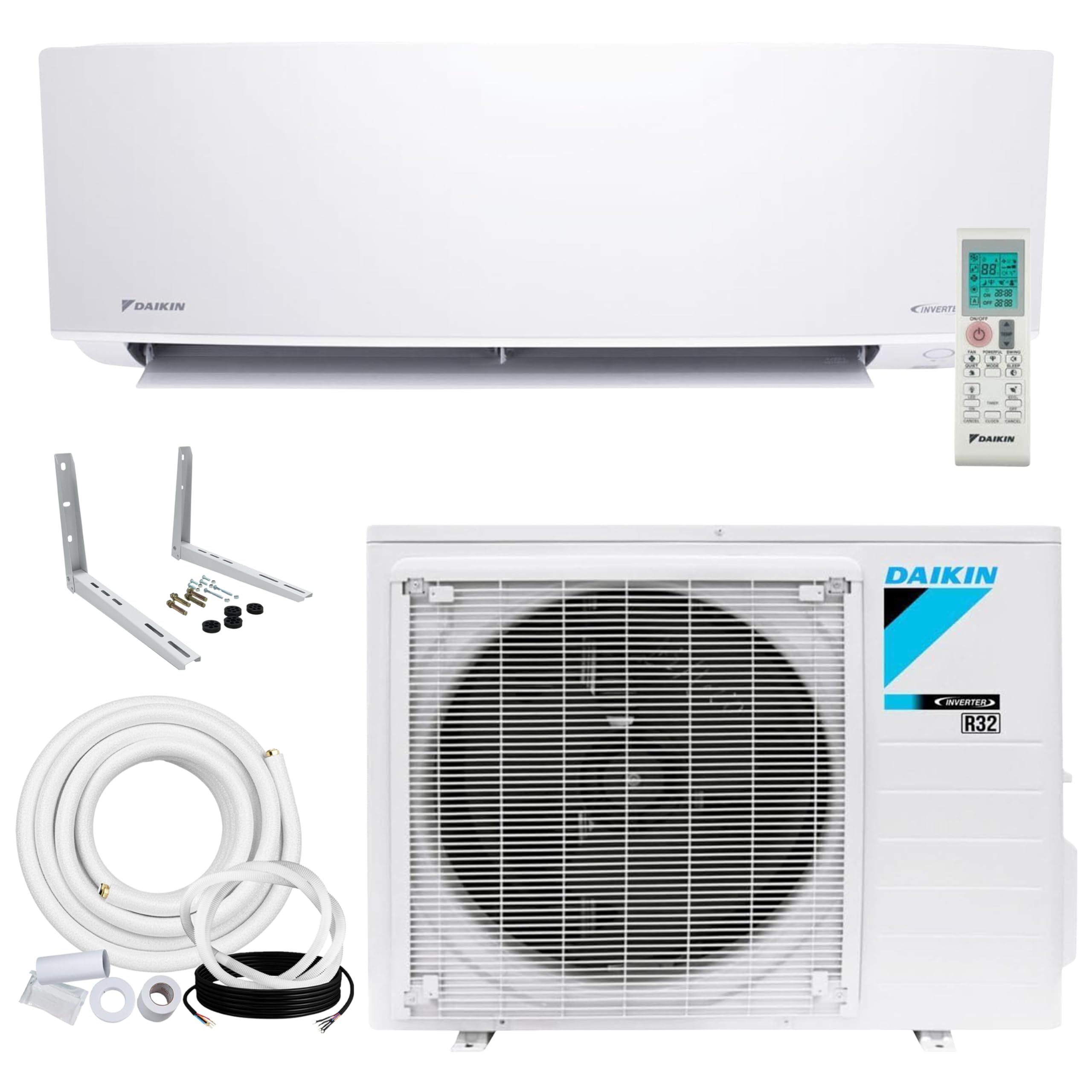
Daikin 12
Navigating the world of ductless mini-split systems can feel like a maze, especially when you’re looking for that perfect balance of efficiency, comfort, and value for your home. Today, we’re diving deep into two compelling options: the 12000BTU Mini Split Air Conditioner Heat Pump, 19 SEER2 Inverter Compressor AC U (let’s call it the “12000BTU Mini Split Air” for simplicity) and the Daikin 12,000 BTU 18 SEER2 Entra R32 Series Ductless Mini Split Heat Pump System (which we’ll refer to as “Daikin 12”). Both promise to deliver climate control with impressive features, but which one truly stands out?
Choosing the right mini-split is a significant decision. It impacts your energy bills, the comfort of your living space, and the overall ambiance of your home. Whether you’re looking to cool a stuffy summer room, add supplemental heat in the winter, or replace an aging system, understanding the nuances between these two models is crucial. We’ll break down their capabilities, weigh their pros and cons, and help you figure out which one is the best fit for your specific needs and budget. Get ready to explore the details that matter most!
In-Depth Look: 12000BTU Mini Split Air
The 12000BTU Mini Split Air is pitched as an all-around solution for year-round comfort, and it certainly packs a punch in terms of features. At its core, this unit leverages powerful inverter technology, which is a big deal. Inverter compressors are like the smart thermostats of the AC world; they adjust their speed based on your needs, rather than just switching on and off abruptly. This translates to more stable temperatures, quieter operation, and, most importantly, significant energy savings. It boasts a 19 SEER2 rating, which is quite respectable and points to excellent efficiency during cooling cycles.
What’s really appealing about the 12000BTU Mini Split Air is its versatility. It’s not just about beating the summer heat; it’s equally adept at providing cozy warmth in the winter thanks to its robust heat pump. The stated coverage area of up to 750 sq. ft. is generous for a 12,000 BTU unit, suggesting it’s designed to handle larger single rooms or even open-plan living areas. The inclusion of R32 refrigerant is a forward-thinking choice, as this gas has a lower global warming potential compared to older refrigerants, making it a more environmentally conscious option.
Beyond the core functions, the 12000BTU Mini Split Air offers a suite of customization options. With five distinct modes—Cooling, Heating, Auto, Fan, and Dry—you can fine-tune your environment precisely. The four fan speeds provide further control, and features like a 24-hour timer, Sleep Mode, Eco Mode, and Turbo Boost add layers of convenience and efficiency. It’s these thoughtful additions that elevate a standard AC unit into a more personalized comfort system. The whisper-quiet operation is another major draw, crucial for maintaining a peaceful atmosphere in bedrooms, home offices, or living spaces. Plus, built-in mildew protection and self-defrosting capabilities are practical features that contribute to the unit’s longevity and consistent performance, especially in challenging climates.
Pros of the 12000BTU Mini Split Air:
- Year-Round Versatility: Excellent heating and cooling capabilities make it suitable for all seasons.
- High Energy Efficiency: A 19 SEER2 rating indicates significant savings on energy bills.
- Large Coverage Area: Can effectively condition spaces up to 750 sq. ft.
- Advanced Features: Multiple modes, fan speeds, timers, and smart modes offer great customization.
- Quiet Operation: Designed for minimal noise, enhancing comfort.
- Eco-Friendly Refrigerant: Uses R32, which is better for the environment.
- Durability Features: Mildew protection and self-defrosting help maintain performance and longevity.
Cons of the 12000BTU Mini Split Air:
- Installation Complexity: As with most mini-splits, professional installation is often recommended or required, adding to the total cost.
- Brand Recognition: While feature-rich, it may not have the same long-standing brand reputation as established giants like Daikin.
- Customer Review Inconsistencies: Some reviews point to issues with receiving all packages or minor cosmetic damage upon arrival, though sellers seem responsive.
Customer Reviews for 12000BTU Mini Split Air:
One customer shared, “I bought this unit to replace a 24,000 BTU unit that had given us years of good service but was icing under use and dripping water on our floor. I decided to replace it rather than chase the R22 pressures and whatever other issues were going on. I bought this 18,000 BTU unit hoping it would be enough to replace the more powerful previous unit. It came quickly and was well packaged. Everything on this unit was well packaged, the directions were clear, and all wiring marked and terminated.” This highlights the robust packaging and clear instructions which are a great starting point for any installation.
Another DIY enthusiast mentioned, “We are diy’ers but not pros and this unit was very easy to install. We bought a vacuum pump for $100 to save the cost of having a pro come and pressure test it. Our temps reached -4 last night and it stayed warm. Came with a couple of dents but the sellers gave us some money off and an extra remote control in case we lost ours as it is the only way to control the unit. Highly recommend.” This review underscores the potential for DIY installation and its effectiveness even in very cold weather, with a positive note on seller resolution for minor issues.
However, one customer encountered a significant issue: “Didn’t get the outside unit or installation kit. Only received the inside unit. Box read 1 of 2 packages. Never received the 2nd package outside unit or installation kit.” This is a critical point regarding shipping and fulfillment, suggesting potential for incomplete orders that need prompt attention.
Best for:
The 12000BTU Mini Split Air is an excellent choice for homeowners looking for a powerful, energy-efficient, and versatile climate control solution. It’s particularly well-suited for larger single rooms, open-plan living areas, or even garages and workshops that need reliable heating and cooling year-round. Its impressive SEER2 rating makes it a strong contender for those prioritizing energy savings. If you’re comfortable with a bit of DIY or have a trusted installer, this unit offers a great bang for your buck.
In-Depth Look: Daikin 12
Daikin is a name synonymous with air conditioning excellence, and their Daikin 12 Entra R32 Series is no exception. This system is built on a foundation of sophisticated DC Inverter technology, ensuring that it operates with impressive efficiency across its wide temperature ranges. While its stated cooling capacity is 12,000 BTU, the detailed range of 4,400 to 13,300 BTU for cooling and 4,400 to 16,400 BTU for heating shows its ability to precisely modulate its output to meet demand, rather than just switching on and off. This modulation is key to maintaining consistent comfort and reducing energy waste.
The Daikin 12 boasts a high 18 SEER2 energy efficiency rating, which is excellent and contributes to lower electricity bills. It also comes with specific ratings for HSPF2 (9) and EER2 (8.5), offering a more comprehensive picture of its performance in both heating and cooling modes. These metrics are important for comparing its efficiency against other models, especially when considering its heating capabilities. The inclusion of a Coefficient of Performance (COP) rating of 3.30 is also a strong indicator of its heating efficiency – for every unit of electricity consumed, it delivers 3.30 units of heat.
Designed for all-season comfort, the Daikin 12 operates effectively from a chilly 5°F up to a scorching 115°F, making it a reliable performer in diverse climates. This broad operational range is ideal for spaces that experience extreme temperature fluctuations. Its application versatility is also a plus; it’s presented as a perfect solution for renovations, new constructions, sunrooms, basements, attics, and garages where traditional ductwork is either impossible or impractical.
Beyond pure performance, Daikin focuses on enhancing the user experience and indoor air quality. Features like customizable air direction and flow, Powerful Operation for quick comfort boosts, and ECO+ mode for optimized energy savings are standard. What truly sets it apart are the Blue Fin Protection, which helps protect the coil from corrosion, and the Titanium Apatite Photocatalytic Air Purifying Filter. This filter is designed to trap airborne pollutants and remove odors, contributing to a cleaner and healthier indoor environment. The system also comes with a comprehensive installation kit, including a pre-charged condenser and necessary line sets, simplifying the setup process for qualified installers.
Pros of the Daikin 12:
- Established Brand Reputation: Daikin is a globally recognized leader in HVAC, known for quality and reliability.
- High Efficiency Ratings: Strong SEER2, HSPF2, EER2, and COP ratings ensure energy savings.
- Wide Operating Temperature Range: Reliable performance in both very cold and very hot conditions.
- Advanced Air Filtration: Includes a photocatalytic filter for improved indoor air quality.
- Durable Coil Protection: Blue Fin Protection enhances longevity.
- Comprehensive Kit: Comes with essential installation components.
- Precise Temperature Control: DC Inverter technology allows for highly modulated output.
Cons of the Daikin 12:
- Smaller Coverage Area: Recommended for up to 550 sq. ft., which is less than the 12000BTU Mini Split Air.
- Installation Complexity & Cost: Like all mini-splits, professional installation is a must, and Daikin systems often command a premium.
- Customer Review Concerns: Some reviews mention issues with initial low Freon codes and costly troubleshooting for potential internal leaks, indicating potential quality control concerns in some units.
Customer Reviews for Daikin 12:
One customer detailed their installation experience: “If you are an HVAC person you can probably install this, if not don’t try, instructions are hard to understand. It has to be wired into your fuse box so electrician will be needed. The unit works great. It’s in my 2 car garage (440 sq ft) turned to work room and heats well. Don’t know about the AC yet. Glad I bought this.” This review highlights the need for professional installation and the unit’s strong performance in a garage workspace.
Another user faced immediate challenges: “I bought this unit and immediately after installing it sent me a low Freon code. I called Daikin customer service who found a local contractor to come check it out. It cost me $100.00 for him to show up and tell me it had a low Freon code. He needs to perform a nitrogen test to determine the where it is leaking. This requires another visit. This costs me $570.00. I’m told the leak is not the line sets. It’s internal. Possibly a bad solder joint from the factory. Not from the installation. After…” This is a concerning review that points to potential manufacturing defects and the associated high costs of diagnosis and repair, even under warranty if it’s a factory issue.
A third customer experienced shipping delays: “The first AC unit was ordered and on the day it was supposed to arrive, tracking listed it as delayed at the checkpoint in Dallas, due to severe weather. I knew that was not accurate because we live near Dallas and there had been no severe weather in the area. I waited until the new arrival date but when it didn’t arrive then either, I called Amazon to see what was going on. I was put on hold, so the rep could call to find out what had happened and where our order was. He told me that the manuf…” This review illustrates potential logistical issues with shipping, which can be frustrating for any buyer.
Best for:
The Daikin 12 is an excellent choice for those who prioritize brand reputation, cutting-edge efficiency ratings, and superior air purification features. It’s ideal for smaller to medium-sized rooms or specific zones within a home where high-quality, reliable climate control is paramount. If you’re looking for a system that also actively improves your indoor air quality with advanced filtration and appreciate the peace of mind that comes with a globally recognized HVAC leader, the Daikin 12 is a strong contender, provided you are prepared for professional installation and potential service costs.
Head-to-Head Comparison
Performance and Coverage
When it comes to raw power and the area they can cover, the 12000BTU Mini Split Air takes a clear lead. It’s rated for up to 750 sq. ft., which is significantly more than the Daikin 12’s recommended 550 sq. ft. This makes the 12000BTU Mini Split Air a better choice for larger spaces or open-plan layouts. While both use inverter technology for efficient temperature management, the 12000BTU Mini Split Air’s higher SEER2 rating of 19 suggests it might be slightly more efficient in cooling mode than the Daikin 12’s 18 SEER2. However, the Daikin 12 provides more granular heating BTU output and includes specific HSPF2 and COP ratings that indicate robust heating efficiency, crucial for colder climates. If you need to heat a space intensely, the Daikin 12 might have an edge in its heating performance modulation.
Energy Efficiency
Both units are designed with energy efficiency in mind, utilizing inverter technology and R32 refrigerant. The 12000BTU Mini Split Air boasts a 19 SEER2 rating, which is higher than the Daikin 12’s 18 SEER2. A higher SEER2 generally means better energy efficiency for cooling. The Daikin 12, however, provides more detailed efficiency metrics like HSPF2 (9) and COP (3.30), which are strong indicators of its heating efficiency. If your primary concern is cooling efficiency and covering a larger area with less energy, the 12000BTU Mini Split Air might be more appealing. If heating efficiency is a major factor, the Daikin 12’s specific ratings provide more insight into its capabilities. For context on how these systems compare to others, understanding mini-split vs. window AC energy usage can be quite eye-opening.
Features and Functionality
Both units offer a good range of features. The 12000BTU Mini Split Air provides five core modes (Cooling, Heating, Auto, Fan, Dry) along with extras like Sleep Mode, Eco Mode, and Turbo Boost, offering extensive customization. The Daikin 12 also includes standard modes and adds features like Powerful Operation for quick comfort, ECO+ for energy optimization, and importantly, an advanced Titanium Apatite Photocatalytic Air Purifying Filter and Blue Fin Protection for coil durability. If advanced air purification is a priority, the Daikin 12 has a distinct advantage. If you prefer a simpler, yet highly customizable experience with more general comfort modes, the 12000BTU Mini Split Air is very user-friendly.
Installation and Maintenance
This is where things get tricky for both. Mini-split systems, by their nature, require professional installation. This involves complex wiring, refrigerant line connections, and system evacuation. Both units likely fall into this category, and customer reviews for both mention the need for qualified technicians. The Daikin 12 comes with a more explicitly detailed installation kit, which might streamline the process for an installer. Maintenance-wise, the 12000BTU Mini Split Air includes built-in mildew protection and self-defrosting, which are great for longevity. The Daikin 12’s Blue Fin Protection also points to enhanced durability of the outdoor unit. For routine cleaning, investing in a mini-split cleaning kit can be beneficial for either system.
Brand Reputation and Reliability
Daikin is a titan in the HVAC industry with a long-standing reputation for quality and reliability. Their systems are generally well-regarded, though some customer reviews for the Daikin 12 do highlight potential issues with initial performance and costly diagnostics for leaks. The 12000BTU Mini Split Air, while seemingly feature-rich, may not have the same level of established brand trust as Daikin. However, customer reviews for this unit also point to good performance and seller support for minor issues, with a notable exception of incomplete shipments for one user. For those who value brand heritage and established support networks, Daikin often wins. For those who prioritize features and potentially better value from a newer entrant, the 12000BTU Mini Split Air could be attractive.
Value for Money
Determining the ultimate value depends on your priorities. The 12000BTU Mini Split Air offers a larger coverage area and a higher SEER2 rating for what might be a competitive price point, making it potentially more cost-effective for larger spaces. The Daikin 12, while potentially more expensive, comes with the prestige of the Daikin brand, advanced air purification, and specific heating efficiency ratings that might justify its cost for users in colder climates or those prioritizing air quality. It’s worth noting that comparing a single-zone unit like this to a single-zone vs. multi-zone mini-split can also impact overall cost and efficiency for larger homes.
Frequently Asked Questions
Q: Which unit is better for a very cold climate?
A: For very cold climates, the Daikin 12, with its specific HSPF2 and COP ratings (9 and 3.30 respectively) and a wider heating capacity range, might offer slightly more optimized heating performance. However, the 12000BTU Mini Split Air also features a heat pump and provides year-round comfort, and customer reviews have indicated good performance in cold weather. Always check the unit’s minimum operating temperature for heating to ensure it meets your local climate needs.
Q: Can I install these units myself?
A: While some technically savvy individuals have successfully installed mini-splits themselves, it is generally highly recommended to have a qualified HVAC professional install these units. Improper installation can lead to system inefficiency, damage, and void warranties. Customer reviews for both products mention the complexity and need for professional skills or specialized tools. For more on this, check out our guide on how to install a mini-split AC.
Q: Which unit is more energy-efficient for cooling?
A: Based on the SEER2 ratings provided, the 12000BTU Mini Split Air with its 19 SEER2 rating is technically more efficient for cooling than the Daikin 12’s 18 SEER2 rating. However, actual energy consumption also depends on usage patterns, room insulation, and ambient temperatures. Both units use inverter technology, which is inherently more efficient than non-inverter models. You can learn more about inverter vs. non-inverter mini-splits here.
Q: Does either unit bring in fresh air?
A: Standard ductless mini-split systems, including both the 12000BTU Mini Split Air and the Daikin 12, primarily recirculate and condition the air within a room. They do not inherently bring in fresh outside air. If fresh air ventilation is a requirement, you would typically need a separate ventilation system, such as an ERV or HRV, or a mini-split designed with fresh air intake capabilities (which are less common and usually more complex). You can read about this common question here: Does Mini Split Bring Fresh Air?
Q: What is the typical lifespan of these mini-split systems?
A: With proper installation and regular maintenance (like cleaning filters and coils), a well-maintained mini-split system can last anywhere from 10 to 20 years or even longer. Factors like usage, environmental conditions, and the quality of components play a role. Features like the Blue Fin Protection on the Daikin 12 and mildew protection on the 12000BTU Mini Split Air can contribute to longevity by protecting against corrosion and internal buildup.
Q: Which unit is better for improving indoor air quality?
A: The Daikin 12 has a distinct advantage here due to its inclusion of a Titanium Apatite Photocatalytic Air Purifying Filter. This type of filter is designed to trap fine particles, break down odors, and even neutralize some airborne pathogens. While the 12000BTU Mini Split Air has mildew protection, it doesn’t feature a dedicated air-purifying filter. For superior air quality features, the Daikin 12 is the stronger choice.
Final Verdict: Which One Should You Choose?
Deciding between the 12000BTU Mini Split Air and the Daikin 12 comes down to prioritizing specific needs.
The 12000BTU Mini Split Air shines as a robust, all-around performer, especially for larger spaces. Its broader coverage area (up to 750 sq. ft.), higher SEER2 rating (19), and comprehensive comfort modes make it an excellent value proposition for those looking to condition a significant area efficiently and affordably. If your primary goal is to get broad coverage with good year-round comfort and you’re seeking a feature-rich system that might offer a more competitive price point, this unit is a strong contender.
On the other hand, the Daikin 12 appeals to those who value brand prestige, specific heating efficiency metrics, and advanced air purification. Its established reputation, precise temperature control, and the inclusion of a photocatalytic filter make it a premium choice for smaller to medium-sized rooms where air quality and reliable brand performance are paramount. If you’re willing to invest in a trusted name and desire the added benefit of cleaner air, the Daikin 12 is a compelling option, despite its smaller coverage area and some concerning customer feedback regarding initial issues.
Ultimately, if you have a larger room or open-plan area and are looking for efficient cooling with good heating capabilities, the 12000BTU Mini Split Air is likely your best bet for maximizing coverage and value. If you have a smaller space, prioritize brand reliability, superior air filtration, and potentially better heating efficiency ratings, the Daikin 12 stands out.
No matter which you choose, remember that professional installation is key to unlocking the full potential and longevity of your new mini-split system.
