
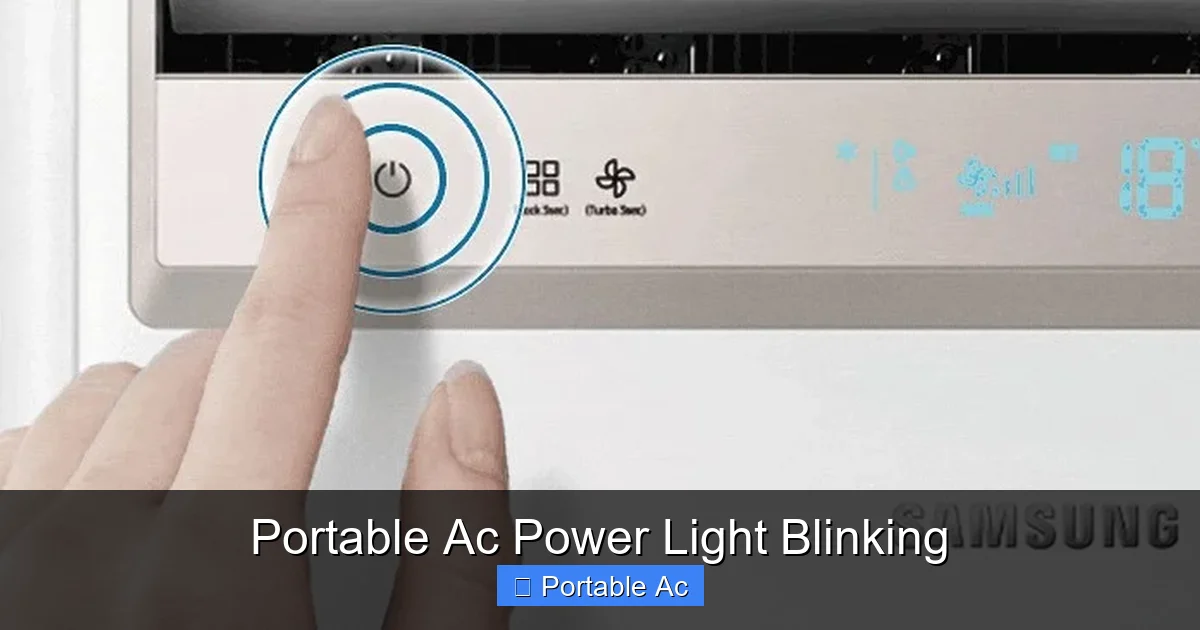
When your portable AC power light blinks, it’s usually a sign of an issue that needs attention. This could range from a loose hose connection to low refrigerant or even overheating. Ignoring the blinking can lead to reduced cooling performance or complete failure. In this guide, we’ll walk you through common causes, step-by-step solutions, and prevention tips so you can get back to comfortable cooling quickly and safely.
Have you ever turned on your portable AC only to see the power light blinking instead of staying solid? It’s a common frustration, especially during those sweltering summer days when you just want relief. But don’t panic—blinking power lights aren’t necessarily a sign of disaster. They’re actually your portable AC’s way of saying, “Hey, something’s up.” Understanding what those blinks mean and how to respond can save you time, money, and a lot of discomfort.
Portable air conditioners rely on precise internal systems to regulate temperature, monitor airflow, and detect potential malfunctions. When the power indicator starts blinking, it’s often part of the unit’s built-in diagnostic system. These alerts help protect the compressor and other sensitive components from damage due to overheating, blockages, or electrical irregularities. While it might feel alarming at first, a blinking power light is usually fixable with some basic troubleshooting.
This article will walk you through everything you need to know about portable AC power light blinking, including common causes, step-by-step fixes, and preventive measures. Whether you’re dealing with a single blink, rapid flashing, or a specific pattern, you’ll learn how to decode the message and restore your unit’s performance quickly and safely.
Key Takeaways
- Power light patterns matter: Different blink codes often indicate specific problems like blocked exhaust hoses or overheating.
- Check hose connections first: Loose or kinked hoses are one of the most common reasons for blinking lights.
- Clean filters regularly: Dirty air filters restrict airflow and can trigger safety shutdowns.
- Ensure proper ventilation: Portable ACs need room to expel hot air—blocked vents cause overheating alerts.
- Reset the unit if needed: Sometimes unplugging for 10–15 minutes resolves temporary glitches.
- Consult the manual: Your model’s blink code chart is your best friend for diagnosing issues accurately.
Quick Answers to Common Questions
Why does my portable AC power light blink once?
A single blink often indicates a minor issue like a loose hose connection or low airflow. Check your exhaust hose and clean the filter before considering deeper diagnostics.
Is a blinking light dangerous?
Not usually. It’s a warning signal, not an emergency. However, ignoring it may lead to overheating or permanent damage to internal components.
Can I still use my portable AC with a blinking light?
It’s not recommended. Running the unit while the light blinks risks further damage and reduced efficiency. Fix the underlying issue first.
How do I reset my portable AC after a power outage?
Unplug the unit for 10–15 minutes, then plug it back in. This allows the internal capacitors to discharge and resets the control board.
Why does the light blink only when I switch it on?
This often means the system is performing a self-check. If it stops blinking within a few seconds, the unit is likely fine. If it continues, consult the manual.
📑 Table of Contents
Why Is My Portable AC Power Light Blinking?
Before diving into solutions, let’s understand why your portable AC might be showing a blinking power light. Unlike traditional window units, portable air conditioners use digital control panels and sensors to monitor operation in real time. The blinking light is typically a warning signal triggered by one of several conditions:
– **Blocked or disconnected exhaust hose:** Most portable ACs expel hot air through a flexible hose connected to a wall vent. If this hose becomes kinked, detached, or improperly installed, the unit can’t release heat efficiently, leading to overheating.
– **Dirty or clogged air filters:** Air filters trap dust, pet dander, and allergens. Over time, they become saturated and restrict airflow. When airflow drops below safe levels, the system shuts down to prevent damage.
– **Low refrigerant levels (in rare cases):** Some models detect refrigerant issues and display error codes via blinking lights. However, this usually requires professional service.
– **Overheating components:** Internal sensors monitor motor and compressor temperatures. If they exceed safe limits, the unit enters protective mode.
– **Faulty power supply or voltage fluctuations:** Unstable electricity or incorrect outlet voltage can confuse the control board, resulting in erratic behavior.
Each of these issues has a distinct cause and solution. The key is identifying which one applies to your situation.
How to Decode Your Portable AC’s Blink Code
Visual guide about Portable Ac Power Light Blinking
Image source: i.stack.imgur.com
One of the most helpful features of modern portable ACs is their diagnostic blink code system. Manufacturers program specific light patterns to indicate particular errors. For example:
– **Single long blink followed by three short blinks** might mean “exhaust hose not detected.”
– **Rapid blinking five times** could signal a temperature sensor fault.
– **Alternating red and green flashes** may point to a drain overflow.
To interpret your unit’s blink pattern:
1. Count the number of blinks before a pause.
2. Note how long each blink lasts (short vs. long).
3. Repeat the cycle once or twice to confirm consistency.
4. Match the pattern to the code in your user manual.
If you’ve lost your manual, search online using your model number—many brands publish digital versions on their support sites. Decoding the code eliminates guesswork and speeds up repairs.
Common Causes and Fixes for Blinking Power Lights
Visual guide about Portable Ac Power Light Blinking
Image source: portablepowerguides.com
Let’s go deeper into the most frequent culprits behind blinking power lights and how to address them.
1. Exhaust Hose Issues
The exhaust hose carries hot air out of the room. If it’s bent, blocked, or disconnected, the AC works harder than necessary, triggering thermal protection.
Fix:
– Ensure the hose is fully inserted into both the unit and the wall vent.
– Check for sharp bends—especially near corners or windows—that reduce airflow.
– Replace cracked or brittle hoses every 1–2 years.
– Use a hose clamp if the connection feels loose.
Pro tip: Some models come with dual-hose systems (like those reviewed in our Best Portable AC With Dual Hose System guide), which improve efficiency and reduce strain on the unit.
2. Dirty Air Filters
Filters are the lungs of your portable AC. When clogged, they force the system to work harder, raising internal temperatures.
Fix:
– Remove and inspect the filter weekly during heavy use.
– Vacuum loose debris or rinse under lukewarm water.
– Let it dry completely before reinstalling—never use wet filters!
– Consider upgrading to washable mesh filters for easier maintenance.
Regular cleaning not only prevents blinking lights but also boosts energy efficiency. Speaking of which, check out our Portable AC Energy Saving Tips for more ways to cut power consumption.
3. Overheating Due to Poor Ventilation
Even with clean filters and intact hoses, poor room layout can cause overheating. If furniture blocks the front grille or the exhaust vent faces a solid wall, hot air recirculates inside the unit.
Fix:
– Place the AC at least 6 inches away from walls and obstacles.
– Position the exhaust hose through a window using a properly fitted vent kit.
– Keep doors open slightly to allow cross-ventilation.
– Avoid running the AC in enclosed spaces without external airflow.
For rooms without windows, look into models designed for windowless areas, which use advanced airflow designs to minimize hose dependency.
4. Electrical Problems
Sometimes, the issue isn’t mechanical—it’s electrical. Voltage drops, faulty outlets, or damaged power cords can confuse the control panel.
Fix:
– Plug directly into a grounded outlet—don’t use extension cords or power strips.
– Test the outlet with another device to rule out power issues.
– Inspect the cord for fraying or exposed wires.
– Reset the circuit breaker if necessary.
If problems persist after checking these basics, consider consulting a licensed electrician, especially if you live in an older building with outdated wiring.
Preventive Maintenance Tips
Visual guide about Portable Ac Power Light Blinking
Image source: letscoolaircon.com.sg
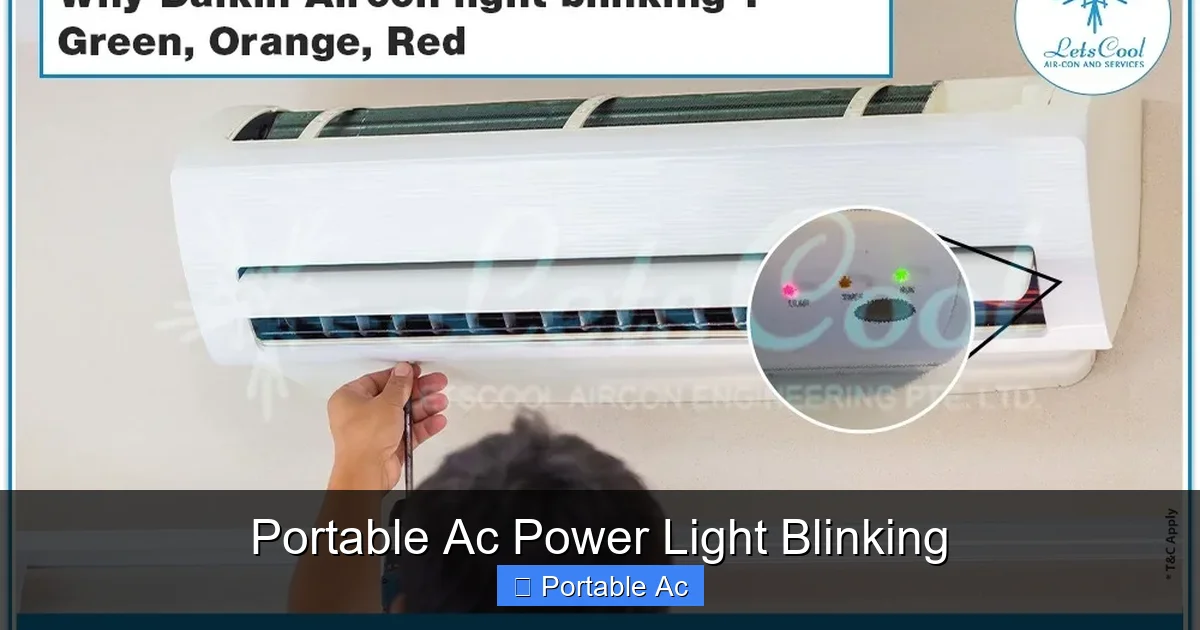
Prevention is always better than repair. By following a simple routine, you can avoid many causes of blinking power lights altogether.
– **Monthly filter checks:** Make it a habit to inspect and clean filters.
– **Quarterly hose inspection:** Look for cracks, kinks, or wear.
– **Annual professional servicing:** Even high-end units benefit from annual tune-ups, particularly refrigerant checks and coil cleaning.
– **Use surge protectors:** Protect your investment from power surges that can fry delicate electronics.
Also, choose a reliable brand from our Best Portable AC Brands To Trust list. Quality construction reduces the likelihood of sensor failures and false alarms.
When to Call a Professional
While most blinking light issues are DIY-friendly, some situations require expert help:
– You hear unusual noises like grinding or buzzing.
– The unit won’t turn on at all after troubleshooting.
– Refrigerant leaks or chemical odors are present.
– Error codes persist despite correct hose and filter installation.
Attempting complex repairs without experience can void warranties or worsen existing problems. Always prioritize safety.
Conclusion
A blinking power light on your portable AC doesn’t have to ruin your day. Armed with the right knowledge, you can diagnose and resolve most issues quickly. Start by decoding the blink pattern, then methodically check hoses, filters, and ventilation. Simple steps like cleaning filters and ensuring proper hose placement go a long way.
Remember, regular maintenance keeps your unit running smoothly and extends its lifespan. And if you’re shopping for a new portable AC that rarely runs into such issues, explore our curated guides—from budget picks to premium models—to find one built for reliability.
Stay cool, stay informed, and never ignore those blinking lights!
Frequently Asked Questions
What does a double blink mean on a portable AC?
A double blink typically signals a drainage problem, such as a full water tank or clogged condensate line. Empty the tank and inspect the drain tube for blockages.
Can dirty filters cause the power light to blink?
Yes. Restricted airflow from clogged filters raises internal temperatures, triggering thermal protection and causing the light to flash as a safety measure.
How often should I clean my portable AC filter?
At least once per week during peak usage months. Less frequently in mild weather. Always ensure the filter is completely dry before reinstalling.
Do all portable ACs have blink codes?
Most modern models do, but older or budget units may not. Refer to your owner’s manual to confirm whether yours uses diagnostic light patterns.
Will a weak power outlet cause the light to blink?
Yes. Insufficient voltage confuses the control board. Try plugging into a different outlet or avoid using power strips—direct wall outlets work best.
Can cold weather affect the blinking light?
Extreme cold can slow refrigerant flow, potentially triggering error codes. Most portable ACs aren’t rated for sub-freezing temps, so limit outdoor exposure in winter.
