
Quick Summary
Don’t sweat it if your AC compressor isn’t starting! Often, a tripped breaker, a dirty filter, or a simple thermostat reset can get it humming again. Let’s walk through some easy fixes together.
You know that feeling, right? The summer heat is on, and your air conditioner just isn’t kicking in. It can be confusing and a little frustrating when your AC acts up. But don’t worry, understanding your AC doesn’t have to be complicated. We’re here to break down those common AC puzzles into simple, doable steps.
This guide will help you figure out why your AC compressor might not be starting and show you some easy ways to fix it. You’ll learn how to do some simple checks that could save you a service call. Let’s get your cool air flowing again!
Why Isn’t My AC Compressor Starting?
Your AC compressor is like the heart of your cooling system. It’s a big, sturdy part that sits outside your house. When it doesn’t start, your home won’t get cool. There are a few common reasons this happens, and thankfully, some are super easy to fix yourself.
Check the Power: Is it Plugged In (or Breaker On)?
The first thing to check is always power. Sometimes, the simplest things are the easiest to overlook. Your AC needs electricity to run, just like any other appliance.
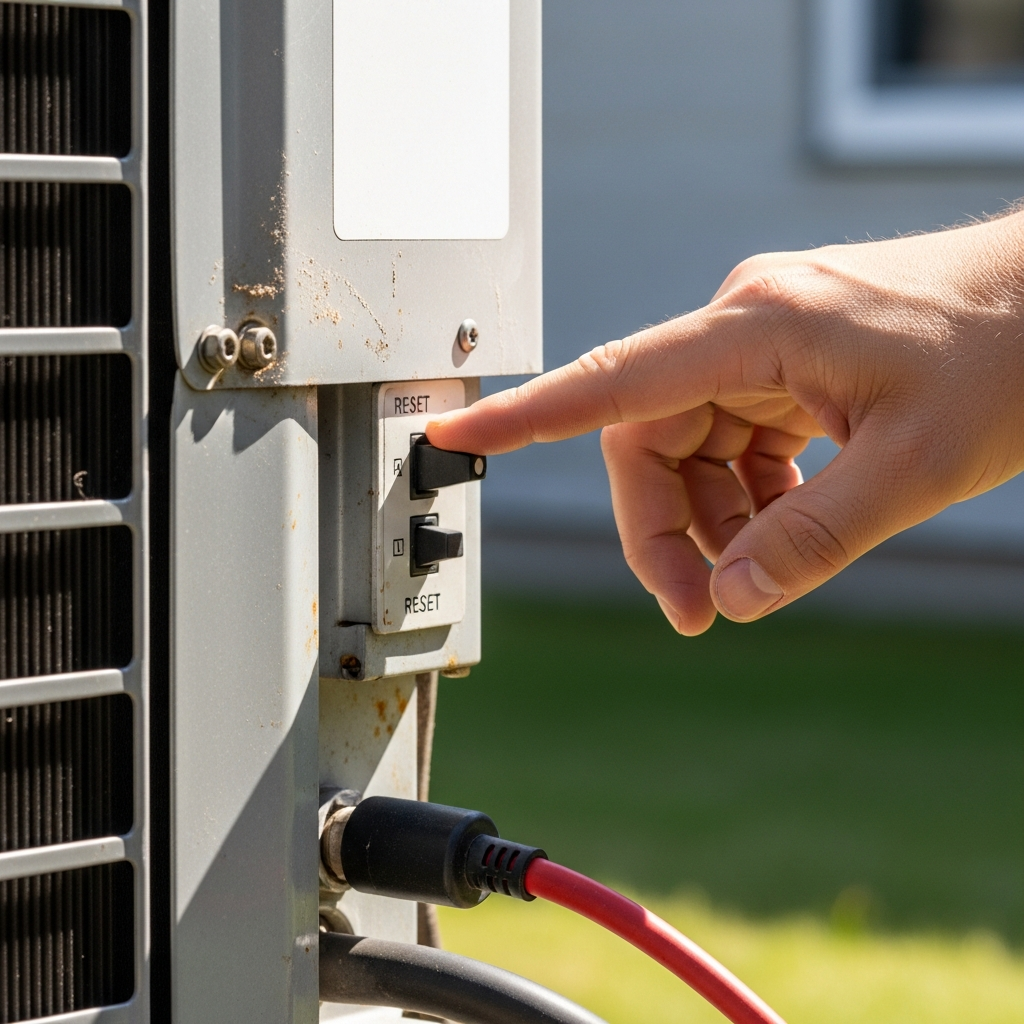
Circuit Breaker: Go to your home’s electrical panel. Look for a switch that’s in the “off” position or halfway between “on” and “off.” If you find one, flip it all the way to “off” and then back to “on.” This is called resetting the breaker.
Disconnect Switch: Outside, near your AC unit, there’s usually a metal box. This is a disconnect switch. Make sure it’s in the “on” position. Sometimes, these can get bumped or accidentally turned off.
Thermostat Troubles: A Simple Reset
Your thermostat is the brain of your AC system. If it’s not set right, the compressor won’t get the signal to start. It’s like telling your fridge to warm up!
Check the Settings: Make sure your thermostat is set to “Cool.” Also, set the temperature a few degrees lower than the current room temperature. This tells the AC it needs to work.
Battery Power: If your thermostat has batteries, try replacing them. Old batteries can cause weird issues, even if the display still looks okay.
Resetting the Thermostat: Some thermostats can be reset. Check your thermostat’s manual for instructions. It might involve pressing a small button or taking the batteries out for a minute.
Clean Air Filter: A Breath of Fresh Air for Your AC
A dirty air filter is one of the most common culprits for AC problems. When the filter is clogged, it stops air from flowing properly. This can make your AC work too hard and even cause it to shut down to protect itself.
Locate Your Filter: You can usually find the air filter behind a return air vent on a wall or ceiling, or in a slot in your furnace or air handler.
Inspect and Replace: Take out the filter. If it looks dirty and dusty, it’s time for a new one. You can often just rinse some washable filters, but most disposable ones need to be replaced.
Dirty Condenser Coils: Let Your AC Breathe
The condenser coils are on your outdoor unit. They help release heat from your home. If they get covered in dirt, leaves, and gunk, the AC can’t do its job efficiently.
Turn Off Power: Safety first! Make sure the power to your outdoor unit is off at the disconnect switch and the circuit breaker.
Gentle Cleaning: You can gently hose down the outside of the coils. Use a soft brush to remove any stubborn debris. Be careful not to bend the delicate fins.
Capacitor Problems: The Little Spark That Could
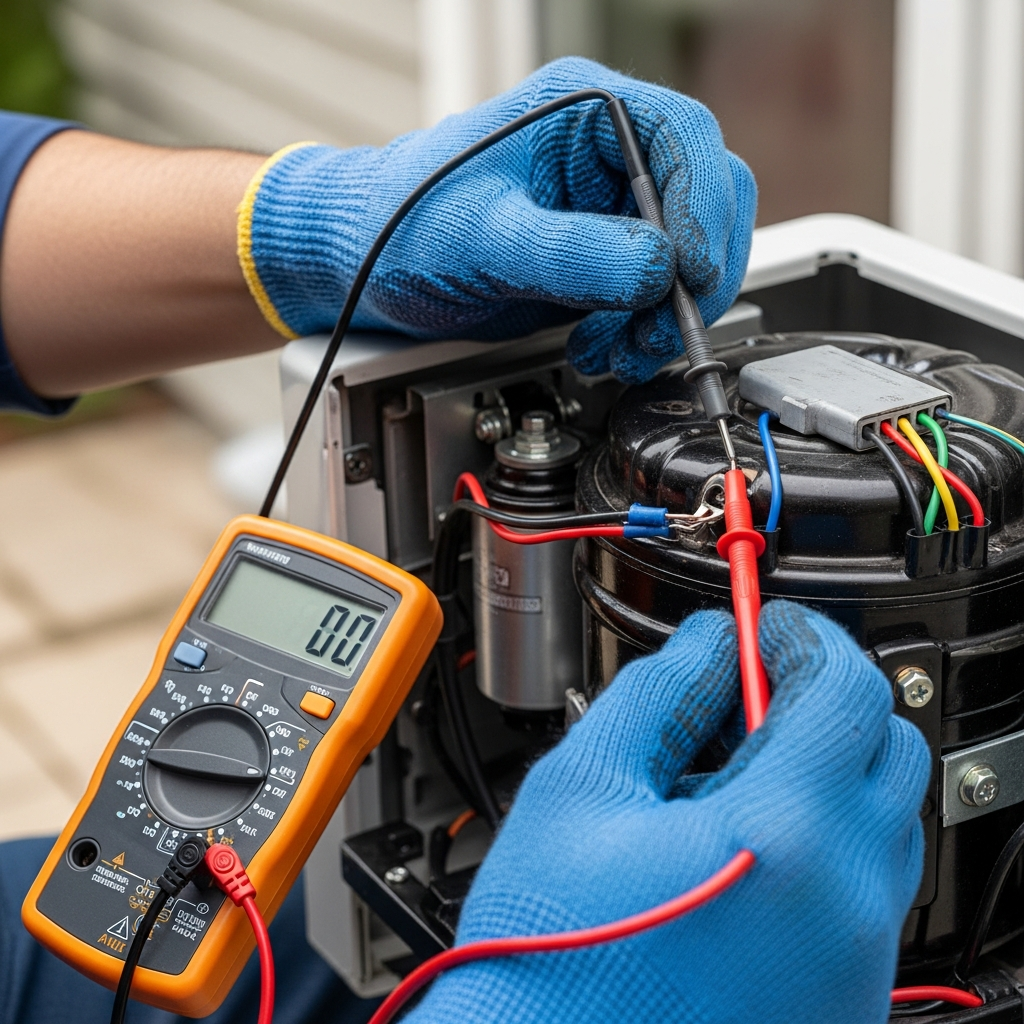
The capacitor is a small part in your outdoor unit that gives the compressor and fan the initial jolt of electricity they need to start. If it’s weak or blown, they won’t start. This is a common reason for a compressor not starting.
Signs of a Bad Capacitor: You might hear a humming sound from the outdoor unit, but the fan and compressor don’t spin. Or, you might see a bulging or leaking capacitor.
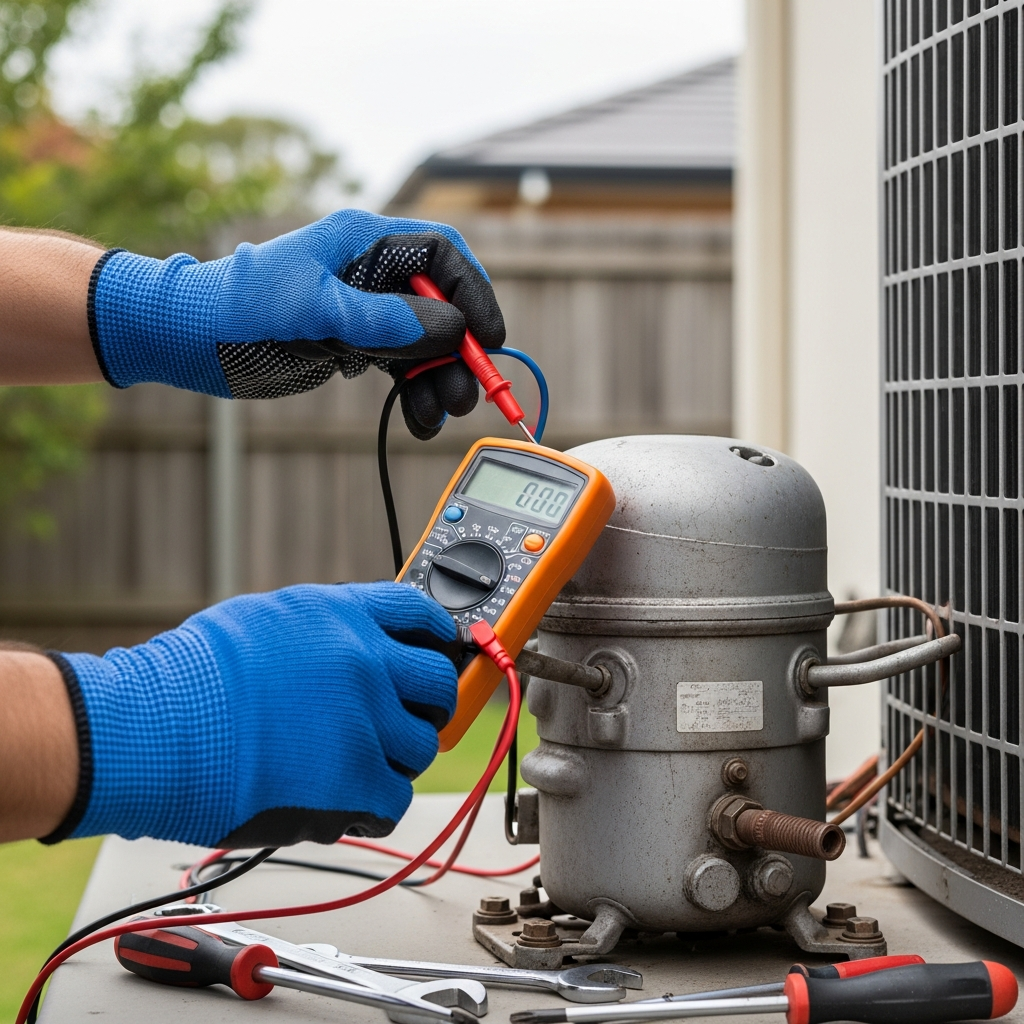
When to Call a Pro: Replacing a capacitor involves working with electricity, so it’s best to leave this to a qualified HVAC technician. They can test it and replace it safely.
The Start Capacitor vs. Run Capacitor
Your AC unit might have more than one capacitor. The start capacitor gives a big boost to get the motor going, while the run capacitor helps it keep running smoothly. If either one fails, your compressor might not start or might try to start and then stop.
Other Potential Issues
Sometimes, the problem might be a bit more complex. These are usually things you’ll need a professional to look at.
Overheating Compressor: The compressor might have a thermal overload switch that trips if it gets too hot.
Bad Contactor: This is an electrical switch that turns the compressor on and off. If it’s faulty, it won’t send power.
Low Refrigerant: While this usually causes poor cooling, in some cases, it can prevent the unit from starting.
* Motor Failure: The compressor motor itself could be damaged.
Troubleshooting Table: Compressor Not Starting
| Symptom | Possible Cause | What You Can Do | When to Call a Pro |
| :———————————— | :————————————————– | :———————————————————————————- | :—————– |
| AC unit makes a humming noise but fan/compressor don’t start | Bad start capacitor or run capacitor | Check for obvious signs of damage to capacitor. | Yes |
| AC unit is completely dead (no lights, no sounds) | Tripped circuit breaker, blown fuse, or power issue | Check and reset circuit breaker. Ensure disconnect switch is on. | Yes |
| AC unit runs for a bit then shuts off | Dirty air filter, overheating, or motor issue | Clean or replace air filter. Ensure outdoor unit has good airflow. | Yes |
| Thermostat doesn’t seem to be working | Dead batteries, faulty wiring, or thermostat failure | Replace thermostat batteries. Ensure thermostat is set to “Cool” and a lower temp. | Yes |
When to Call an HVAC Professional
It’s great to tackle simple fixes yourself! But if you’ve tried the easy steps and your AC still won’t start, it’s time to call in the experts. Trying to fix more complex electrical or mechanical issues can be dangerous and might cause more damage.
A professional technician has the tools and knowledge to diagnose and repair problems like faulty capacitors, contactors, or internal compressor issues safely and effectively.
Frequently Asked Questions
Q1: Can I just bypass the thermostat to see if the AC starts?
A: It’s generally not recommended for beginners to bypass a thermostat. It’s a safety feature, and messing with wiring can be risky. Stick to checking the thermostat settings and batteries first.
Q2: How often should I change my air filter?
A: It’s usually recommended to change or clean your air filter every 1-3 months, depending on the type of filter and how much you use your AC. Check it monthly to see if it needs attention sooner.
Q3: Is it normal for my outdoor AC unit to make noise?
A: Yes, your outdoor unit will make some noise when it’s running, like the hum of the fan and compressor. However, if you hear loud banging, grinding, or screeching, that’s a sign of a problem.
Q4: My AC worked yesterday but not today. What happened?
A: This could be anything from a tripped breaker to a sudden component failure. Start with the simple checks: power, thermostat, and air filter. If those are fine, it might be something more serious.
Q5: How do I know if my capacitor is bad?
A: You might hear the compressor try to start (a humming sound) but it won’t engage. Visually, a bad capacitor can sometimes look swollen or leaky. But testing requires special tools and knowledge.
Q6: Can a dirty air conditioner unit cause the compressor not to start?
A: Yes, absolutely! If the coils are too dirty, the system can overheat and shut down to protect itself. Regular cleaning of the outdoor unit is important.
Taking care of your air conditioner doesn’t have to be a headache. By understanding the basics and performing simple maintenance, you can keep your system running smoothly. Small, consistent steps make a big difference in saving energy and keeping your home comfortable.
Stay cool, and don’t hesitate to reach out if you need more tips!
