
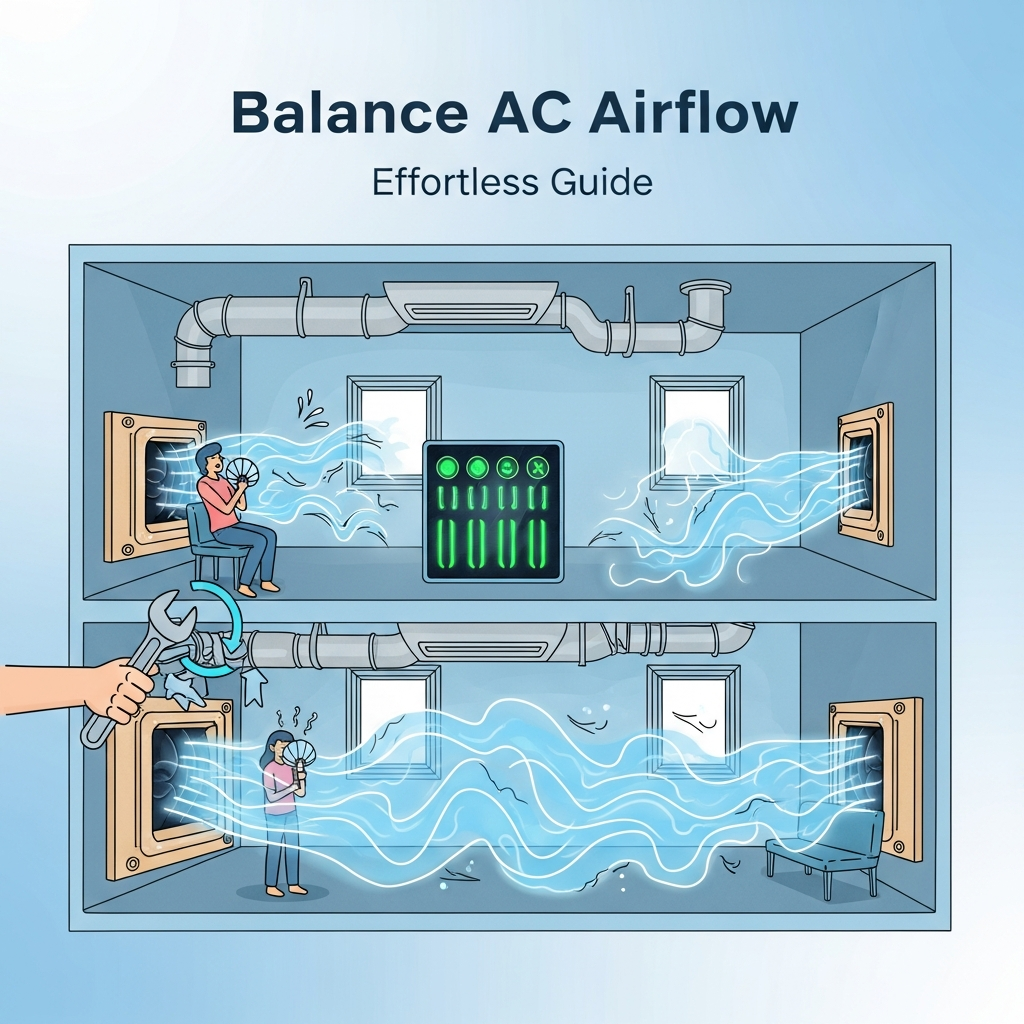
Don’t let uneven AC cooling drive you crazy! This guide shows you how to easily balance your home’s airflow for perfect comfort and lower energy bills.
Ever feel like your AC works super hard but some rooms stay too hot while others are freezing? It’s a common problem, and it can be frustrating. You might be worried about high energy bills or your AC not doing its job right. Don’t sweat it! I’m Jack from ACReviewHub.com, and I’m here to make understanding and fixing your AC simple. We’ll walk through how to get that cool air flowing evenly everywhere.
Why Balanced AC Airflow Matters
When your air conditioner’s airflow is balanced, it means cool air is reaching every part of your home evenly. This makes your home feel more comfortable all over. It also helps your AC run more efficiently, which can save you money on your electricity bill. An unbalanced system can make your AC work harder than it needs to, leading to more wear and tear.
Understanding Your AC’s Airflow
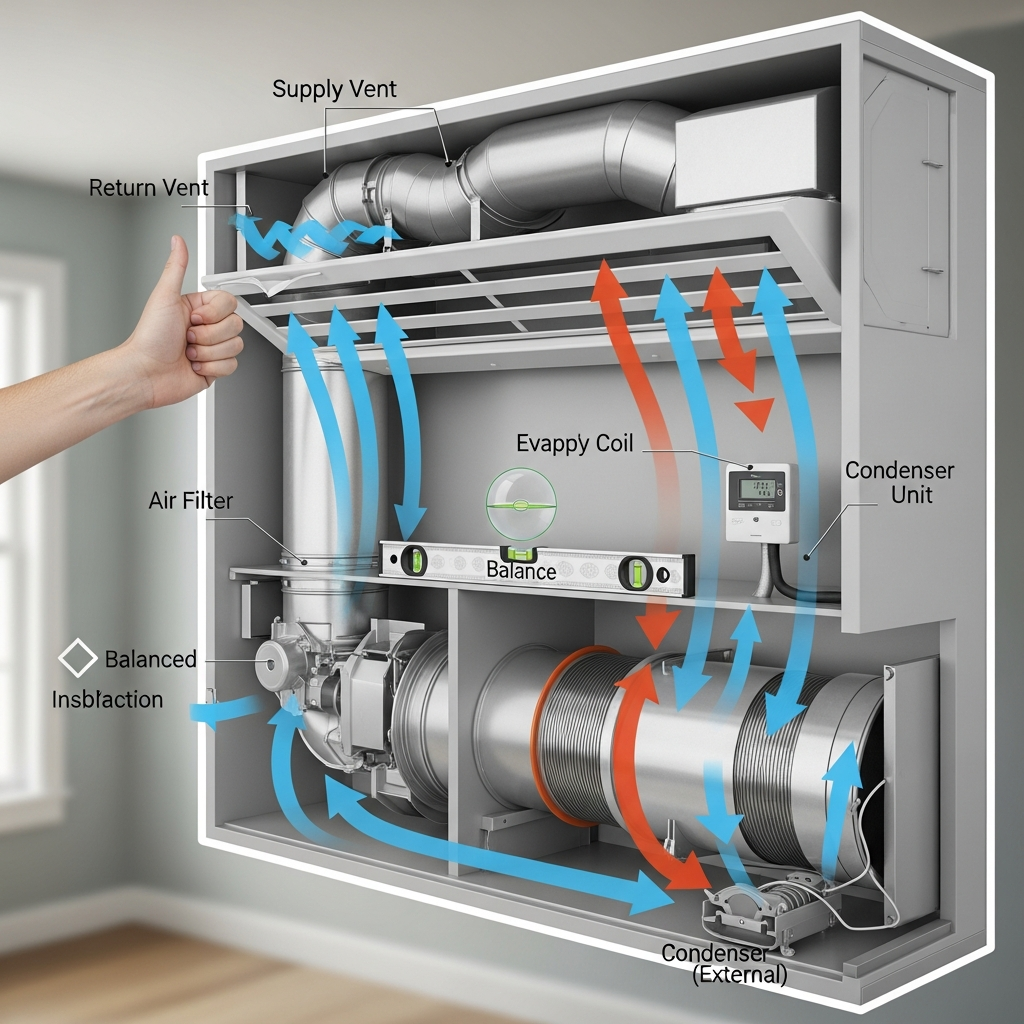
Think of your AC system like your home’s circulatory system. The air handler is the heart, pushing conditioned air out through ducts (arteries) to different rooms. Vents, or registers, are like the capillaries where the air finally reaches you. If any part of this system is blocked or not working right, the flow gets disrupted.
Common Signs of Uneven Airflow
You’ll usually notice a few key signs when your AC’s airflow isn’t balanced:
- Some rooms are noticeably warmer or colder than others.
- You hear your AC running constantly, even though certain areas aren’t comfortable.
- You feel weak airflow coming from some vents, while others blast air.
- You notice dust buildup around certain vents more than others.
Simple Steps to Balance Your AC Airflow
The good news is that many airflow issues can be fixed with simple, DIY steps. Let’s get your home feeling perfectly cool, everywhere!
Check and Clean Your Air Filter
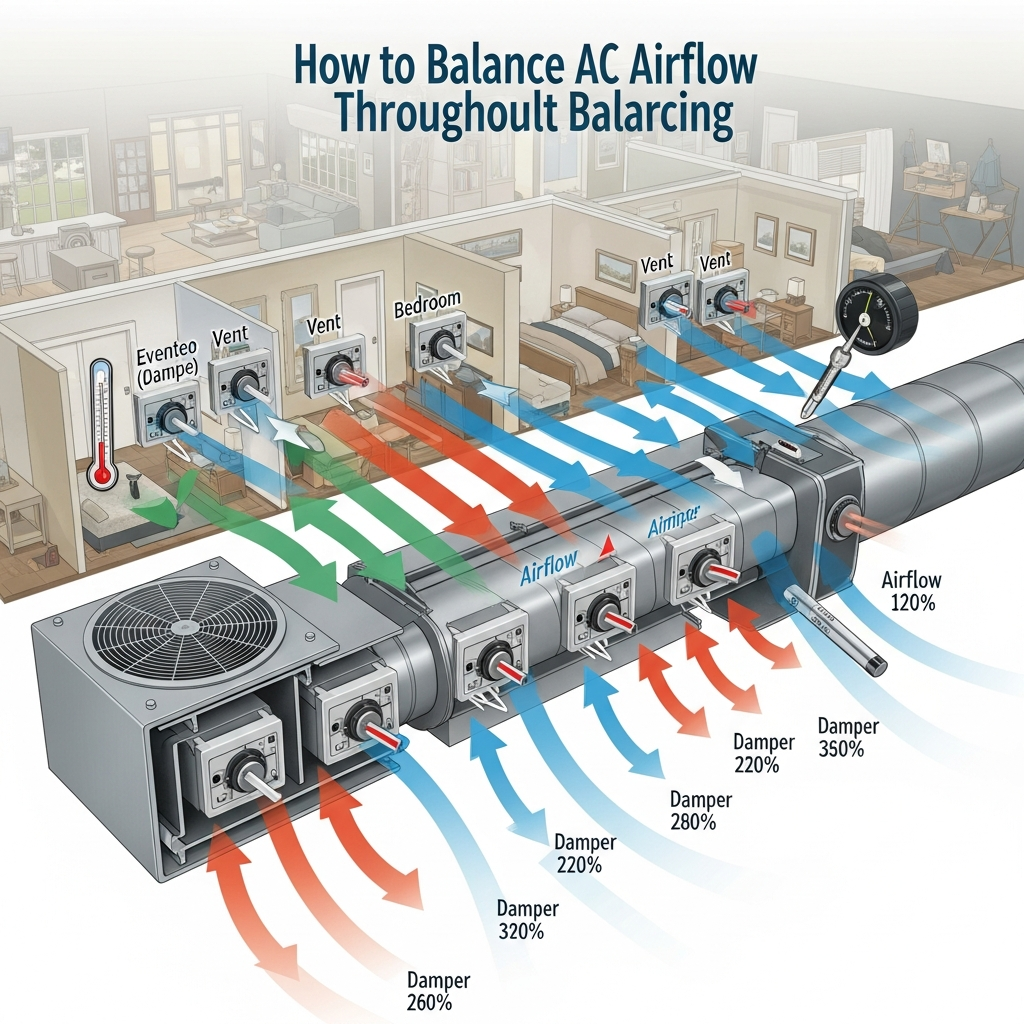
This is the most important and easiest step! A clogged air filter is like a blocked nose for your AC – it restricts airflow.
How to do it:
- Locate your air filter. It’s usually in the return air duct near your air handler or in a wall or ceiling return vent.
- Note the size of your filter (it’s usually printed on the side).
- Carefully remove the old filter.
- If it’s a disposable filter, replace it with a new one of the same size.
- If it’s a washable filter, rinse it thoroughly and let it dry completely before putting it back.
- Do this every 1-3 months, depending on your filter type and how dusty your home is.
Inspect Your Vents and Registers
Sometimes, the simplest solution is the best. Are your vents blocked?
What to look for:
- Make sure furniture, curtains, or rugs aren’t blocking any air vents.
- Ensure that the louvers (the little slats) on your vents are open.
- Don’t close too many vents in unused rooms. While it seems like a good idea to save energy, it can actually disrupt the system’s pressure and make the AC work harder.
Check Your Return Air Grilles
Return air grilles are where your AC “breathes in” the air from your home. If these are blocked, it starves the system of air.
What to do:
- Like supply vents, make sure furniture or other items aren’t blocking these larger grilles.
- These grilles often have filters behind them, so check those too!
Listen to Your AC System
Your AC will often tell you if something is wrong.
What to listen for:
- Are there any unusual noises like banging, rattling, or whistling coming from the vents or the main unit?
- Is the fan running consistently, or does it cycle on and off unexpectedly?
Consider Professional Help
If you’ve tried the simple steps and still have uneven airflow, it might be time for an expert.
When to call a pro:
- If you suspect leaks in your ductwork.
- If you hear persistent strange noises.
- If your AC is blowing warm air.
- If you’ve cleaned the filter and checked vents, but airflow is still weak.
A qualified HVAC technician can perform a more in-depth inspection of your ductwork, fan motor, and other components.
Understanding Airflow: BTU and Room Size
When choosing a new AC or troubleshooting an existing one, understanding its capacity is key. BTUs (British Thermal Units) measure how much heat an air conditioner can remove from a room per hour. The right BTU for your room size is crucial for efficient cooling.
Here’s a general guide:
| Room Size (Square Feet) | Recommended BTU Capacity |
|---|---|
| 100-150 | 5,000 BTU |
| 150-250 | 6,000 BTU |
| 250-350 | 8,000 BTU |
| 350-450 | 10,000 BTU |
| 450-550 | 12,000 BTU |
| 550-700 | 14,000 BTU |
| 700-1000 | 18,000 BTU |
| 1000-1200 | 21,000 BTU |
Note: This is a general guideline. Factors like ceiling height, insulation, window exposure, and climate can affect the ideal BTU. For central AC systems, the total home square footage and insulation are considered by professionals.
Energy-Saving Checklist for Balanced Airflow
Keeping your AC running efficiently doesn’t just mean comfort; it means saving money!
| Action | Frequency | Impact on Airflow & Energy Use |
|---|---|---|
| Clean or replace air filter | Monthly (or as needed) | Improves airflow, reduces strain on AC, lowers energy bills. |
| Check vents for blockages | Monthly | Ensures air reaches intended rooms, prevents wasted energy. |
| Ensure return air grilles are clear | Monthly | Allows AC to draw sufficient air, maintains system pressure. |
| Seal minor duct leaks (DIY tape) | Annually | Prevents cool air loss, improves delivery efficiency. |
| Program thermostat correctly | Daily | Avoids overcooling/overheating, saves significant energy. |
| Annual professional tune-up | Annually | Ensures optimal performance, catches potential issues early. |
For more detailed energy-saving tips, check out the Energy Saver website from the U.S. Department of Energy.
Frequently Asked Questions About AC Airflow
Q: My AC blows weak air from one vent, but strong from another. What’s up?
A: This usually means something is blocking that weak vent (like furniture) or there might be a problem further up in the ductwork leading to it. First, check for obstructions!
Q: Can I just close the vents in rooms I don’t use?
A: It’s generally not recommended. Closing too many vents can mess with your system’s pressure and make the AC work harder, potentially causing damage and wasting energy.
Q: How often should I change my AC filter?
A: For standard filters, aim for every 1-3 months. If you have pets or allergies, you might need to change it more often. Washable filters need cleaning regularly too!
Q: My upstairs is always hotter than downstairs. Why?
A: Heat rises! Also, upstairs rooms get more direct sun. Ensure your upstairs vents are open and unobstructed, and consider a professional check for ductwork issues or insulation.
Q: Is it okay if my AC cycles on and off a lot?
A: If it’s cycling on and off very rapidly (short cycling), it could mean the AC is too large for the space, or there’s an airflow issue. If it’s just cycling normally to maintain the set temperature, that’s fine.
Q: I feel a draft from my AC vent. Is that normal?
A: A gentle, cool breeze is normal! But if it’s a strong, uncomfortable draft, it could indicate a duct leak or an issue with the vent itself.
Conclusion
See? Balancing your AC’s airflow is totally doable! By taking a few simple steps like regularly changing your filter and keeping your vents clear, you can make a big difference in your home’s comfort and your energy bills. Consistent, small actions are the key to keeping your AC happy and your home perfectly cool.
Happy cooling!
