
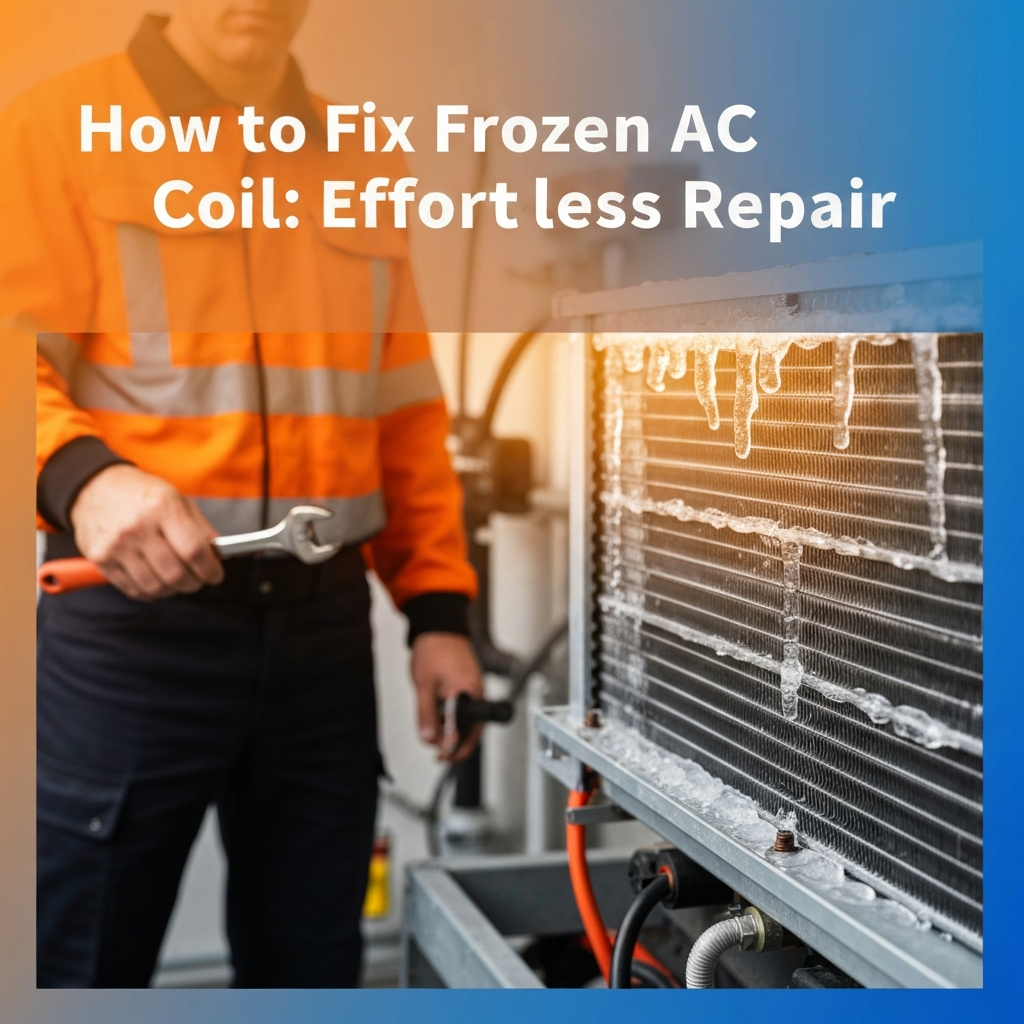
Frozen AC Coil? No Sweat! This Simple Fix Will Get Your Cool Air Flowing Again in No Time.
Hey there! Is your air conditioner acting up, blowing warm air instead of that lovely cool breeze? It can be super confusing and frustrating when your AC isn’t working right. You might be worried about expensive repairs or how to even begin fixing it.
Don’t you worry one bit! I’m Jack from ACReviewHub.com, and I’m here to make understanding and taking care of your AC as easy as a summer day. We’ll break down what’s happening and how to fix it without any confusing jargon.

In this guide, we’ll tackle a common problem: a frozen AC coil. You’ll learn exactly what causes it and, more importantly, how to fix it yourself. Let’s get your cool air back!
Why Your AC Coil Might Be Freezing Up
So, what exactly is an AC coil, and why does it freeze? Think of your AC like your home’s personal chef for cool air. It has a special part, called the evaporator coil, that’s responsible for absorbing heat from your home.
When things are running smoothly, this coil gets cold, but it stays dry. If airflow is blocked or your system isn’t quite right, moisture can build up and then freeze onto the coil, turning it into a block of ice!

Signs Your AC Coil Is Frozen
You might be wondering, “How do I know if my AC coil is the problem?” It’s usually pretty obvious when your AC isn’t working its best. You’ll notice a few key things that point to a frozen coil.
Here are the tell-tale signs:
- Your air conditioner is blowing warm air, even when it’s set to cool.
- You might hear strange noises coming from your AC unit, like hissing or gurgling.
- You can actually see ice or frost built up on the refrigerant lines or the coil itself.
- Your cooling bills are higher than usual, but you’re not getting the comfort you expect.
Easy Steps to Fix a Frozen AC Coil
The good news is that you can often fix a frozen AC coil yourself with a few simple steps. The most important thing is to be patient and let the ice melt completely before trying to turn your AC back on.
Step 1: Turn Off Your Air Conditioner
First things first, safety and preventing more damage are key. You need to turn your AC completely off. This means shutting off both the cooling and the fan. Don’t just set the thermostat to a higher temperature; turn the whole system off at the power switch or breaker.
Step 2: Let the Ice Melt
This is where patience comes in. You need to let all the ice on the coil melt away. The easiest way to do this is to simply turn the AC system off, but keep the fan running. This will help circulate room-temperature air over the frozen coil and speed up the melting process.
You can usually do this by setting your thermostat to “Fan On” and “Cool Off.” This allows air to move but prevents the system from trying to cool and freeze again.
Step 3: Check and Clean the Air Filter
A clogged air filter is one of the most common culprits behind a frozen AC coil. When the filter is full of dust and dirt, it blocks the airflow over the evaporator coil. This makes the coil get too cold and freeze up.
Locate your air filter (it’s usually near your indoor air handler or furnace). Take it out and check if it’s dirty. If it is, replace it with a new one. This is a super simple step that can make a huge difference!
Here’s a quick rundown on filter care:
- Check Regularly: Look at your filter at least once a month.
- Replace When Dirty: Don’t wait for it to be completely clogged.
- Choose the Right Filter: Use a filter that fits your system and has a good MERV rating (Minimum Efficiency Reporting Value) for your needs.
Step 4: Inspect the Evaporator Coil
Once the ice has melted, you’ll want to take a peek at the evaporator coil itself. This is usually located inside your home, inside the air handler or furnace unit. You might need to remove a panel to see it. Look for any signs of heavy dirt or grime buildup.
If it looks dirty, you can try cleaning it gently with a soft brush or a specialized AC coil cleaner. Be very careful not to bend the delicate fins on the coil.
Step 5: Check for Airflow Obstructions
Sometimes, the problem isn’t just the filter. Make sure nothing is blocking the return air vents (where air gets sucked into your AC) or the supply vents (where cool air comes out). Furniture, curtains, or even clutter can restrict airflow.
Walk around your house and make sure all your vents are clear and open. This ensures your AC can breathe easily and do its job effectively.
Step 6: Turn Your AC Back On
After you’ve given the ice time to melt completely, replaced the filter, and checked for any obvious obstructions, you can try turning your air conditioner back on. Set your thermostat to “Cool” and a temperature a few degrees below the current room temperature.
Listen for any unusual noises and feel the air coming out of the vents. If it’s blowing cold air and running smoothly, you’ve likely fixed the problem!
When to Call a Professional
While these steps can help with many frozen coil issues, sometimes the problem is a bit more complicated. If you’ve followed these steps and your AC is still freezing up, or if you’re not comfortable doing these checks yourself, it’s time to call in an HVAC professional.
There might be underlying issues like a refrigerant leak, a faulty fan motor, or a problem with your thermostat that requires expert attention.
Understanding Your AC’s Cooling Capacity
Choosing the right size air conditioner for your space is crucial for efficiency and comfort. An AC that’s too small will struggle to cool your home, running constantly and potentially leading to problems like frozen coils. An AC that’s too large can cool your home too quickly, not allowing it to dehumidify properly and leading to that clammy feeling.
Here’s a general idea of cooling capacity, measured in British Thermal Units (BTUs):
| Room Size (Sq. Ft.) | Recommended BTU Range |
|---|---|
| 100 – 150 | 5,000 – 6,000 |
| 150 – 250 | 6,000 – 8,000 |
| 250 – 350 | 8,000 – 10,000 |
| 350 – 450 | 10,000 – 12,000 |
| 450 – 550 | 12,000 – 14,000 |
| 550 – 700 | 14,000 – 18,000 |
| 700 – 1,000 | 18,000 – 24,000 |
For more detailed information on choosing the right AC size, you can check out resources from the U.S. Department of Energy: Energy.gov – Air Conditioners.
Frequently Asked Questions About Frozen AC Coils
Q: How long does it take for an AC coil to thaw?
A: It can take anywhere from a few hours to a full day, depending on how much ice there is and how warm your home is. Just be patient!
Q: Can I just spray water on the ice to melt it faster?
A: It’s best not to. Let the system’s fan do the work. Forcing water might not be safe and could cause other issues.
Q: Will running my AC fan help melt the ice?
A: Yes! Setting your thermostat to “Fan On” and “Cool Off” is the best way to circulate air and melt the ice without trying to freeze it again.
Q: What if my AC keeps freezing up?
A: If it freezes again after thawing and you’ve changed the filter, it’s time to call a pro. There might be a bigger issue like low refrigerant.
Q: How often should I change my air filter?
A: Most people should change their filter every 1-3 months. Check it monthly to see if it’s dirty.
Q: Is it expensive to fix a frozen AC coil?
A: If the fix is just a dirty filter or clearing a blockage, it’s usually very cheap or free! If you need a pro for other issues, costs can vary.
Q: Can I use my AC at all while the coil is frozen?
A: No, it’s best to turn it off completely. Running it while frozen can damage the compressor, which is a major and expensive part.
Keep Your Cool with Simple AC Care
See? Taking care of your air conditioner doesn’t have to be complicated. By understanding common issues like frozen coils and knowing these simple troubleshooting steps, you can often fix the problem yourself and save money.
Remember to check that air filter regularly – it’s your AC’s best friend! Consistent, simple maintenance is the key to a happy, healthy, and efficient air conditioning system.
Stay cool and comfortable!
