
Don’t let a faulty AC fan capacitor leave you sweating! This guide shows you how to easily check and potentially fix this common issue yourself, saving you time and money.
Is your air conditioner acting up? Maybe it’s not blowing cold air, or it’s making strange noises. It can be a bit confusing when your AC isn’t working right, and those energy bills can start to climb. But don’t worry, sometimes a simple fix is all you need. This guide will walk you through checking a common AC part called the fan capacitor in easy steps. We’ll make understanding your AC much simpler!
Why Your AC Fan Needs a Healthy Capacitor
Think of the capacitor as the tiny power booster for your AC’s fan motor. It gives the motor the extra “oomph” it needs to start spinning and keep running. If this booster is weak or dead, the fan might struggle, hum, or not start at all. This is a super common reason why ACs stop cooling properly.
What is an AC Fan Capacitor?
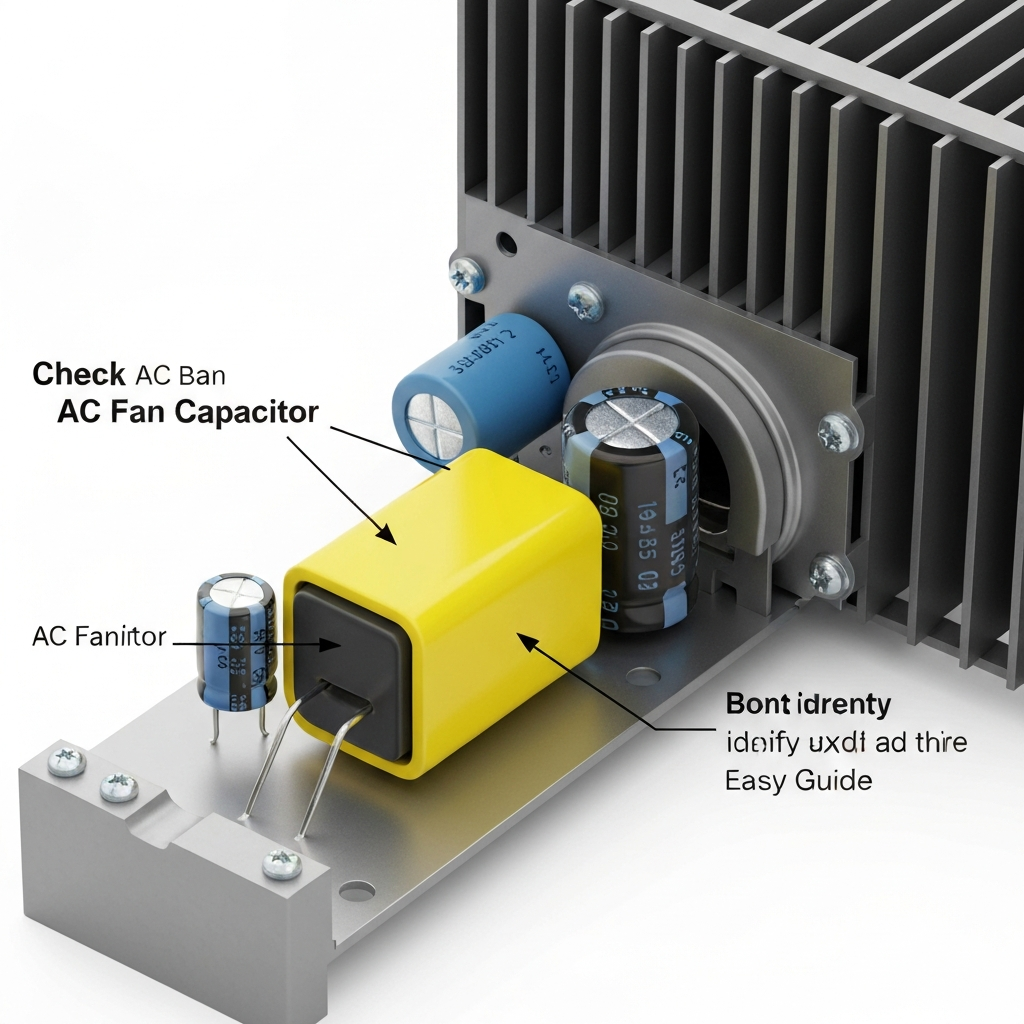
An AC fan capacitor is a small, cylindrical component found inside your outdoor AC unit. It looks like a little metal can. Its main job is to store electrical energy and then release it to help the fan motor start and run smoothly. It’s essential for the fan to do its job of moving air.
Signs Your AC Fan Capacitor Might Be Bad
You might notice a few things if your capacitor is giving up the ghost. The fan on your outdoor unit might not be spinning at all, even when the AC is supposed to be on. Sometimes, you’ll hear a humming noise coming from the unit, but the fan still won’t turn. The fan might also start and stop unexpectedly. These are all clues that the capacitor could be the culprit.
Tools You’ll Need for the Job
Before you start, gather a few things to make the job safe and easy. You’ll need a Phillips head screwdriver and a flathead screwdriver. Most importantly, you’ll need a multimeter that can test capacitance (ohms or microfarads, µF). A pair of insulated gloves and safety glasses are also a must for protecting yourself.
Safety First: Turn Off the Power!
This is the most important step! Before you even think about touching anything inside your AC unit, you need to cut the power. Go to your electrical panel and flip the breaker that controls your air conditioner. Some systems also have a disconnect switch near the outdoor unit. Make sure both are off to be completely safe.
How to Access the AC Fan Capacitor
Your outdoor AC unit has a metal panel that covers the electrical components. You’ll usually find screws holding this panel in place. Use your Phillips head screwdriver to remove these screws. Gently pull off the panel to reveal the inner workings of your AC. Be careful, as there might be sharp edges.
Locate the Fan Capacitor
Once the panel is off, look for a cylindrical component, often mounted near the fan motor. It will have wires connected to it. Capacitors usually have their specifications printed on them, like the microfarad (µF) rating and the voltage. Take a picture of the wiring connections before you do anything else – this will be super helpful later!
How to Test the AC Fan Capacitor
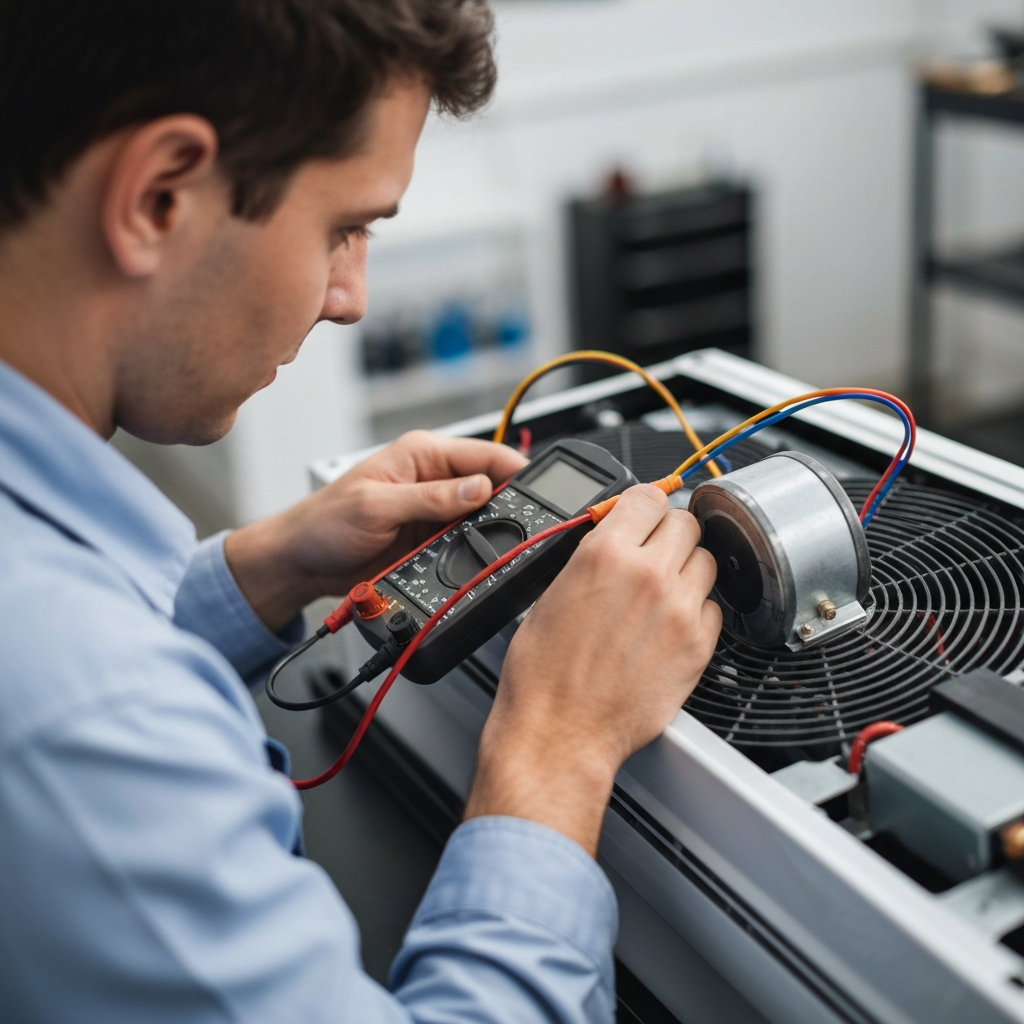
This is where your multimeter comes in handy.
- First, discharge the capacitor. This is crucial for safety! Use an insulated screwdriver to carefully touch the metal casing of the capacitor with the metal shaft of the screwdriver, bridging the terminals. Do this for each pair of terminals. You might see a small spark.
- Set your multimeter to measure capacitance (µF).
- Disconnect the wires from the capacitor terminals. Remember your picture if you need to reconnect them later!
- Place the multimeter probes on the two terminals of the capacitor.
- Read the measurement on your multimeter.
Compare this reading to the µF rating printed on the capacitor. If the reading is significantly lower than the rating (usually more than 10-20% off), the capacitor is likely bad and needs to be replaced.
When to Call a Professional
While checking the capacitor is a great DIY step, sometimes the problem is more complex. If you’re not comfortable working with electrical components, or if testing the capacitor doesn’t reveal the issue, it’s always best to call a qualified HVAC technician. They have the tools and expertise to diagnose and fix any AC problem safely.
Common AC Troubleshooting Scenarios
Here’s a quick look at what might be happening and what it could mean:
| Symptom | Possible Cause |
|---|---|
| Fan not spinning, humming noise | Bad capacitor, bad fan motor |
| AC not cooling, but fan is running | Refrigerant leak, dirty coils, bad compressor |
| AC cycles on and off frequently | Dirty filter, thermostat issue, oversized unit |
Where to Learn More About AC Maintenance
For more in-depth tips on keeping your AC running efficiently, the U.S. Department of Energy offers fantastic resources on their website. You can find great advice on energy-saving tips and regular maintenance to keep your system in top shape. Check out Energy.gov’s Home Cooling Section.
Frequently Asked Questions About AC Fan Capacitors
Q: How often should I check my AC fan capacitor?
A: You don’t need to check it often unless you notice problems. Regular AC maintenance by a pro usually includes checking these components.
Q: Can I just replace the capacitor myself?
A: If you’re comfortable with basic electrical work and have the right tools, yes. But always prioritize safety and double-check that you have the exact same µF and voltage rating.
Q: What does the µF rating mean?
A: µF stands for microfarads. It’s a measurement of the capacitor’s electrical storage capacity. The replacement must match this value.
Q: My capacitor looks swollen or leaky. Is it bad?
A: Yes, absolutely! If you see any physical damage like bulging or a oily residue, replace it immediately.
Q: How much does a new capacitor cost?
A: Capacitors are usually pretty inexpensive, often between $10-$30. The labor cost if a technician replaces it will be more.
Taking care of your air conditioner doesn’t have to be complicated. By learning how to check simple components like the fan capacitor, you can often catch problems early and save yourself a headache. Remember to always put safety first, and don’t hesitate to call in an expert when needed. Keep up with these small steps, and your AC will keep you cool and comfortable all season long. Stay cool!
