
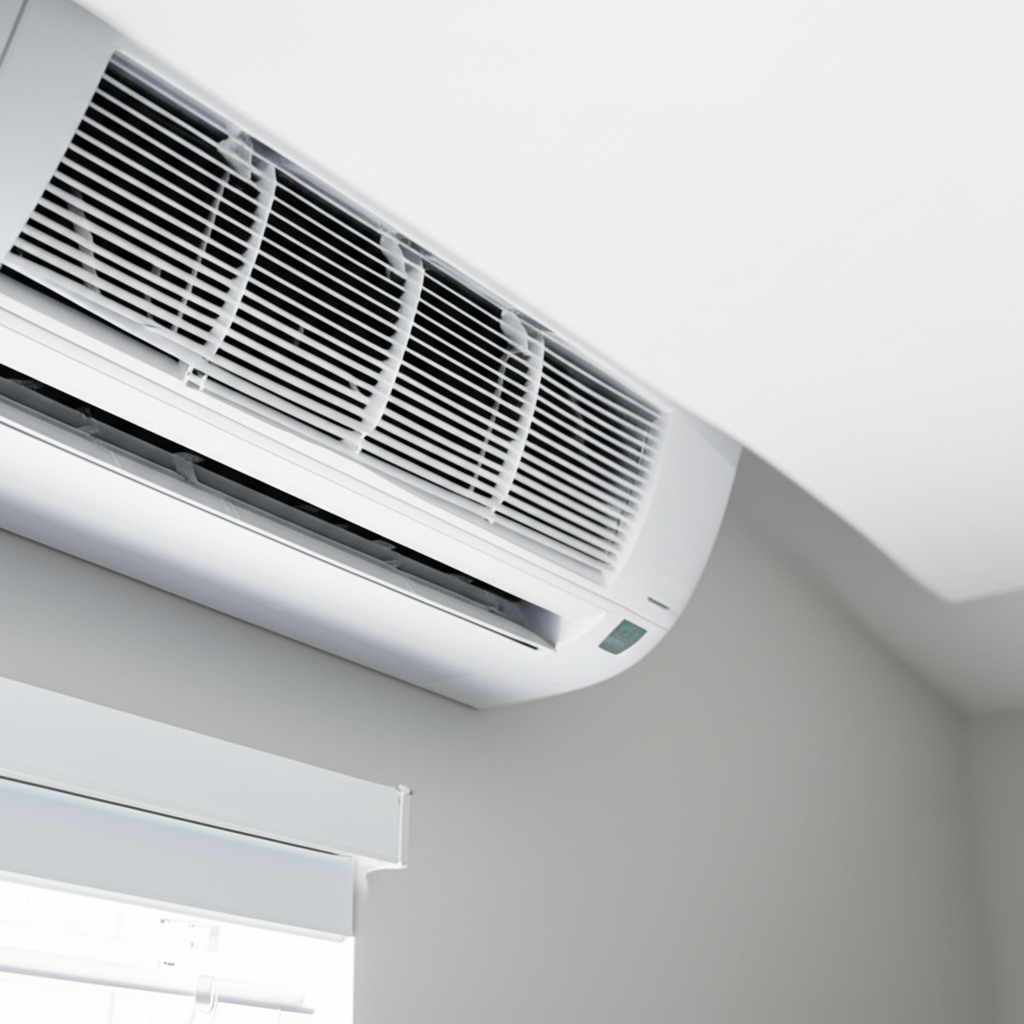
Quick Summary: Checking your AC airflow direction is easy! Make sure the louvers or vents are pointed slightly downward for the best cooling effect, pushing cold air down where you sit, and adjust them if the air feels blocked or unevenly distributed.
Is your air conditioner running, but the room still feels hot? Maybe the cold air seems stuck near the ceiling. It is frustrating when your AC is working hard, but you are not feeling the cool relief. Many times, the problem is not a broken unit but just a simple airflow setting that needs a quick tweak.
Don’t worry; checking and fixing your AC airflow direction is one of the easiest maintenance tasks you can do. You do not need special tools or a big repair bill. We will walk through exactly how to check where the air is going and how to point it right where you need it.
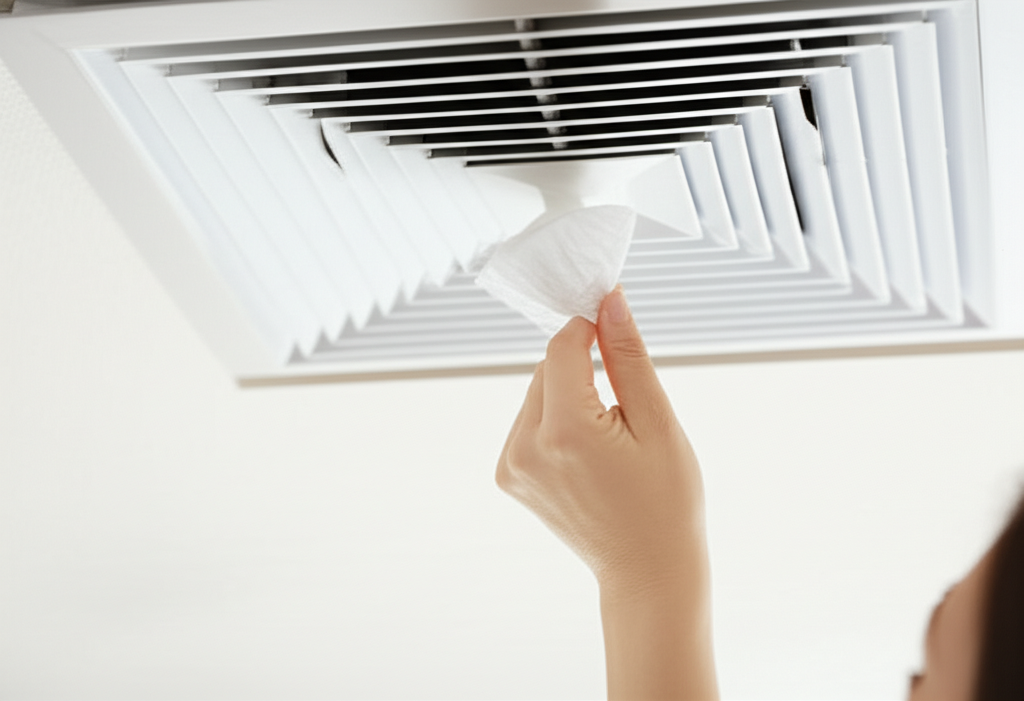
Why AC Airflow Direction Matters for Your Comfort
The way cold air leaves your AC unit really matters. Cold air is heavier than warm air. If you point the cold air straight up, it just sits near the ceiling, and you won’t feel cool.
Proper airflow direction helps mix the cool air with the warmer air in the room. This mixing process is what makes you feel comfortable quickly. When airflow is wrong, your AC runs longer, uses more energy, and still leaves you sweating.
Step-by-Step: How to Check Your AC Airflow Direction
We need to look at two main places where air direction is controlled: the indoor unit (the vents) and the outdoor unit (if you have a heat pump setting).
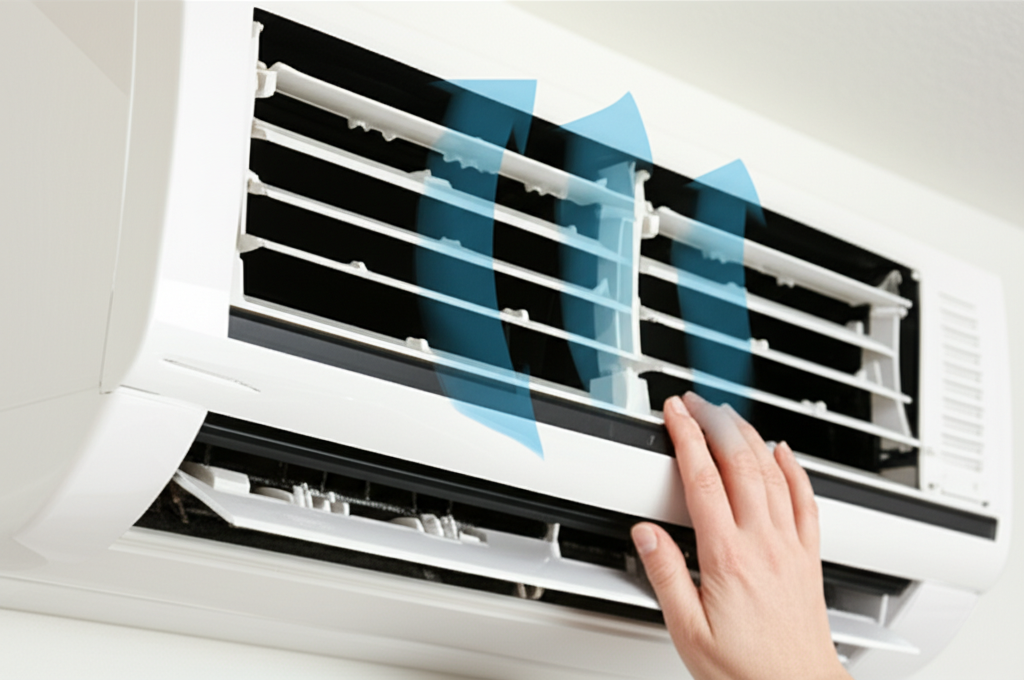
Checking Your Indoor Vents (The Grills)
This is the most common place to adjust airflow for cooling. You are looking at the louvers—those little flaps inside the vent.
- Step 1: Turn your AC to the “Cool” setting. Set the fan speed to medium or high so you can feel the air movement well.
- Step 2: Go to the vent closest to you. Carefully feel where the air is blowing.
- Step 3: If the louvers are pointing straight up or closed, the air will not cool the room effectively.
- Step 4: Gently move the horizontal louvers (the ones that go side-to-side) so they are aimed slightly downward, about 45 degrees toward the floor.
- Step 5: Check other vents in the house. Make sure they are all aimed to distribute air evenly across the room, not just blowing directly onto one piece of furniture.
Understanding Fan-Only Mode vs. Cool Mode
When you run the fan only, the air moves, but it is not cold air. It just moves the room air around. When you switch to “Cool,” the direction settings become even more important for getting that chilly blast where you need it.
Fixing Common Airflow Direction Problems
Sometimes, airflow issues are caused by something simple you can fix right now. These problems often cause weak airflow or air blowing in the wrong spot.
Problem 1: Blocked Vents
If a vent is blocked, the air has nowhere to go, and your system struggles. This is super common!
- Check if furniture, like a tall bookshelf or a large couch, is sitting right in front of a supply vent. Move it back a few inches.
- Look at return vents (these are usually bigger and suck air in). Do not put anything in front of these, or your AC will starve for air.
- If you have baseboard vents, make sure rugs are not covering them up completely.
Problem 2: Stuck or Broken Louvers
Sometimes those little plastic fins get stuck in one position, especially if they have not been moved in a long time.
Gently try to move the louvers by hand. If they feel stiff or break off, you might need a small replacement part. For now, just ensure the remaining ones are positioned for downward airflow.
Problem 3: Thermostat Location Confusion
If your thermostat is right above a supply vent, the AC thinks the room is cold when it is not! The cold air blasts right onto the sensor, making the AC shut off too soon.
If this is the case, point the vent air away from the thermostat. This lets the room temperature stabilize before the AC stops cooling.
When to Adjust for Heating (Heat Pumps Only)
If you have a heat pump and use it for heating in the winter, the airflow direction rule flips. Remember: Heat rises!
For heating, you want the warm air to blow slightly upward. This helps push the heat down into the living space as it naturally rises toward the ceiling. Always check your unit’s manual for the correct setting when switching from cooling to heating.
| Condition | Goal Airflow Direction | Why? (The Simple Reason) |
|---|---|---|
| Cooling Mode (Summer) | Slightly Downward (Toward Floor) | Cold air sinks naturally; direct it where people are sitting. |
| Heating Mode (Winter – Heat Pump) | Slightly Upward (Toward Ceiling) | Hot air rises; direct it up so it spreads down as it cools. |
| Fan Only Mode | Medium Spread (Horizontal) | Just moving air around to circulate the room evenly. |
Quick Checklist: Maximizing Cooling Efficiency
Getting the direction right is key, but it works best with other simple checks. Think of this as your quick tune-up list.
- Clean the Air Filter: A dirty filter chokes the airflow, making it feel weak no matter where the vents point. Change this monthly!
- Check the Outdoor Unit: Make sure nothing is blocking the big unit outside (like tall grass or weeds). It needs room to breathe.
- Seal Leaky Ducts: If air leaks out in your attic or basement, less air reaches your room. Use mastic tape to seal visible gaps if you can safely reach them.
- Set the Right Temperature: Don’t set it too low. A comfortable 75°F (24°C) lets the AC run efficiently without overworking.
For more detailed information on how your HVAC system works best, the U.S. Department of Energy offers great resources on home energy savings.
Frequently Asked Questions (FAQ) for Beginners
Here are the quick answers to the things people often ask me about airflow.
- Q: My central AC is blowing air out of the vents, but it feels weak. What should I check first?
- A: First, check your air filter! A clogged filter is the number one cause of weak airflow. Change it right away.
- Q: Should I close the vents in rooms I don’t use?
- A: Generally, no. Closing too many vents can increase pressure in your ducts and strain your system. It’s better to set the thermostat a bit higher in those unused rooms.
- Q: How often should I manually adjust my vent louvers?
- A: Only when you switch between heating and cooling seasons. Otherwise, leave them set for cooling (slightly down) during the summer months.
- Q: Can I use my fan settings to push air further?
- A: Yes! If you have a high fan setting, use it when you first turn the AC on to cool the room down fast. Then, switch back to medium or auto for steady comfort.
- Q: What if my window AC unit only blows air straight out?
- A: Most window units have small plastic flaps on the front. Gently wiggle these side-to-side or up-and-down to direct the stream where you need it most.
| Symptom | Likely Airflow Cause | Easiest Fix |
|---|---|---|
| Cold air pools near the ceiling. | Vents aimed too high. | Angle louvers down toward the floor. |
| AC runs constantly but the room is warm. | Return vent is blocked or filter is dirty. | Clear the return vent and change the filter. |
| Only one room feels cold. | Supply vents in other rooms are closed or blocked. | Open or clear the blocked vents in other rooms. |
Taking a moment to check your AC airflow direction is a small step that makes a huge difference in how cool and comfortable your home feels. It costs nothing and saves you energy right away. Remember, your AC is there to serve you, not the other way around!
Keep checking those simple things, and enjoy that perfectly cooled air all season long. You’ve got this!
