

Checking your AC’s suction temperature is key to knowing if it’s running right. You just need a temperature clamp gauge on the large, insulated (suction) line coming out of the outdoor condenser. This temperature, combined with pressure, tells us if your system has the correct refrigerant charge. Don’t worry—it’s easier than you think!
How to Check AC Suction Temp: Ultimate, Easy Guide
Is your air conditioner not cooling like it should? Maybe your energy bills are creeping up, and you feel like your AC is secretly struggling. When things go wrong, the jargon about refrigerant and pressures can sound totally confusing. Don’t worry—I’m here to help.
As your friendly AC expert, I want to show you one of the easiest ways to check your system’s health: measuring the AC suction temperature. This simple measurement tells us a lot about your unit’s performance. By the end of this guide, you’ll know exactly how to check this temperature safely and what those numbers actually mean. Let’s dive in!
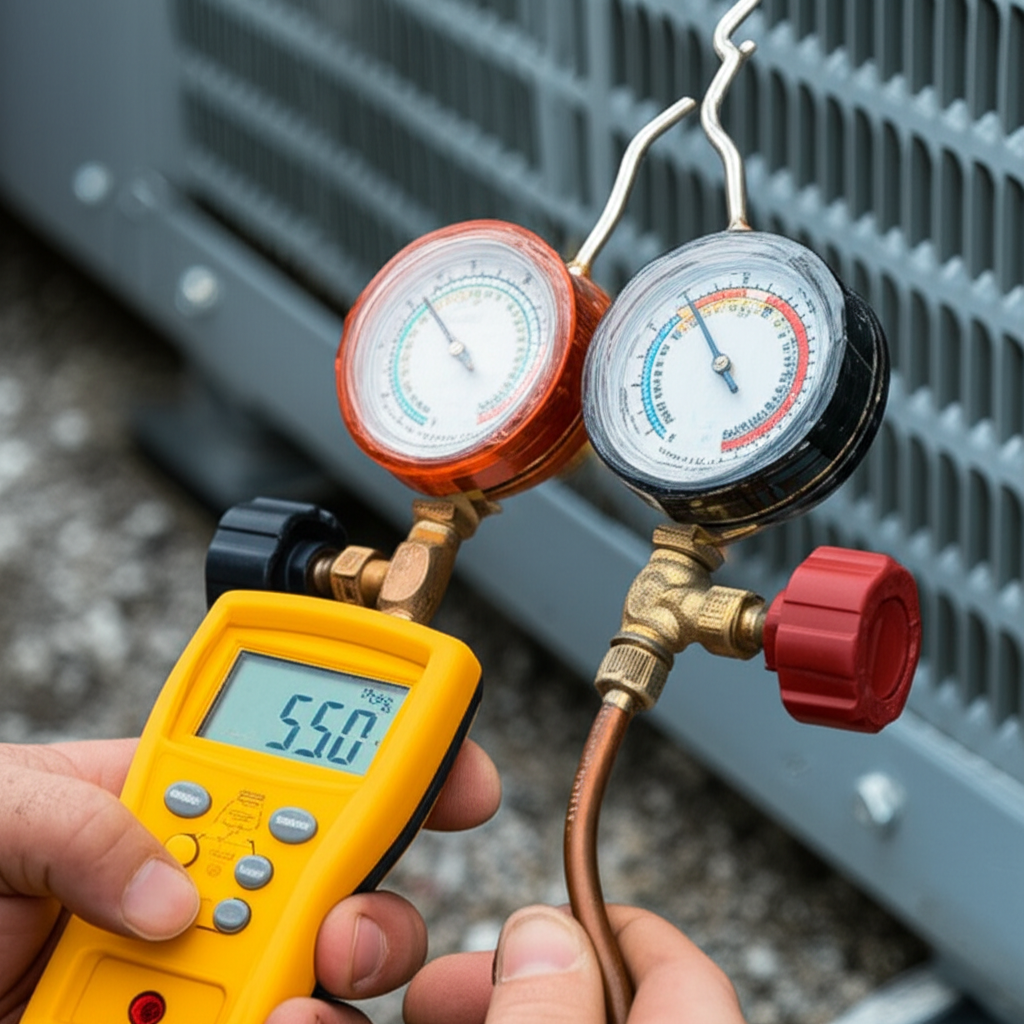
Understanding the Basics: What is the Suction Line?
Before we measure anything, let’s quickly look at the two copper lines connecting your outdoor unit (condenser) to your indoor unit (evaporator). They are easy to spot.
- The Small Line (Liquid Line): This line carries high-pressure, cool liquid refrigerant from the outside unit into the house.
- The Large Line (Suction Line): This is the one we care about. It carries low-pressure, cool gas (refrigerant that just absorbed heat from your home) back to the compressor outside. It is almost always wrapped in thick foam insulation.
The temperature of this large suction line tells us how well the refrigerant did its job inside your home. It’s like taking the AC system’s temperature—it’s a quick health check!
Tools You Need for This Temperature Check
You don’t need fancy, expensive manifold gauges just to check the temperature. You only need a reliable way to measure the surface temperature of the copper pipe.
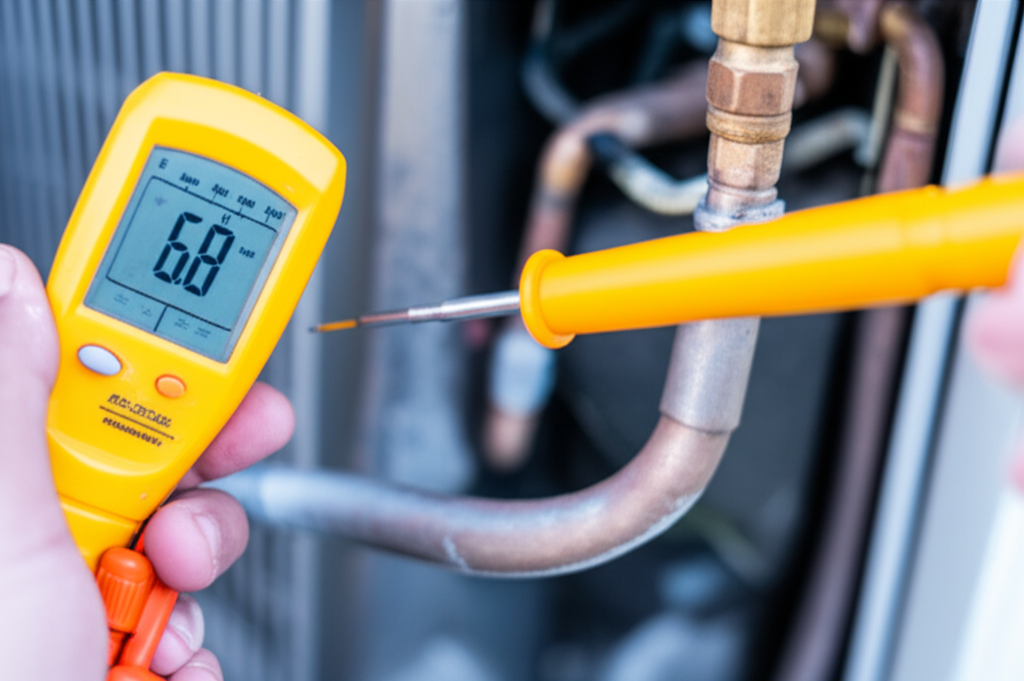
Essential Tool Checklist
- Temperature Clamp Meter: This is the easiest tool. It clips right onto the pipe and gives you a digital reading.
- Infrared Thermometer (Optional): Less accurate, but good for a quick spot check. Make sure the pipe is clean first.
- Safety Gloves: The outdoor unit has moving parts and can have sharp edges.
- Screwdriver/Wrench: To remove any panel access covers, if necessary.
If you don’t have a clamp meter, many high-end multimeters come with a temperature probe that works just as well. Just make sure the sensor makes good contact with the copper pipe.
Step-by-Step: How to Safely Check AC Suction Temperature
This process is straightforward, but remember to prioritize safety. Always ensure the AC has been running for at least 15 minutes before taking a reading. This allows the system to stabilize.
Step 1: Turn Off Power (Safety First!)
Always turn off the breaker or the disconnect switch near the outdoor unit before you touch anything. Even if you are just measuring the pipe, it’s best to be safe when working around the high-voltage compressor area.
Step 2: Locate and Prepare the Suction Line
Find the large, insulated line coming out of the outdoor unit. You will need to slide or cut back a small section of the foam insulation—about two inches—to expose the bare copper pipe. The clamp needs to touch the metal directly for an accurate reading.
You can usually gently push the foam back without cutting it if you are careful.
Step 3: Attach the Temperature Clamp
Clip your temperature clamp meter firmly onto the exposed copper pipe. Make sure the clamp jaws are completely closed around the pipe for the best thermal contact.
Step 4: Turn the AC Back On and Wait
Restore power to the unit and turn on the AC inside your home, setting the thermostat to a low temperature (like 68°F). You must wait 15 to 20 minutes for the system to run consistently before taking the final temperature reading.
Step 5: Record the Reading
Once the 20 minutes are up, look at the digital display on your clamp meter. This number is your AC Suction Line Temperature.
Expert Tip: Write down the temperature reading and the outside air temperature. Both are important!
What Should the Suction Temperature Be?
This is where beginners often get stuck. There isn’t one single “magic number” for suction temperature because it depends on your specific AC unit and the outdoor temperature. However, we can give you a helpful range.
In a properly running residential AC system, the suction line temperature is usually between 35°F and 50°F.
Remember this rule: The suction temperature is useless by itself. You need to combine it with the suction pressure (which requires professional gauges) to calculate Superheat. Superheat is the real indicator of whether your system has the right amount of refrigerant.
If you see a temperature in that 35°F to 50°F range, it’s a good initial sign that the system is moving heat correctly.
Troubleshooting: When the Suction Temperature is Wrong
If your temperature reading is far outside the normal range, it indicates a problem. Here is a simple breakdown of what those readings might mean.
Table 1: Suction Temperature Troubleshooting Guide
| Temperature Reading | Common Symptom | Possible Problem (The Easy Explanation) |
|---|---|---|
| Too Low (Below 35°F) | Line may be freezing, compressor running loud, poor cooling. | Low Airflow: The indoor coil (evaporator) is not getting enough air (dirty filter, blocked vents). This causes the refrigerant to get too cold. OR Overcharged: Too much refrigerant. |
| Too High (Above 55°F) | AC runs constantly, warm air from vents, high energy bills. | Low Refrigerant Charge: The system is leaking refrigerant and cannot absorb enough heat. OR Restricted Liquid Line: The small line is partially blocked. |
If the large suction line is freezing over, turn the AC off immediately! Running an AC with a frozen coil can cause severe damage to the compressor. Turn the fan on (if possible) to help thaw the indoor coil before restarting.
The Importance of Superheat (Made Simple)
You’ll often hear technicians talk about “Superheat.” This is the real goal of measuring the suction temperature. Don’t let the technical name scare you!
Superheat is simply the difference between the actual temperature of the refrigerant gas in the suction line and the temperature that the refrigerant should be boiling at (which is determined by pressure).
Think of it like this: Superheat tells us how much extra heat the gas picked up after it finished boiling away the liquid inside the indoor coil. If this number is too high, the system is low on charge. If it is too low, the system might be overcharged or suffering from poor airflow.
While calculating Superheat accurately requires pressure gauges, just knowing the suction line temperature is a great first step for basic home troubleshooting.
For more detailed information on AC efficiency and system health, check out this resource from the U.S. Department of Energy on proper AC maintenance: Energy.gov Air Conditioning Guide.
FAQ: Quick Answers to Common AC Questions
Is it normal for the suction line to sweat?
Yes, absolutely. The suction line carries very cool refrigerant, which causes condensation (sweating) when it meets warm, humid outdoor air. That is why it should always be wrapped in foam insulation. If the insulation is damaged, fix it!
Can I check the temperature with my hand?
You can do a quick check, but it is not accurate. The large suction line should feel cool, like a cold can of soda. If it feels warm or if it is covered in ice, you have a problem that requires further investigation.
Why is my AC freezing up?
The most common cause of freezing is lack of airflow. This is usually due to a severely dirty air filter or a blocked return vent. The second most common cause is a low refrigerant charge (a leak).
How often should I check the suction temperature?
You don’t need to check it often. It’s a useful troubleshooting step if you notice the AC isn’t cooling properly or if your energy bills suddenly spike. Focus more on changing your filter every 1–3 months!
Should the small line be hot?
Yes. The small line (liquid line) carries high-pressure refrigerant that has just been compressed, making it very warm or even hot to the touch. This is totally normal.
Final Thoughts From Jack
See? Checking the health of your AC system isn’t rocket science. By knowing how to check the AC suction temperature, you now have a powerful, simple diagnostic tool in your hands.
Don’t be afraid to take small steps to understand your home’s cooling system. A healthy temperature reading means your AC is efficiently sucking heat out of your home, saving you money and keeping you comfortable. Stay consistent with your filter changes, keep the outdoor unit clean, and you’ll be set for years of trouble-free cooling!
Stay cool out there!
