
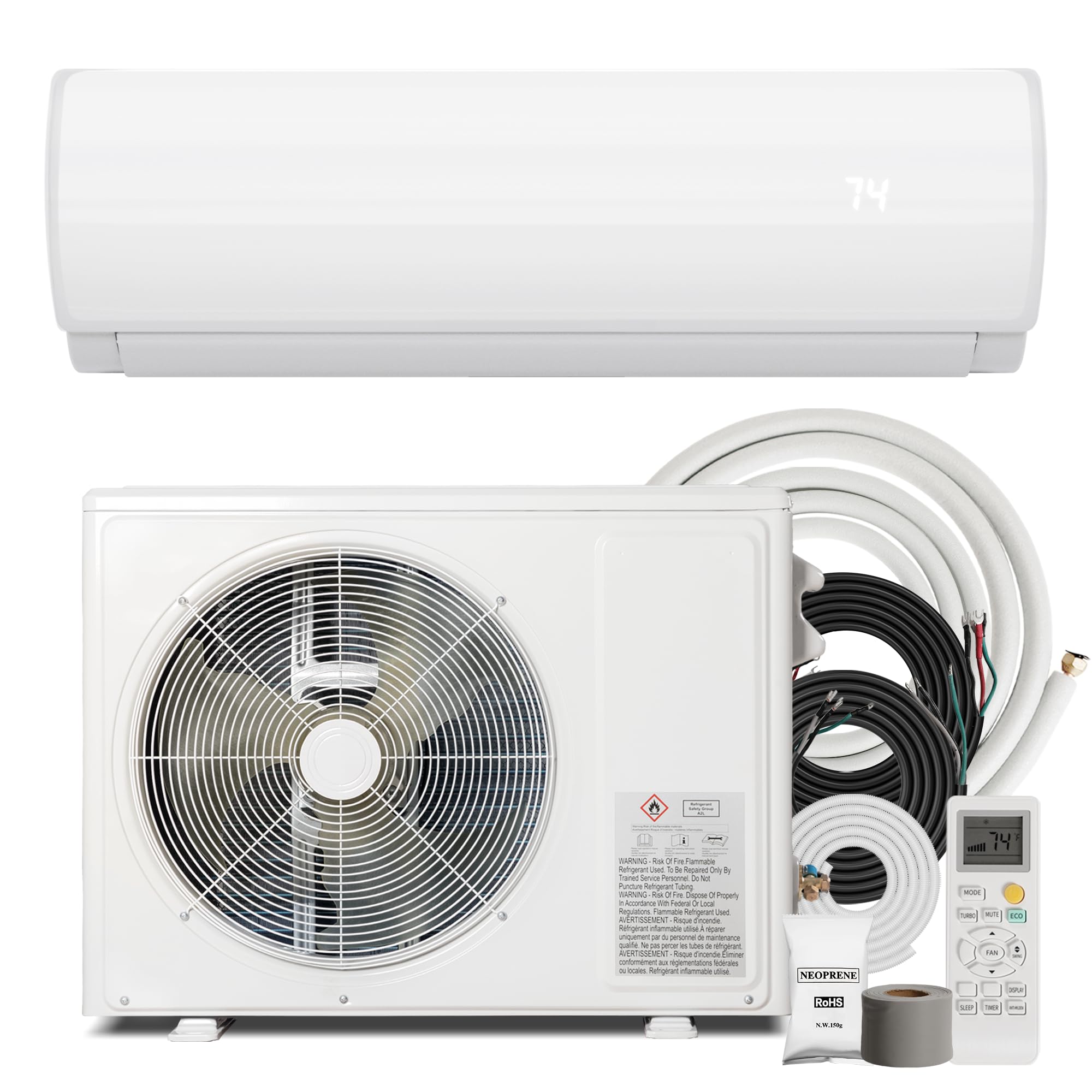
12000BTU Mini Split Air
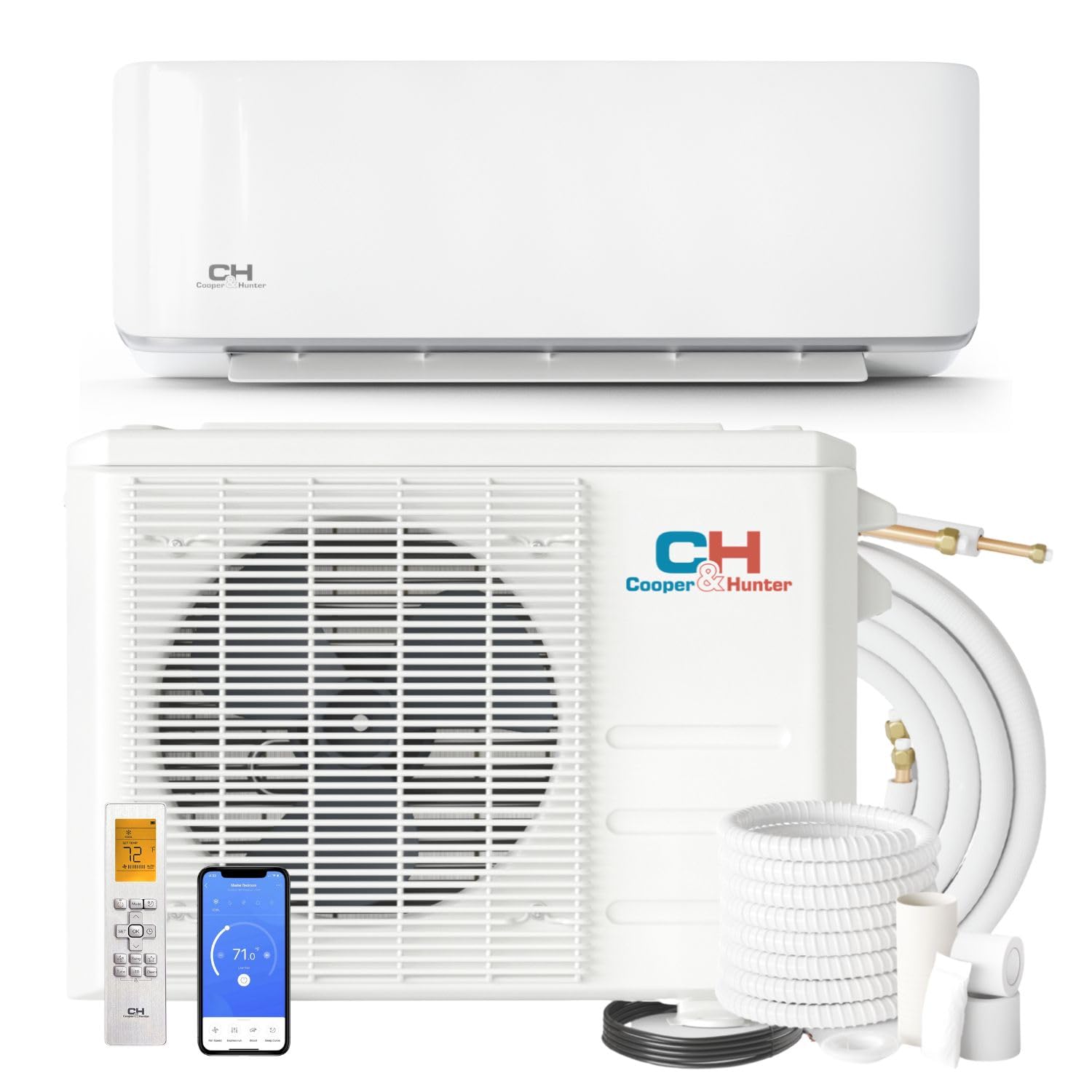
Cooper & Hunter 24
Choosing the right mini-split air conditioner can feel like a significant decision, especially when you’re looking to create a comfortable environment year-round. We all want that perfect balance of cool air in the summer and cozy warmth in the winter, without breaking the bank on energy bills. Today, we’re diving into two popular options on Amazon: the 12000BTU Mini Split Air Conditioner Heat Pump and the Cooper & Hunter 24,000 BTU 18.9 SEER Mini Split AC/Heating system.
Both of these units promise efficient climate control, but they cater to different needs and room sizes. One might be perfect for a smaller bedroom or home office, while the other is built to tackle larger, more demanding spaces. Understanding their differences in power, features, and efficiency is key to making an informed purchase. We’ll break down what each unit brings to the table, compare them side-by-side, and help you figure out which one is the champion for your specific home comfort needs.
In-Depth Look: 12000BTU Mini Split Air
The 12000BTU Mini Split Air conditioner is positioned as a versatile, year-round climate control solution. Its core strength lies in its inverter technology, which is a big deal for energy efficiency. This means it doesn’t just blast cold or hot air at full power and then shut off; instead, it intelligently adjusts its output to maintain your desired temperature, saving you money on electricity bills. It’s designed to be a workhorse, capable of cooling or heating spaces up to 750 square feet. This makes it a fantastic option for a primary bedroom, a medium-sized living room, a detached garage you’re converting into a workspace, or even a smaller apartment.
One of the standout features is its inclusion of a heat pump. This isn’t just an air conditioner; it’s a full-fledged HVAC system for smaller areas. It means you can rely on it for warmth during those chilly transitional months and even into milder winters, in addition to its cooling capabilities. The use of R32 refrigerant is also a plus, as it’s known for being more environmentally friendly with a lower global warming potential compared to older refrigerants. This aligns with a growing awareness of our environmental impact.
The 12000BTU Mini Split Air doesn’t skimp on user-friendly features. It offers five distinct modes: Cooling, Heating, Auto, Fan, and Dry. This flexibility allows you to tailor the environment precisely to your needs. Whether you just need air circulation on a mild day (Fan mode) or want to dehumidify a stuffy room (Dry mode), it’s got you covered. Add to that four fan speeds, a 24-hour timer for scheduling, a Sleep Mode that adjusts temperature subtly through the night, and an Eco Mode to maximize energy savings, and you’ve got a highly customizable experience.
Furthermore, the emphasis on whisper-quiet operation is a significant selling point, especially for bedrooms or home offices where noise can be a major distraction. This unit aims to create a peaceful sanctuary, allowing you to work, sleep, or relax without the constant hum of machinery. The built-in mildew protection and self-defrosting features are smart additions that contribute to the longevity and consistent performance of the unit, preventing common issues like ice buildup and ensuring it runs smoothly even when the weather gets tough.
Pros of the 12000BTU Mini Split Air:
- Energy Efficiency: Inverter technology and Eco Mode contribute to lower energy consumption.
- Year-Round Comfort: Functions as both a powerful air conditioner and a capable heater thanks to its heat pump.
- Versatile Operation: Multiple modes (Cooling, Heating, Auto, Fan, Dry) and fan speeds offer great customization.
- Quiet Performance: Designed for minimal noise, making it ideal for quiet spaces.
- Environmentally Conscious: Uses R32 refrigerant with a lower global warming potential.
- Maintenance Features: Built-in mildew protection and self-defrosting enhance durability and performance.
- DIY Installation Potential: One reviewer mentioned successful DIY installation with a vacuum pump, potentially saving on professional costs.
Cons of the 12000BTU Mini Split Air:
- Coverage Limit: While up to 750 sq. ft. is good, it might be insufficient for very large open-plan areas.
- Potential Shipping Issues: One customer reported receiving only part of the order, highlighting a possible shipping or packaging inconsistency.
- Professional Help for Refills: While R32 refills are available, you’ll likely need a local dealer, which might add an extra step compared to DIY.
Customer Reviews Highlight for 12000BTU Mini Split Air:
One reviewer shared, “I bought this unit to replace a 24,000 BTU unit that had given us years of good service but was icing under use and dripping water on our floor. I decided to replace it rather than chase the R22 pressures and whatever other issues were going on. I bought this 18,000 BTU unit hoping it would be enough to replace the more powerful previous unit. It came quickly and was well packaged. Everything on this unit was well packaged, the directions were clear, and all wiring marked and terminated.” This testimonial indicates a positive initial unboxing and setup experience, with a focus on replacing an older, problematic unit with this newer model.
Another customer noted, “We are diy’ers but not pros and this unit was very easy to install. We bought a vacuum pump for $100 to save the cost of having a pro come and pressure test it. Our temps reached -4 last night and it stayed warm. Came with a couple of dents but the sellers gave us some money off and an extra remote control in case we lost ours as it is the only way to control the unit. Highly recommend.” This review is particularly valuable as it highlights the potential for DIY installation and the unit’s effectiveness in cold weather, even mentioning a positive resolution to minor shipping damage. However, it also points to the necessity of specialized tools like a vacuum pump for a proper DIY setup.
A less positive experience was shared by a customer who stated, “Didn’t get the outside unit or instalation kit. Only received the inside unit. Box read 1 of 2 packages. Never received the 2nd package outside unit or instalation kit.” This is a significant issue, indicating a potential breakdown in packaging or shipping logistics that needs to be addressed by the seller. It underscores the importance of verifying all components upon arrival.
Best for:
The 12000BTU Mini Split Air is an excellent choice for individuals or families looking to efficiently heat and cool single rooms or smaller defined areas (up to about 750 sq. ft.). It’s ideal for bedrooms, home offices, smaller living rooms, apartments, or even as a supplemental unit in a larger home. Those who appreciate energy savings, quiet operation, and the flexibility of year-round heating and cooling in a single unit will find this a compelling option. It’s also a good consideration for DIY enthusiasts who are comfortable with the necessary tools and steps involved in a mini-split installation.
In-Depth Look: Cooper & Hunter 24
Stepping up in power, the Cooper & Hunter 24,000 BTU unit, from their Sophia Series, is clearly designed for more demanding applications. With a robust 24,000 BTU capacity, this unit is built to handle large rooms, open-plan layouts, bonus spaces, garages, home additions, commercial retail spaces, and even server rooms. If you’ve got a space that standard window units or smaller mini-splits struggle to manage, the Cooper & Hunter 24 is engineered to deliver powerful, consistent comfort.
A key differentiator here is its superior heating capability. This model is designed to provide reliable heating even in very cold ambient conditions, capable of functioning down to -13°F. This makes it a true four-season solution for regions that experience significant temperature swings. For those who need to keep a larger space comfortable year-round, this level of cold-weather performance is a critical advantage. The higher SEER rating of 18.9 also speaks to its efficiency in cooling.
The inclusion of a “Smart Kit” is a modern convenience that many users will appreciate. This allows you to control your system remotely via your smartphone and a dedicated app. Imagine being able to turn on the AC before you get home on a hot day, or adjust the heating from your couch without getting up. This connectivity adds a layer of convenience and smart home integration that the other unit doesn’t explicitly mention.
Cooper & Hunter emphasizes quality and durability with this unit, touting quiet operation alongside its performance. The fact that it comes with a pre-charged outdoor condenser and a comprehensive 16FT installation kit (including insulated copper lines, communication cable, and drainage extension) is a significant benefit, streamlining the installation process for professionals. However, it’s important to note that Cooper & Hunter explicitly states this is not a DIY system and requires professional installation. This is a crucial distinction from the other unit and implies a more complex setup that necessitates expert knowledge.
The company also offers free U.S.-based technical support, which is a valuable resource should any issues arise. Because of its size and weight, this unit ships via freight, requiring coordination for delivery to the nearest accessible point outside your home. This means planning ahead for delivery is essential.
Pros of the Cooper & Hunter 24:
- High Capacity: 24,000 BTU is ideal for large or challenging spaces.
- Exceptional Cold Weather Heating: Reliable heating performance down to -13°F.
- Smart Connectivity: Integrated Smart Kit allows for remote smartphone control.
- Comprehensive Installation Kit: Includes all necessary components for professional installation.
- UL Listed & AHRI Certified: Indicates adherence to safety and performance standards.
- Strong Technical Support: Free U.S.-based support adds peace of mind.
Cons of the Cooper & Hunter 24:
- Professional Installation Required: Not suitable for DIY enthusiasts, adding to the overall cost.
- Freight Shipping: Delivery requires more coordination and may take longer.
- Potential for Loudness: One review mentioned a loud interior unit with a buzzing/humming fan motor, suggesting potential quality control issues in some units.
- Refrigerant Type Not Explicitly Stated: While pre-charged, the specific type of refrigerant (likely R410A) isn’t detailed, unlike the R32 in the other unit.
Customer Reviews Highlight for Cooper & Hunter 24:
A satisfied customer wrote, “We replaced an old wall mount unit with this one. It looks great and works well. We like it. And, the price is very good.” This review highlights aesthetics, performance, and value for money, suggesting a positive overall experience.
Another user shared their installation experience: “I bought this unit to cool a small warehouse for a home-based business. It replaced a wood stove and large Window AC unit. I did the entire install myself in a few hours. The only item that I outsourced was running the 220 line and wiring in the disconnect switch. Once the power was run the unit was super easy to install. The only special tools needed were a 45* flaring tool and a vacuum pump. The lineset cut and flared really easily with the cutter included with the flaring tool. I deburred the.” This reviewer, like the one for the 12000BTU unit, implies a degree of DIY friendliness for those comfortable with electrical work, and mentions specific tools needed. It’s worth noting the explicit mention of needing a 220V line, which is standard for this BTU range, and professional help for that specific part.
However, a less favorable review stated, “Don’t waste your money or your time with this product. Arrived on time, packaged well. But after install interior wall unit is loud with fan motor making buzzing/humming sound. Now to trouble shoot and wait on parts to fix a ‘new’ unit. Would look at other brands unless you enjoy fixing things you have just purchased.” This is a critical piece of feedback, pointing to a potential issue with noise and quality control for the interior unit, requiring troubleshooting and replacement parts. This contrasts sharply with the “whisper-quiet” claims and highlights a potential risk.
Best for:
The Cooper & Hunter 24 is the go-to choice for those who need serious cooling and heating power for larger areas. This includes owners of spacious open-plan homes, garages converted into living spaces, workshops, commercial storefronts, or any situation where a standard 12,000 BTU unit would be undersized. It’s also an excellent option for colder climates where reliable, robust heating performance in freezing temperatures is essential. If you’re looking for smart connectivity and are prepared for professional installation, this unit offers a high-capacity solution.
Head-to-Head Comparison
When deciding between these two powerful climate control systems, it’s helpful to see how they stack up against each other in key areas.
Cooling and Heating Capacity
This is perhaps the most significant difference. The 12000BTU Mini Split Air is rated for 12,000 BTUs, suitable for spaces up to 750 sq. ft. It provides both cooling and heating, making it a good all-rounder for medium-sized rooms. The Cooper & Hunter 24, on the other hand, boasts a massive 24,000 BTUs. This makes it ideal for much larger areas, such as open-plan living spaces, garages, or commercial areas that the 12000BTU unit simply couldn’t handle effectively. The Cooper & Hunter 24 also offers superior cold-weather heating, capable of functioning down to -13°F, which is a critical advantage for those in very cold regions.
Energy Efficiency (SEER Rating)
Both units feature inverter technology, which is excellent for energy efficiency. The 12000BTU Mini Split Air has a 19 SEER2 rating, while the Cooper & Hunter 24 has an 18.9 SEER rating. The SEER2 rating is a newer standard that’s generally considered more rigorous. While the numbers are very close, the 12000BTU Mini Split Air might have a slight edge in energy efficiency based on the SEER2 rating. However, for the Cooper & Hunter 24, its sheer capacity means it’s delivering that efficiency across a much larger area. For smaller spaces, the 12000BTU unit’s efficiency will translate to lower running costs. For larger spaces, the 24,000 BTU unit is more efficient than using multiple smaller units or other less efficient methods to condition that large area.
Installation and Setup
This is a crucial point of divergence. The 12000BTU Mini Split Air is presented as more amenable to DIY installation, as suggested by customer reviews that mention successful self-installation using a vacuum pump. This can represent a significant cost saving. The Cooper & Hunter 24, however, explicitly states that professional installation is required. It comes with a comprehensive installation kit, which is great for the installer, but it means you’ll need to budget for professional services. This makes the Cooper & Hunter 24 a higher upfront investment in terms of labor. If you’re looking for a more accessible DIY project, the 12000BTU unit is the clearer choice. For those who prefer to outsource installation entirely and ensure it’s done by a pro, either unit can work, but the Cooper & Hunter 24 is geared towards that.
Smart Features and Connectivity
The Cooper & Hunter 24 stands out with its included Smart Kit, enabling smartphone control via an app. This offers modern convenience for remote operation, scheduling, and adjustments. The 12000BTU Mini Split Air also offers smart features like a 24-hour timer, Sleep Mode, and Eco Mode, which enhance usability and efficiency, but it doesn’t appear to have the same level of Wi-Fi connectivity and app integration as the Cooper & Hunter 24. For those who prioritize smart home integration and remote control, the Cooper & Hunter 24 has a distinct advantage.
Refrigerant and Environmental Impact
The 12000BTU Mini Split Air clearly states it uses R32 refrigerant. R32 is generally considered an improvement over older refrigerants like R410A because it has a lower global warming potential and is more energy-efficient. The Cooper & Hunter 24 is pre-charged, but the specific refrigerant type isn’t explicitly mentioned in its primary description. It’s highly likely to be R410A, which is still common but less environmentally friendly than R32. For eco-conscious buyers, the 12000BTU Mini Split Air has a slight edge here.
Noise Levels
Both units are described as operating quietly. The 12000BTU Mini Split Air specifically highlights “whisper-quiet operation,” which is a significant benefit for noise-sensitive environments like bedrooms. The Cooper & Hunter 24 also mentions “quiet operation.” However, one negative review for the Cooper & Hunter 24 cited a loud interior unit with a buzzing/humming sound, which could indicate a less consistent experience regarding noise compared to the 12000BTU unit, at least based on that specific feedback.
Value and Price Point (Implied)
While exact prices fluctuate on Amazon, generally, a 24,000 BTU unit will be more expensive than a 12,000 BTU unit, both in terms of the unit itself and the installation costs if professional installation is mandatory. The 12000BTU Mini Split Air, with its potential for DIY installation, offers a strong value proposition for its capacity and features in smaller spaces. The Cooper & Hunter 24 represents a higher investment but delivers significantly more power and features, making it valuable for larger or more demanding applications where its capacity is essential.
Frequently Asked Questions
Q: Which unit is better for a single, medium-sized bedroom?
A: For a single, medium-sized bedroom (up to 750 sq. ft.), the 12000BTU Mini Split Air is likely the more appropriate and cost-effective choice. Its 12,000 BTU capacity is well-suited for this size, and its whisper-quiet operation is ideal for sleeping environments. You can learn more about how to choose the right size mini-split in our guide on how to choose a mini-split AC.
Q: I have a large open-plan living area. Which unit should I consider?
A: If you have a large open-plan living area, especially one exceeding 750 sq. ft., the Cooper & Hunter 24 with its 24,000 BTU capacity is the much better option. Its higher power output is designed to tackle these larger spaces effectively. For even larger or more complex setups, you might explore multi-zone options; read our comparison on single zone vs. multi zone mini split systems.
Q: Can I install either of these units myself?
A: The 12000BTU Mini Split Air has customer reviews suggesting it can be installed by DIY enthusiasts with the right tools (like a vacuum pump). The Cooper & Hunter 24 explicitly states that professional installation is required and is not a DIY system. Always refer to the manufacturer’s instructions and consider your own skill set and local regulations before attempting any DIY installation.
Q: Which unit offers better smart home integration?
A: The Cooper & Hunter 24 comes with a Smart Kit that enables direct smartphone control via an app, offering more advanced smart home integration. The 12000BTU Mini Split Air has programmable features like timers and sleep modes but doesn’t explicitly mention Wi-Fi connectivity for app control. If app control is a priority, the Cooper & Hunter 24 is the way to go. You might also be interested in whether Nest thermostats can control mini-splits.
Q: Which unit is more environmentally friendly?
A: The 12000BTU Mini Split Air uses R32 refrigerant, which has a lower global warming potential than older refrigerants like R410A. While the Cooper & Hunter 24’s exact refrigerant isn’t specified in the listing, it’s typically R410A for units of this size. Therefore, the 12000BTU Mini Split Air has a slight advantage in terms of environmental impact due to its refrigerant choice.
Q: What if I experience installation problems or unit malfunctions?
A: Both brands offer support, but the Cooper & Hunter 24 specifically advertises free U.S.-based technical support. For the 12000BTU Mini Split Air, you might need to rely on local dealers for refrigerant refills or more complex technical issues. Customer reviews for both units indicate varying experiences, so it’s always wise to check product warranties and support policies. If you encounter common issues, our troubleshooting guides like how to troubleshoot mini split nightmares can be very helpful.
Final Verdict: Which One Should You Choose?
The decision between the 12000BTU Mini Split Air and the Cooper & Hunter 24 boils down to one primary factor: the size and specific needs of the space you want to condition.
If you’re looking to comfortably heat and cool a single room or a smaller area (up to about 750 sq. ft.) like a bedroom, home office, or small apartment, the 12000BTU Mini Split Air is an excellent and practical choice. It offers a great balance of features, year-round comfort, energy efficiency thanks to its inverter technology and R32 refrigerant, and the potential for cost savings through DIY installation. Its whisper-quiet operation makes it perfect for quiet environments.
However, if you have a larger challenge – a spacious open-plan living area, a garage conversion, a home addition, a workshop, or a commercial space – the Cooper & Hunter 24 is the undisputed champion. Its 24,000 BTU capacity is built to handle significant loads, and its robust heating performance in extreme cold weather makes it a true four-season solution for demanding climates. The added convenience of smartphone control through its Smart Kit is a significant bonus for modern living. Just remember that this power and advanced feature set comes with the requirement for professional installation.
Ultimately, both units are capable mini-split systems from reputable brands, offering efficient heating and cooling. Your choice hinges on matching the unit’s power and features to the scale and demands of your space.
Ready to make a choice?
Check out the 12000BTU Mini Split Air on Amazon:
View 12000BTU Mini Split Air on Amazon
Or explore the powerful Cooper & Hunter 24:
View Cooper & Hunter 24 on Amazon
