
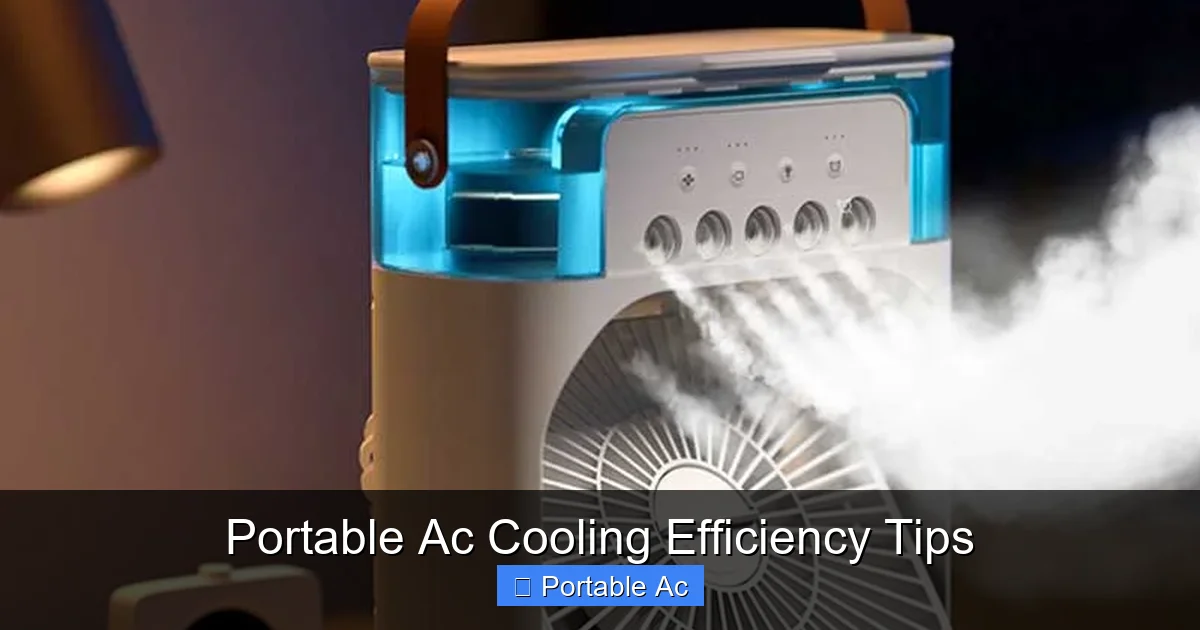
Want your portable AC to work smarter, not harder? These cooling efficiency tips help you get maximum chill with less energy and cost. From smart placement to simple maintenance, small changes make a big difference in comfort and savings.
Ever felt like your portable AC is working overtime but still can’t cool the room? You’re not alone. Many people underestimate how much their setup, habits, and even tiny details can affect portable AC cooling efficiency. The good news? With a few smart tweaks, you can boost performance, cut energy bills, and stay comfortable all summer long.
Portable air conditioners are incredibly convenient—no permanent installation needed, easy to move between rooms, and perfect for renters or small spaces. But if you’re not getting the most out of them, you’re likely wasting energy and money. Let’s dive into practical, easy-to-implement tips that will help you maximize your portable AC’s cooling power.
Key Takeaways
- Optimal Placement: Position your portable AC near the center of the room and keep it away from direct sunlight for better airflow and cooling.
- Seal Air Leaks: Use weather stripping or towels to block drafts around doors and windows—this prevents cooled air from escaping.
- Clean Filters Regularly: A clogged filter restricts airflow and reduces efficiency. Clean or replace it every 1–2 weeks during peak use.
- Use a Ducting Hose Wisely: Ensure your exhaust hose is straight, short, and sealed tightly to avoid warm air recirculation.
- Set Realistic Temperatures: Avoid setting the thermostat too low. A 78°F (26°C) setting balances comfort and efficiency.
- Leverage Smart Features: Use timers, sleep modes, and eco settings to reduce runtime and save power without sacrificing comfort.
- Upgrade Insulation: Adding thermal curtains or sealing gaps under doors improves overall cooling effectiveness.
Quick Answers to Common Questions
How can I tell if my portable AC is running efficiently?
Listen for unusually loud noises, notice inconsistent cooling, or check if the unit cycles on and off frequently. Also, monitor your energy bill—sharp spikes may indicate inefficiency.
Does room size affect portable AC performance?
Yes. A portable AC rated for 500 square feet won’t cool a 900-square-foot space effectively. Always match the unit’s BTU rating to your room size for optimal efficiency.
Can I leave my portable AC running all night?
Yes, but use sleep mode and a timer to reduce noise and energy use. Just ensure the room is sealed and filters are clean for best results.
Is it better to run the AC continuously or cycle it?
Continuous operation uses more energy, but cycling allows the room to stabilize. Use a timer to run it during peak heat and turn it off when you’re asleep or away.
What’s the biggest mistake people make with portable ACs?
Leaving the exhaust hose unplugged or placing the unit in a drafty area. Both lead to warm air recirculation and reduced cooling efficiency.
📑 Table of Contents
- Why Portable AC Efficiency Matters
- Smart Placement for Maximum Cooling
- Seal the Room Like a Pro
- Maintain Your Portable AC Like a Pro
- Optimize Thermostat Settings
- Upgrade Your Setup for Better Performance
- Energy-Saving Habits That Help
- When to Upgrade Your Portable AC
- Final Thoughts: Comfort Meets Efficiency
Why Portable AC Efficiency Matters
Efficiency isn’t just about saving money—it’s also about reducing environmental impact. A more efficient portable AC uses less electricity, which means lower carbon emissions and fewer spikes on your utility bill. Plus, when your unit runs smoothly, it lasts longer and requires less maintenance.
Think of your portable AC like a car: if you drive with a blocked air filter or ignore tire pressure, fuel efficiency drops. The same goes for your AC. Small inefficiencies add up over time, turning what should be a cool retreat into a warm struggle.
Smart Placement for Maximum Cooling
Visual guide about Portable Ac Cooling Efficiency Tips
Image source: enjoycool.com
Where you put your portable AC plays a huge role in its cooling efficiency. Most units work best when placed in the center of a room, allowing cold air to spread evenly. Placing it near a wall or corner can create hot spots and force the unit to work harder.
Avoid Direct Sunlight
If possible, position your portable AC away from windows that face the sun. Heat from direct sunlight warms the air inside the room, making your AC fight an uphill battle. If you must place it near a window, close the blinds or curtains to block solar gain.
Keep Vents Clear
Ensure nothing blocks the air intake and exhaust vents. Furniture, drapes, or even piles of clothes can restrict airflow. Give your unit at least 12 inches of clearance on all sides for optimal performance.
Elevate for Better Airflow
Placing your portable AC on a small stand or shelf can improve airflow underneath. This helps draw in cooler floor-level air instead of warm air rising from the floor—especially useful in drafty basements or carpeted rooms.
Seal the Room Like a Pro
Visual guide about Portable Ac Cooling Efficiency Tips
Image source: m.media-amazon.com
Your portable AC can only do so much if cooled air keeps escaping. Sealing leaks around windows, doors, and other openings is one of the easiest ways to boost cooling efficiency.
Weatherstripping and Caulking
Apply weatherstripping around window frames and door edges. For larger gaps, use foam tape or expandable spray foam. Even small cracks let warm outdoor air in and cool indoor air out.
Towel Barriers
For temporary fixes, roll up thick towels and tuck them under doors. This creates a seal without damaging your floors or furniture. It’s especially helpful in rental homes where permanent fixes aren’t allowed.
Close Unused Rooms
If you’re only cooling one room, close the doors to adjacent spaces. This prevents cooled air from flowing into hallways or unused bedrooms, where it would go to waste.
Maintain Your Portable AC Like a Pro
Visual guide about Portable Ac Cooling Efficiency Tips
Image source: thepinnaclelist.com
A dirty or poorly maintained portable AC simply can’t perform at its best. Over time, dust builds up in filters, coils, and fans, reducing airflow and cooling capacity.
Clean the Filter Weekly
Most portable ACs have reusable filters that should be cleaned every 1–2 weeks during heavy use. Remove the filter, rinse it under lukewarm water, let it dry completely, and reinstall. A clean filter ensures smooth airflow and better heat exchange.
Vacuum the Coils and Fans
Dust accumulation on evaporator and condenser coils hampers heat transfer. Use a soft brush attachment on your vacuum to gently clean around the coils and fan blades. Do this once a month to keep efficiency high.
Check the Exhaust Hose
The hose that vents hot air outside must be intact and properly connected. Cracks or loose connections allow warm air to re-enter the room, reducing cooling efficiency. Make sure the hose is as short and straight as possible—bends increase resistance and reduce airflow.
Optimize Thermostat Settings
Many people crank their portable AC to the lowest setting thinking it will cool faster. But this actually slows down the process and increases energy use.
Aim for 78°F (26°C)
Setting your thermostat between 75°F and 78°F offers the best balance of comfort and efficiency. Lower temperatures don’t cool significantly faster—they just mean more compressor runtime.
Use the Timer Feature
Program your AC to turn off during the hottest parts of the day (like midday) and restart before you return home. This reduces load and saves energy.
Combine with Fans
Use ceiling or oscillating fans to circulate cooled air. This makes the room feel several degrees cooler without lowering the thermostat further—a technique called “wind chill.”
Upgrade Your Setup for Better Performance
Sometimes, the issue isn’t the AC itself—it’s the environment it’s in. Simple upgrades can dramatically improve cooling efficiency.
Install Thermal Curtains
Heavy, insulated curtains reflect heat away from windows. Open them during the day and close them at night to trap cool air inside.
Add Reflective Window Film
Specialized window films block up to 80% of solar heat. They’re affordable and easy to apply, making them ideal for renters.
Insulate Hot Surfaces
Wrap pipes, walls, or attic areas with reflective insulation to prevent heat transfer into living spaces.
Energy-Saving Habits That Help
Even the most efficient portable AC can’t compensate for poor habits. Small lifestyle changes support better cooling and lower costs.
Limit Appliance Use
Running dishwashers, ovens, or dryers during the day generates extra heat. Try to schedule these tasks for early morning or evening.
Ventilate Strategically
Open windows at night when it’s cooler to let fresh air in. Close them during the day to keep heat out.
Avoid Overloading Outlets
Plug your portable AC into a dedicated outlet. Overloaded circuits can cause voltage drops, reducing performance and increasing fire risk.
When to Upgrade Your Portable AC
If you’ve tried every tip and your portable AC still struggles, it might be time to consider an upgrade. Older models are less energy-efficient and lack modern features like dual-hose systems or programmable controls.
For example, best portable AC for quick cooling often includes advanced compressors and smart thermostats that respond faster to temperature changes. Similarly, models designed for single-room cooling are optimized for focused, efficient operation.
If you’re in a tropical climate or dealing with extreme heat, investing in a higher-capacity model from a trusted brand like Frigidaire or LG can make a noticeable difference in comfort and efficiency.
Final Thoughts: Comfort Meets Efficiency
Boosting your portable AC’s cooling efficiency doesn’t require expensive upgrades or major renovations. By focusing on placement, sealing, maintenance, and smart usage, you can enjoy consistent cool air while saving money and extending your unit’s life.
Remember, the goal isn’t just to blast cold air—it’s to create a comfortable, energy-smart environment. Combine these tips with regular checkups and thoughtful habits, and you’ll stay cool, calm, and collected—even on the hottest days.
—
Frequently Asked Questions
How often should I clean my portable AC filter?
Clean the filter every 1–2 weeks during heavy use. A clogged filter reduces airflow and forces the compressor to work harder, lowering efficiency.
Can I use my portable AC in a basement?
Yes, but basements are often cooler and more humid. Ensure proper ventilation and consider a dehumidifier mode if available to improve comfort and efficiency.
Should I open windows when using a portable AC?
No. Opening windows lets hot air in and cooled air out, drastically reducing efficiency. Seal the room tightly unless you’re using cross-ventilation with fans.
What temperature should I set my portable AC?
Set it between 75°F and 78°F (24°C–26°C) for optimal comfort and efficiency. Lower settings don’t cool faster and increase energy consumption.
Do portable ACs need to be vented outside?
Yes. All portable ACs require an exhaust hose vented through a window or wall to expel hot air. Without proper venting, they lose cooling power quickly.
Can insulation improve portable AC performance?
Absolutely. Adding weatherstripping, thermal curtains, or sealing gaps under doors traps cooled air inside, helping your AC maintain temperature more efficiently.
