
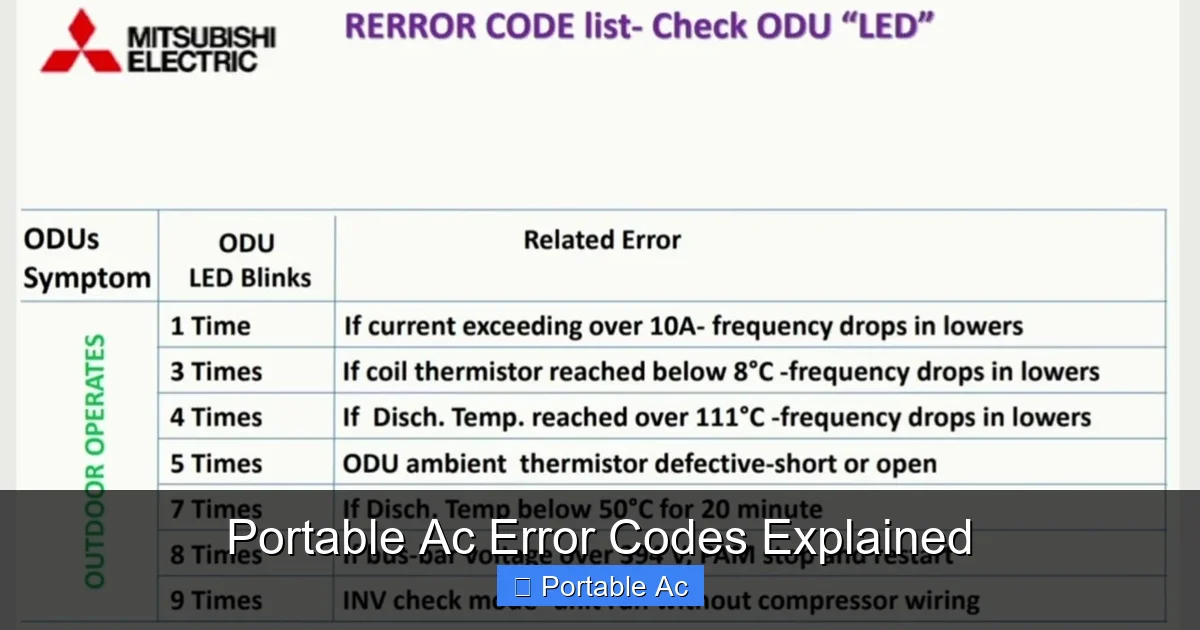
Portable AC error codes can be confusing, but understanding them helps you solve problems quickly and avoid costly repairs. This guide breaks down the most common portable AC error codes explained, so you know exactly what’s wrong and how to fix it—no technician needed.
Living in a hot climate means relying on your portable AC to keep cool. But when that trust is broken by blinking lights or error messages, it’s easy to feel frustrated. You press buttons, unplug it, maybe even Google “what does E3 mean?”—only to get overwhelmed by technical jargon. That’s where this guide comes in.
We’re breaking down portable AC error codes explained in plain English. Whether you own a Frigidaire, LG, Honeywell, or another brand, understanding these codes empowers you to troubleshoot effectively. No more guessing games—just clear, actionable steps to get your unit running smoothly again.
—
Key Takeaways
- Error codes indicate specific malfunctions: Each code points to a particular issue like refrigerant leaks, sensor failures, or electrical faults.
- Refer to your user manual first: The best source for accurate code definitions is always the manufacturer’s documentation.
- Some codes are safety-related: Codes like “E1” or “F1” often signal serious problems that require immediate attention.
- Temporary resets may not fix permanent faults: Power cycling works for minor glitches, but persistent errors need real repairs.
- Cleaning and maintenance prevent many errors: Regular filter cleaning and hose inspection reduce error frequency significantly.
- Know when to call a pro: If basic steps don’t resolve the issue, professional help prevents further damage.
Quick Answers to Common Questions
What does E1 mean on my portable AC?
E1 usually indicates a faulty indoor temperature sensor. Clean the sensor gently with compressed air and restart the unit. If the error continues, consult your manual or contact support.
Can I fix all error codes myself?
Many minor issues like E4 (drainage) or P0 (overload) can be resolved with basic steps such as cleaning filters or using a dedicated outlet. Always prioritize safety and avoid tampering with refrigerant lines.
Why does my AC show Err 5?
“Err 5” often refers to a compressor overload or thermal protection trigger. Wait 15–30 minutes before restarting, and ensure proper ventilation. Persistent alerts warrant professional diagnosis.
Do all portable ACs use the same error codes?
No—brands like Frigidaire, LG, and Honeywell share similarities, but codes vary. Always verify with your specific model’s manual for accurate interpretation.
Is it safe to ignore a blinking error code?
Not recommended. Some codes (e.g., E3 for refrigerant issues) pose environmental or safety risks if ignored. Address warnings promptly to prevent worsening damage.
📑 Table of Contents
What Are Portable AC Error Codes?
Portable air conditioners use error codes as diagnostic tools. When something goes wrong—like a dirty filter, low refrigerant, or a faulty sensor—the control board detects the problem and displays a code. These codes appear as letters (E1, F2) or numbers (Err 5), usually blinking on the digital display or flashing via LED indicators.
Think of error codes like warning lights on your car dashboard. They don’t tell you everything, but they point you in the right direction. Some codes are minor annoyances; others signal urgent repairs. Knowing which is which saves time, money, and stress.
Most manufacturers design their systems so these codes map directly to common household AC issues. However, interpretations can vary slightly between brands. That’s why checking your owner’s manual is always step one.
—
Common Portable AC Error Codes Explained
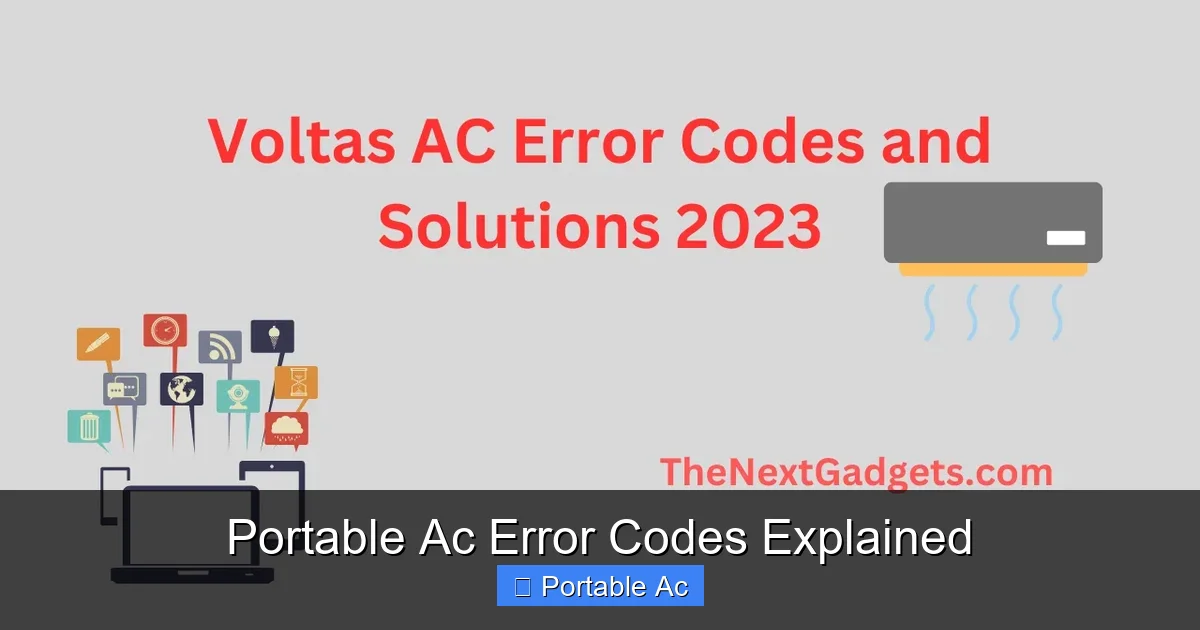
Visual guide about Portable Ac Error Codes Explained
Image source: thenextgadgets.com
Let’s dive into the most frequently encountered error codes across popular portable AC models. While exact labeling differs slightly by brand, many share similar meanings.
E1: Sensor Malfunction
The E1 code typically indicates an indoor temperature sensor failure. This internal sensor measures room temperature to regulate cooling output. If it sends incorrect data or fails entirely, the AC won’t operate properly.
**Why it happens:** Dust buildup on the sensor, loose wiring, or aging electronics.
**Fix:** Power off the unit, locate the sensor (usually behind the front panel), gently clean it with compressed air, then restart. If the code persists, replacement may be needed.
E2: Outdoor Temperature Sensor Fault
Similar to E1, but this relates to the external sensor that monitors ambient conditions outside the unit. It helps balance efficiency based on outdoor heat.
**Causes:** Moisture exposure, corrosion, or physical damage.
**Solution:** Check for visible damage near the exhaust vent. Dry any moisture, ensure connections are secure, and test again.
E3: Refrigerant Pressure Issue
E3 often signals low refrigerant levels or pressure irregularities. This is more serious than a clogged filter—it involves the core cooling mechanism.
**Warning signs:** Weak airflow, warm air blowing out, or frequent cycling.
**Important:** Only certified technicians should handle refrigerant refills due to EPA regulations and safety risks.
F1: Fan Motor Failure
When the fan motor overheats or stalls, the system triggers an F1 error. The fan circulates cold air and expels hot air through the exhaust hose.
**Common causes:** Blocked vents, seized bearings, or electrical shorts.
**Quick fix:** Turn off the unit, inspect the fan blades for obstruction, and ensure the exhaust hose isn’t kinked.
E4: Drainage Problem
Portable ACs collect condensation during operation. If drainage is blocked, water backs up and triggers an E4 alert.
**Symptoms:** Water pooling inside, unusual dripping sounds, or shutdowns.
**Prevention:** Empty the condensate bucket regularly and check the drain tube for clogs.
P0: Electrical Overload
P0 appears when power demand exceeds safe limits—often due to voltage drops or simultaneous high-load appliances.
**What to do:** Plug the AC directly into a dedicated circuit, avoid daisy-chaining extension cords, and consider a surge protector.
—
How to Read Your Specific Error Code
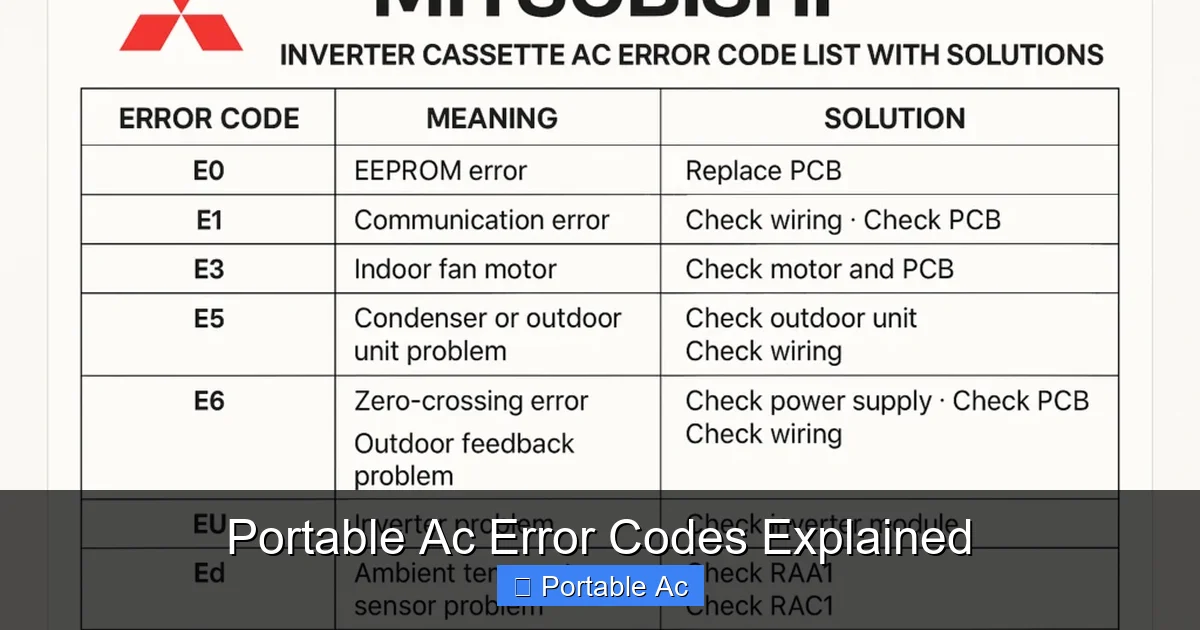
Visual guide about Portable Ac Error Codes Explained
Image source: uniqrepair.com
Before panicking, confirm the exact code your unit shows. Some displays cycle through multiple digits slowly; others flash rapidly. Count the blinks carefully.
For example:
– A single blink followed by a pause = code “1”
– Two blinks = code “2”
– Three blinks = code “3”
If your model uses alphanumeric displays (like “E1-F2”), write it down immediately. Digital units often have a memory function—if the error disappears after resetting, note whether it returns within minutes.
Always cross-reference with your manual. Brands like Whynter, De’Longhi, and Black+Decker use nearly identical coding schemes, but exceptions exist. Never assume all “E3” errors are identical unless verified.
—
Troubleshooting Steps Before Calling a Technician
Visual guide about Portable Ac Error Codes Explained
Image source: machineanswered.com
Many error codes vanish after simple fixes. Try these steps in order:
1. **Power Cycle**: Unplug for 2–3 minutes. This resets the control board and clears temporary glitches.
2. **Inspect Filters**: Dirty filters restrict airflow and strain components. Clean reusable ones monthly; replace disposable ones every 1–2 months.
3. **Check Exhaust Hose**: Ensure it’s fully extended (minimum 4 feet) and unobstructed. Kinks block hot air expulsion.
4. **Clear Condensate Drain**: Remove the bucket and flush the tube with vinegar and water weekly to prevent mold and clogs.
5. **Verify Window Setup**: For models requiring window kits, double-check seal integrity. Gaps let warm air back in and confuse sensors.
If none of these work, move to advanced checks:
– Test continuity of fuses (with power off)
– Inspect capacitor terminals for corrosion
– Confirm voltage at the outlet matches specs (usually 110–120V)
Remember: Safety first! Disconnect power before touching internal parts.
—
When to Replace vs. Repair Your Portable AC
Sometimes, persistent errors signal deeper wear. Consider these factors:
– **Age**: Units older than 7 years often have degraded capacitors and refrigerants.
– **Repair Cost**: If fixing an error costs over 50% of a new unit’s price, replacement makes sense.
– **Frequency**: Errors recurring within weeks suggest systemic issues.
For budget-conscious buyers, exploring top-rated models like those in our Best Portable AC Under $400 Dollars guide ensures long-term reliability without overspending.
On the flip side, if your current AC runs well otherwise, targeted repairs (like replacing a sensor or motor) are cost-effective.
—
Preventing Future Error Codes
Maintenance is cheaper than repairs. Follow this routine:
– **Monthly**: Clean filters, wipe exterior vents, empty water bucket
– **Quarterly**: Deep-clean coils with a soft brush and vacuum
– **Annually**: Schedule professional inspection (especially before summer peaks)
Invest in a quality portable AC cleaning kit. Simple tools like coil brushes and microfiber cloths keep your system efficient and error-free.
Also, position your unit on level ground away from direct sunlight. Elevated platforms with ventilation reduce strain on motors and sensors.
—
Final Thoughts: Empower Yourself with Knowledge
Understanding portable AC error codes explained transforms panic into progress. Instead of calling a service tech at $150/hour, you diagnose issues confidently and apply targeted fixes.
Yes, some errors demand professional help—but now you’ll recognize them early. And with regular care, your portable AC will deliver reliable cooling for years.
Stay cool, stay informed!
—
Frequently Asked Questions
How do I reset my portable AC after an error?
Unplug the unit for 2–3 minutes, then plug it back in. Most models automatically reboot and clear temporary faults. If the error returns, perform targeted troubleshooting.
What causes the E4 error code?
E4 typically indicates a blocked condensate drain or full water bucket. Empty the bucket, flush the drain tube with vinegar-water solution, and check for mineral deposits.
Can low refrigerant cause an error code?
Yes. Low refrigerant levels trigger codes like E3 or P0 due to pressure imbalances. This requires licensed technician intervention—never attempt DIY refills.
Should I buy a new portable AC if it shows errors?
It depends. If the unit is under 5 years old and errors stem from simple fixes (filters, hoses), repair is wise. Older units with recurring issues may be better replaced.
Are error codes covered under warranty?
Most manufacturers cover defect-related errors if reported within the warranty period. Keep proof of purchase and document troubleshooting attempts for faster claims.
Why does my AC keep showing E1 even after cleaning?
This suggests a hardware fault—possibly a damaged sensor or loose connection. Contact customer support or a certified technician for diagnosis and part replacement.
