
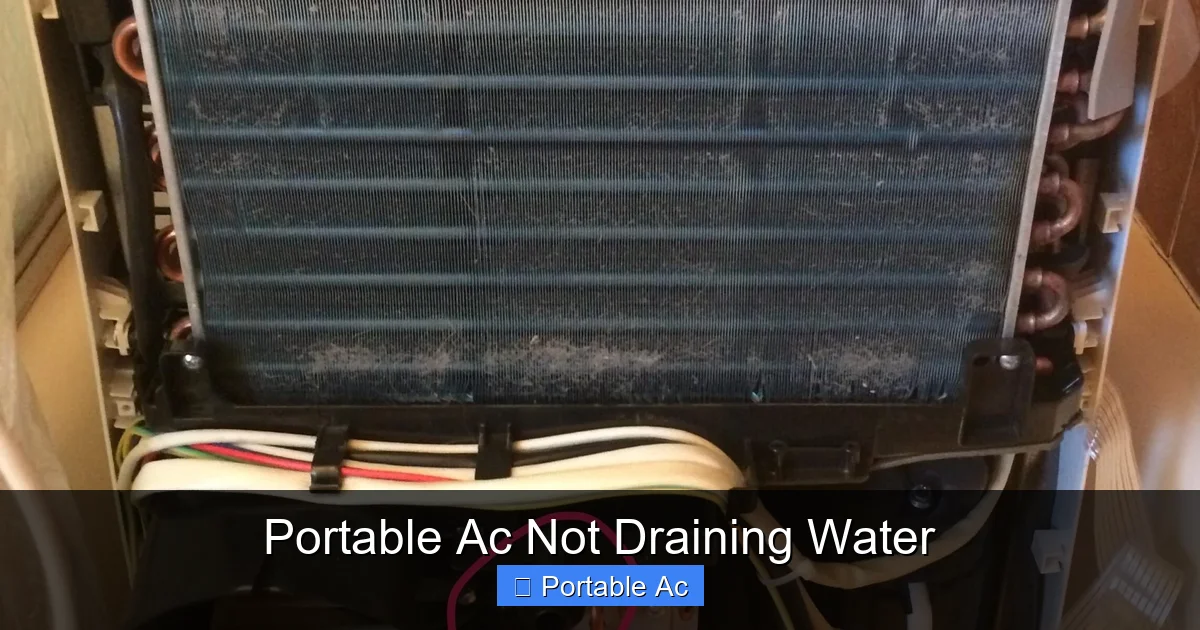
Your portable AC isn’t draining water—but that doesn’t mean it’s broken. Most of the time, this issue is caused by a simple blockage or misaligned hose. With a few easy checks and maintenance steps, you can get your unit running smoothly again. We’ll walk you through common causes like clogged drain tubes, improper setup, and dirty filters so you can fix it yourself—no technician needed.
Have you ever turned on your portable AC, only to find a puddle forming around the base—or worse, water leaking inside the unit? You’re not alone. One of the most common complaints among portable AC owners is: **”My portable AC is not draining water.”** It sounds like a minor inconvenience, but if left unchecked, it can lead to water damage, mold growth, or even electrical hazards.
Portable air conditioners work by pulling warm air through coils, where it cools and condenses moisture into water. That water needs to be safely drained outside—usually via a built-in drain tube. But sometimes, that tube gets blocked, the hose twists, or the unit sits at the wrong angle. When that happens, water backs up instead of draining. The good news? In most cases, this issue has a simple fix.
In this guide, we’ll explore exactly why your portable AC might not be draining water, how to diagnose the problem quickly, and step-by-step solutions to get things running smoothly again. Whether you’re dealing with a clogged drain line, a kinked hose, or a faulty component, we’ve got you covered.
Key Takeaways
- Clogged drain tube: The most common reason a portable AC fails to drain water is a blocked condensate drain line. Debris or mold buildup can prevent water from flowing out.
- Improper hose setup: If the exhaust hose isn’t positioned correctly or the drain hose kinks, water won’t flow properly and may back up inside the unit.
- Dirty air filter: A clogged filter restricts airflow, reducing condensation and causing the system to overheat or stop draining efficiently.
- Incorrect tilt angle: Portable ACs need a slight downward slope (about 1–2 inches) in the drain tube to allow gravity-assisted drainage. Without it, water pools and stops flowing.
- Faulty float switch: Inside the unit, a small sensor called the float switch detects water levels. If it’s stuck or damaged, it may shut off the compressor even when there’s no real overflow.
- Low refrigerant or cooling issues: If the AC isn’t cooling well, it produces less condensation, which reduces or stops drainage altogether.
- Unit placed on uneven surface: Running the AC on an incline or uneven floor can disrupt the natural water flow path and cause drainage failure.
Quick Answers to Common Questions
Why is my portable AC leaking water inside?
Water leaking inside usually means the drain tube is blocked, kinked, or disconnected. Check the tube for clogs and ensure it’s properly routed. Also, verify the unit is tilted correctly for gravity drainage.
Can I run my portable AC without draining it?
Some newer models have auto-evaporation systems that recycle condensation, allowing continuous use without draining. Older units typically require periodic emptying unless using a continuous drain setup.
How often should I clean my portable AC’s drain tube?
At least once per month during peak usage seasons. More frequently in humid areas or if you notice reduced drainage or musty smells.
Is it safe to leave water in the portable AC’s bucket?
Only temporarily. Most buckets are designed for short-term storage, not long-term standing water, which can encourage mold and odors. Empty it regularly.
Why does my portable AC turn off when it rains?
If the outdoor exhaust hose isn’t sealed properly during rain, water can enter and flood the unit. Ensure the hose outlet has a rain shield or cap to prevent backflow.
📑 Table of Contents
Why Does My Portable AC Not Drain Water?
Before jumping into fixes, let’s understand how portable ACs handle condensation. Unlike window units, portable models don’t vent heat directly outside—they use an exhaust hose to remove hot air. Meanwhile, they collect the cooled, condensed water in a drip pan. From there, the water should flow out through a drain tube, either into a bucket or directly outside via a gravity-fed system.
But when something goes wrong—like a clog, a twist, or a mechanical fault—the water can’t escape. Instead, it pools inside the unit or leaks out. This is usually a sign of one of these issues:
– A clogged or blocked drain tube: Over time, mineral deposits, mold, or dust can build up inside the tube.
– A kinked or improperly connected hose: If the drain hose is bent or disconnected, water can’t flow.
– An incorrect setup: Many portable ACs require a specific tilt or positioning for proper drainage.
– A malfunctioning internal component: Parts like the float switch or pump may fail, stopping drainage even when the tube is clear.
Let’s dive deeper into each cause and how to fix it.
Common Causes of Drainage Issues in Portable AC Units
Visual guide about Portable Ac Not Draining Water
Image source: devicesmag.com
1. Clogged Condensate Drain Tube
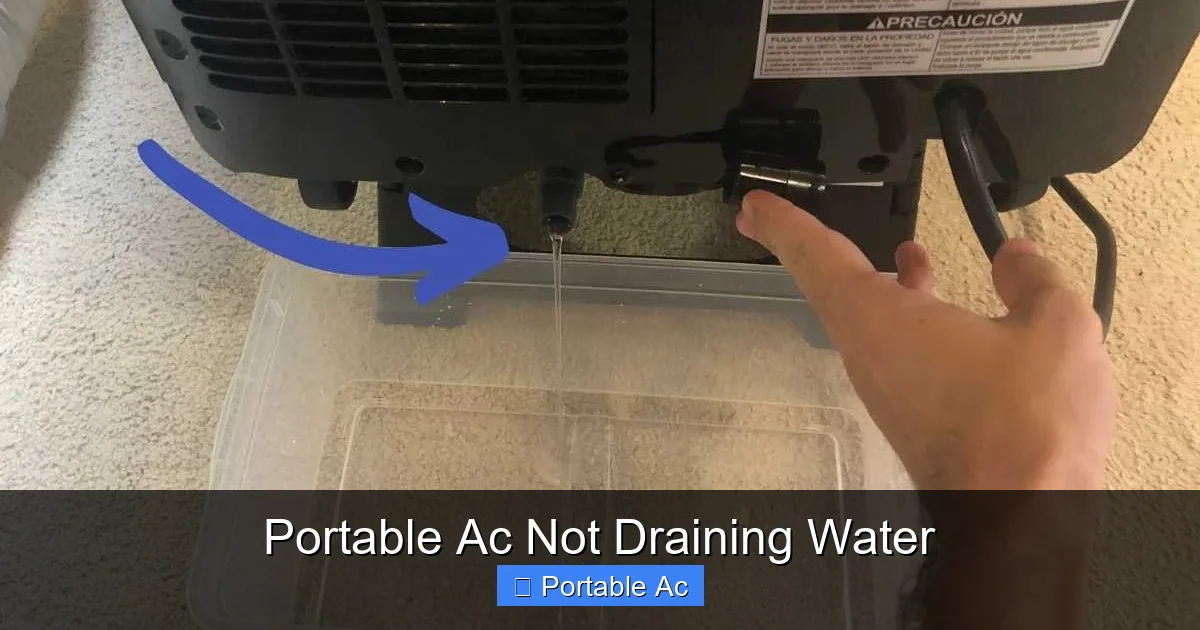
The drain tube is the lifeline of your portable AC’s water removal system. It’s usually a soft plastic tube that runs from the drip pan to either a drain outlet or a collection bucket. But over time, this tube can become blocked with algae, mold, or sediment—especially in humid environments.
How to check: Unplug the unit and locate the drain tube. Follow it to see if water flows freely. If it feels stiff or water doesn’t move, it’s likely clogged.
Fix: Use a pipe cleaner, a bent wire, or even a long piece of string to gently push through the tube. For stubborn clogs, mix equal parts white vinegar and water, pour it through the tube, and let it sit for 15 minutes before flushing with clean water.
2. Kinked or Misconnected Exhaust or Drain Hose
Your portable AC uses two hoses: one to expel hot air (exhaust hose) and another to drain water (condensate hose). If either is kinked, twisted, or disconnected, water won’t flow properly.
Example: You set up your AC near a couch, loop the hose around a leg, and accidentally pinch it. Now the drain is blocked—even though everything else works fine.
Fix: Reconnect the hose securely and ensure it’s not bent at a sharp angle. The ideal route should be straight or gently curved without any tight bends.
3. Incorrect Unit Positioning
Portable ACs are designed to drain water using gravity. That means the unit must be slightly tilted—typically about 1 to 2 inches lower on the side where the drain tube exits. If the AC sits flat or is placed on a sloped surface, water can pool and refuse to flow.
Tip: Use a level or measure with a tape to confirm the unit is tilted correctly. Place a small box or book under one corner if needed.
4. Dirty Air Filter or Evaporator Coils
A dirty air filter restricts airflow, which reduces the temperature difference across the cooling coils. Less cooling means less condensation—and therefore, less water to drain.
Additionally, grime on the evaporator coils can trap moisture, creating a sticky buildup that attracts dirt and promotes mold growth in the drain line.
Maintenance tip: Clean or replace your filter every 2–4 weeks during heavy use. Also, wipe down the coils with a damp cloth and mild detergent every few months.
5. Faulty Float Switch
Inside the drip pan, there’s a tiny float switch that senses when water reaches a certain level. If the switch is stuck closed, it can trigger a safety shutdown, preventing the AC from draining fully—even when the pan isn’t full.
Signs of a bad float switch: The unit turns off unexpectedly, or the fan runs but no water drains.
What to do: Unfortunately, this part isn’t user-serviceable in most models. Contact the manufacturer or a technician for replacement.
6. Low Cooling Performance
If your portable AC isn’t cooling effectively—perhaps due to low refrigerant or a failing compressor—it won’t produce much condensation. Without condensation, there’s little to no water to drain.
This often happens after extended use or if the unit was moved without professional servicing.
Step-by-Step Troubleshooting Guide
Don’t worry—you don’t need a degree in HVAC engineering to fix this. Here’s a simple checklist to diagnose and resolve the issue:
- Unplug the unit for safety before inspecting any parts.
- Check the drain tube for clogs. Flush it with vinegar and water if needed.
- Inspect all hoses for kinks or disconnections. Straighten or reconnect as necessary.
- Verify the unit is tilted correctly—about 1–2 inches lower on the drain side.
- Clean the air filter and wipe down the interior coils.
- Run the unit in dry mode (if available) to test drainage without cooling load.
- If nothing works, consult your manual or contact customer support.
Pro tip: Some modern portable ACs come with auto-evaporation technology, which means they recycle condensation back into the cooling process—eliminating the need for constant draining. If yours has this feature, drainage issues may simply indicate it’s working as designed.
Preventing Future Drainage Problems
Visual guide about Portable Ac Not Draining Water
Image source: hvactrainingshop.com
Once you’ve fixed the immediate issue, take steps to avoid recurrence:
– Regular cleaning: Make it a habit to clean the filter and inspect the drain tube monthly.
– Use distilled water: If your area has hard water, mineral buildup is more likely. Using distilled water in the bucket (if applicable) can reduce clogs.
– Keep the room humidity moderate: Extremely humid conditions increase condensation—and potential drainage strain.
– Choose the right model: If you frequently deal with drainage headaches, consider a portable AC that doesn’t require draining. These self-evaporating units are perfect for humid climates or hands-off users.
When to Call a Professional
While most drainage issues are DIY-friendly, there are times when you should call in an expert:
– The float switch appears damaged or non-functional.
– You suspect refrigerant loss or compressor problems.
– The unit is under warranty and tampering could void it.
– You’ve tried all troubleshooting steps and the problem persists.
Attempting complex repairs without experience can lead to further damage or safety risks.
Conclusion: Stay Cool and Dry
A portable AC that won’t drain water is annoying—but rarely dangerous. With a little patience and basic tools, you can usually resolve the issue yourself. Start with the simplest fixes: check for clogs, verify hose alignment, and ensure proper tilt. Regular maintenance will keep your unit running efficiently and extend its lifespan.
Remember, not all portable ACs are created equal. If drainage problems persist, it might be worth investing in a model designed to minimize leaks and drainage hassles. And for those who want maximum convenience, exploring easy-to-install units or budget-friendly options with reliable performance can make summer cooling stress-free.
Stay cool, stay dry, and enjoy your portable AC without the drip!
Frequently Asked Questions
Can a blocked drain tube cause my portable AC to overheat?
Yes. Excess water buildup can trigger the float switch to shut off the compressor, leading to overheating if the issue isn’t resolved. Always address drainage problems promptly.
Do all portable ACs require a drain hose?
Most do, but some advanced models use self-evaporating technology that recycles moisture internally. Check your manual to confirm whether your unit needs external drainage.
Will vinegar damage my portable AC’s components?
No. White vinegar is safe for cleaning drain lines and coils. Just rinse thoroughly afterward to avoid residual odor or corrosion from prolonged exposure.
What happens if I ignore a drainage issue?
You risk water damage, mold growth, electrical shorts, and reduced efficiency. Persistent leakage can also void your warranty if it leads to internal component failure.
How do I know if my float switch is faulty?
If your AC shuts off unexpectedly while running normally, and the drain tube is clear, the float switch may be stuck. Only a technician can test or replace this internal sensor.
Can I use a shop vacuum to clear a clogged drain line?
Not recommended. Shop vacuums create strong suction that could damage delicate internal parts. Use gentle methods like a pipe cleaner or diluted vinegar solution instead.
