
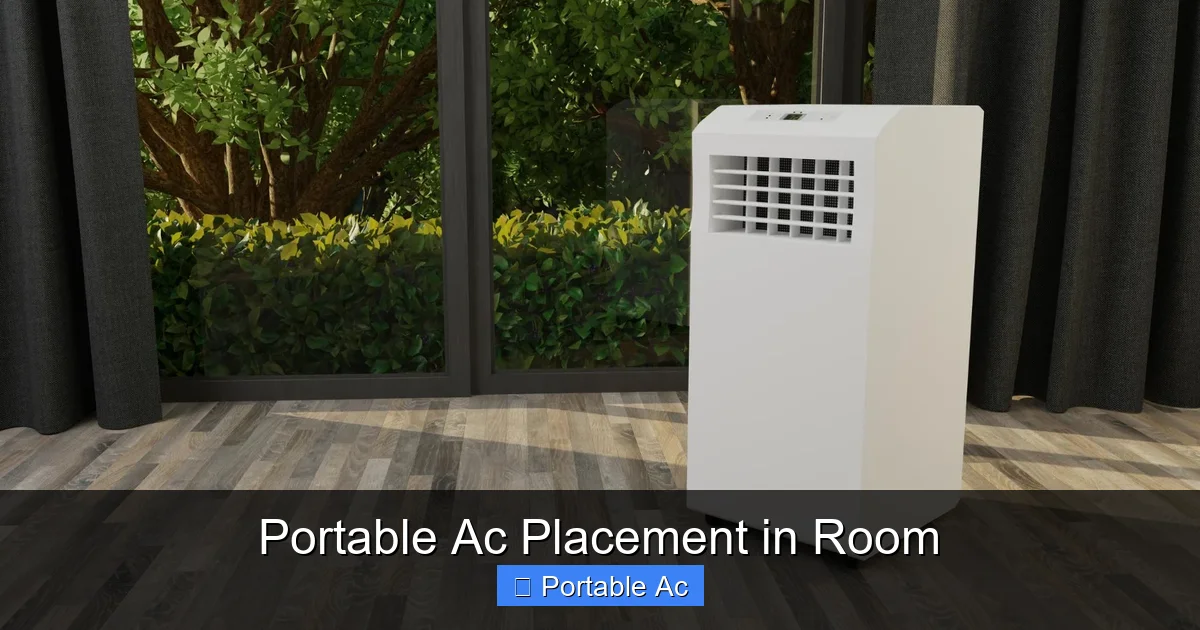
Portable AC placement in room is more than just finding a spot—it’s about airflow, energy use, and comfort. Placing your unit near a window with a hose outlet ensures proper exhaust and effective cooling. This guide walks you through the best locations, common mistakes, and expert tips to keep your room cool without wasting power.
Key Takeaways
- Place near a window: Always position your portable AC close to a window for hose connection to expel hot air efficiently.
- Keep space clear: Maintain at least 2–3 feet of clearance around the unit to allow proper airflow and prevent overheating.
- Avoid direct sunlight: Placing the AC in direct sun can reduce efficiency and increase energy bills—choose a shaded, cooler spot.
- Use the hose correctly: Ensure the exhaust hose is straight and sealed tightly to prevent warm air from re-entering the room.
- Consider room layout: Position the unit away from furniture or curtains to improve air circulation and cooling performance.
- Monitor temperature zones: Use a thermometer to test airflow effectiveness and adjust placement if needed.
- Don’t block return air: Make sure the intake vent isn’t blocked by walls or objects, as this reduces cooling capacity.
Quick Answers to Common Questions
Where should I place my portable AC for best cooling?
Place it near a window with easy access for the exhaust hose. Keep at least 2–3 feet of space around the unit for airflow.
Can I put a portable AC in direct sunlight?
No. Direct sunlight heats the unit, reducing efficiency. Choose a shaded spot or use a reflective barrier.
Do I need a window to use a portable AC?
Yes, most portable ACs require a window or vent for the exhaust hose to expel hot air outside.
How close should the portable AC be to the window?
Within 3–6 feet is ideal. The hose should be straight and not kinked or stretched.
Can I vent the hose into another room?
No. The hose must vent outside. Venting indoors traps heat and defeats the purpose of cooling.
📑 Table of Contents
- Portable AC Placement in Room: The Ultimate Guide to Cool, Comfortable Spaces
- Why Portable AC Placement Matters
- Best Locations for Portable AC Placement
- Common Placement Mistakes to Avoid
- Room-Specific Placement Tips
- Enhancing Performance with Accessories and Accessories
- Energy-Saving Tips for Portable AC Placement
- Final Thoughts: Smart Placement = Smarter Cooling
Portable AC Placement in Room: The Ultimate Guide to Cool, Comfortable Spaces
Hot summer days can turn even the coziest rooms into saunas. If you’ve invested in a portable AC, you’re probably wondering: Where’s the best place to put it? It’s a simple question, but the answer can make or break your cooling experience. The truth is, portable AC placement in room directly affects how well your unit works, how much energy it uses, and how comfortable your space feels.
Unlike window units that are permanently installed, portable air conditioners offer flexibility—but that freedom comes with responsibility. A poorly placed portable AC can waste electricity, cool unevenly, or even fail to work altogether. On the flip side, the right placement can transform your room into a cool, refreshing retreat with minimal effort. In this guide, we’ll walk you through everything you need to know about positioning your portable AC for maximum performance, energy efficiency, and comfort.
Why Portable AC Placement Matters
You might think, “It’s just a machine—what difference does where I put it make?” But trust us, it does. The placement of your portable AC influences airflow patterns, heat exchange, and even noise levels. Let’s break it down.
Visual guide about Portable Ac Placement in Room
Image source: contentgrid.homedepot-static.com
The Science Behind Airflow
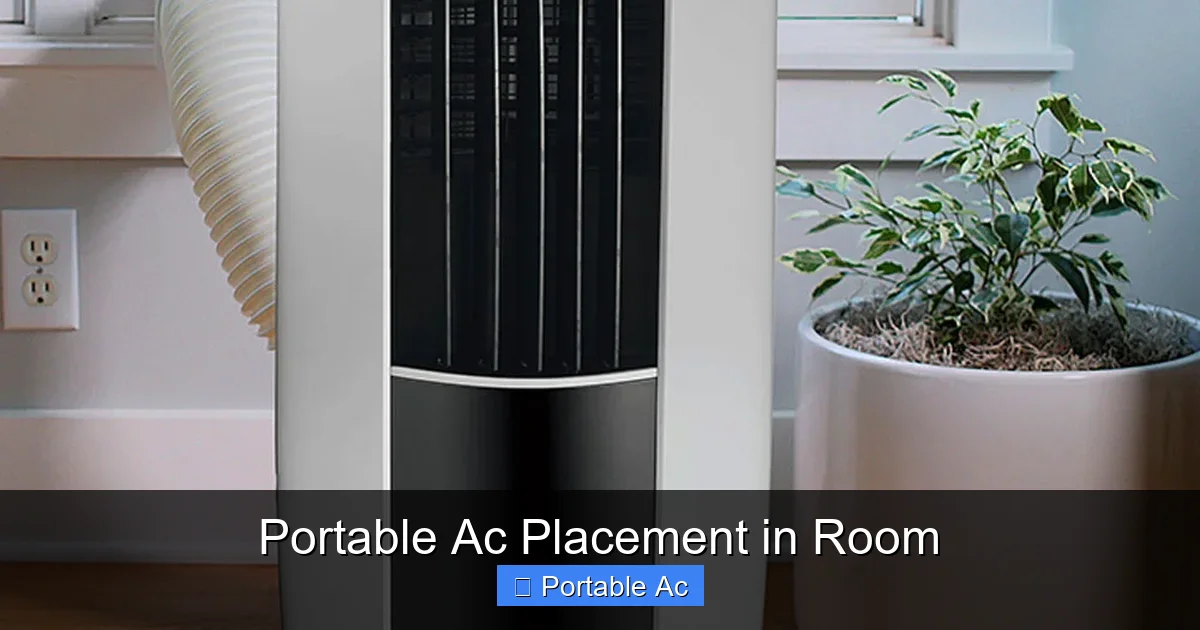
Portable ACs work by drawing in warm indoor air, cooling it through an evaporator coil, and then blowing the cooled air back into the room. At the same time, they expel the heat through an exhaust hose connected to a window or vent. This process depends on smooth airflow—both in and out. If the unit is too close to a wall or blocked by furniture, the air can’t circulate properly, reducing cooling power and increasing strain on the compressor.
Energy Efficiency and Placement
When your portable AC has to work harder because of poor placement, it consumes more electricity. For example, a unit placed in direct sunlight absorbs extra heat, making it harder to cool the room. Similarly, a tangled or kinked hose can restrict airflow, forcing the compressor to run longer. Both scenarios spike your energy bill and shorten the unit’s lifespan.
Comfort and Noise
Placing your portable AC near your bed or seating area means you want it to be quiet and effective. Units placed too close to furniture may create drafty spots or uneven cooling. Also, if the exhaust hose runs across the room, it can create noise and reduce efficiency. Proper placement ensures consistent, quiet cooling where you need it most.
Best Locations for Portable AC Placement
So, where should you actually put your portable AC? The ideal spot depends on your room layout, window access, and personal needs. Here are the top locations to consider.
Visual guide about Portable Ac Placement in Room
Image source: m.media-amazon.com
Near a Window with Hose Access
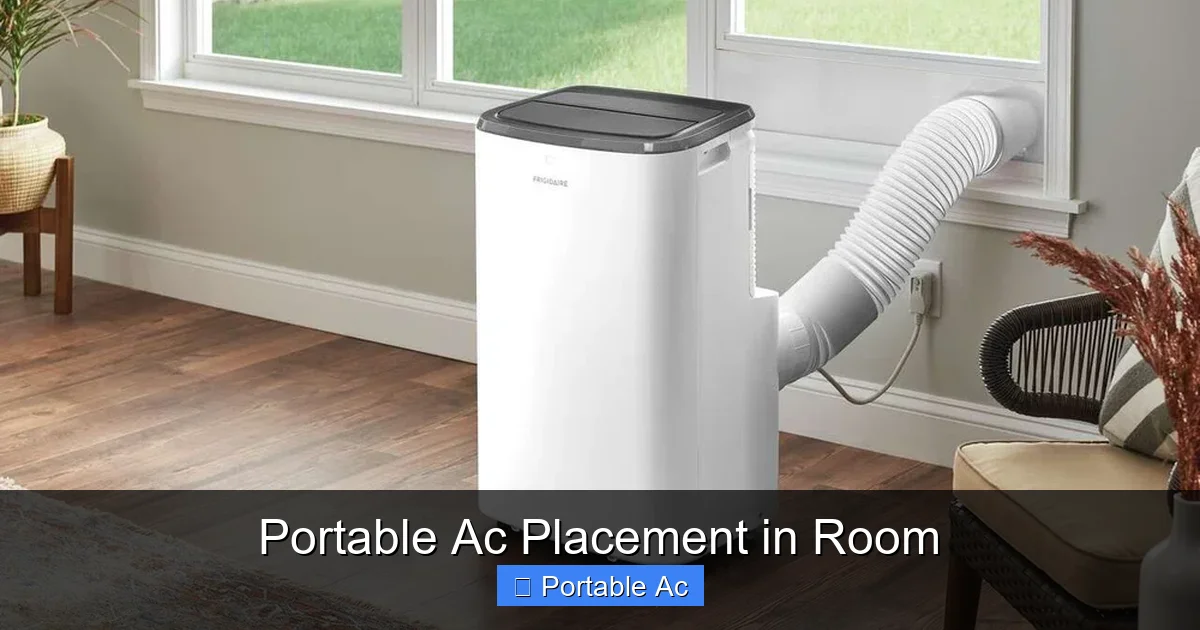
This is the gold standard for portable AC placement. Always position your unit within 3–6 feet of a window that allows the exhaust hose to reach the outside. The hose must be able to exit the room and vent hot air outdoors. Without proper exhaust, the AC can’t remove heat effectively—meaning it just recycles warm air.
Tip: Use a window kit or sealant to prevent air leaks around the hose. A loose connection lets hot air back in, reducing cooling power.
In the Center of the Room
If your room has a central window or multiple windows, placing the portable AC in the middle of the room can help distribute cool air more evenly. This works well in square or rectangular rooms where airflow can spread in all directions.
Example: In a 12×12 bedroom, placing the unit near the center wall (with hose going to one window) often cools the entire room faster than placing it near a corner.
Away from Heat Sources
Avoid placing your portable AC near lamps, electronics, or appliances that generate heat. These sources make the unit work harder to cool the air. Instead, choose a spot near a cooler wall or in a shaded area.
Pro tip: Use a room thermometer to find the coolest spot in the room—that’s usually where you should place the AC.
Near Your Bed or Living Area
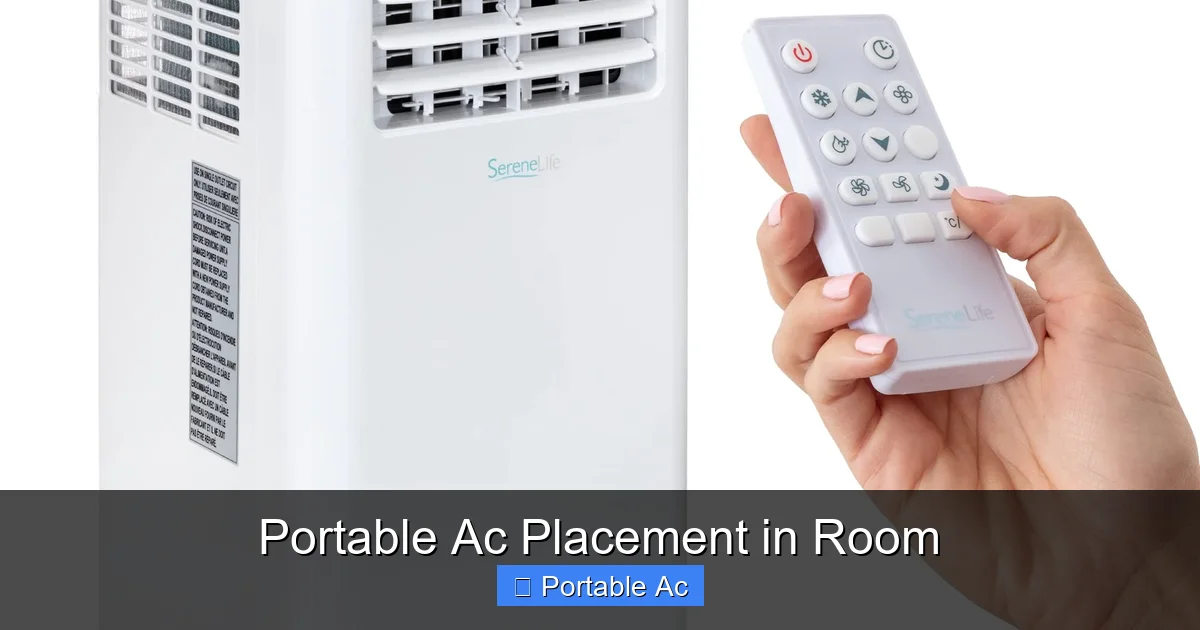
For bedrooms or home offices, place the unit where you spend most of your time. Just make sure it’s not blowing cold air directly onto you, which can cause discomfort. Use fans or adjust the louvers to direct airflow where needed.
Related: Best Portable AC for Office Room – Designed for quiet, focused cooling.
Common Placement Mistakes to Avoid
Even experienced users make these mistakes. Let’s go over the most common errors and how to fix them.
Visual guide about Portable Ac Placement in Room
Image source: assets.wfcdn.com
Blocking the Air Intake
Most portable ACs have an intake vent on the front or side. If this is blocked by a wall, bed, or curtain, the unit can’t draw in enough air. Always keep at least 2–3 feet of space in front of the unit.
Kinking or Bending the Exhaust Hose
A kinked hose restricts airflow and reduces cooling efficiency. Keep the hose straight and use a hose support or clip to prevent sagging.
Placing in Direct Sunlight
Sunlight heats up the unit, making it work harder. If possible, move the AC to a shaded area or use a reflective barrier behind it.
Using the Hose Indoors
Some people try to vent the hose into a closet or another room. This traps heat and defeats the purpose of cooling. The hose must go outside.
Ignoring Room Size and BTU Needs
Even with perfect placement, a portable AC with too low a BTU rating won’t cool a large room. Always match the unit’s capacity to your room size. For example, a 100 sq ft room needs about 8,000 BTUs, while a 300 sq ft room needs 14,000 BTUs.
Room-Specific Placement Tips
Different rooms have unique layouts and challenges. Here’s how to optimize portable AC placement for common spaces.
Small Rooms (Under 200 sq ft)
In compact spaces like bathrooms or closets, place the unit near the door or window. Use a shorter hose and ensure the room is sealed as much as possible to retain cool air.
Large Living Rooms
For open-plan areas, position the AC near a window and use a fan to help distribute cool air. Consider a dual-hose model for better performance.
Bedrooms
Place the unit opposite the bed or in a corner near a window. Use the sleep mode feature and set a timer so it runs quietly all night.
Offices and Home Gyms
Keep the unit away from equipment that generates heat. Use a quiet, energy-efficient model to avoid disrupting focus or workouts.
Rooms Without Windows
If your room has no window, you’ll need a portable AC with a built-in exhaust fan or a venting kit that fits a sliding door. Some models even allow you to vent through a standard air vent.
Enhancing Performance with Accessories and Accessories
Your portable AC’s placement isn’t the only factor affecting performance. The right accessories can make a big difference.
Window Kits and Seals
A proper window kit ensures the exhaust hose fits snugly and prevents air leaks. Look for adjustable kits that work with sliding, double-hung, or casement windows.
Hose Extensions
If your window is far from the floor, a hose extension can help reach the outside without bending the original hose.
Cooling Mats and Stands
Elevating your portable AC slightly (with a stand or mat) can improve airflow underneath and reduce noise.
Air Circulation Fans
Place a fan near the AC to help distribute cool air throughout the room. This reduces the load on the unit and improves comfort.
Energy-Saving Tips for Portable AC Placement
Want to save on electricity while staying cool? These tips will help you get the most out of your portable AC.
- Seal gaps: Use weather stripping or draft stoppers around doors and windows to keep cool air in.
- Use timers: Run the AC only when needed—especially at night or during cooler hours.
- Clean filters regularly: Dirty filters block airflow and reduce efficiency. Clean or replace them every 2–4 weeks.
- Close curtains: Blocking sunlight reduces indoor heat, so your AC doesn’t have to work as hard.
- Maintain clearance: Always keep the unit at least 3 feet away from walls and furniture.
Final Thoughts: Smart Placement = Smarter Cooling
Portable AC placement in room isn’t just about convenience—it’s about performance, efficiency, and comfort. When you place your unit correctly, you get better cooling, lower energy bills, and longer-lasting equipment. Take the time to assess your room, choose the best spot, and avoid common mistakes. With a little planning, your portable AC can be your best ally against summer heat.
Remember: the ideal spot is near a window, with clear airflow, minimal heat exposure, and easy access for maintenance. And if you’re unsure which model to buy, check out our guide on Best Portable AC for Single Room Cooling for top-rated picks.
Frequently Asked Questions
What is the best spot to place a portable AC?
The best spot is near a window with a clear path for the exhaust hose. Keep the unit away from walls and furniture, and ensure it’s in a shaded area to avoid overheating.
How far should a portable AC be from the window?
It should be within 3–6 feet of the window. This allows the hose to reach the outside without kinking or bending, which reduces efficiency.
Can I use a portable AC without a hose?
Only if it’s a hose-free model. Most portable ACs require an exhaust hose to vent hot air outside.
Is it better to place the portable AC in the corner or center of the room?
It depends on your layout. In small rooms, corners work well. In larger spaces, the center may help distribute air more evenly—especially if you have a window on one side.
How do I know if my portable AC is placed correctly?
Check for consistent airflow, low noise, and a noticeable drop in room temperature. Use a thermometer to monitor changes and adjust placement if needed.
Can I place a portable AC on a carpet?
Yes, but make sure it’s on a flat, stable surface. Avoid placing it directly on thick carpet if possible, as it can block airflow underneath. Use a cooling mat or stand for better ventilation.
