
Quick Summary: Most window AC issues—like not cooling or strange noises—are easy fixes involving cleaning filters, checking the plug, or resetting the unit. Don’t panic; we’ll walk through these simple steps together to get your cool air back fast!
Is your window AC blowing warm air when you need it most? Dealing with those confusing blinking lights can certainly feel frustrating. We all want that perfect blast of cold air without having to call a pricey repair person.
Don’t worry one bit about all the complicated AC jargon you’ve heard. I’m Jack from ACReviewHub.com, and I’m here to break everything down simply. By the end of this guide, you’ll know exactly how to handle the most common window unit headaches.
Let’s dive in and learn how to troubleshoot your unit like a pro, save some money on energy bills, and get back to enjoying your cool space!
Window AC Troubleshooting Guide: Fix Major Issues Like a Friendly Expert
Window AC units are tough workhorses, but sometimes they need a little TLC. Most problems aren’t major breakdowns; they are usually simple things that need a quick check. We start with the easiest fixes first, just like peeling back layers on an onion.
First Steps: The Quick Power and Setting Check
Before you grab any tools, let’s check the basics. About half of all service calls are solved right here. This is the “Did you plug it in?” phase, but way more helpful!
Check 1: Is the Unit Actually Plugged In and Getting Power?
This sounds silly, but it happens all the time. Make sure the plug is firmly seated in the wall socket. If it seems loose, try another outlet if possible.
Check your circuit breaker box. If the AC tripped the breaker, you’ll see the switch halfway between “On” and “Off.” Flip it completely off, wait a minute, and then flip it firmly back to “On.”
Check 2: Are the Thermostat Settings Correct?
Look closely at your control panel. Is the unit set to “Cool” and not “Fan” or “Dry” mode? Also, set the temperature lower than the current room temperature. If it’s set to 75°F and the room is 74°F, the unit won’t kick on.
The Power Reset Trick
If the unit seems frozen or unresponsive, try a full power reset. Unplug the unit completely from the wall. Wait a full five minutes to let all the internal capacitors drain their power. Plug it back in and try turning it on again. This often clears minor electronic glitches.
Common Problem 1: My Window AC Isn’t Cooling Enough
This is the most common complaint, especially on hot days. The air coming out feels cool, but it’s not dropping the room temperature where you need it to be.
Why It Happens: Dirty Filters Are the Biggest Culprit
Think of your AC filter like the lungs of the unit. When they get clogged with dust and pet hair, air can’t flow properly over the cold coils. This makes the unit work harder and freeze up.
Here is your simple cleaning routine:
- Unplug the AC unit for safety.
- Gently slide out the front filter panel (usually near the controls).
- Rinse the reusable filter under warm running water until the water runs clear.
- Let the filter air dry completely before putting it back in. Never run the AC without a dry filter!
Why It Happens: Ice Formation on the Coils
If you see ice building up on the front grille or the inside coils, you have an airflow problem (usually the dirty filter) or you’re running the unit in temperatures that are too cold outside.
If you spot ice:
- Turn the AC off completely. Set it only to the “Fan” mode (high speed) for a few hours to thaw the ice.
- Once thawed, clean the filter thoroughly.
- Turn the unit back on to “Cool” mode and monitor it.
Common Problem 2: Water Leaking Inside the Room
Seeing drips on your floor is never fun. This usually involves drainage issues, which are often simple to resolve.
The Cause: Improper Installation Angle
Window ACs must be tilted slightly downward to the outside. This ensures that condensation (water created when cooling) drains properly out the back of the unit and onto the ground outside.
If the unit is level or tilted inward, water pools inside the drain pan and eventually spills over into your room.
The Fix: Adjusting the Tilt
If you recently installed the unit or if it has shifted, you may need to adjust the support brackets or shims on the outside. The general rule is a slight downward slope toward the exterior.
Note: If the leak is happening even when it’s installed correctly, the drain hole at the bottom might be clogged with sludge. You can sometimes clear this by gently poking a thin, flexible wire into the outside weep holes (small holes on the bottom exterior casing).
Common Problem 3: Strange Noises Coming from the Unit
A gentle hum is normal, but loud rattling, grinding, or high-pitched squeals mean something needs attention.
| Symptom Noise | Most Likely Cause |
|---|---|
| Rattling or Vibrating | Loose screws, vibrating side panels, or the unit not seated firmly in the window frame. |
| Loud Grinding or Scraping | The fan blade hitting something (debris or a loose part). Turn off immediately! |
| High-Pitched Squeal | Often a worn-out motor bearing or fan motor issue. |
For rattling, carefully check the outer casing screws to ensure they are tight. Don’t overtighten, but make sure they are snug against the frame.
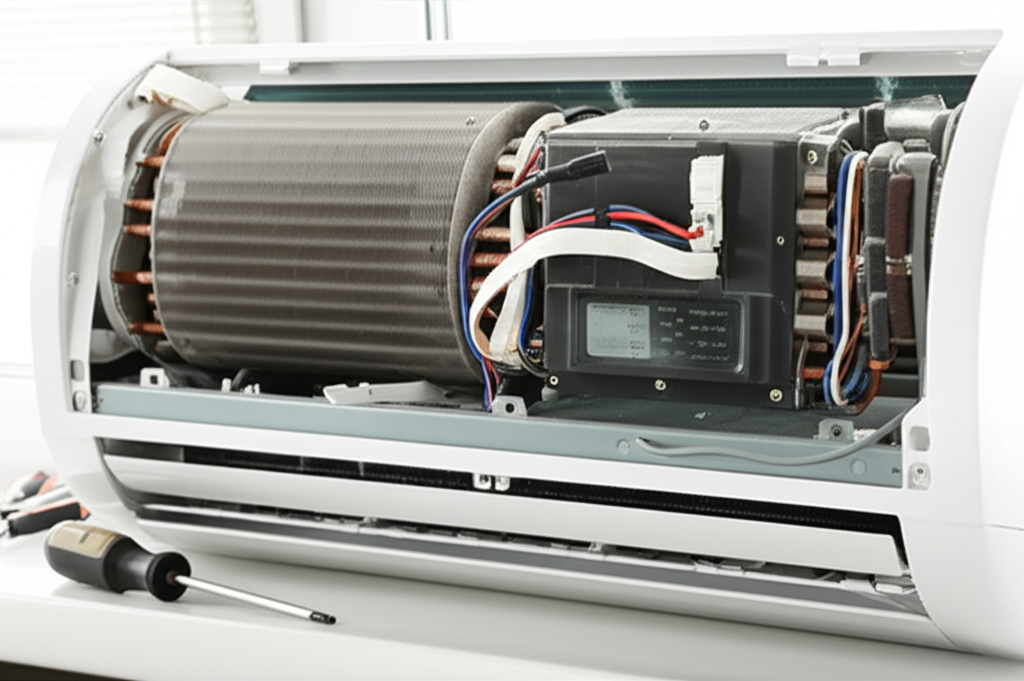
If you hear grinding, unplug the unit immediately. A fan blade hitting something can quickly cause serious damage. You might need to look inside the casing (only after unplugging!) to see if debris is caught in the fan area.
Understanding Sizing: Why Your AC Might Struggle
Sometimes, the unit isn’t broken; it’s just too small for the job. Choosing the right size is crucial for comfort and efficiency. This measurement is called BTU (British Thermal Units).
If you buy an AC that is too small for your room, it will run constantly, never truly cooling the space, and your energy bill will climb.
Here is a quick guide based on standard ceiling heights. Always round up if you have a very sunny room or many occupants:
| Room Size (Square Feet) | Required BTU Range |
|---|---|
| 150 to 250 sq. ft. | 5,000 – 6,000 BTUs |
| 250 to 350 sq. ft. | 7,000 – 8,000 BTUs |
| 350 to 450 sq. ft. | 9,000 – 10,000 BTUs |
For more detailed sizing help, the experts at Energy.gov have great resources on calculating your exact needs.
When to Call a Professional
We covered a lot of do-it-yourself fixes, which is great! But knowing when to stop is just as important. If you notice any of these signs, it’s time to call a certified HVAC technician:
- The compressor (the outdoor humming part) won’t start at all, even with power.
- You smell a distinct, strong burning odor (unplug immediately!).
- The unit is leaking oily or dark, dirty water.
- You hear loud, persistent grinding noises that don’t stop after checking the casing.
Frequently Asked Questions (FAQ) for Beginners
Q: My remote control isn’t working. Is the AC broken?
A: Usually not! First, change the batteries. If that doesn’t work, try using the manual buttons on the unit itself. If the manual controls work, the remote is the only problem.
Q: How often should I clean the filter?
A: For maximum efficiency and comfort, clean it at least once a month during heavy use. If you have pets, check it every two weeks.
Q: Why does my AC smell musty or moldy when I turn it on?
A: That’s just accumulated moisture and dust on the coils. Run the unit on “Fan Only” mode for an hour or two to help dry everything out after you clean the main filter.
Q: Can I leave my window AC in all winter?
A: Yes, most modern units are designed to stay in place. Just make sure the outside vents are closed or covered slightly to prevent cold drafts from coming in, though most units have internal dampers for this.
Q: Why is my electric bill suddenly so high?
A: If the AC is running constantly but the air isn’t cold, it’s struggling. Check the filter first, then make sure all your windows and doors are properly sealed around the AC unit itself.
Q: Do I need to vacuum the outside coils too?
A: Yes! Once a year, usually before the season starts, gently vacuum the outdoor fins (the metal slats you see outside) to remove heavy dirt buildup that restricts heat exchange.
Taking care of your window air conditioner doesn’t require an engineering degree. It just takes a little bit of regular attention to the basics—especially cleaning those filters and checking those power connections.
Consistency is your best friend here. A five-minute check every few weeks saves you hours of discomfort later. Stay diligent with your cleaning, and you’ll keep that cool air flowing all summer long without stress.
You’ve got this — and cool, comfortable air is just a few simple steps away.
