
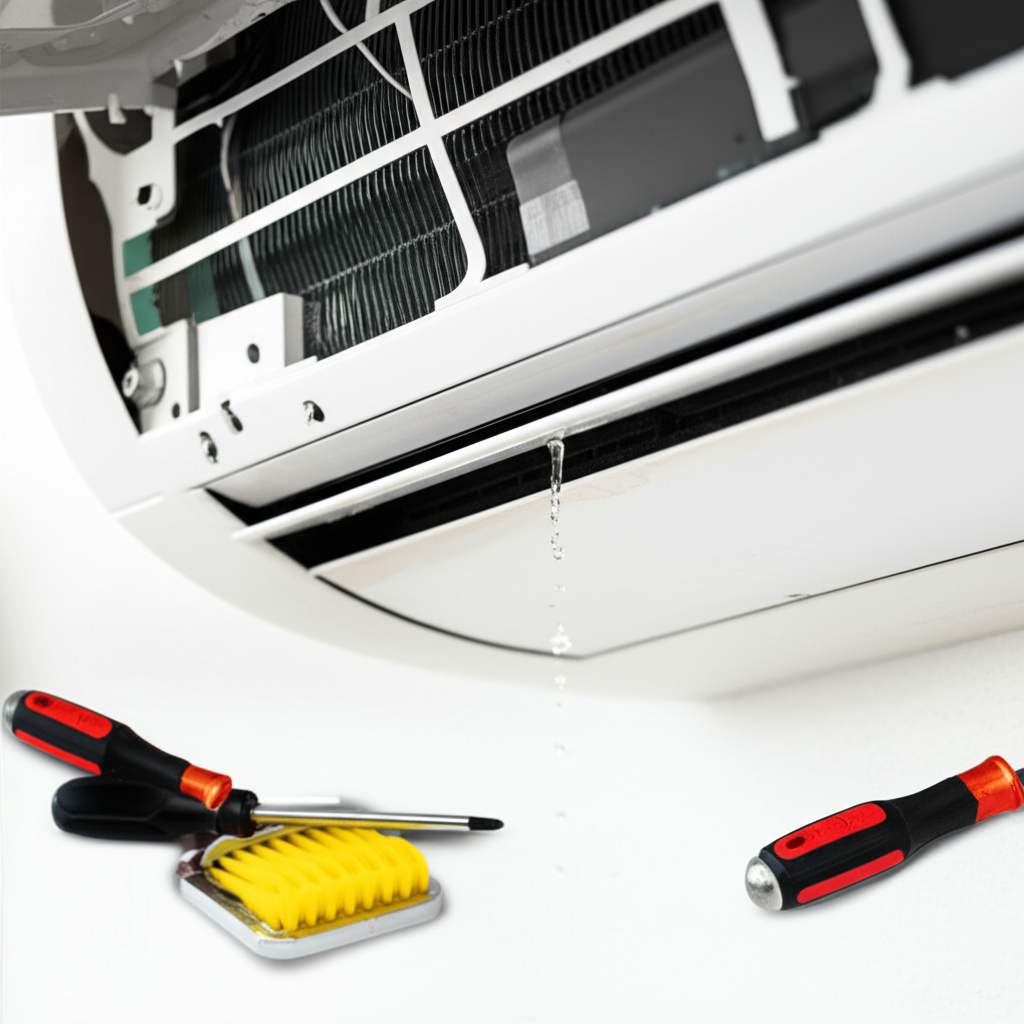
If your AC is dripping water, it usually means a clog in the drain line or that the unit is freezing up. This guide shows you the simple fixes, like clearing the drain pipe or checking the filter, so you can stop the leak fast and keep your cool.
Fix AC Dripping Water: Effortless Guide
Seeing water drip from your indoor AC unit is never fun. It can make you worry about big repair bills. Don’t panic! Most AC leaks are easy fixes that you can handle yourself. I’m Jack from ACReviewHub.com, and I help folks like you understand their air conditioners simply.
We are going to walk through this step-by-step. You will learn the common reasons for drips. Then, we will show you easy, safe ways to solve them. Let’s get your cool air back without the messy puddles!
Why Is My Air Conditioner Leaking Water? The Simple Causes
Air conditioners are supposed to move water out of your home. This water comes from the humidity they remove from the air. When water drips inside, something is blocking that path. It is usually not a major emergency.
Here are the three main culprits we often see when an AC starts dripping:
- Clogged Condensate Drain Line: This is the most common issue. Dirt and mold build up in the small pipe that carries water away.
- Dirty Air Filter: A super dirty filter blocks airflow. This makes the indoor coil get too cold and freeze up, creating excess water when it thaws.
- Frozen Evaporator Coil: If the coil freezes (turns to ice), it melts later, causing a big flood of water. This is often caused by low refrigerant or poor airflow.
Step 1: Check and Clean the Air Filter (The Easiest Fix)
A clogged filter is the number one enemy of good airflow. When air cannot move well, your system gets too cold.
Here is how to check your filter:
- Turn your AC system completely off at the thermostat. Turn the fan setting to “Off” too.
- Find the filter slot. It is usually behind a panel on your indoor unit or sometimes in a return vent on a wall or ceiling.
- Carefully slide the old filter out. Look at it—if it looks dark gray or totally covered in dust, it needs replacing.
- Put in a new filter of the same size. If you use a reusable one, clean it well according to the manufacturer’s instructions.
- Wait about an hour for the system to warm up slightly, then turn the AC back on. See if the dripping stops.
Step 2: Unclogging the Condensate Drain Line
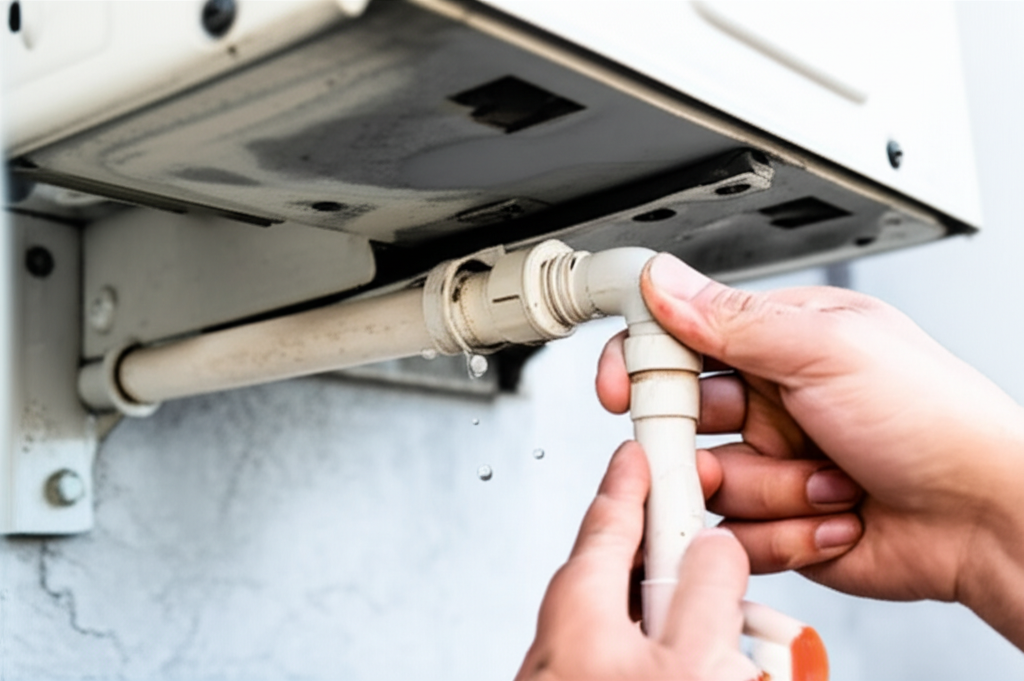
The drain line is a small PVC pipe that looks like plumbing under your sink, but for your AC. Its job is to guide water outside or to a floor drain.
If this pipe gets blocked by slime or dust, the water backs up into the drip pan and overflows.
Here is a safe way to clear that tiny clog:
- Locate the access point: Look for a T-shaped vent pipe near your indoor unit (often coming up from the floor or wall). This is where you pour the cleaner.
- Use a wet/dry vacuum: The best tool is a wet/dry shop vac. Attach the hose to the drain line access point and seal it tightly with duct tape if needed.
- Vacuum the blockage: Turn the vacuum on high suction for about two minutes. You might hear gurgling as the blockage is pulled out.
- Flush the line (Optional but helpful): After vacuuming, gently pour about a cup of distilled white vinegar down the access point. This helps kill any remaining mold or algae. Do NOT use bleach, as it can damage some plastic pipes.
If the vacuum doesn’t work, you might need a professional plumber’s snake to gently clear a deeper blockage, but usually, the vacuum does the trick.
Step 3: Dealing with a Frozen Evaporator Coil
If you see ice on the copper lines near your indoor unit, or if the unit is blowing weak, warm air, your coil is frozen. This causes massive dripping when the ice melts.
Never try to chip the ice off! You will damage the delicate fins.
Here is the simple defrosting process:
- Turn the AC OFF: Switch the thermostat from “Cool” to “Off.”
- Turn the Fan ON: Switch the system fan setting from “Auto” to “On.” This blows warm room air over the ice to melt it faster.
- Wait it out: Let the fan run for several hours. Keep the room temperature comfortable if you can.
- Check the drain: Once all the ice melts, watch to see if the drain line is now working correctly.
If the coil freezes again after cleaning the filter and clearing the drain, you might have low refrigerant. That requires a certified HVAC technician to check and fix.
Quick Look: AC Leaks vs. Weather
Sometimes, dripping isn’t a problem at all! Humid weather can be tricky. Here is a quick chart to help you decide if you need to worry:
| Symptom | Likely Cause | Action Needed |
|---|---|---|
| Water drips only on very hot, humid days. | Normal condensation overflow (Pan might be slightly slow). | Monitor; clean the drain line if it gets worse. |
| Water drips constantly, even when it’s cooler. | Clogged drain or frozen coil. | Follow Steps 1, 2, and 3 above immediately. |
| Water drips from the outdoor unit (not the indoor one). | Normal defrost cycle (in winter/heat pump mode). | No action needed unless it’s summer. |
For more information on energy efficiency and AC basics, the Department of Energy has great resources: U.S. Department of Energy HVAC Tips.
When to Call in the Experts
While most drips are simple fixes, some issues need a trained eye. If you try cleaning the filter and the drain line, and the dripping continues, it is time to call a pro.
You should call an HVAC technician if:
- You suspect low refrigerant (the coil keeps freezing).
- The drain line is completely blocked and vacuuming did nothing.
- You see water leaking from the actual outdoor unit (the condenser).
- Your AC is blowing warm air even after defrosting the coil.
Remember, calling early for real problems saves you from bigger repair bills later. Getting professional help is smart maintenance!
Frequently Asked Questions (FAQ) for Beginners
Q1: Can I just put a bucket under the drip?
A: You can catch the water temporarily, yes. But this only treats the symptom, not the cause. You still need to fix the clog or the freezing issue fast!
Q2: How often should I change my air filter?
A: For most homes, check it monthly and change it every 1 to 3 months. If you have pets or allergies, change it more often.
Q3: Is it bad if my AC freezes up sometimes?
A: Yes, it is a warning sign. It means the system is struggling due to lack of airflow (filter) or low cooling agent (refrigerant). Don’t ignore it.
Q4: What kind of water is dripping? Clear or brown?
A: Clear water is normal condensation. Brown or murky water usually means dirt, algae, or rust is coming from a dirty drain pan or line.
Q5: Can I use a coat hanger to clear the drain line?
A: Be very careful! You can poke a hole in the PVC pipe. Use a wet/dry vacuum first. If you must use something thin, use a specialized flexible drain cleaning brush.
Q6: Does turning the thermostat up stop the dripping?
A: Turning the thermostat up (setting a higher temperature) will stop the cooling cycle, which stops the ice from forming or the water from condensing, so yes, it pauses the problem.
Final Thoughts on Keeping Your AC Happy
Fixing an AC drip might seem intimidating at first glance. But as we saw, it usually boils down to a simple filter change or clearing a clogged tube. These small maintenance steps are your best defense against repair calls.
Stay consistent with checking that filter every month or two. A little bit of proactive care goes a long way in keeping your AC efficient and your home dry. You’ve got this!
