
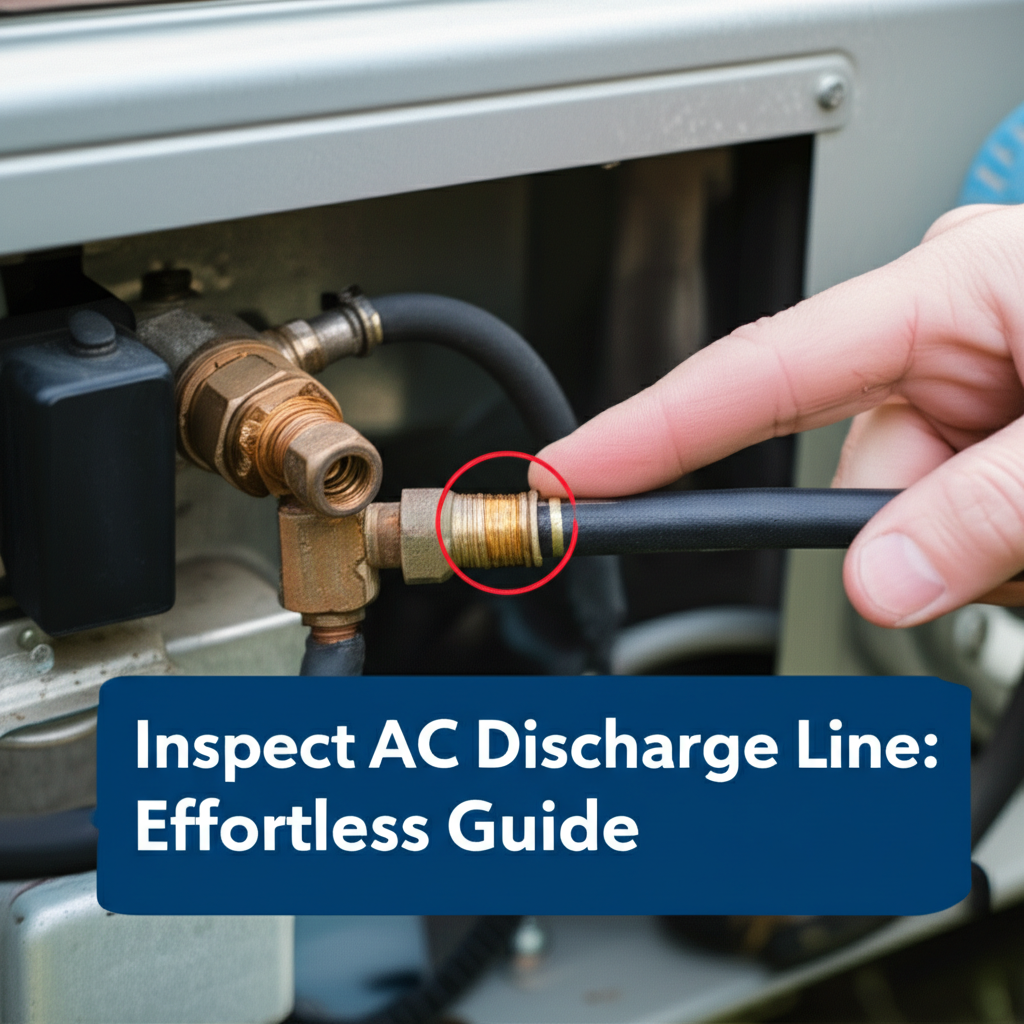
Quick Summary: Inspecting your AC discharge line is easy! Look for hard insulation, dry pipes, and no leaks where the copper pipe exits the outdoor unit. This simple check ensures your AC is cooling efficiently and not wasting energy.
Is your air conditioner blowing warm air? Are your energy bills climbing higher than you like? It can feel confusing when your AC acts up. Many big problems start with small, easy-to-spot issues. We will look at one important part today. It is called the discharge line. You do not need to be a technician to check it. This guide makes learning about your AC simple. Let’s get your cooling system running perfectly!
Understanding Your AC Lines: What is the Discharge Line?
Your AC unit has two main copper pipes running between the indoor part and the outdoor part. These pipes move the cold stuff, called refrigerant, around. Think of them like the roads for your AC’s cooling power.

One pipe is the suction line. It is the bigger pipe and feels cool or even cold to the touch when the AC runs. This line brings the cold gas back to the compressor outside.
The other pipe is the discharge line. This is the smaller line. It carries the hot, high-pressure gas from the compressor out to the condenser coils. This line is supposed to be warm or hot when the AC is working hard. That heat is normal!
Why Inspecting the Discharge Line Matters for Home Cooling
Checking this small pipe saves you money. If something is wrong here, your AC works harder for less cool air. This means higher electric bills.
A major sign of trouble is bad insulation on this hot pipe. If the insulation is missing or damaged, the heat escapes before it can cool your home properly. This makes the AC less efficient.
We are looking for three main things during our inspection. These are insulation condition, physical damage, and proper temperature.
Step-by-Step Guide: How to Inspect Your AC Discharge Line
Safety first! Always make sure your AC unit is turned off at the thermostat before you touch any pipes or wiring outside. We are just looking and maybe touching lightly.
Step 1: Locate the Outdoor Unit and the Lines
Go outside to where your big air conditioner box sits. You will see the two copper pipes going into the side or top of the unit. Remember, the discharge line is the smaller of the two.
Step 2: Check the Insulation Quality
Feel the insulation covering the small, hot pipe. It should be a thick, black or white foam covering. This foam keeps the heat inside the pipe until it reaches the coils.
Look for cracks, tears, or spots where the insulation has completely fallen off. If you see bare copper pipe, that needs fixing right away.
Step 3: Assess the Temperature (With Caution!)
Turn your AC on and let it run for about 15 minutes. This gives the system time to build up normal pressure and temperature.
Carefully touch the discharge line—remember, it should feel warm or hot. If it feels cold, or if the suction line (the bigger one) is freezing up with ice, you might have a serious refrigerant issue. Call a pro for that!
Step 4: Inspect for Leaks and Damage
Look closely at where the pipe enters the unit. Do you see any oily residue? Refrigerant is often mixed with oil. A small oily spot might mean a tiny leak. Small leaks should be repaired by an HVAC professional.
Check the entire length of the visible pipe. Are there any dents or kinks in the copper? Dents can block the flow of refrigerant, making your AC struggle.
Easy Fixes You Can Do Today
If you found damaged insulation, this is a simple fix you can handle! You do not need to call anyone for this maintenance task.
<ul
When to Call Jack’s Expert Friends (The HVAC Pros)
Some issues are bigger than a simple repair job. Knowing when to stop and call a certified technician saves you time and prevents bigger damage.
<table
If you suspect low refrigerant, never try to add it yourself. Refrigerant handling requires special tools and certification. Only licensed pros can handle this safely, according to EPA rules.
For more deep dives into energy efficiency, check out these great resources:
<ul
Common AC Myths vs. Reality Checks
Let’s clear up a few things that might confuse new AC owners. We want you to feel confident about what you are seeing outside.
<ul
Frequently Asked Questions About Your AC Pipes
Here are some quick answers to the questions I hear most often.
Q: How warm should the discharge line feel?
A: It should feel noticeably warm, often too hot to comfortably hold for more than a few seconds, especially on a very hot day.
Q: Can I just use duct tape instead of special sealing tape on the foam?
A: Duct tape will break down quickly in the sun and rain. Use proper HVAC foil tape or rubber mastic tape for a long-lasting, weatherproof seal.
Q: What if I see water dripping from the bottom of the outdoor unit?
A: A little water dripping during heavy cooling is usually just condensation. If it’s a lot of water, check your indoor drain line first, as that often backs up.
Q: Do I need to check the lines often?
A: A quick visual check once a month during peak cooling season is perfect. Also, check every spring before you turn the system on.
Q: Is it bad if the insulation near the unit is wet?
A: Yes, wet insulation loses its ability to insulate. If it’s wet from rain, try to redirect the water. If it’s wet from condensation, the pipe might be too cold, indicating a different issue.
Q: Does this inspection work for mini-split systems too?
A: Yes, mini-splits have the same principles! The small line leaving the outdoor unit is the discharge line and should be checked for good insulation.
AC Capacity Guide for Beginners
Sometimes, poor performance isn’t a leak, but simply having the wrong size AC. If your unit is constantly running hard, check this quick guide:
<table
When you keep up with small checks like inspecting the discharge line, you are doing big maintenance. You are protecting your comfort and your wallet. Simple steps taken regularly keep complex machines happy.
Keep watching those pipes, take care of that insulation, and enjoy the cool air you are working to maintain. Stay cool out there!
