
The easiest way to remove mold from your AC is to shut it off, clean the filter and accessible parts with a vinegar solution, and ensure the drip pan is clear. Regular cleaning stops mold from coming back.
Mold Removal: Effortless AC Cleaning Guide
Is your air conditioner blowing air that smells a little… musty? You are not alone. Many folks worry about yucky mold hiding inside their cooling machines. Mold loves damp, dark places, and your AC unit has plenty of both.
Don’t stress out about this problem. Dealing with AC mold sounds scary, but it is actually quite simple. I am Jack from ACReviewHub.com, and I will walk you through every step. We will make your AC clean and your air fresh again, the easy way.
Why Mold Loves Your Air Conditioner
Air conditioners are perfect mold hotels. They pull warm, moist air from your home over cold coils. This makes water drip down, just like on a cold glass in summer.
If this water sits still, mold spores floating in the air land and start to grow. This usually happens on the filter or inside the drain pan. Mold can make your air smell bad and might even cause minor health issues.
Safety First: Shut Down Your AC System
Before you touch anything inside your unit, we must turn it off completely. Safety is step one, always.
Here is how to safely power down your system:
- Turn the thermostat setting to “OFF.” This stops the indoor fan from running.
- Go to your main electrical panel (the breaker box).
- Find the breaker switch labeled for your AC unit or furnace/air handler and flip it to the “OFF” position. This cuts all power to the machine.
Step-by-Step Mold Cleaning for Beginners
We will focus on the parts you can safely reach, like the filter and the accessible coil area. If you have a central system, you will mostly work on the indoor air handler unit.
Phase 1: Cleaning the Air Filter
The filter catches dust, which is the mold’s favorite food. A dirty filter is often the first place mold starts to show up.
- Locate the filter slot. This is usually behind a panel on the furnace or air handler unit.
- Carefully slide the old filter out. Note which way the arrow on the filter is pointing (it shows airflow direction).
- If your filter is disposable (cardboard frame), toss it out. Do not try to clean it.
- If you have a reusable, washable filter, take it to a sink. Wash it gently with warm water and a little dish soap. Rinse well.
- Let the washable filter dry completely before putting it back in.
Phase 2: Wiping Down Accessible Areas
For window units or the blower section of a central system, you can often wipe down the housing.
We need a simple, safe cleaning solution. Skip harsh chemicals; vinegar works wonders against mold spores.
The Go-To Mold-Fighting Spray
Mix equal parts of white vinegar and water in a spray bottle. This 50/50 mix is safe for most AC plastics and metals.
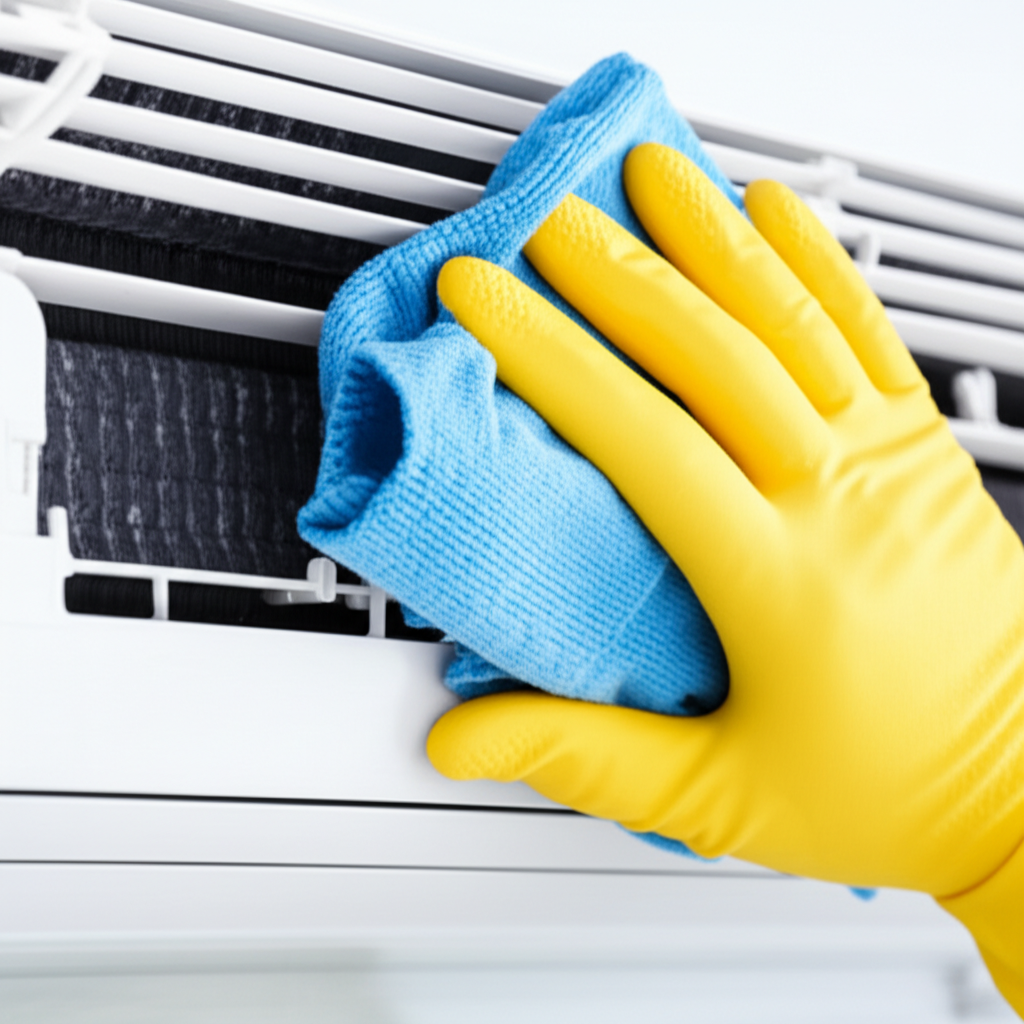
Use this spray to wipe down surfaces like the inside of the access panel and the plastic housing around the fan if you can see them easily. Do not spray directly onto electrical components.
Phase 3: Checking the Drain Line (Super Important!)
If water cannot drain away properly, it sits and creates mold. This is often the hidden cause of smells.
The drain line is a small PVC pipe that carries condensation away from the unit. It can get clogged with sludge and mold.
- Find the end of the drain line, usually outside your house or near the unit.
- Pour about a cup of the vinegar solution down the access port near the indoor coil (if you can locate it safely) or directly into the line opening outside.
- Let it sit for 30 minutes. This vinegar flush helps kill any mold or algae growing inside the pipe.
When to Call a Professional HVAC Tech
Sometimes, the mold is deep inside the unit, especially on the evaporator coil itself. This coil is tricky and requires special tools to clean safely.
If you have cleaned the filter and checked the drain, but the musty smell is still strong after running the AC for a day, it is time to call in the pros. They have special coil cleaners and foggers.
Here is a quick guide to help you decide:
| Symptom | Likely Fix | Who Should Do It |
|---|---|---|
| Slight musty smell after turning on | Clean/Replace Filter | You |
| Visible slime on the drain pan | Flush Drain Line | You |
| Strong, constant odor; AC is blowing warm air | Deep Coil Cleaning/System Check | HVAC Professional |
Keeping Mold Away: Prevention is Key
Once your AC is clean, we want to keep it that way! Preventing mold is much easier than removing it later. This is all about managing moisture.
Follow these simple habits to keep things fresh:
- Change Filters Often: Check your filter once a month. Change disposable ones every 1–3 months, especially during heavy use seasons.
- Use the Fan Setting: When you are done cooling, switch the thermostat fan setting from “AUTO” to “ON” for about 30 minutes. This helps dry out the coils before the system shuts down completely.
- Check the Drip Pan: Once a year, look at the drain pan underneath the unit. If you see standing water or slime, flush the line again.
- Humidity Control: If you live in a very humid area, consider running a dehumidifier alongside your AC. Lowering overall humidity starves mold of what it needs to grow.
For more detailed information on system efficiency and maintenance, the U.S. Department of Energy has great resources on keeping your home cooling systems running well (Energy.gov).
Common AC Mold Myths Busted
Let’s clear up a few things people often get confused about when it comes to AC mold.
Myth: Bleach kills mold inside the AC.
Fact: Never pour straight bleach into your AC system! It is corrosive and can damage internal parts like evaporator coils. Vinegar or specialized coil cleaner is much safer.
Myth: Mold only grows in old units.
Fact: Mold can grow in brand new units if they are installed in a very humid basement or if the drain line is accidentally blocked during setup.
Myth: If I can’t smell it, it isn’t there.
Fact: Sometimes mold grows in places you cannot see, like deep in the ductwork. Regular filter changes and professional annual checkups are your best defense.
Frequently Asked Questions (FAQ)
Q: How long does it take for mold to grow in an AC?
A: If moisture is present, mold spores can start growing within 24 to 48 hours. That is why fast filter changes are so important!
Q: Can I just spray Lysol into the vents?
A: A quick spray might mask the smell for a little while, but it won’t kill the mold deep inside the system. Focus on cleaning the source (filter and drain).
Q: My AC is very old. Should I just replace it instead of cleaning the mold?
A: If your unit is over 15 years old and needs frequent repairs, replacing it might save you money long-term. But if it is just a bit smelly, cleaning will usually fix it right up.
Q: What is the best temperature setting to prevent mold?
A: Mold thrives when the temperature difference between the air and the coil is huge. Setting your AC to a moderate temperature (like 75°F) instead of blasting it to 65°F can reduce condensation.
Q: Do window AC units get mold easily?
A: Yes, they do! Because the entire cooling mechanism is inside your room, they are very prone to moisture buildup if not cleaned regularly.
Final Thoughts on Keeping Cool and Clean
See? Cleaning mold out of your air conditioner is not a scary, expert-only job. It mostly involves swapping out a filter and giving the accessible parts a good wipe-down with simple vinegar water.
Remember, a little consistency goes a long way. Keep up with those filter changes, and take a quick look at your unit every few months. You will save money, breathe better air, and keep that cool comfort all season long.
Stay cool, and happy cleaning!
