
Portable ACs that keep turning on and off are annoying and wasteful. This issue usually stems from thermostat problems, dirty filters, or blocked air vents. Understanding the root cause helps you fix it fast. In this guide, we’ll walk you through common triggers and simple, effective solutions to restore steady cooling.
If your portable AC keeps turning on and off, you’re not alone—and you’re not crazy. It’s one of the most common complaints among portable AC users, and while it’s frustrating, it’s usually fixable with a little troubleshooting. Unlike window units or central air, portable ACs rely on a delicate balance of airflow, temperature sensing, and internal safety systems. When that balance gets disrupted, you get the dreaded “on-off-on-off” cycle that leaves your room uncomfortably warm and your electricity bill creeping up.
The good news? Most causes of this issue are simple to identify and fix. Whether it’s a dirty filter, a blocked hose, or a misbehaving thermostat, understanding why your portable AC won’t stay on is the first step toward consistent cooling. In this guide, we’ll break down the most likely reasons behind the cycling, explain how to diagnose them, and walk you through practical fixes—so you can get back to enjoying a cool, quiet space without the constant hum of a restarting unit.
Key Takeaways
- Thermostat malfunctions are a top cause—check calibration and placement.
- Dirty or clogged air filters restrict airflow and trip safety sensors.
- Blocked exhaust hoses or vents prevent proper heat exchange.
- Low refrigerant levels or leaks can cause the unit to cycle abnormally.
- Power supply issues, like unstable voltage or faulty cords, disrupt operation.
- Overheating due to poor ventilation makes the unit shut down to protect itself.
- Using the wrong portable AC model for your room size leads to frequent cycling.
Quick Answers to Common Questions
Why does my portable AC turn on and off every few minutes?
Most likely, it’s due to a dirty air filter restricting airflow, causing the coils to freeze. Clean or replace the filter and check for blockages in the exhaust hose.
Can a blocked exhaust hose cause my portable AC to cycle?
Yes. If the hose is kinked or disconnected, hot air can’t escape, triggering overheating protection and causing the unit to shut off repeatedly.
How do I know if my thermostat is the problem?
Compare the AC’s displayed temperature to a separate digital thermometer. If there’s a significant difference, the thermostat may be miscalibrated or poorly placed.
Is it safe to run my portable AC on an extension cord?
Not recommended. Extension cords can cause voltage drop, leading to erratic operation. Use a heavy-duty cord rated for the AC’s wattage or plug directly into a wall outlet.
Should I replace my portable AC if it keeps cycling?
Only if it’s old, poorly maintained, or frequently breaks down. Many cycling issues are fixable with cleaning or part replacement. Check your warranty first.
📑 Table of Contents
Why Your Portable AC Keeps Turning On and Off
Portable ACs are designed to maintain a set temperature by turning on when the room gets too warm and off when it reaches the target. But when the cycle becomes too short or too frequent, it’s a sign something’s off. This isn’t just annoying—it can also strain your unit, reduce efficiency, and shorten its lifespan.
The most common culprits fall into a few categories: thermostat issues, airflow blockages, refrigerant problems, and power-related glitches. Let’s dive into each one and see how to spot them.
Thermostat and Temperature Sensor Problems
The thermostat is the brain of your portable AC. It constantly monitors the room temperature and tells the unit when to start and stop. If the thermostat is off, misaligned, or malfunctioning, the AC will keep turning on and off without ever reaching the set temperature.
One frequent issue is improper placement. If your portable AC’s thermostat is tucked behind furniture or near a heat source like a lamp or window, it may read the temperature incorrectly and think the room is still hot. Similarly, if the unit is placed too close to a drafty door or air vent, it might cool the immediate area too fast and shut off prematurely.
Another possibility is thermostat calibration drift. Over time, internal sensors can lose accuracy. You can test this by comparing the AC’s displayed temperature to a reliable digital thermometer. If there’s a 2–3 degree difference, the thermostat may be sending false signals.
To fix this, try relocating the unit to a more central, draft-free spot. If that doesn’t help, consider resetting the thermostat or replacing it if it’s old or damaged. In some models, you can recalibrate the thermostat through the control panel—check your manual for instructions.
Dirty or Clogged Air Filters
Air filters are your portable AC’s lungs. They trap dust, pet dander, and other particles so they don’t recirculate into the air. But when they get clogged, airflow drops dramatically—and that’s when the cycling starts.
When airflow is restricted, the evaporator coils inside the unit can freeze over. Once frozen, the coils eventually thaw, but during that cycle, the AC shuts down to prevent damage. This creates a loop: the unit cools briefly, shuts off due to frozen coils, then restarts—again and again.
You’ll know this is happening if your portable AC runs for 5–10 minutes, then stops. The air coming out may feel warm or lukewarm, and you might hear a hissing or gurgling sound as the system tries to restart.
The fix is simple: clean or replace the air filter. Most portable ACs use washable or replaceable filters. If yours is washable, remove it, rinse it under cool water, let it dry completely, and reinstall. If it’s disposable, replace it every 1–3 months depending on usage. For homes with pets or high dust levels, monthly checks are a must.
Blocked Exhaust Hose or Air Vents
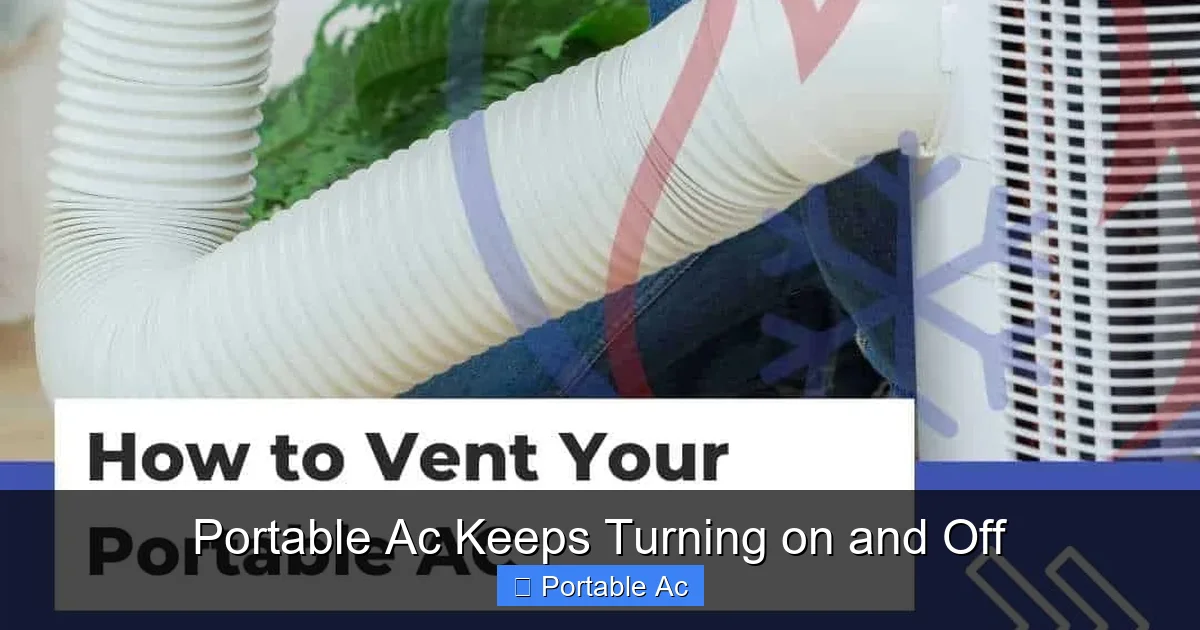
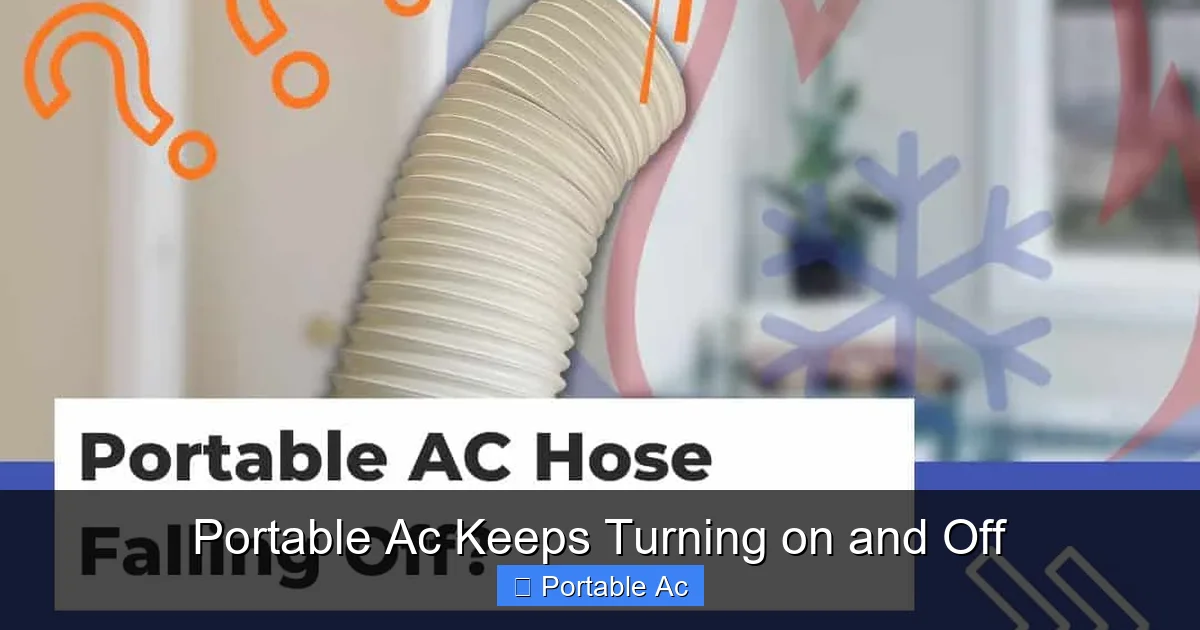
Portable ACs expel hot air through an exhaust hose that vents outside—usually through a window. If this hose gets kinked, blocked, or disconnected, the unit can’t release heat efficiently. That forces the compressor to work harder and triggers overheating protection, which shuts the unit off.
Common issues include:
– Kinked or compressed exhaust hoses that restrict airflow.
– Improper window sealing, allowing hot air to re-enter the room.
– Dirty or obstructed vents inside the unit.
Check your hose first. Make sure it’s straight, not bent at sharp angles, and securely connected at both ends. If it’s flexible, ensure it’s not resting on sharp edges or being stepped on. Also, verify the window seal—use a towel or foam board to block any gaps.
If the hose is fine, inspect the unit’s intake and exhaust vents. Dust buildup here can mimic a blockage. Use a vacuum with a brush attachment to gently clean around the vents.
Refrigerant Issues
Refrigerant is the lifeblood of your portable AC. It absorbs heat from the room and releases it outside. If the refrigerant level drops—due to a leak or manufacturing defect—the cooling capacity plummets. The unit may run nonstop or cycle on and off trying to reach the set temperature.
Signs of low refrigerant include:
– Ice buildup on the coils (even after the filter is clean).
– Warm air blowing even when the unit is on.
– Frequent cycling with short run times.
If you suspect a refrigerant leak, don’t attempt to fix it yourself. This requires specialized tools and EPA certification. Instead, contact a licensed HVAC technician. They can detect leaks, recharge the system if needed, and ensure it’s sealed properly.
In most cases, portable ACs are sealed units and don’t require refrigerant refills—so if yours is new and already cycling, it might be a factory defect. Check your warranty.
Power Supply and Electrical Problems
Sometimes, the issue isn’t mechanical—it’s electrical. Portable ACs draw a lot of power, especially during startup. If your circuit is overloaded, or if the outlet or power cord is faulty, the unit may not get stable voltage.
Common electrical causes include:
– Overloaded circuits—running too many high-wattage devices.
– Failing power cords or loose connections.
– Unstable voltage from the grid (more common in older homes or during storms).
To test this, plug your portable AC into a different outlet—ideally on a dedicated circuit. If it runs smoothly there, the original outlet may be the problem. Also, inspect the power cord for fraying or damage.
Another tip: avoid using extension cords. They increase resistance and can cause voltage drop, leading to erratic operation. If you must use one, ensure it’s heavy-duty and rated for the AC’s wattage.
How to Diagnose and Fix the Issue Step by Step
Visual guide about Portable Ac Keeps Turning on and Off
Image source: hvactrainingshop.com
Diagnosing a cycling portable AC doesn’t require a degree in engineering. Just follow a logical checklist. Start with the easiest fixes and work your way up.
Begin by inspecting the air filter. If it’s dirty, clean or replace it. Next, check the exhaust hose for kinks or disconnections. Then, verify the thermostat placement and room temperature with an external thermometer.
If those don’t help, look for ice on the coils—a sign of airflow issues or low refrigerant. Finally, test the power source and ensure the unit isn’t sharing a circuit with other heavy appliances.
Most users can resolve the problem within 15–30 minutes. If not, it’s time to consult the manual or contact support.
When to Call a Professional
While many cycling issues are DIY-friendly, some require expert help. Call a technician if:
– You hear unusual noises like hissing or grinding.
– The unit smells burning or emits smoke.
– You suspect a refrigerant leak.
– The problem persists after all basic fixes.
A licensed HVAC pro can run diagnostics, check refrigerant levels, and inspect the compressor—components that aren’t user-serviceable.
Preventing Future Cycling Issues
Visual guide about Portable Ac Keeps Turning on and Off
Image source: hvactrainingshop.com
The best fix is prevention. Keep your portable AC running smoothly with these habits:
– Clean or replace filters monthly, especially during peak cooling season.
– Inspect the exhaust hose weekly for kinks or disconnections.
– Place the unit centrally in the room, away from heat sources and drafts.
– Use a surge protector with built-in voltage regulation.
– Schedule annual maintenance if you use the unit heavily.
Also, consider investing in a high-quality portable AC from a trusted brand. Models with dual-hose systems and self-diagnostic features are less prone to cycling issues. For example, units with smart thermostats and auto-cleaning filters offer more consistent performance.
If you’re shopping for a new portable AC, check out our guide on Best Portable AC for First-Time Buyers to find a reliable, user-friendly model.
Choosing the Right Portable AC for Your Needs
Visual guide about Portable Ac Keeps Turning on and Off
Image source: hvactrainingshop.com
Not all portable ACs are created equal. If your current unit keeps cycling, it might simply be the wrong size or model for your space. A unit that’s too small will run constantly trying to cool a large room. One that’s too big may short-cycle due to overcooling.
To pick the right size, calculate your room’s square footage and match it to the unit’s BTU rating. For example:
– 100–350 sq ft: 8,000–10,000 BTU
– 350–500 sq ft: 12,000–14,000 BTU
– 500–700 sq ft: 15,000–18,000 BTU
Also, consider features like remote control, sleep mode, and energy efficiency. For spot cooling in a home office, a compact, quiet model works best. For whole-room cooling in a studio apartment, look for a unit with strong airflow and a reliable hose system.
We’ve tested dozens of models and compiled our top picks in guides like Best Portable AC Under $500 and Best Value Portable AC for Money. These reviews highlight units with stable performance, low noise levels, and minimal cycling issues.
Conclusion
A portable AC that keeps turning on and off is more than a nuisance—it’s a sign your system isn’t working efficiently. But with the right knowledge, most of these issues are easy to fix. Start with the basics: clean the filter, check the hose, and verify the thermostat. If those don’t work, dig deeper into power, refrigerant, or internal components.
Remember, prevention is key. Regular maintenance not only stops cycling but also extends your unit’s life and saves you money on energy bills. And if you’re in the market for a new portable AC, choose wisely. A well-reviewed, properly sized unit from a trusted brand will give you years of reliable, quiet cooling.
For more tips on portable AC performance, check out our comparison of Evaporative Cooler vs Portable AC Pros and Cons to see which cooling solution fits your climate and lifestyle.
Frequently Asked Questions
How often should I clean my portable AC filter?
Clean or replace the filter every 1–3 months, or more frequently if you have pets or live in a dusty area. Clogged filters are a leading cause of cycling issues.
Can low refrigerant cause my portable AC to turn on and off?
Yes. Low refrigerant reduces cooling efficiency, causing the unit to run longer or cycle more frequently. This requires professional repair due to safety and environmental regulations.
Why does my portable AC run for only 5 minutes then stop?
This is often due to frozen evaporator coils from restricted airflow. Check the filter and vents, and ensure the exhaust hose is clear and properly sealed.
Does room size affect how often my portable AC cycles?
Absolutely. A unit that’s too small for the room will run constantly trying to cool, while one that’s too large may short-cycle. Match the BTU rating to your room size.
Can a faulty power cord cause my portable AC to cycle?
Yes. A damaged or undersized power cord can lead to voltage instability, causing the unit to restart unexpectedly. Try a different outlet or replace the cord if damaged.
Is it worth repairing an older portable AC that cycles frequently?
It depends. If the unit is less than 5 years old and the issue is fixable (like a dirty filter), repair is cost-effective. For older models with recurring problems, replacement may be smarter.
